
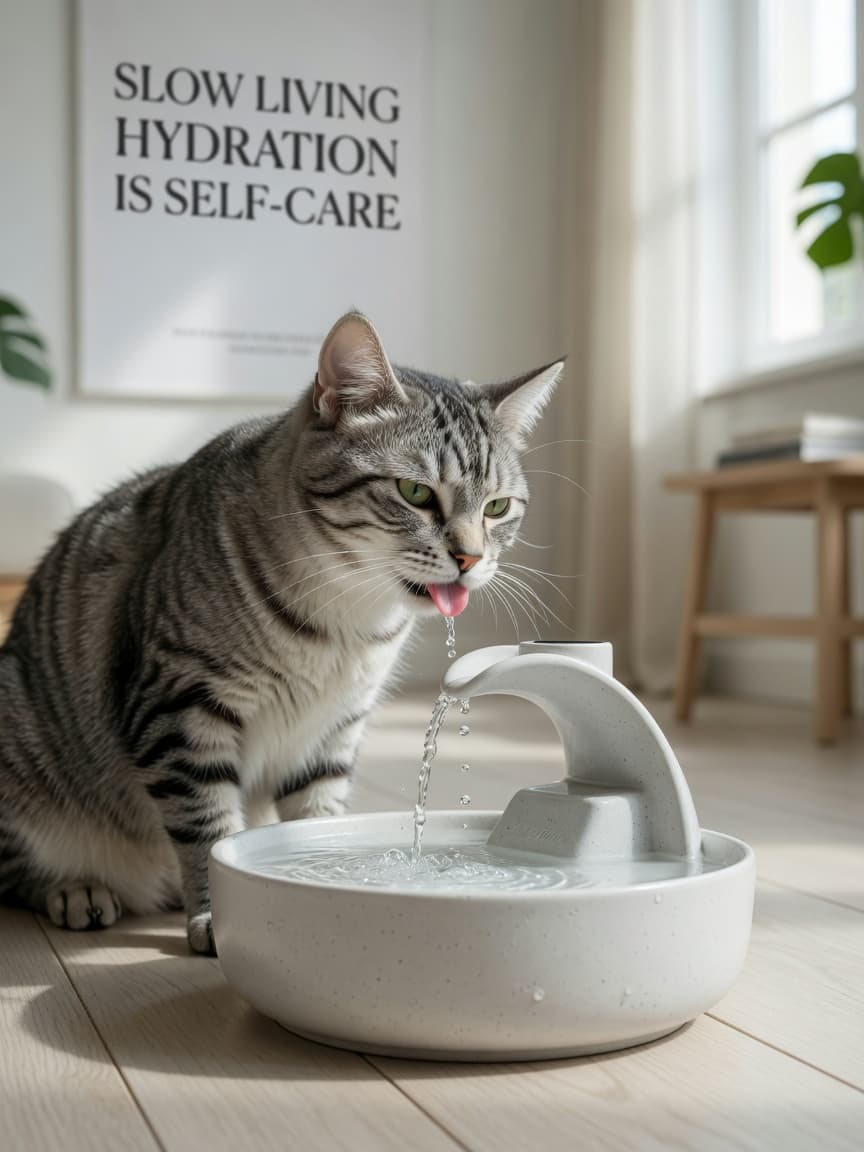
The Case for Moving Water
Cat water fountains have gone from a niche pet product to a mainstream accessory over the past decade, and with good reason. The idea behind them is grounded in feline biology: cats evolved in arid environments where still, stagnant water was often unsafe to drink. Running water — a stream, a trickle from a tap — was historically a more reliable signal of freshness and safety. Domestic cats have retained this preference, which is why so many of them are inexplicably drawn to dripping taps.
But beyond the intuitive logic, does the science actually support water fountains as a meaningful tool for improving hydration? The short answer is yes, with some nuance.
What the Research Shows
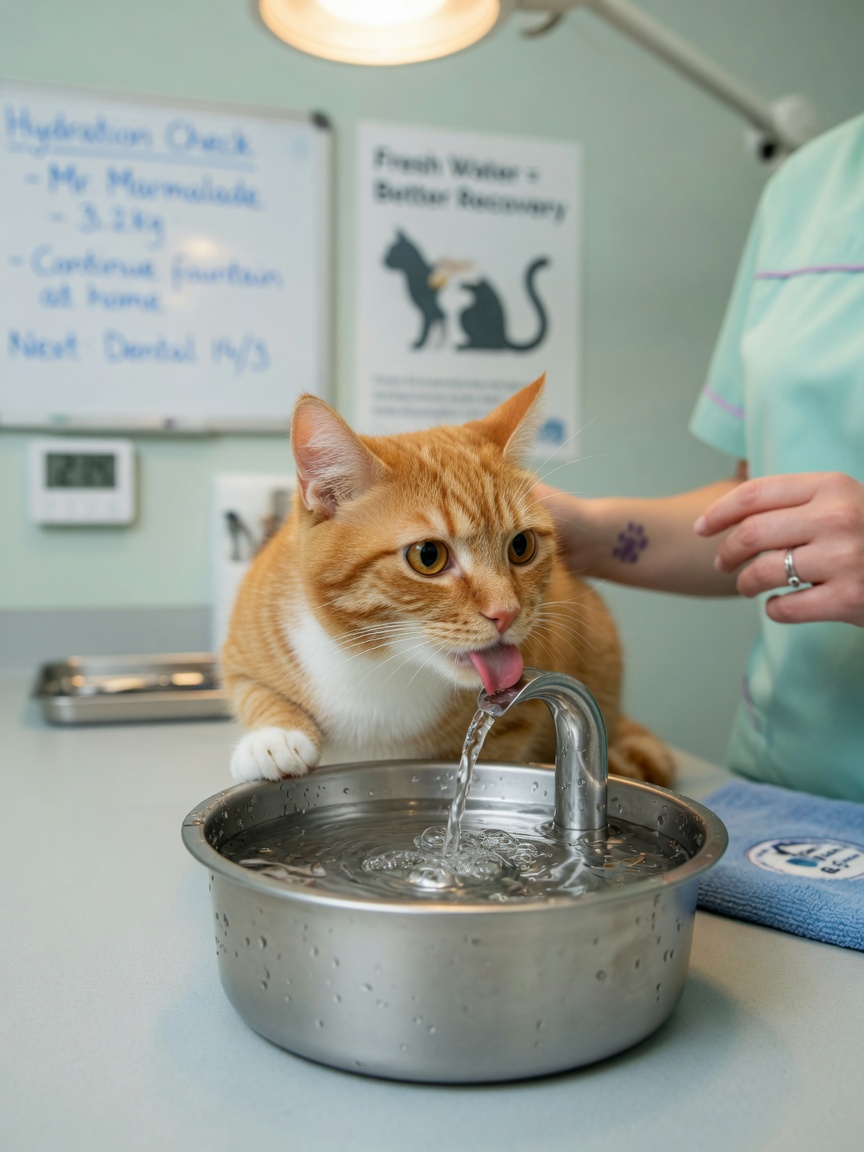
A peer-reviewed study published in the Journal of Feline Medicine and Surgery found that cats offered a circulating water fountain consumed significantly more water than those offered a static bowl, particularly in households where the cats were fed predominantly dry food. The study noted that the effect was more pronounced in cats who had previously been identified as low drinkers.
Veterinary nutritionists and feline medicine specialists frequently recommend fountains as a first-line intervention for cats with a history of urinary tract disease, early-stage chronic kidney disease, or bladder crystals — conditions where increasing fluid intake has a direct therapeutic effect. The rationale is simple: more dilute urine reduces the concentration of minerals that form crystals and supports kidney filtration.
Why Cats Prefer Moving Water
Beyond the evolutionary explanation, there are a few practical reasons why fountains appeal to cats:
- Moving water stays oxygenated, which keeps it tasting fresher
- Circulation through a filter removes debris, hair, and some dissolved impurities
- The sound and movement attract curious cats, particularly younger and more active ones
- The water tends to remain cooler than static bowls left at room temperature
None of these are trivial factors for a species that relies heavily on smell and sensory cues when deciding what to consume.
Types of Cat Water Fountain
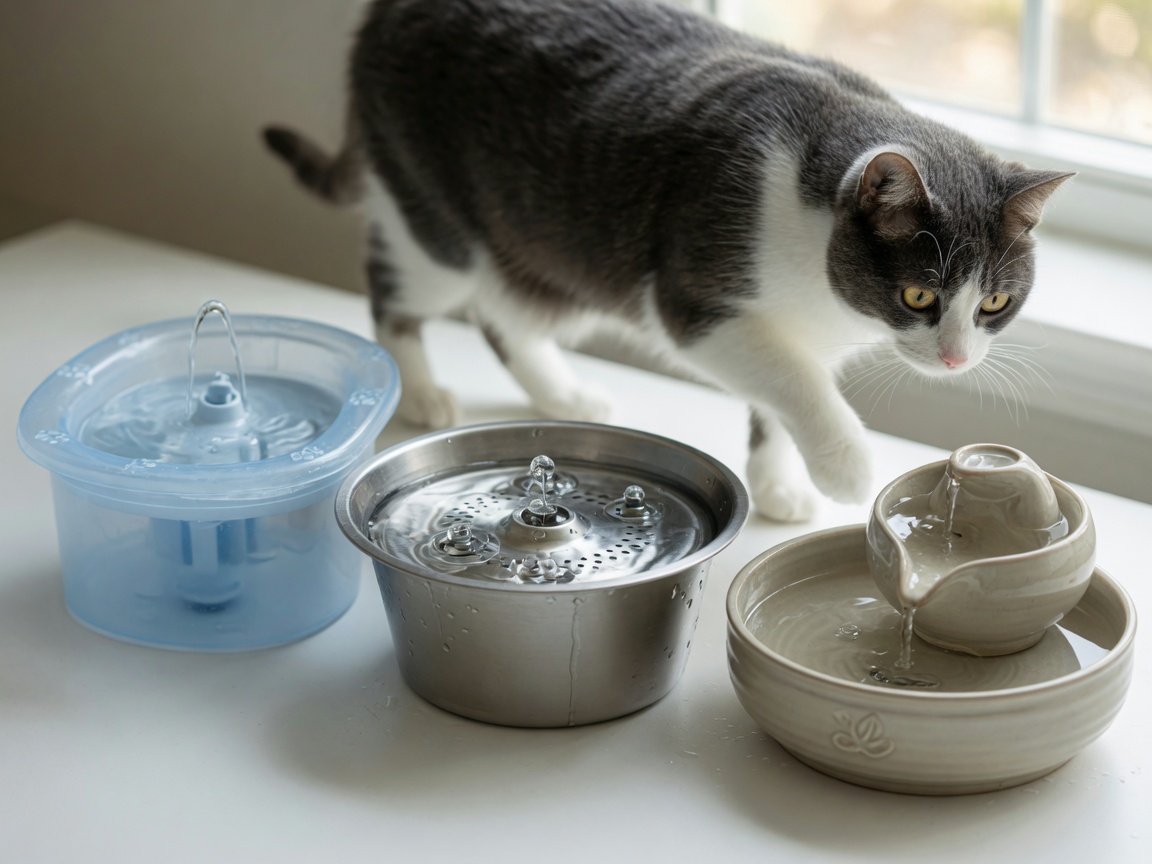
Plastic fountains
The most common and affordable option. They come in a wide variety of designs but have one significant drawback: plastic is porous and develops scratches over time where bacteria can colonise. Some cats are sensitive to the subtle odour of plastic and may avoid these models. If you use a plastic fountain, replace it every six to twelve months and wash it thoroughly every few days.
Stainless steel fountains
More hygienic and durable than plastic. Stainless steel does not harbour bacteria in the same way, is dishwasher-safe, and has no odour that might deter sensitive cats. The main downside is cost — stainless steel models tend to be significantly more expensive — but they last far longer and are the preferred option from a hygiene standpoint.
Ceramic fountains
A good middle ground. Ceramic is non-porous, easy to clean, and aesthetically neutral, which means it blends more easily into a home environment. They are heavier and more fragile than plastic but are an excellent choice for cats who are put off by the smell of plastic.
Choosing the Right Fountain for Your Cat
Not every fountain suits every cat. A few factors to consider:
- Flow style — some fountains produce a stream or arc of water; others produce a gentle bubbling surface. Shy or noise-sensitive cats may prefer a quieter bubbling model, while playful cats often enjoy batting at a stream.
- Capacity — a larger reservoir means less frequent refilling. If you travel or work long hours, opt for a model with at least 1.5 to 2 litres capacity.
- Noise level — the pump motor should be quiet. A noisy pump can deter cats who are startled by unexpected sounds. Read reviews specifically for noise level before purchasing.
- Filter type — most fountains use a foam pre-filter to catch hair and debris plus an activated carbon filter to remove odours and some impurities. Replacement filter costs are worth factoring in when comparing prices.
Common Mistakes With Cat Fountains
Not cleaning it often enough
A fountain that is not cleaned regularly becomes a bacterial and algae breeding ground, which will actively deter a cat from drinking. The entire unit — bowl, pump, and filter housing — should be disassembled and thoroughly cleaned every one to two weeks. The pump impeller in particular collects slime and debris that the filters do not catch.
Placing it next to the food bowl
As with static water bowls, cats prefer their water source to be physically separate from their food. Place the fountain in a different room if possible, or at minimum several feet away from the feeding area.
Expecting immediate adoption
Some cats take days or even weeks to accept a fountain. Do not remove the old water bowl until you are confident your cat is using the fountain regularly. Run both in parallel during the transition period.
Letting the water level drop too low
Most fountain pumps are designed to run submerged. Running them with insufficient water overheats and burns out the motor. Check water levels daily.
Do All Cats Benefit?
Fountains are most beneficial for cats who eat predominantly dry food, cats with a history of urinary or kidney problems, cats who are known low drinkers, and cats who show interest in dripping taps or running water. For cats already eating wet food and drinking normally, the benefit may be smaller — but a fountain can still serve as an additional positive source and maintain interest in hydration.
Senior cats, in particular, are worth considering. Older cats are at elevated risk of chronic kidney disease, and increasing water intake through a fountain is a simple, low-effort intervention that may help slow the progression of early disease. If your vet has flagged kidney function in an ageing cat, a fountain is one of the first practical steps worth taking at home.