ForPetsHealthcare
Cats

How to Bathe Your Kitten or Adult Cat

By Julia WrenfieldUpdated August 4, 20264 min read
Evidence-based · Sources checked
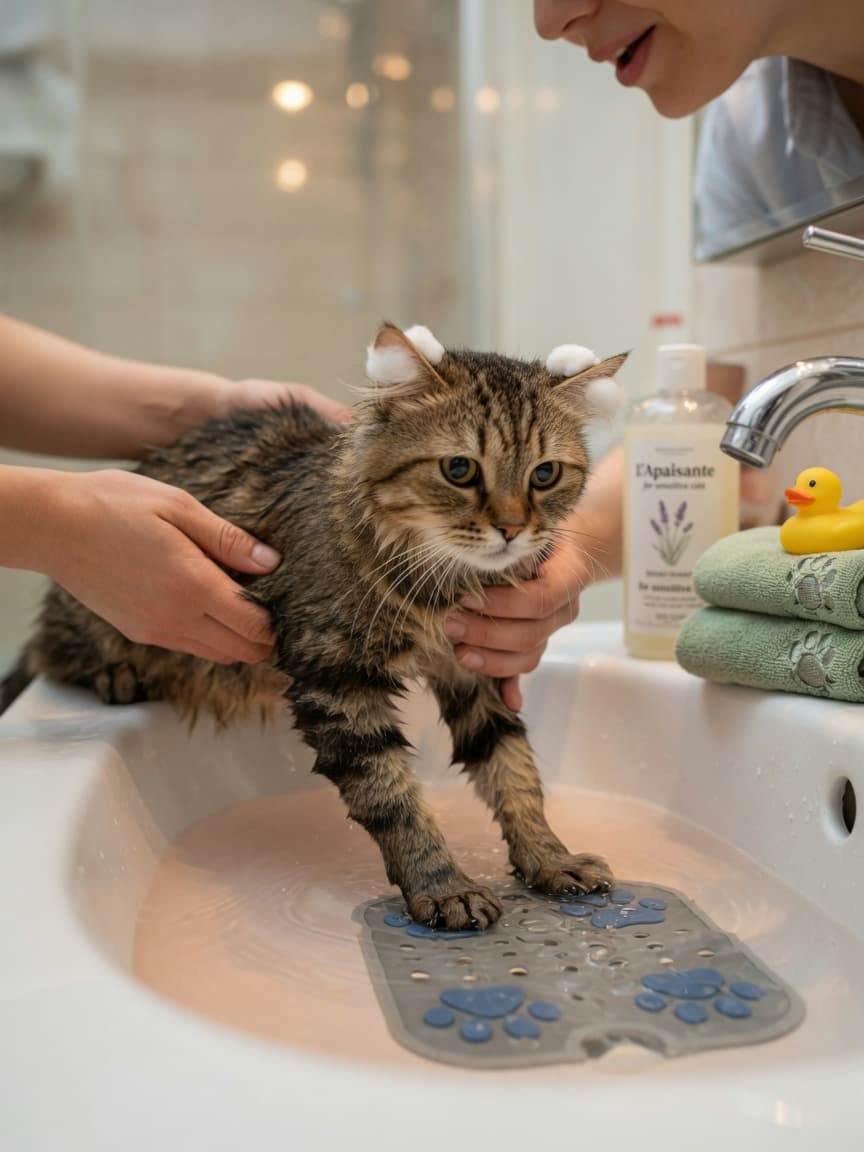
{"en": "Wet tabby cat being gently bathed in a sink with warm water and soap during grooming session", "es": "Gato atigrado mojado siendo ba\u00f1ado suavemente en un lavabo con agua tibia durante el aseo", "fr": "Chat tigr\u00e9 mouill\u00e9 baign\u00e9 d\u00e9licatement dans un \u00e9vier avec de l'eau chaude lors d'une s\u00e9ance de toilettage", "de": "Nasse getigerte Katze wird sanft im Waschbecken mit warmem Wasser w\u00e4hrend der Pflege gebadet", "nl": "Natte gestreepte kat wordt voorzichtig in een wasbak met warm water gewassen tijdens verzorging", "pt": "Gato rajado molhado sendo banhado gentilmente em uma pia com \u00e1gua morna durante sess\u00e3o de higiene", "it": "Gatto tigrato bagnato lavato delicatamente in un lavandino con acqua tiepida durante la toelettatura"}

Most cats are fastidious groomers who rarely need bathing, but there are times when a proper wash becomes necessary—whether your feline friend has rolled in something unpleasant, has oily or matted fur, or requires a bath for medical reasons. Bathing a cat can seem daunting, but with the right preparation, patience, and techniques, you can make the experience calm and manageable for both you and your pet. This guide will walk you through everything you need to know about safely bathing your kitten or adult cat.

When Your Cat Actually Needs a Bath

Before reaching for the shampoo, consider whether a bath is truly necessary. Cats naturally maintain their coat through self-grooming. However, bathing becomes important in these situations:

  • After contact with harmful substances or chemicals
  • Excessive oiliness or sebum build-up, particularly in long-haired breeds
  • Persistent odour or visible dirt accumulation
  • Skin conditions prescribed by your veterinarian
  • Preparation before cat shows
  • For senior cats or those with mobility issues who struggle to groom themselves

If your cat simply has a small mat or minor dirt spot, spot-cleaning with a damp cloth is often sufficient and far less stressful.

Preparing Your Cat and Your Environment
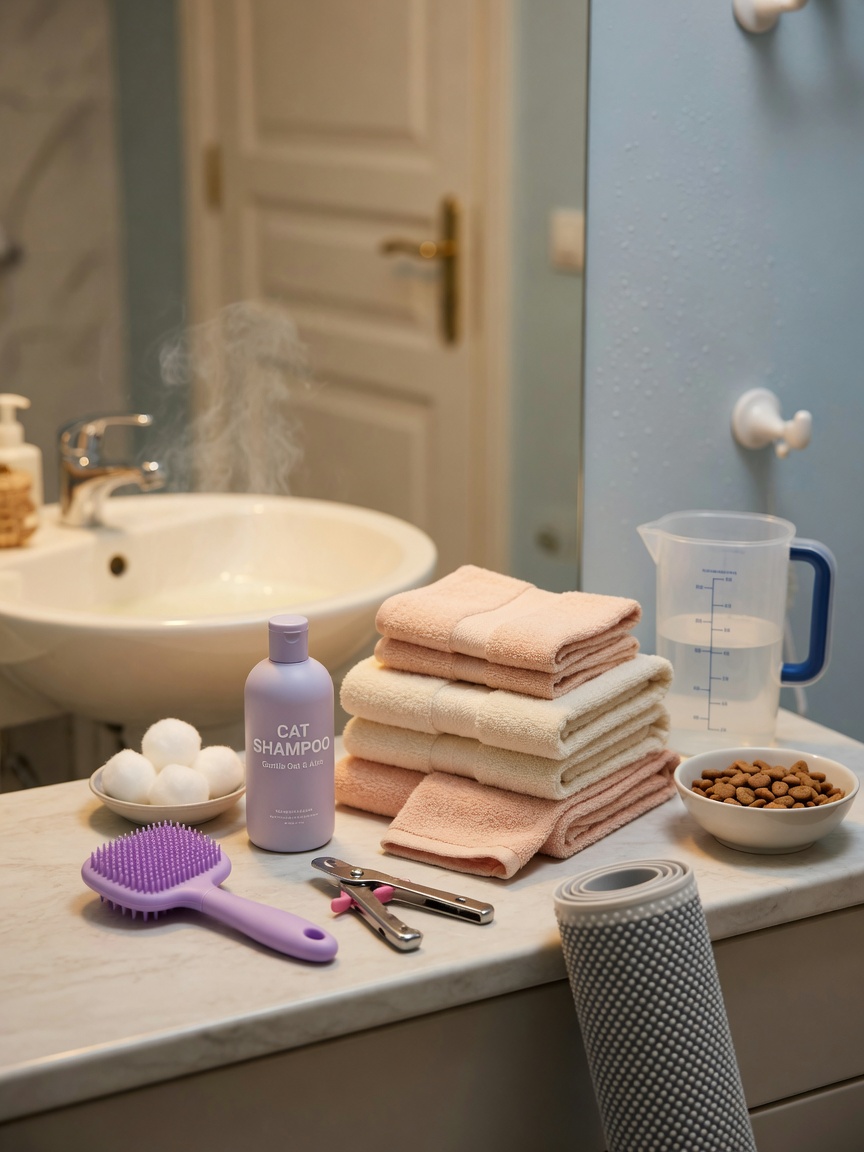
Organized cat bathing supplies on bathroom counter including brush, clippers, cat-specific shampoo, towels, cotton balls, jug, treats, and non-slip mat

Successful cat bathing begins long before water touches their fur. Start by trimming your cat's claws—yours and theirs—to minimise scratching risk. Brush your cat thoroughly to remove loose hair and mats, which become worse when wet.

Set up your bathing area carefully. A sink or bathtub works well for kittens and small cats, whilst larger cats may require a bathtub. Fill it with 5-10 centimetres of lukewarm water (test temperature with your elbow first). Have everything within arm's reach:

  • Cat-specific shampoo (never use human shampoo)
  • Multiple soft towels
  • A non-slip mat for the bottom of the basin
  • Cotton balls for ear protection
  • A plastic jug or soft spray hose for rinsing
  • Treats for positive reinforcement

Ensure the bathroom door is closed to prevent escape attempts.

Bathing Techniques That Work

Start by gently placing your cat in the water, speaking in calm, reassuring tones throughout. Let them adjust for a moment before proceeding. Wet their body gradually, avoiding the head initially—many cats find having water on their face particularly distressing.

Apply shampoo and work it gently into a lather, paying special attention to areas that tend to be oilier, such as the back and base of the tail. Massage rather than scrub to avoid damaging their sensitive skin.

When rinsing, use a jug or gentle spray to remove all shampoo residue thoroughly. Work from neck downwards, holding your cat securely but not too tightly. Insert cotton balls in the ears beforehand to prevent water entering the ear canal.

Carefully avoid the face; instead, use a damp flannel to gently wipe around the eyes and muzzle if needed.

Drying Your Cat
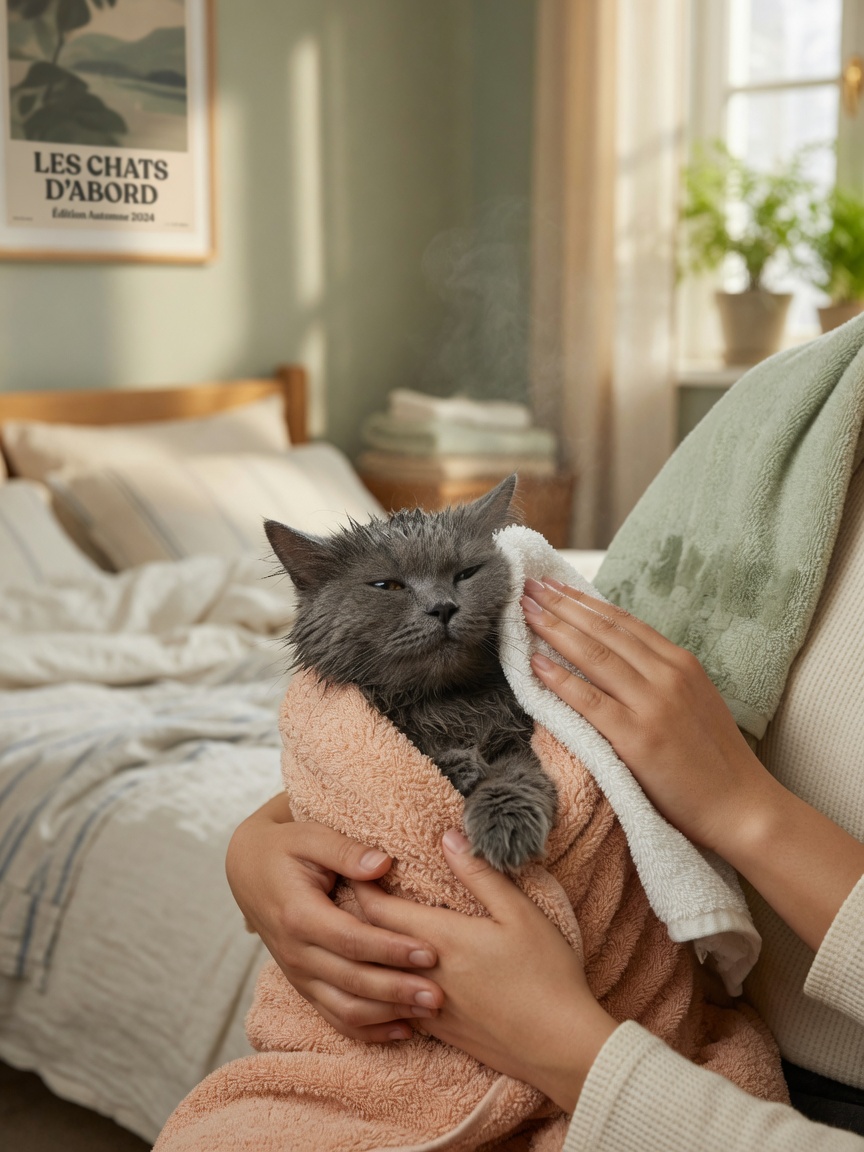
Wet grey cat being gently dried with a warm towel in a draft-free room, owner using gentle dabbing motions

Remove your cat immediately after bathing and wrap them in a warm towel. Rub gently to absorb excess water—rubbing vigorously can damage their coat and upset them further. Keep your cat in a warm, draft-free room whilst they finish drying naturally.

Most cats dislike hair dryers, but if you must use one, set it to the coolest, quietest setting and keep it at a safe distance. Introduce the sound gradually to avoid frightening your pet.

Key Takeaways for Successful Cat Bathing

  • Bathe only when genuinely necessary—cats are self-cleaning animals
  • Prepare thoroughly and gather supplies beforehand
  • Use lukewarm water and cat-specific shampoo exclusively
  • Work quickly but gently, maintaining calm throughout
  • Always protect eyes and ears from water and shampoo
  • Reward your cat with treats and praise to create positive associations
  • Consult your veterinarian if your cat requires frequent bathing due to skin conditions
#how to bathe your kitten or adult cat#cat health#feline nutrition#forpetshealthcare

Sources & further reading

This article is based on peer-reviewed veterinary research and reputable animal-health sources. Explore the underlying science in our Research Library.

Related articles

Can Cats Be Allergic to Dogs?

Many multi-pet households wonder whether their feline companions can develop allergies to their canine housemates. The simple answer is yes—cats can indeed be allergic to dogs, though it's far less common than you might think. Understanding the nature of these allergies and how to manage them is cru…

Read more →

What Vaccinations Does My Kitten Need?

Bringing a new kitten into your home is an exciting time, but it also comes with important responsibilities—and vaccination is one of the most critical decisions you'll make for their health. Kittens are particularly vulnerable to infectious diseases during their early weeks, which is why a proper v…

Read more →

What Can Cats Eat? Safe Human Foods & Toxic Ingredients

As a cat owner, you've probably wondered whether it's safe to share your meals with your feline friend. While cats are obligate carnivores with specific nutritional needs, several human foods can be offered as occasional treats—and just as importantly, many common household items can cause serious h…

Read more →

How to Kitten Proof Your Home

Bringing a new kitten into your home is an exciting time, but it also comes with significant responsibilities. Kittens are naturally curious, energetic, and prone to getting into trouble as they explore their new environment. Unlike adult cats, kittens lack the experience to recognise genuine danger…

Read more →

How to Care for a Sick Kitten

Caring for a sick kitten can be stressful, especially if you're a first-time cat parent. Young kittens are vulnerable to various illnesses, from viral infections to parasites, and recognising the signs early is crucial for their recovery. This guide will help you understand the essentials of kitten …

Read more →

Can Cats Have Blueberries? Is It Safe?

If you've ever wondered whether your feline friend can enjoy the same healthy snacks you do, you're not alone. Blueberries are a nutritional powerhouse for humans, packed with antioxidants and vitamins. But when it comes to our cats, the rules are quite different. The good news is that yes, cats can…

Read more →
Disclaimer:This article is for informational purposes only and does not constitute veterinary advice. Always consult a qualified veterinarian for your pet's health concerns.

Free newsletter

Pet health tips, straight to your inbox

Weekly science-backed advice for dog & cat owners. No spam, unsubscribe anytime.