
What Is Equine Gastric Ulcer Syndrome?
Equine Gastric Ulcer Syndrome (EGUS) is an umbrella term for ulceration affecting the stomach lining of horses. Research consistently shows that ulcers are highly prevalent, with some studies reporting rates of up to 90 per cent in racehorses and over 50 per cent in leisure horses. The European College of Equine Internal Medicine (ECEIM) has published consensus guidelines to help vets and owners better understand, diagnose, and manage this condition.
EGUS is divided into two distinct conditions based on where the ulceration occurs, as each type has different underlying causes and responds to different treatments.
ESGD vs EGGD: Understanding the Difference
Equine Squamous Gastric Disease (ESGD)
ESGD affects the upper, non-glandular (squamous) portion of the stomach. This area lacks the protective mucus layer found in the lower stomach and is particularly vulnerable to acid splashing up from below. ESGD is strongly linked to exercise, fasting, and diets high in non-structural carbohydrates. It is the more commonly diagnosed of the two types and responds well to omeprazole treatment.
Equine Glandular Gastric Disease (EGGD)
EGGD affects the lower, glandular region of the stomach, which is normally protected by mucus secretion. The mechanisms behind EGGD are less well understood than those for ESGD, and the condition tends to be more resistant to treatment. According to ECEIM consensus guidelines, EGGD may be associated with stress, Helicobacter-like bacteria, and disruption to the protective mucosal barrier. Sucralfate is often added to omeprazole therapy for EGGD cases to provide additional mucosal protection.
Risk Factors for Gastric Ulcers
Understanding what puts horses at risk is the first step in prevention. Key risk factors identified in the ECEIM guidelines include:
- High-intensity exercise, particularly fast work or frequent competition
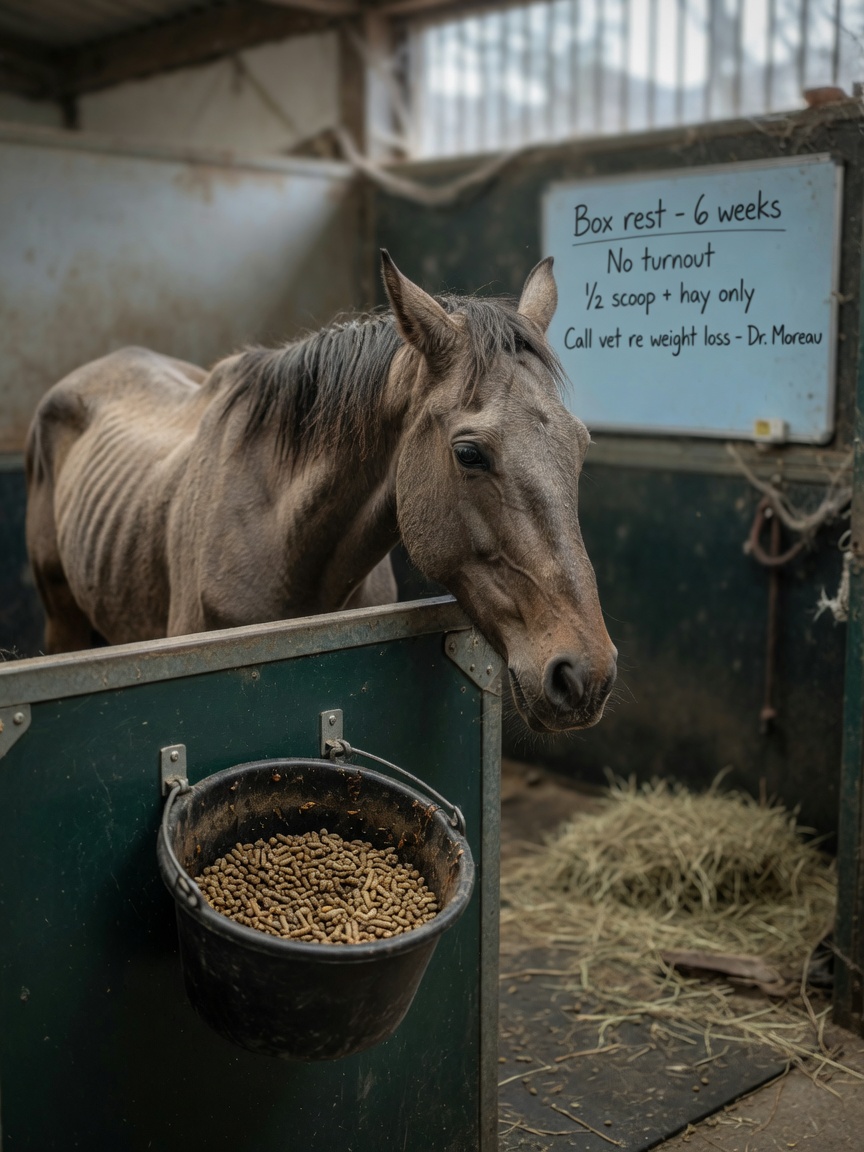
- Prolonged periods of box rest with limited forage access
- Diets high in concentrate feed and low in long-stem forage
- Irregular or infrequent feeding schedules
- Transport stress and frequent changes of environment
- Non-steroidal anti-inflammatory drug (NSAID) use, which can compromise gastric mucosal protection
Recognising the Signs
Gastric ulcers can be difficult to identify because the signs vary widely and are often non-specific. Common indicators include:
- Poor appetite or reluctance to finish feed
- Weight loss and poor body condition despite adequate feeding
- Dull coat and lack of condition
- Behavioural changes such as girthiness, reluctance to work, or general irritability
- Recurrent mild colic, especially after feeding or exercise
- Changes in performance or increased sensitivity along the flank
It is important to note that some horses with confirmed ulcers show no obvious outward signs at all, which underlines the value of gastroscopy in horses at risk.
Diagnosis: Gastroscopy Is the Gold Standard
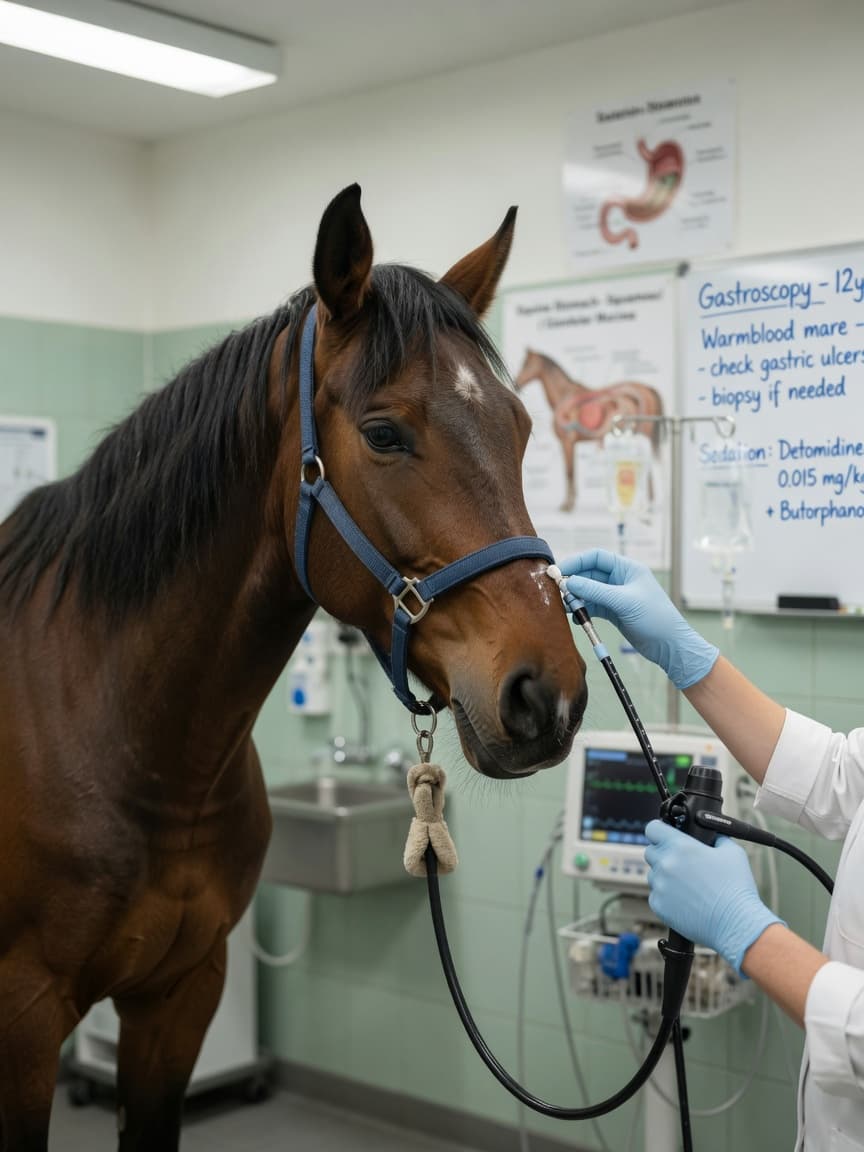
The only reliable way to diagnose EGUS and distinguish between ESGD and EGGD is via gastroscopy — a procedure in which a long endoscope is passed through the nostril and oesophagus into the stomach under standing sedation. The horse is typically fasted beforehand to allow clear visualisation of the stomach lining. Gastroscopy also enables grading of ulcer severity on a validated scale, which helps guide treatment intensity and duration.
Blood tests, response to omeprazole trials, and clinical signs alone cannot reliably confirm a diagnosis. If you suspect your horse has gastric ulcers, request a gastroscopy rather than simply beginning a treatment course without confirmation.
Treatment: GastroGard and UlcerGard
Omeprazole is the only EU-licensed pharmaceutical treatment for EGUS in horses. It is available in the EU under the brand names GastroGard (treatment dose) and UlcerGard (lower prevention dose), and works by suppressing acid production in the stomach. GastroGard is administered once daily as an oral paste and a standard treatment course typically lasts 28 days for ESGD, though longer courses may be needed for EGGD or severe cases.
Treatment should always be guided by gastroscopic findings and veterinary oversight. Re-scoping at the end of treatment is recommended to confirm healing before stopping medication, as clinical improvement does not always mean complete resolution.
Supportive Management: Sucralfate and Supplements
For EGGD cases, sucralfate — a mucosal protectant — is often prescribed alongside omeprazole. It forms a protective barrier over ulcerated tissue and may enhance healing in the glandular region. Sucralfate is a prescription veterinary medicine and should be used under veterinary direction.
Aloe vera products, such as those produced by Equine America, are popular supportive supplements and are anecdotally reported to help maintain gastric comfort. Whilst scientific evidence in horses is limited, aloe vera is widely used across Europe as an adjunct to veterinary treatment and forage-based feeding strategies.
Prevention: Feeding and Management Strategies
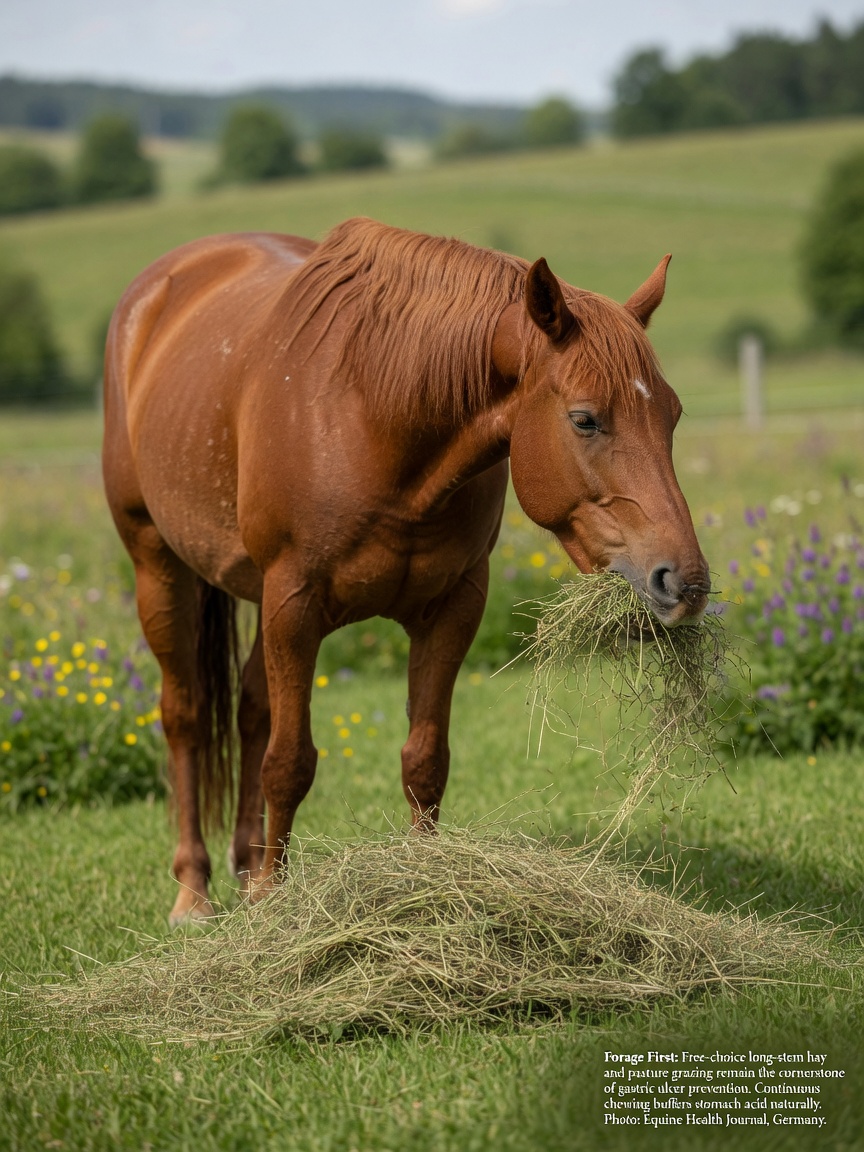
Prevention is central to long-term management, and the ECEIM guidelines place forage at the heart of a gastric-friendly feeding programme. Horses are trickle feeders by nature, producing stomach acid continuously regardless of whether food is present. When forage is absent, acid accumulates and damages the squamous mucosa. Practical prevention strategies include:
- Providing ad libitum or near-constant access to good-quality hay or haylage
- Feeding a small amount of hay before ridden work to create a physical buffer against acid splash
- Reducing or eliminating high-starch concentrate feeds where possible
- Using slow feeders or hay nets with small holes to extend eating time
- Minimising prolonged periods without food, particularly overnight
- Managing stress by maintaining consistent routines and social contact with other horses
Horses in intensive training programmes or those with a history of EGUS should be reassessed by gastroscopy periodically, particularly after significant changes in workload, diet, or management. Working closely with your vet to tailor a prevention plan to your individual horse's routine is the most effective long-term approach.