
What Is Horse Colic?
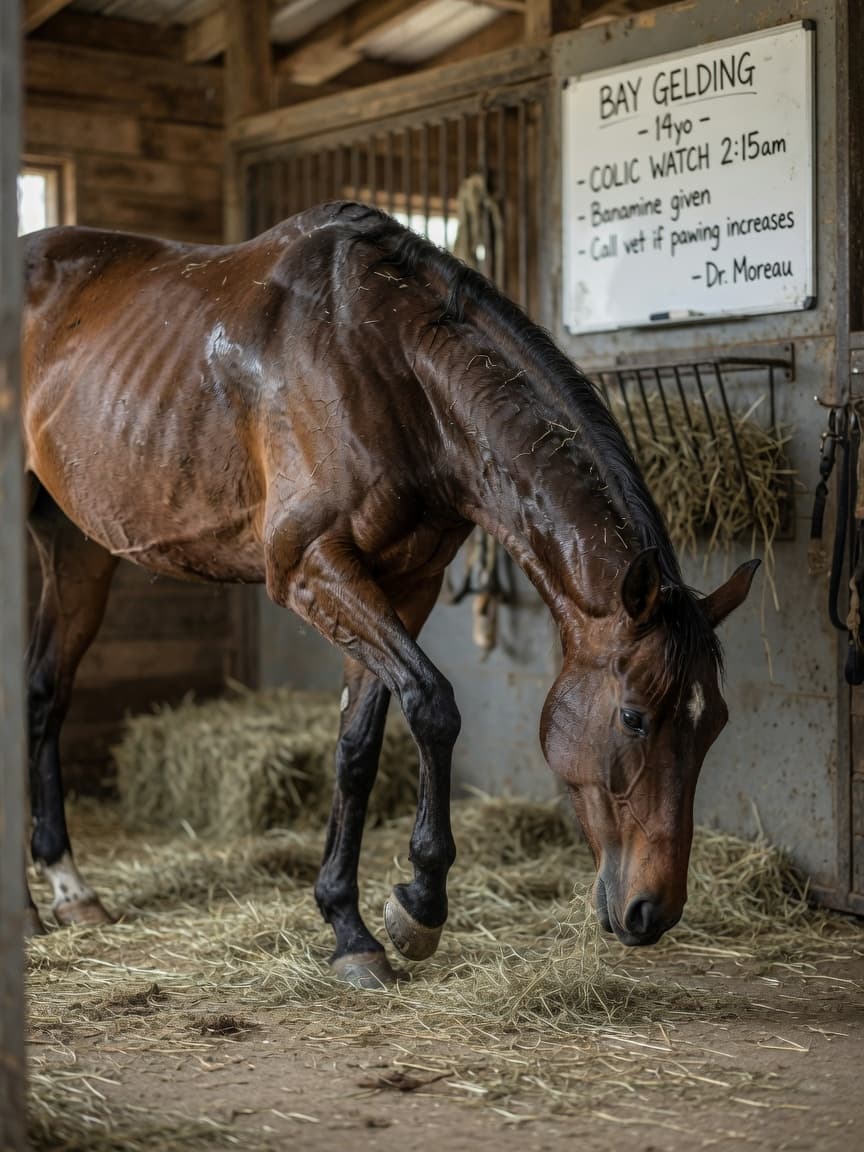
Colic is not a single disease but rather a term used to describe abdominal pain in horses. It is one of the leading causes of death in domesticated horses and constitutes a genuine veterinary emergency in many cases. Every horse owner should understand the different types of colic, how to spot them early, and what steps to take before the vet arrives.
Types of Horse Colic
Spasmodic Colic
Spasmodic colic is caused by increased gut motility, producing painful spasms in sections of the intestine. It is one of the most common and typically least severe forms. It can be triggered by stress, sudden changes in weather, or dietary changes. Horses often respond well to antispasmodic drugs administered by a vet and may recover within a few hours.
Impaction Colic
Impaction colic occurs when food material, sand, or other matter becomes lodged in the large intestine, most commonly at the pelvic flexure. Dehydration, poor dentition, and insufficient water intake are major contributing factors. This type requires veterinary intervention and is often treated with oral fluids via a nasogastric tube to soften and dislodge the blockage.
Displacement Colic
In displacement colic, a section of the large colon shifts from its normal position. The left dorsal displacement, sometimes called nephrosplenic entrapment, occurs when the colon becomes trapped between the spleen and the kidney. This may resolve with controlled exercise or rolling under sedation, but some cases require surgery.
Strangulation Colic
Strangulation colic is the most dangerous type. It involves a portion of the intestine becoming twisted (volvulus) or herniated, cutting off blood supply to that segment. This causes rapid tissue death and is life-threatening within hours. It is almost always a surgical emergency and carries a significant mortality risk even with prompt treatment.
Recognising the Signs of Colic
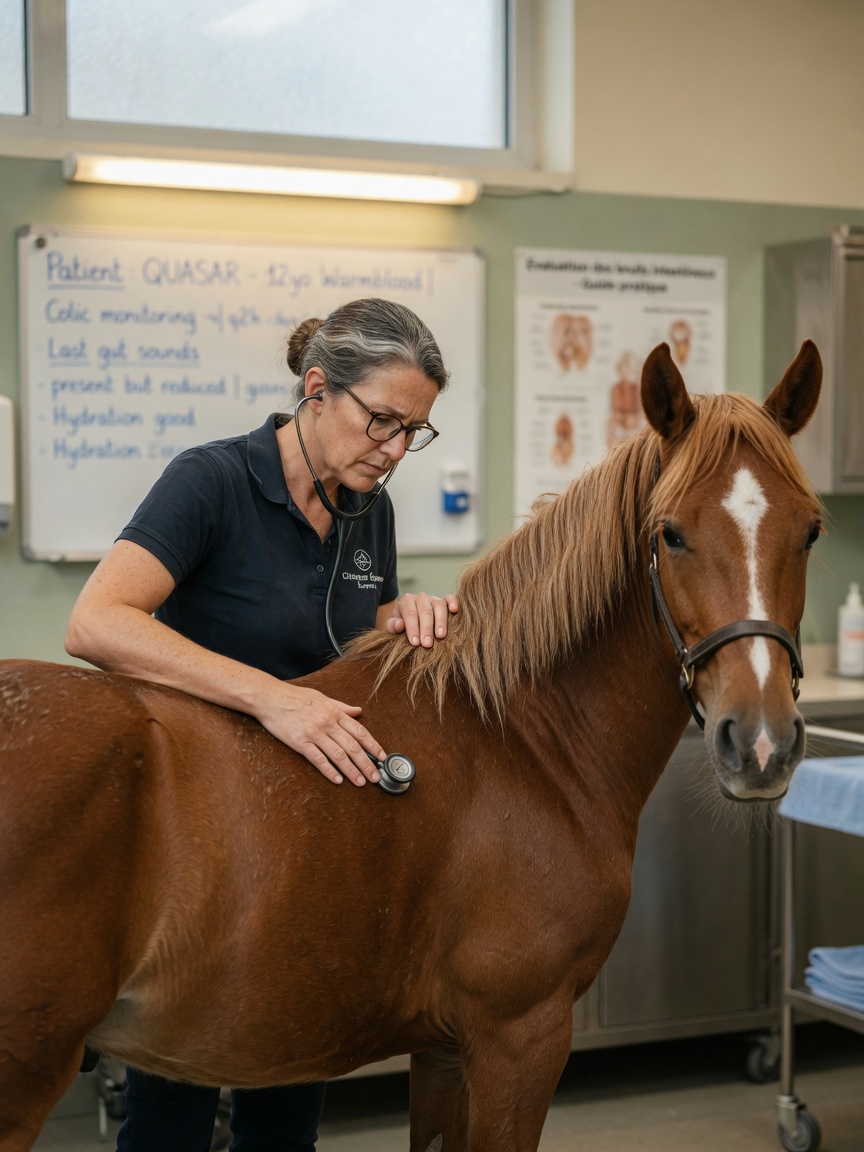
Early recognition dramatically improves outcomes. Common signs of colic include:
- Pawing repeatedly at the ground
- Looking around at or biting the flank
- Attempting to roll, or rolling and getting up repeatedly
- Sweating without exercise
- Refusal to eat or drink
- Lying down more than usual
- Reduced or absent gut sounds when listening to the abdomen
- Elevated heart rate (above 48 beats per minute at rest)
- Straining to pass droppings or passing very little
Absent gut sounds are a particularly concerning sign and should always prompt an immediate call to your vet.
Emergency Protocol: What to Do
If you suspect your horse has colic, act calmly and follow these steps:
- Remove all feed immediately but leave water available unless advised otherwise
- Check vital signs: heart rate, respiratory rate, gum colour, and gut sounds
- Call your vet without delay — do not wait to see if it resolves on its own
- Walk the horse gently if it is trying to throw itself down, to prevent injury
- Do not administer any medications unless directed by your vet, as some can mask symptoms and complicate diagnosis
- Keep the horse calm and away from other horses
The Nasogastric Tube
One of the first things your vet will often do is pass a nasogastric tube through the nostril and into the stomach. This serves two purposes: it relieves pressure from gas accumulation and allows the vet to administer fluids and liquid paraffin directly into the digestive tract to soften impactions. Unlike humans, horses cannot vomit, so stomach rupture is a real risk if gas or fluid builds up without being released. The nasogastric tube is therefore a critical diagnostic and therapeutic tool.
When Is Surgery Needed?
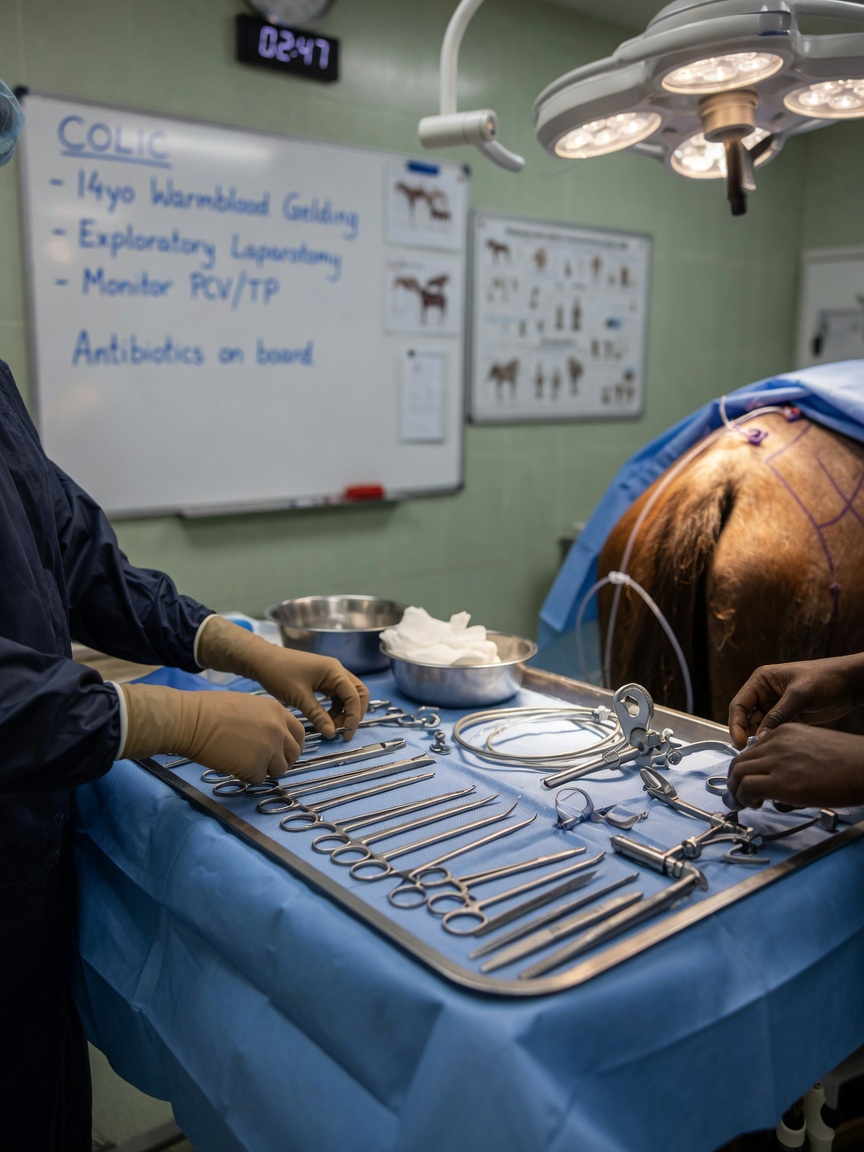
Not all colic cases require surgery, but certain indicators suggest that medical management alone will not be sufficient. Your vet may recommend surgical referral if:
- Pain is severe and unresponsive to analgesics
- Heart rate remains persistently elevated
- The horse shows signs of deteriorating cardiovascular status
- Rectal examination or ultrasound reveals a twist or displacement
- There is no improvement after several hours of medical treatment
Equine colic surgery carries a meaningful risk and is expensive, but for strangulation and some displacement cases it is the only option. Referral to an equine hospital should not be delayed when surgery is suspected, as time is critical.
Preventing Colic
Many colic episodes are preventable through good management practices. Key preventive measures include:
- Ensuring constant access to fresh, clean water — dehydration is a primary trigger of impaction colic
- Feeding a forage-based diet with ad-lib hay or haylage rather than large meals of concentrate
- Making all dietary changes gradually over a minimum of two weeks
- Maintaining a regular dental care programme, as poor dentition leads to incomplete chewing and impaction risk
- Following a consistent worming programme with faecal egg counts to manage parasite burden
- Providing regular, consistent exercise rather than alternating between inactivity and intense work
- Minimising stress, particularly when transporting or stabling horses in new environments
Colic can never be entirely eliminated, but attentive management and early veterinary intervention give your horse the best chance of a full recovery.