
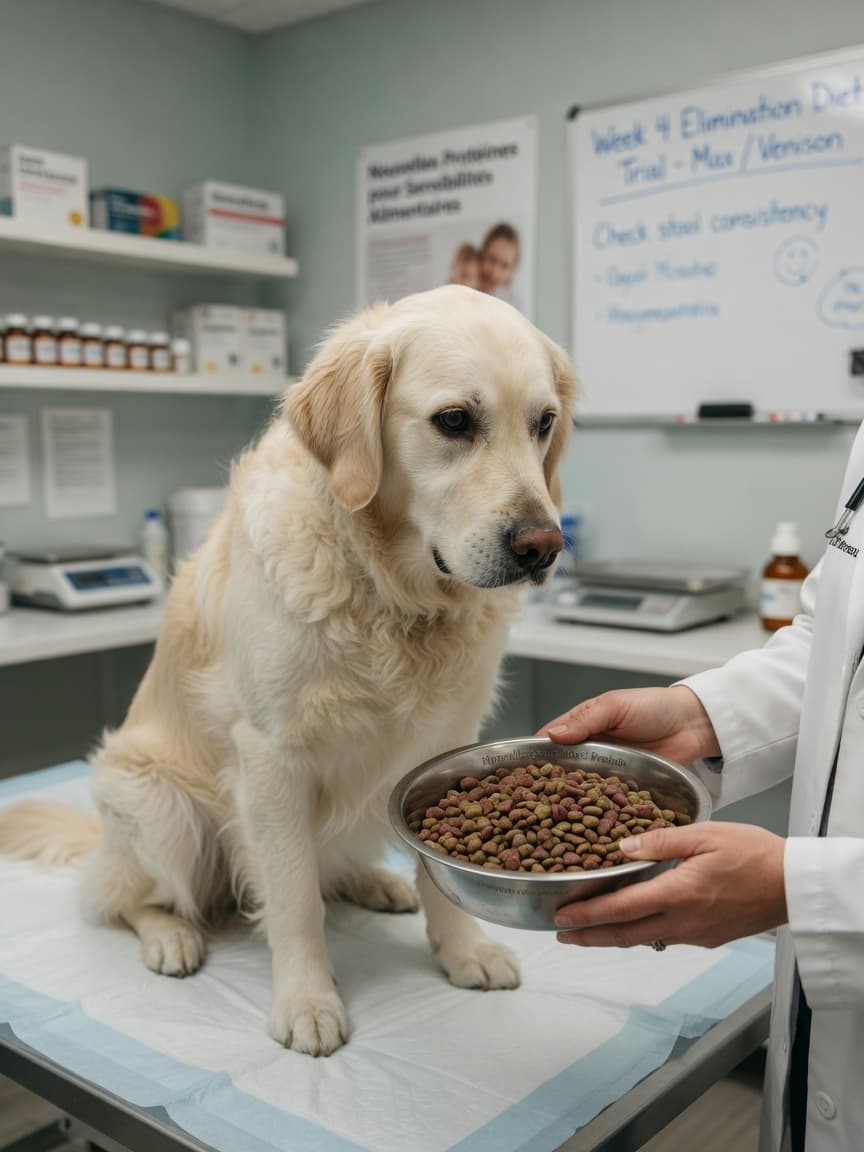
Food Allergy versus Food Intolerance: An Important Distinction
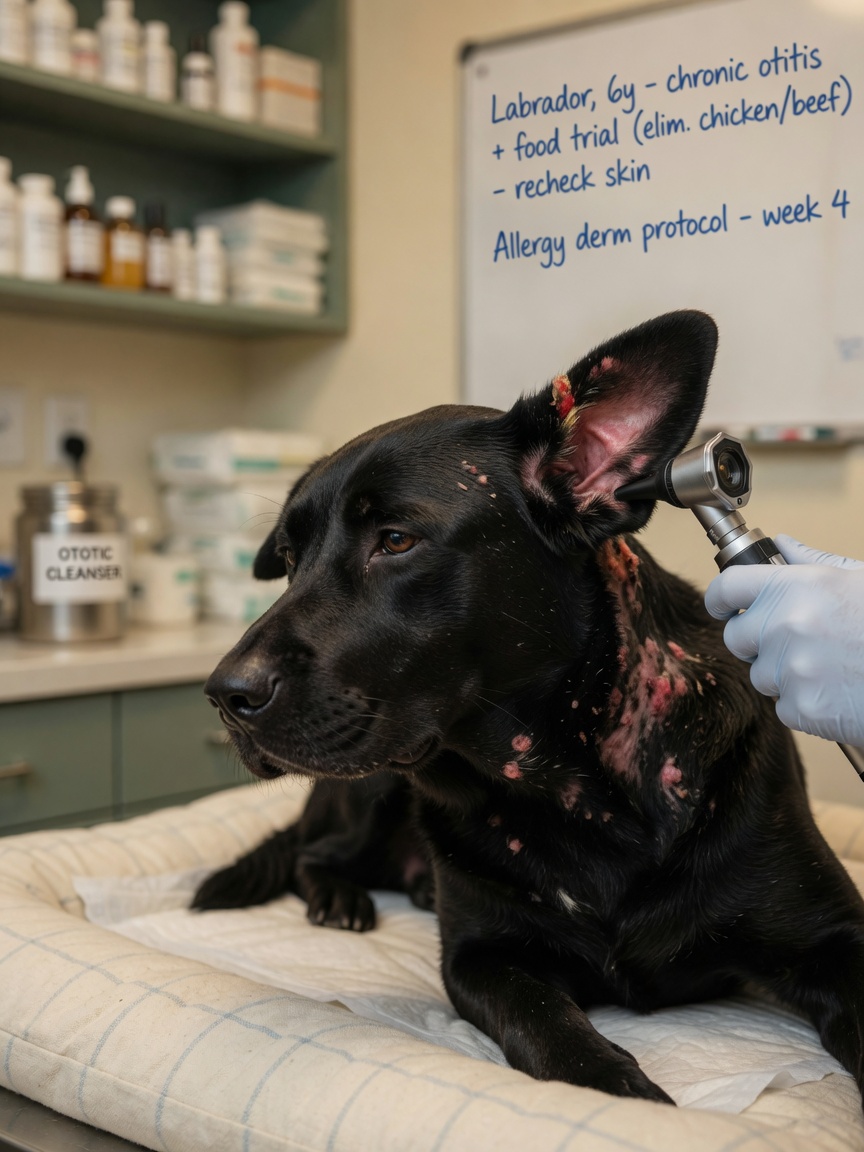
The term "hypoallergenic" is used liberally in the pet food market, but true food allergy in dogs is less common than many owners assume. Understanding the difference between allergy and intolerance matters because the underlying mechanisms, symptoms, and management approaches differ.
A true food allergy is an IgE-mediated immune response. The immune system identifies a food protein as a threat and produces IgE antibodies against it. On re-exposure, these antibodies trigger the release of histamine and other inflammatory mediators, causing acute symptoms such as hives, facial swelling, or even anaphylaxis. This type of immediate hypersensitivity reaction is genuinely rare in dogs.
Food intolerance is far more common and does not involve IgE antibodies. It describes an adverse reaction to a food ingredient that is not immunologically driven in the classic sense. Symptoms are typically chronic and gastrointestinal or dermatological in nature — loose stools, vomiting, chronic diarrhoea, flatulence, or itchy skin and recurrent ear infections. Despite not being a true allergy, food intolerance causes genuine distress and responds well to dietary management.
In clinical practice, both are often grouped under the umbrella of "adverse food reaction," and the management approach — an elimination diet trial — is the same for both.
The Most Common Food Allergens in Dogs
A common misconception is that grain-containing foods are the primary drivers of canine food reactions. The scientific evidence does not support this. Studies consistently show that proteins are the main culprits, not carbohydrates. Grains rarely cause adverse food reactions in dogs; the widespread shift to grain-free diets in response to perceived grain sensitivity has, in most cases, not been evidence-based.
The most frequently implicated ingredients in canine adverse food reactions are:
- Beef — the single most common allergen in dogs, likely because it has historically been the most widely used protein in commercial dog food
- Dairy products — including milk, cheese, and yoghurt
- Chicken — now one of the most common proteins in commercial foods and therefore a frequent sensitiser
- Wheat — one of the few grains genuinely associated with food reactions, though less common than the proteins listed above
- Egg, lamb, soy, and fish — less frequent but documented in the literature
An animal is sensitised to proteins it has been exposed to repeatedly, which is why novel proteins — those the dog has never eaten before — form the basis of elimination diet trials. A dog that has always eaten chicken- and beef-based foods cannot be tested for chicken and beef sensitivity using a diet that contains them.
The Elimination Diet Trial: The Only Reliable Diagnostic Tool
There is no blood test or skin test currently available that reliably diagnoses food allergy or intolerance in dogs. Serum IgE testing, saliva tests, hair analysis, and applied kinesiology tests marketed for this purpose have all been shown in controlled studies to produce results no better than chance. Positive results from these tests should not be used to guide dietary decisions. The only reliable method is a strict elimination diet trial.
Choosing the Right Diet for the Trial
An elimination diet must contain a protein source the dog has never previously consumed — a novel protein — or alternatively a hydrolysed protein diet, in which proteins have been broken into fragments too small to be recognised by the immune system.
Novel protein options include venison, rabbit, duck, kangaroo, crocodile, or horse — proteins unlikely to feature in commercial mainstream foods. The key is confirming the dog has not previously been exposed to the chosen protein. Hydrolysed diets such as Hills Prescription Diet z/d or Royal Canin Anallergenic are convenient alternatives, particularly for dogs where identifying a genuine novel protein is difficult.
Trial Duration
The elimination trial must last a minimum of eight weeks, and twelve weeks is preferred to capture the full range of possible response times. Skin symptoms in particular may take this long to resolve after the offending allergen is removed. Many owners abandon trials too early, concluding the diet "didn't work" when resolution was simply incomplete.
Strict Compliance: The Most Common Reason Trials Fail
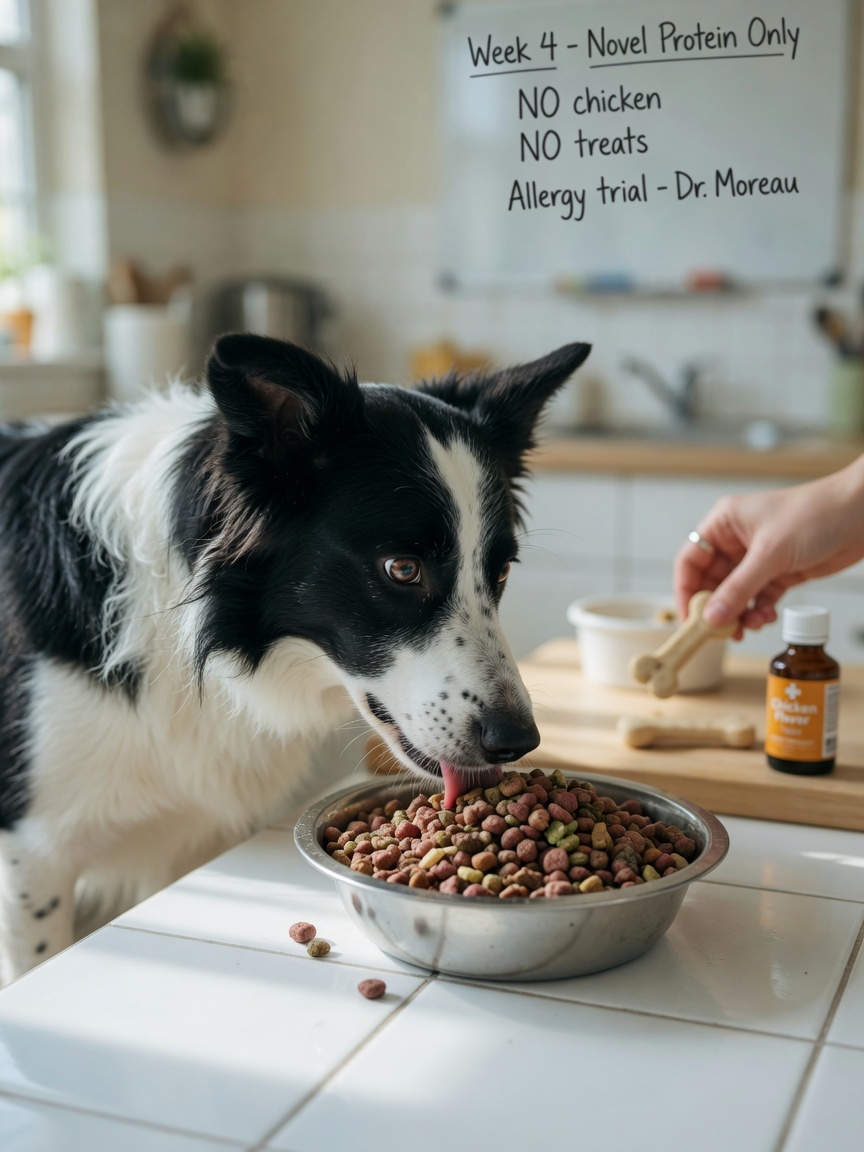
During the elimination trial, the dog must consume absolutely nothing except the test diet. This means:
- No treats — not even small pieces of regular food or commercial dog treats
- No flavoured medications — chewable tablets, flavoured parasite treatments, and flavoured toothpastes can all contain the allergen protein (chicken flavouring is ubiquitous)
- No access to other pets' food, dropped human food, or food scraps
- No table scraps from household members who may not be aware of the trial
A single exposure to the allergen during the trial period can reset the inflammatory response and invalidate weeks of progress. If strict compliance cannot be maintained at home, the trial will not produce a meaningful result.
Cross-Contamination in Commercial Foods
Even foods labelled as containing a single protein source can be cross-contaminated during manufacture. Studies using DNA analysis of commercial pet foods have found that many products contain unlabelled proteins — often chicken or beef — due to shared production lines or ingredient contamination at the supplier level. For dogs with genuine food sensitivity, a commercial novel protein food may fail the trial not because the protein is the problem, but because of unlabelled contamination. In such cases, a prescribed hydrolysed diet manufactured under tighter quality controls may be more reliable.
After the Trial: Provocation and Identification
If symptoms resolve during the elimination trial, the next step is provocation — reintroducing previous proteins one at a time to identify which specific ingredient triggers a response. This step is important for long-term management, as a dog that tolerates chicken can eat most commercial foods containing chicken without restriction. Without provocation, the dog must remain on the elimination diet permanently, which limits food choice and increases cost unnecessarily.
Written by Sarah Bennett