
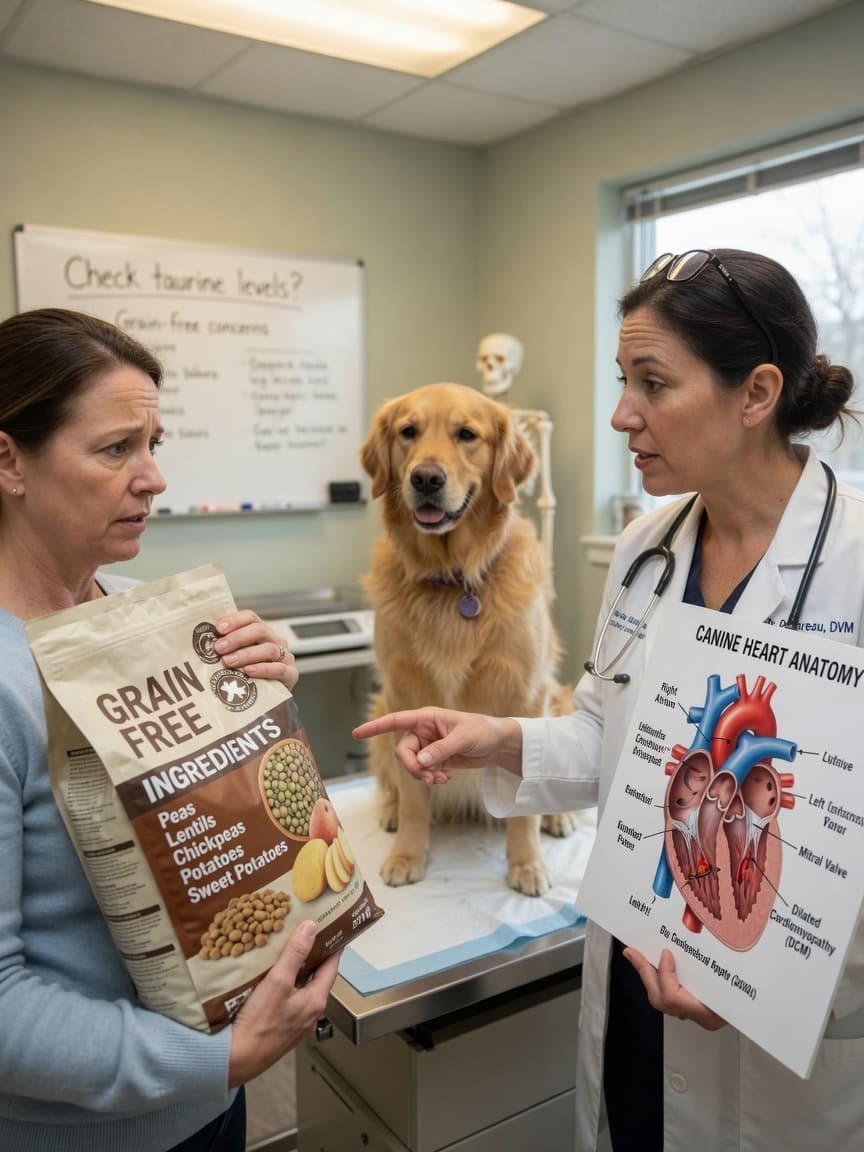
A Warning That Shook the Pet Food Industry
In July 2018, the US Food and Drug Administration issued an alert that stopped many dog owners mid-scoop: certain grain-free diets appeared to be linked to a serious and potentially fatal heart condition called dilated cardiomyopathy (DCM). The announcement triggered panic, confusion, and a wave of conflicting claims that has not fully resolved to this day. If your dog eats a grain-free diet, here is what the science actually says.
What Is Dilated Cardiomyopathy?

DCM is a disease in which the heart muscle weakens and the heart chambers enlarge, reducing the organ's ability to pump blood effectively. In advanced stages it leads to congestive heart failure. Certain breeds — Dobermanns, Great Danes, Irish Wolfhounds, Boxers — are genetically predisposed to DCM. What alarmed cardiologists and researchers from 2014 onwards was a cluster of DCM cases appearing in breeds not typically associated with the condition, including Golden Retrievers, Labrador Retrievers, and mixed-breed dogs.
What the FDA Investigation Found
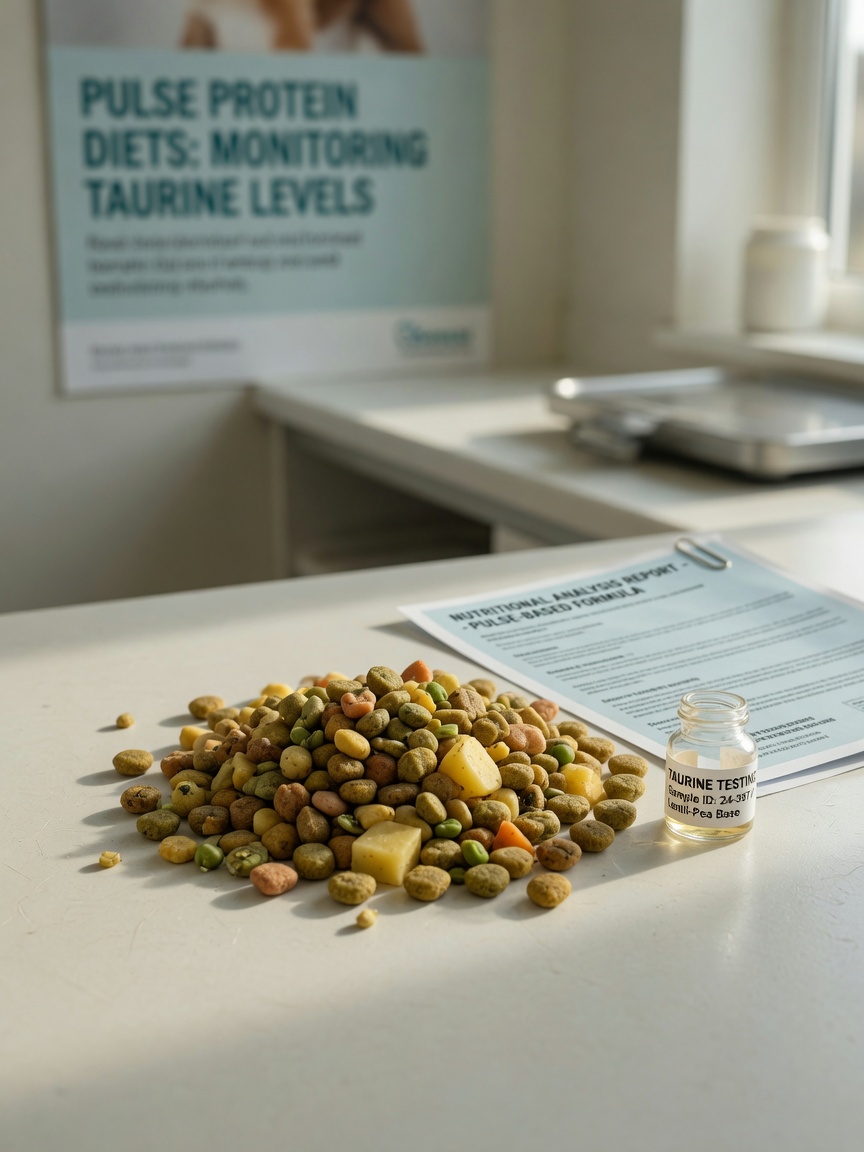
Between January 2014 and April 2019, the FDA received over 500 reports of DCM in dogs, a number considered significant given that DCM is a notifiable condition not always reported to regulators. The investigation identified a disproportionate association with diets containing peas, lentils, other legumes, and potatoes as primary ingredients — the same ingredients commonly used in grain-free formulations to replace wheat, corn, and rice.
Critically, the FDA was careful to say the investigation did not establish causation. Correlation between grain-free diets and DCM cases was observed; the mechanism was not confirmed. The agency noted that some affected dogs had low blood taurine levels, suggesting a possible taurine-related pathway, but others had normal taurine levels, indicating the picture is more complex.
The Taurine Hypothesis
Taurine is an amino acid essential for cardiac function. Dogs, unlike cats, can synthesise taurine from other amino acids — but research suggests that certain dietary combinations may impair this synthesis. High fibre content from legumes may reduce taurine absorption. Some protein sources may be lower in the precursor amino acids cysteine and methionine needed for taurine production. Whether legume-heavy grain-free diets specifically interfere with taurine metabolism remains an active area of research.
Where the Investigation Stands
The FDA published its most recent update in 2019 and has not issued a formal recall or conclusive finding. Research groups at several veterinary schools, including UC Davis, have published studies exploring the link. A 2020 study in the Journal of Veterinary Internal Medicine found that some grain-free-fed Golden Retrievers had lower plasma taurine and lower echocardiographic measures, but the evidence remained associational rather than causal.
What Critics of the Concern Say
A number of veterinary nutritionists and pet food researchers have argued that the FDA data is insufficient to draw firm conclusions. They point out that grain-free diets represent a large share of the premium pet food market, so finding cases among grain-free-fed dogs may partly reflect market penetration rather than specific dietary harm. Reporting bias — concerned owners of grain-free-fed dogs being more likely to report DCM to the FDA — may also have inflated the apparent association.
Practical Guidance for Dog Owners
Given the uncertainty, a pragmatic approach is warranted:
- Unless your dog has a confirmed grain allergy or intolerance (diagnosed by a vet, not assumed), there is no established benefit to grain-free diets
- Choose diets that list meat, poultry, or fish as the primary ingredients, not legumes or potatoes
- Look for foods that meet AAFCO or FEDIAF nutritional standards and have been tested through feeding trials rather than formulation alone
- If your dog is a large or giant breed, ask your vet about periodic taurine level testing
- If your dog is showing signs of reduced exercise tolerance, coughing, or laboured breathing, seek veterinary assessment promptly
- Do not make dramatic dietary changes without veterinary guidance
The Broader Lesson
The grain-free DCM story illustrates how quickly marketing-driven dietary trends can outpace the science. "Grain-free" became a proxy for "healthy" in the minds of many consumers, despite grains not being inherently harmful to dogs. Whole grains such as oats, brown rice, and barley provide digestible energy, B vitamins, and fibre, and have a long history of safe use in canine nutrition.
Your vet is your best guide to choosing a diet appropriate for your specific dog's breed, age, and health status. The ideal diet is not the trendiest one — it is the one backed by nutritional science and suited to your individual animal.