
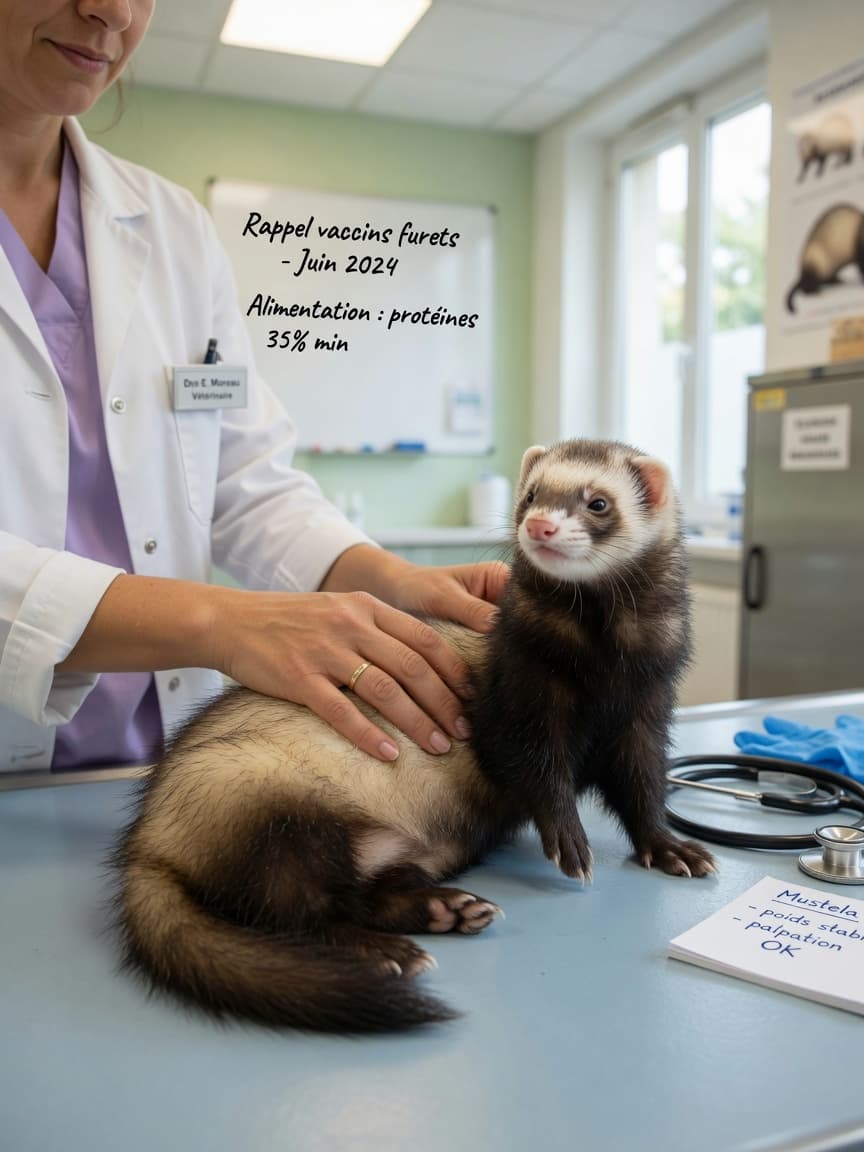
Ferrets in Europe: A Uniquely Demanding Pet
Ferrets (Mustela putorius furo) have a devoted following across Europe. They are intelligent, playful, highly social animals that form strong bonds with their owners and can provide years of entertaining and rewarding companionship. However, they are also one of the more medically complex small mammals kept as pets, with a number of health conditions that are either unique to or disproportionately common in domesticated ferrets. Any prospective owner should research their needs thoroughly before acquiring one.
Legal Status Across the EU
Ferret ownership is legal in the majority of EU member states, but the situation is not uniform and owners — particularly those who travel or relocate — should always verify local regulations.
In Portugal, ferrets are subject to restrictions under national wildlife legislation, as they are considered capable of becoming an invasive species if released or escaped into the wild. Prospective owners in Portugal should check current licensing requirements with the relevant national authority (ICNF — Instituto da Conservação da Natureza e das Florestas) before acquiring a ferret.
In Spain, regulations vary between autonomous communities. While ferrets are generally legal at the national level, some regional governments have introduced restrictions or require registration of ferrets. Owners in Spain should check with their comunidad autónoma's relevant environmental or agricultural authority. The concern in both countries relates to the ferret's potential impact on native wildlife — particularly rabbits and ground-nesting birds — should animals escape.
Across most of continental Europe — including Germany, France, the Netherlands, Belgium, Italy, and the Nordic countries — ferrets are legal to keep as pets without special licensing, though microchipping and registration are commonly required for pet travel under EU regulations.
Adrenal Gland Disease
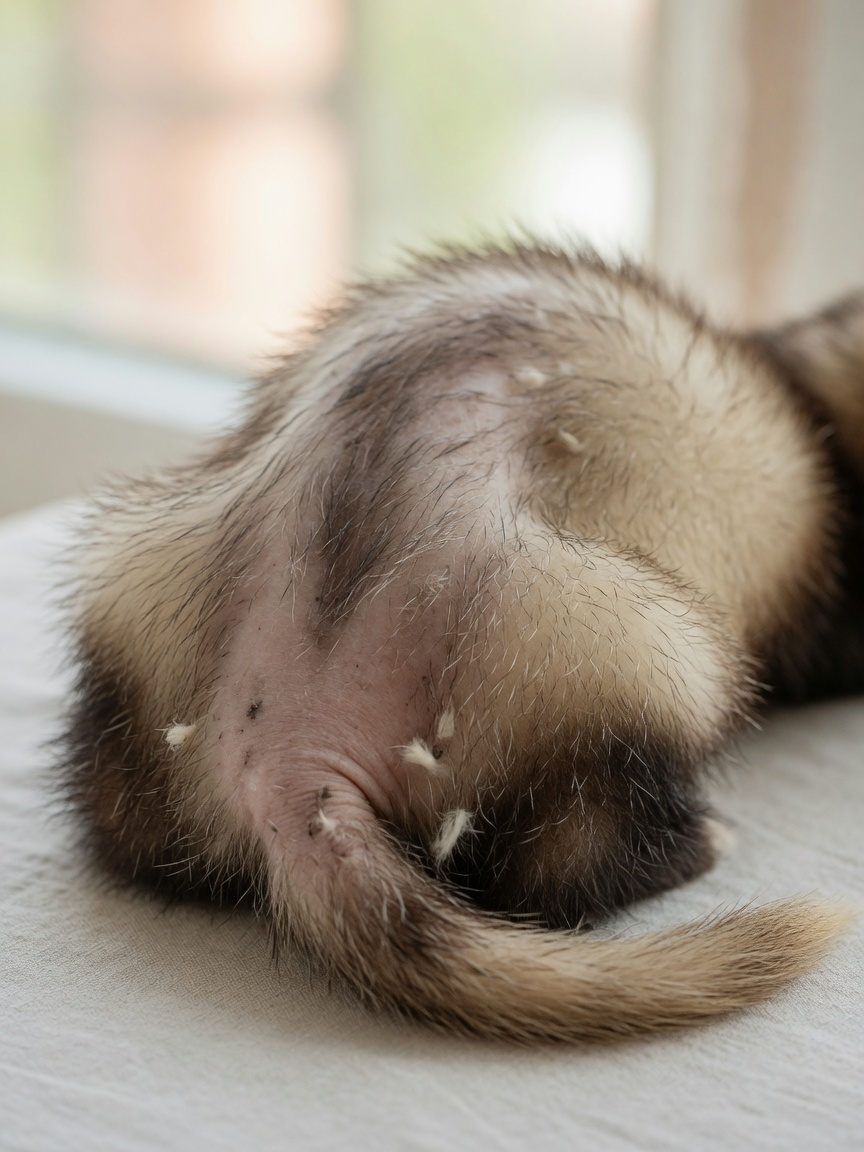
Adrenal gland disease is extraordinarily common in domestic ferrets, particularly those in Europe and North America. It is estimated that the majority of ferrets will develop some degree of adrenal disease during their lifetime, with most cases appearing from around three to four years of age. The condition involves the abnormal proliferation of cells in the adrenal glands, resulting in the overproduction of sex hormones — a situation distinct from Cushing's disease in dogs, though the terms are sometimes confused.
The clinical signs of adrenal disease vary depending on sex. In both males and females, the most common early sign is symmetrical hair loss (alopecia) typically beginning at the base of the tail and spreading up the back. Affected female ferrets may develop a swollen vulva — a sign that their owner may mistake for being in season — even if they are spayed. Males may develop urinary blockage due to prostatic tissue enlargement, which is a medical emergency requiring immediate veterinary attention. Other signs include muscle wasting, lethargy, and increased sexual behaviours.
The exact cause of the high prevalence of adrenal disease in European ferrets is debated, but early neutering — which is standard practice in the UK and much of Europe — is considered a significant contributing factor. Neutering at a young age eliminates the hormonal feedback that regulates the adrenal glands, which some researchers believe causes compensatory overactivity in the gland over time.
Treatment options include surgical removal of the affected gland (adrenalectomy), medical management with hormonal implants (GnRH agonist implants such as Suprelorin, which are available and commonly used in Europe), or a combination of both. Untreated adrenal disease is progressive and ultimately fatal, so early diagnosis — through clinical signs, ultrasound, and hormone assays — is important. Annual health check-ups with a vet experienced in ferrets are strongly recommended from two to three years of age.
Distemper Vaccination
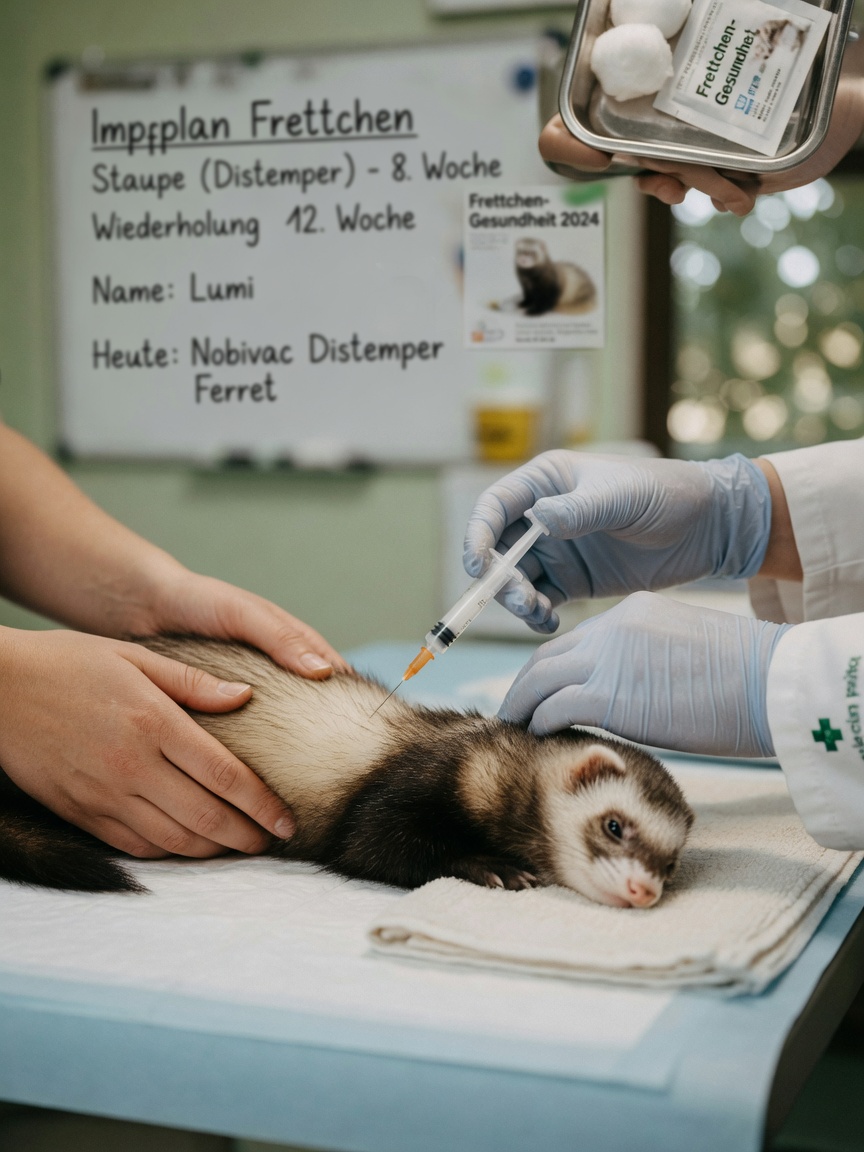
Distemper vaccination is compulsory or strongly recommended in most EU countries for domestic ferrets. Canine distemper virus (CDV) is almost universally fatal in ferrets — there is no treatment, and the disease progresses rapidly to severe neurological signs and death. The virus can be carried by dogs and wild mustelids, and ferrets can be exposed even without direct contact with other animals if the virus is brought in on clothing or equipment.
Ferrets should receive their primary distemper vaccination course as kits, typically at six to eight weeks and again at ten to twelve weeks, followed by annual boosters. Not all canine distemper vaccines are licensed for use in ferrets — your vet should use a product specifically authorised for ferret use. In many EU countries, the Purevax Ferret product range is commonly used.
Some countries also recommend vaccination against rabies for ferrets, particularly for animals that may travel between countries under EU pet travel regulations. Owners planning to travel with their ferret should check current entry requirements for each destination country.
Diet: Obligate Carnivores
Like cats, ferrets are obligate carnivores. They have a short, simple digestive tract designed to process animal protein and fat, and they have no nutritional requirement for carbohydrates. A diet high in plant-based ingredients or carbohydrates is inappropriate for ferrets and may contribute to the development of insulinoma — a tumour of the pancreatic islet cells — as well as gastrointestinal problems.
There are two main approaches to feeding ferrets appropriately: raw feeding or high-quality kibble. A raw diet — consisting of whole prey, raw meaty bones, and organ meat — most closely mirrors what ferrets would eat in the wild and provides excellent hydration and nutritional variety. However, it requires careful preparation to ensure nutritional completeness and safe handling to minimise bacterial contamination risk.
For owners who prefer kibble, a high-quality, high-meat ferret-specific or cat food with at least 30 to 40 per cent protein and 15 to 20 per cent fat from animal sources is appropriate. Check that the first several ingredients are named meats or meat meals. Avoid products where the first ingredients are cereals, maize, or plant proteins. Many ferret owners in Europe use Zooplus to source high-meat ferret foods and treats, with delivery available across the EU.
Ferrets have a very fast metabolism and a short gut transit time — typically three to four hours — which means they need to eat frequently. Free feeding (leaving food available at all times) is acceptable for ferrets on a dry kibble diet, as they tend to self-regulate. Fresh water must always be available.
Enrichment and Social Needs
Ferrets are highly social and intelligent animals that require substantial daily mental and physical stimulation. Without adequate enrichment, boredom can lead to destructive behaviour, stress, and deteriorating health. They should have a minimum of three to four hours of supervised free-roaming time outside their enclosure each day in a ferret-proofed area.
Ferrets are inherently playful and enjoy tunnels, hammocks, dig boxes, interactive toys, and the company of other ferrets. Most owners find that ferrets do best kept in pairs or small groups, as they are highly social and spend much of their time playing, grooming, and sleeping together. Introducing adult ferrets requires care and patience, but most ferrets eventually accept companions.
Enrichment items including ferret-safe hammocks, tunnel sets, and interactive toys are available through Zooplus. Providing a rotating variety of enrichment is preferable to leaving the same items permanently in the enclosure, as novelty sustains interest and engagement in these naturally curious animals.
Routine Health Checks and Vet Selection
Ferrets should see a vet experienced with exotic animals at least once a year, increasing to twice yearly for animals over three years of age given the higher prevalence of adrenal disease and insulinoma in older ferrets. Blood glucose monitoring is advisable for older ferrets, as insulinoma — like adrenal disease — is very common and benefits from early detection. Finding a vet with proven ferret experience before your animal becomes ill is an important step that every European ferret owner should prioritise.