
The Cat That Cannot Stop Reacting to Its Own Skin
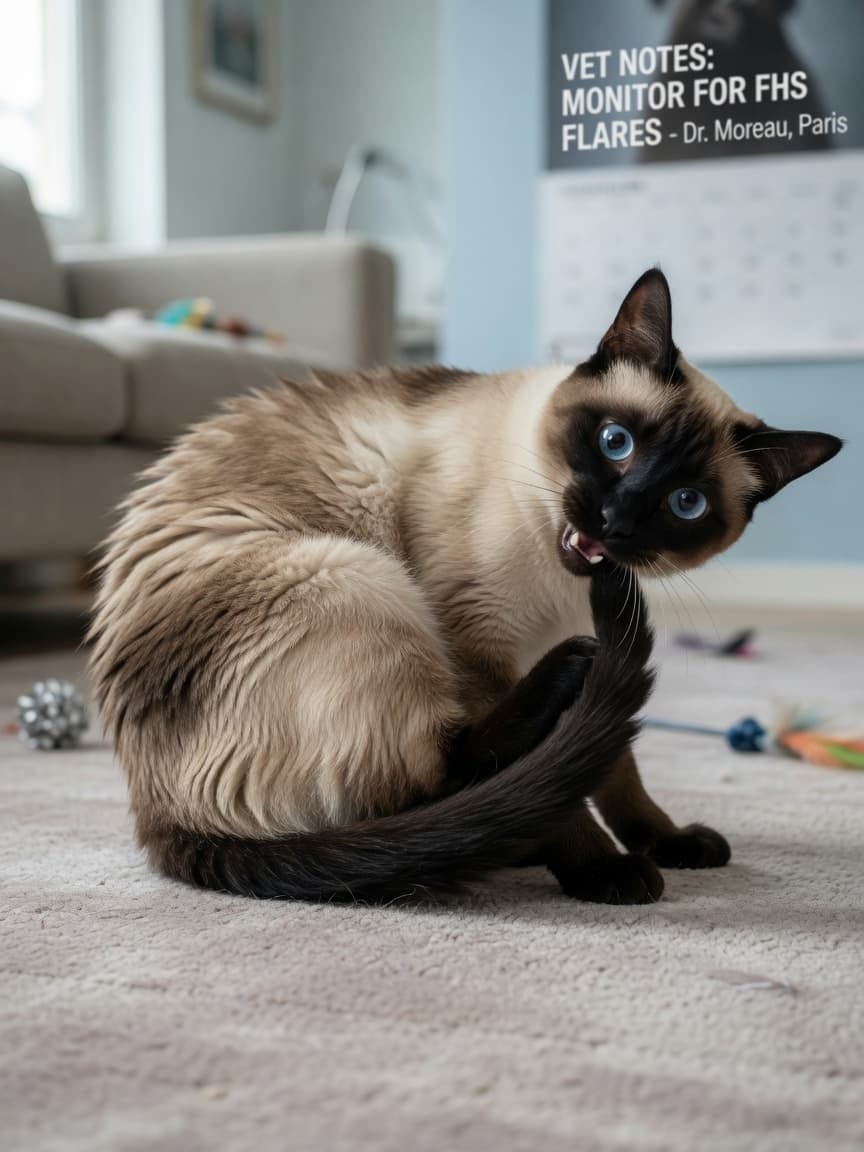
If you have watched a cat suddenly freeze, then spin to attack its own tail — or seen the skin along its back ripple and roll as though something is crawling beneath it — you may have witnessed Feline Hyperaesthesia Syndrome. Also known as rolling skin disease or twitchy cat disease, FHS is a puzzling and often distressing condition characterised by abnormal sensitivity along the dorsal (back) skin, episodic bizarre behaviours, and signs that can range from mildly odd to genuinely alarming. Despite being well documented in the veterinary literature, FHS remains incompletely understood, and affected cats are frequently misdiagnosed or managed poorly before an accurate diagnosis is reached.
What Defines Feline Hyperaesthesia Syndrome
FHS is characterised by episodes during which a cat shows one or more of the following signs:
- Rippling or rolling of the skin along the back, particularly the lumbar (lower back) region.
- Sudden, intense self-directed attention to the tail, flanks, or lower back — biting, licking, or scratching to the point of self-trauma.
- Dilated pupils during episodes.
- Vocalisation — sudden yowling or crying.
- Apparent hallucinations: the cat appears to track or react to stimuli that are not visible to the observer.
- Explosive, unpredictable aggression towards the owner or other animals.
- Running frantically, as though in flight from an unseen threat.
Episodes are typically brief — lasting seconds to a couple of minutes — but can occur multiple times daily in severely affected cats. Between episodes, affected cats often appear completely normal.
Proposed Causes and Triggers
FHS is best understood not as a single disease entity but as a syndrome — a cluster of signs that may arise from several distinct underlying mechanisms. Current thinking implicates three broad categories.
Dermatological Causes
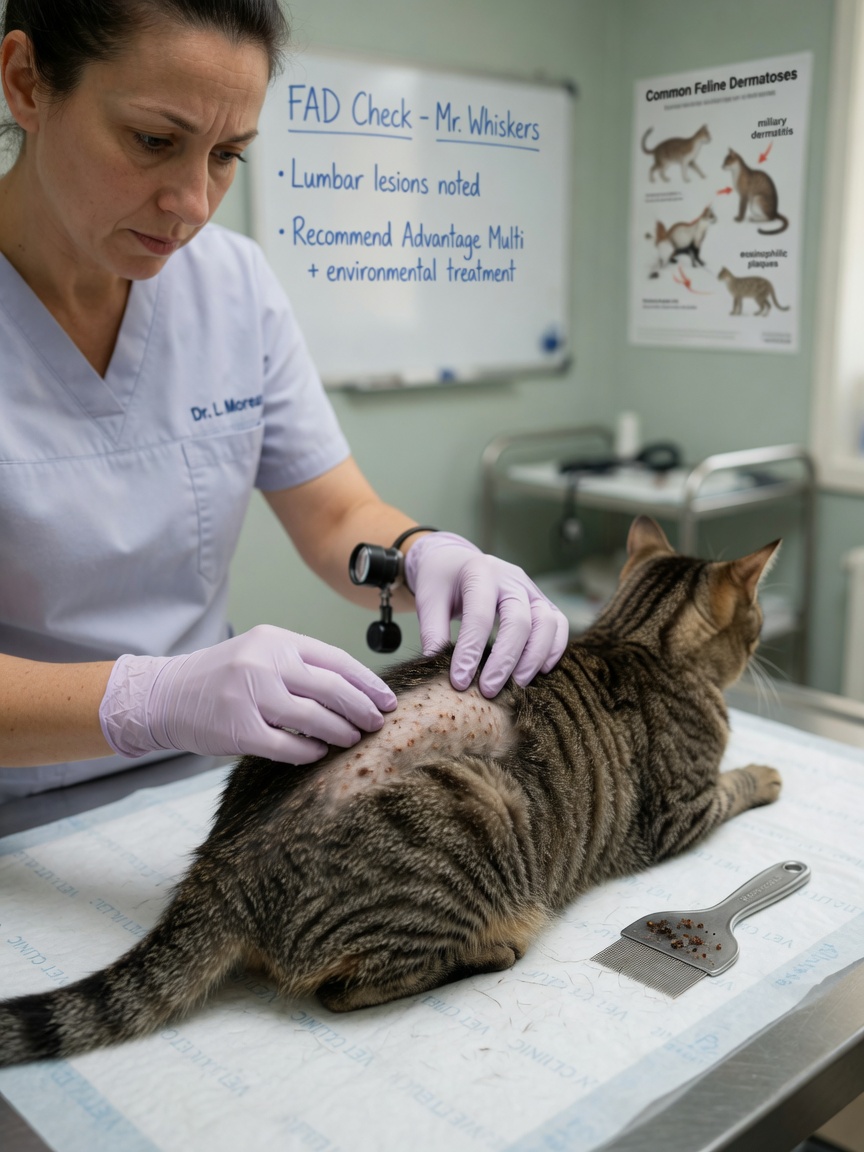
Skin disease is the most important starting point for investigation because it is both common and treatable. Ectoparasites — particularly fleas — can generate intense pruritus concentrated over the lumbar region. Flea allergy dermatitis, food hypersensitivity, and atopic dermatitis all cause dorsal skin irritation that can present with signs indistinguishable from FHS. Many cats referred with a presumed diagnosis of FHS turn out to have a primary skin disease that, when treated, resolves the syndrome entirely. This is why rigorous flea control, dietary trials, and dermatological evaluation are the non-negotiable first steps in any FHS workup.
Musculoskeletal and Spinal Causes
Pain arising from the spine, muscles, or nerve roots can cause neuropathic-type hypersensitivity of the overlying skin. Spinal arthritis, disc disease, or sacrococcygeal abnormalities may produce the lumbar skin sensitivity that owners observe. In some cats, thorough orthopaedic and neurological examination reveals painful spinal regions that, when treated, reduce or eliminate FHS signs. This category also includes abdominal pain referred to the dorsal skin surface.
Behavioural and Neurological Causes
In cats where dermatological and musculoskeletal causes have been excluded, FHS may represent a form of compulsive disorder, an impulse control disorder, or a focal seizure condition originating in the temporal lobe or limbic system. The episodic, stereotyped nature of the signs, their unpredictability, and their resistance to environmental modification in some cats all support a neurological basis in a subset of individuals. Stress and anxiety are recognised triggers: environmental changes, multi-cat conflict, or inadequate enrichment can precipitate or worsen episodes in susceptible cats.
Breeds with Apparent Predisposition
FHS appears to occur more commonly in Siamese, Burmese, Abyssinian, and Himalayan cats, suggesting a genetic component to vulnerability. However, the condition is seen in domestic shorthair and longhair cats of no specific breeding, so breed alone should not raise or lower the index of suspicion.
Diagnosis: Ruling Out Before Ruling In
There is no diagnostic test for FHS itself; it is a diagnosis of exclusion. A systematic approach should include:
- Complete physical and dermatological examination.
- Strict flea control for all pets in the household for a minimum of eight to twelve weeks, regardless of whether fleas are found on the cat.
- Food elimination trial using a hydrolysed or novel protein diet for eight to ten weeks.
- Skin cytology, skin scrapes, or biopsy where skin lesions are present.
- Neurological examination to identify any spinal pain or focal deficits.
- Spinal radiographs or MRI if musculoskeletal or neuropathic causes are suspected.
- Video recording of episodes to assist the veterinary team in characterising the behaviours accurately.
Management Strategies
Treatment is guided by the underlying cause identified through workup. In dermatological cases, addressing the primary skin disease is curative. Where musculoskeletal pain is the driver, appropriate analgesia and physical therapy can produce substantial improvement. For cats in whom a behavioural or seizure-based aetiology is suspected:
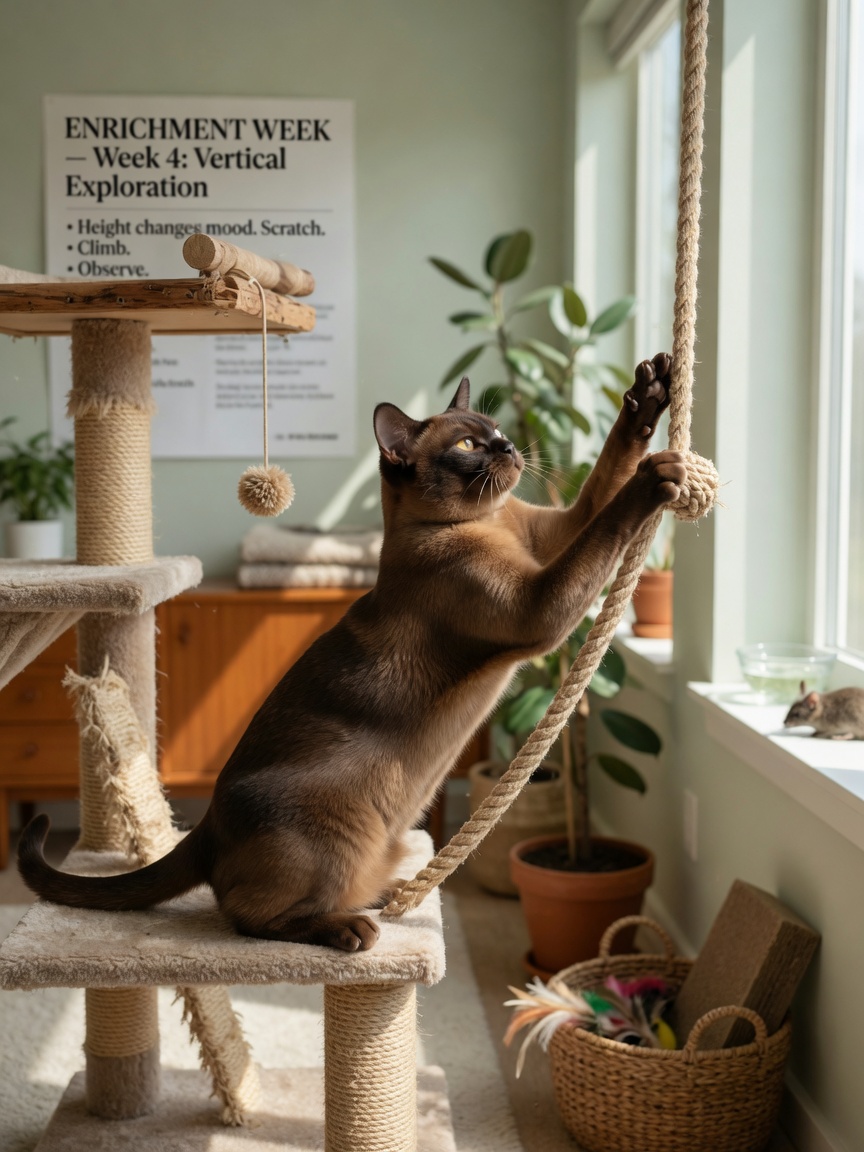
- Environmental enrichment: increased play, vertical space, and reduced inter-cat conflict frequently reduces episode frequency.
- Anxiolytic medication: gabapentin is increasingly used both for its anxiolytic effects and its relevance to neuropathic pain. Selective serotonin reuptake inhibitors (SSRIs) such as fluoxetine, or tricyclic antidepressants such as amitriptyline, have evidence for benefit in the behavioural subset.
- Anti-epileptic drugs: where focal seizure activity is strongly suspected, phenobarbital or levetiracetam may be trialled.
- Pheromone therapy and dietary supplements: synthetic feline pheromone products can reduce ambient anxiety, and certain supplements with evidence for calming effects may serve as useful adjuncts.
Always work with a veterinary surgeon and, ideally, a veterinary dermatologist or behaviourist to navigate diagnosis and treatment. FHS can be frustrating to manage, but cats in whom a clear cause is identified and addressed often improve substantially. Do not accept "stress" as the sole explanation without first completing a full dermatological exclusion — it is one of the most common and correctable missed diagnoses in FHS cases.
- Video episodes on a smartphone to show your vet — this is genuinely helpful for assessment.
- Implement strict, whole-household flea control as a first step, regardless of apparent flea burden.
- Request a food trial before accepting a behavioural diagnosis.
- Reduce stressors: conflict with other cats or dogs, sudden environmental changes, and lack of enrichment all merit attention.
- Be patient — response to treatment can take weeks to months, and some cats require combination approaches.