

Why the Environment Is Part of the Treatment
Feline idiopathic cystitis is a condition rooted in stress physiology, and for many cats, no amount of medication or dietary change will break the cycle of recurrence unless the living environment is also addressed. This is not a peripheral consideration or a nice-to-have afterthought — it is a central component of evidence-based management. The work of researchers including Dr Tony Buffington at Ohio State University established what is now known as the Multimodal Environmental Modification approach, or MEMO, as a primary intervention for FIC.
The premise is straightforward: cats with idiopathic cystitis have a heightened stress response. Their bladder symptoms are, in part, an expression of that stress. Reducing the perceived threat level in their environment reduces activation of the stress response, and this in turn reduces the frequency and severity of cystitis episodes. Clinical data from long-term follow-up of cats managed with environmental enrichment show significant reductions in disease recurrence compared to those receiving only medical treatment.
Understanding What Cats Actually Need
To enrich a cat's environment meaningfully, it helps to understand the core needs of domestic cats as a species. Despite thousands of years of cohabitation with humans, domestic cats retain the behavioural repertoire of a small solitary predator. They need to hunt (or simulate hunting), to have access to predictable resources, to feel safe from perceived threats, and to exercise some degree of control over their own movements and choices.
Many indoor domestic cats live in environments that fail to meet these needs adequately — not through neglect but simply through a mismatch between what the human home offers and what a cat is wired to require. Boredom, frustration, resource competition, and unpredictability all register as stressors, even when the cat appears physically comfortable.
Litter Tray Management
The litter tray situation in a household has a direct and measurable impact on urinary health. Cats that feel anxious about litter tray access — because trays are shared, positioned in exposed areas, cleaned infrequently, or physically inadequate — are more likely to experience urinary symptoms.
Key evidence-based recommendations include:
- Providing one tray per cat plus one additional in multi-cat households
- Placing trays in quiet, low-traffic areas where the cat is not vulnerable while using them
- Scooping at least once daily and full cleaning weekly
- Using large, uncovered trays — most commercial trays are too small for an adult cat
- Offering a variety of substrates if the cat's current preference is unknown, then standardising once a preference is established
- Avoiding strong chemical disinfectants that leave scent residue the cat finds aversive
In multi-cat households, it is important to ensure no single cat controls access to all the trays. Positioning trays in different rooms or on different floors prevents one dominant cat from blocking another's access.
Vertical Space and Safe Retreats
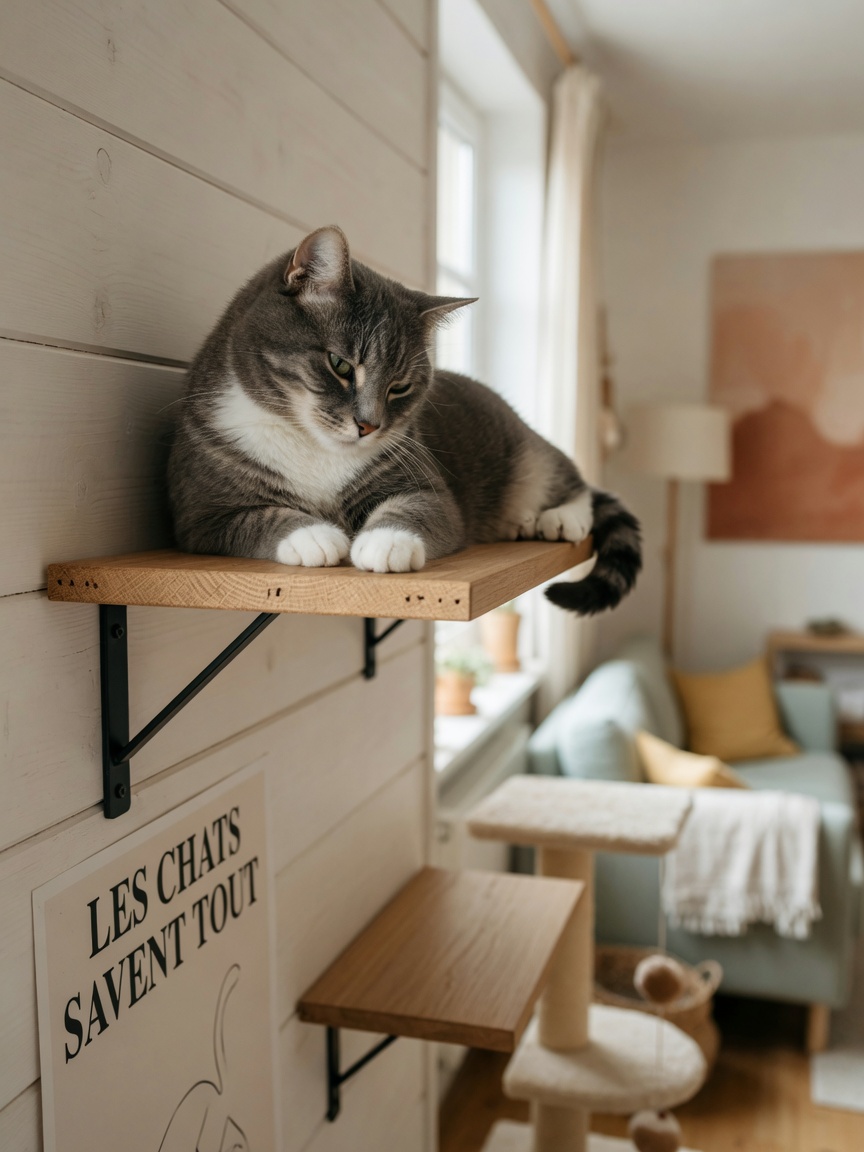
Cats instinctively seek elevated positions when they feel threatened — height provides both a physical advantage and a psychological sense of safety. A cat that has no access to elevated resting places in a home with other animals, children, or unpredictable activity will be in a state of low-level chronic stress that can directly contribute to FIC recurrence.
Providing cat trees, wall-mounted shelves, or cleared surfaces at height allows cats to remove themselves from perceived threats without conflict. This is particularly important in multi-cat households where one cat may bully or monitor another. Separate elevated spaces, ideally not visible from one another, give each cat a true retreat.
Hiding spots at ground level are equally important. Cardboard boxes, covered cat beds, and furniture gaps all serve as retreats. A cat that can choose to be seen or unseen has greater perceived control over its environment — and control is a key stress buffer in feline psychology.
Feeding and Drinking Stations
Resource competition around food and water is a common and underappreciated stressor in multi-cat homes. Even cats that appear to eat alongside each other without overt conflict may be experiencing significant anxiety if one cat is monitoring the other during feeding.
Separating feeding stations — ideally in different rooms — removes this source of chronic low-level stress. Water sources should be multiple and varied. Many cats prefer running water, and a pet water fountain can meaningfully increase voluntary water intake compared to a static bowl. Placing water bowls away from food bowls also increases intake, as cats have an instinctive tendency to avoid water near potential prey contamination.
Play and Predatory Outlet
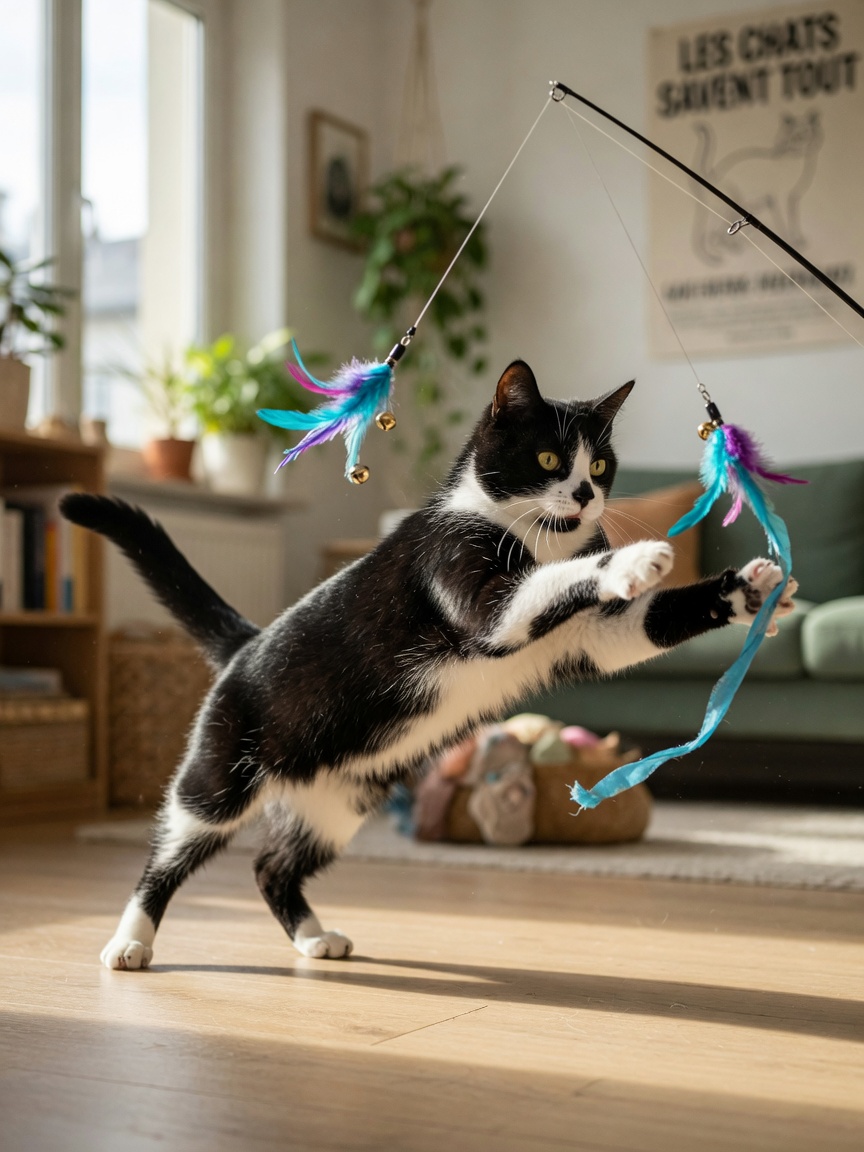
Interactive play that mimics the hunt sequence — stalk, chase, pounce, catch — is one of the most effective stress-reduction tools available and costs almost nothing to implement. Two fifteen-minute play sessions daily using a fishing rod-style toy provide meaningful physical exercise and mental stimulation, and allow the cat to discharge energy that might otherwise contribute to anxiety.
Puzzle feeders and food-dispensing toys that make the cat work for portions of their daily food ration provide further cognitive engagement. These are particularly valuable for cats that eat rapidly and spend the majority of their day inactive.
Predictability as a Stress Reducer
Cats that know what to expect are calmer cats. Regular feeding times, predictable owner routines, and consistent access to their key resources reduce the ambient uncertainty that the feline stress system has to process. When changes are unavoidable — visitors, renovations, new pets — creating a dedicated safe room stocked with the cat's resources and kept off-limits to disruption gives them a stable base from which to manage the change.
Feline facial pheromone products such as Feliway Classic and Feliway MultiCat release synthetic analogues of cats' natural cheek-rubbing pheromones, which signal environmental safety. The evidence for these products is mixed but positive enough in several controlled trials to make them a reasonable adjunct, particularly during periods of unavoidable environmental disruption.
Building a Long-Term Enrichment Plan
Environmental modification is not a one-time adjustment but an ongoing commitment to understanding and meeting your cat's needs as they evolve. An older cat may need lower-access furniture; a newly anxious cat may need temporary separation from housemates. Reviewing the environment at each veterinary visit, particularly if FIC episodes have returned, often reveals fixable factors that are easy to overlook when you are accustomed to how your home is arranged. The investment in getting this right pays dividends in fewer emergency vet visits, a calmer cat, and a significantly improved quality of life for everyone in the household.