
Dog Ear Infection: Types, Symptoms & Vet-Backed Treatment
Understanding Canine Ear Infections: Three Distinct Types
Ear infections in dogs — collectively called otitis — are classified by location. Otitis externa affects the outer ear canal and is by far the most common form, accounting for the vast majority of diagnosed cases. It is generally the easiest to treat and, when caught early, carries an excellent prognosis. Otitis media involves the middle ear, often developing when an outer ear infection is ignored or inadequately treated. It is more painful and may require more aggressive intervention, including oral antibiotics or even surgery. Otitis interna affects the inner ear and is the most serious form. Signs include severe loss of balance, head tilting to the affected side, involuntary eye movements (nystagmus), vomiting, and in advanced cases, permanent deafness. This stage requires immediate veterinary care.
Understanding which type your dog has is impossible without a proper veterinary examination, which is why home guessing games can be dangerous — what looks like a simple outer ear problem may already have spread deeper.
Common Causes of Ear Infections in Dogs
Research published in Veterinary Dermatology found that bacteria and yeast — often in combination — are responsible for the majority of canine ear infections. The most frequently isolated bacteria include Staphylococcus pseudintermedius, Pseudomonas aeruginosa, and Proteus mirabilis. The yeast Malassezia pachydermatis is also extremely common and produces a distinctive musty, dark discharge.
Allergies are often the underlying driver. Environmental allergies (atopy) and food allergies create an inflamed ear canal environment that is ripe for microbial overgrowth. Dogs with uncontrolled allergies frequently cycle in and out of ear infections until the allergy itself is addressed. Ear mites (Otodectes cynotis) are another cause, more common in puppies and dogs with outdoor exposure; they produce a dark, coffee-ground-like debris. Foreign bodies such as grass awns, moisture trapped after swimming, and hormonal disorders like hypothyroidism can all predispose a dog to ear infections as well. Excess moisture — whether from bathing, swimming, or high humidity — softens the ear canal lining and disrupts its natural defenses.
Recognizing the Symptoms
Dogs cannot tell you their ear hurts, but their behavior makes it obvious. The most common signs include:
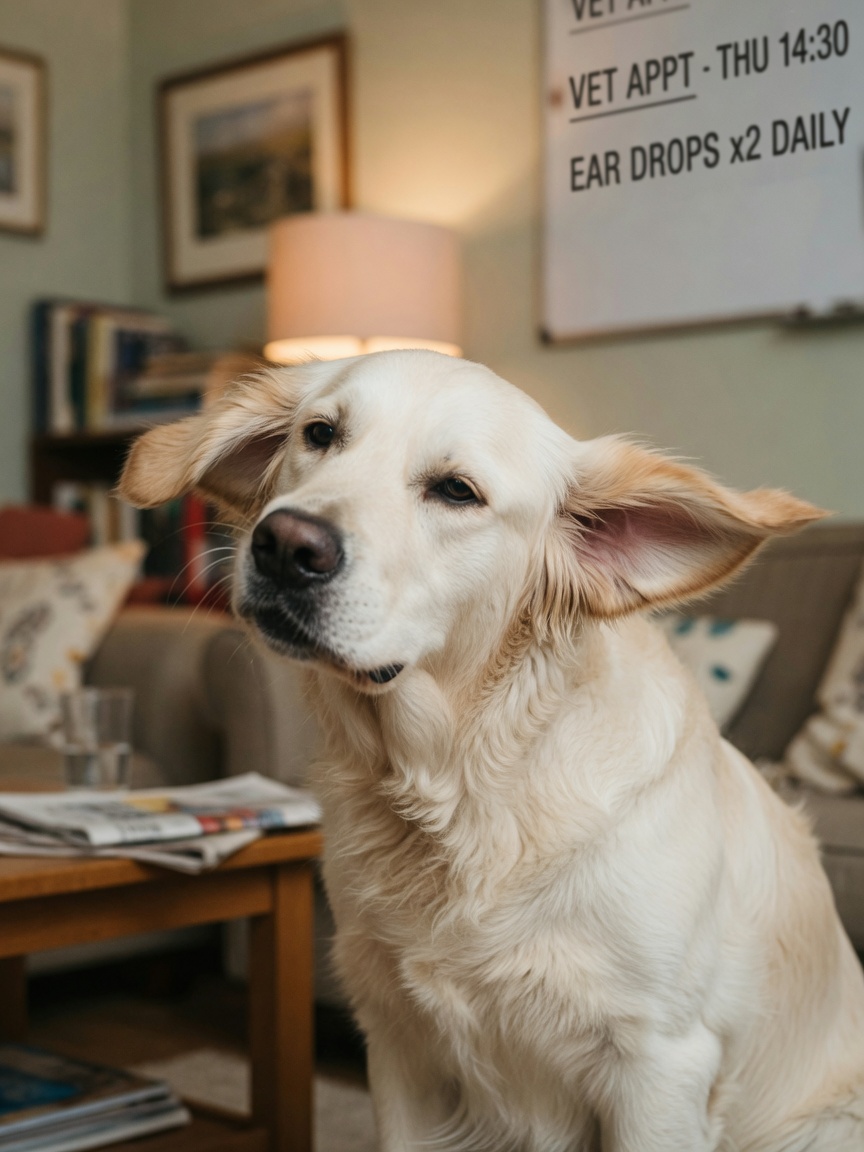
- Head shaking repeatedly, especially after waking up
- Scratching at the ear with a hind paw or rubbing the head against furniture
- Unpleasant odor coming from the ear — often yeasty, sour, or rotten
- Visible discharge that may be yellow, brown, black, or bloody
- Redness and swelling of the ear flap or visible canal opening
- Pain on touch — your dog may yelp or pull away when you touch the ear
- Tilting the head to one side (suggests deeper involvement)
- Loss of balance or coordination (emergency — seek care immediately)
How Vets Diagnose Ear Infections
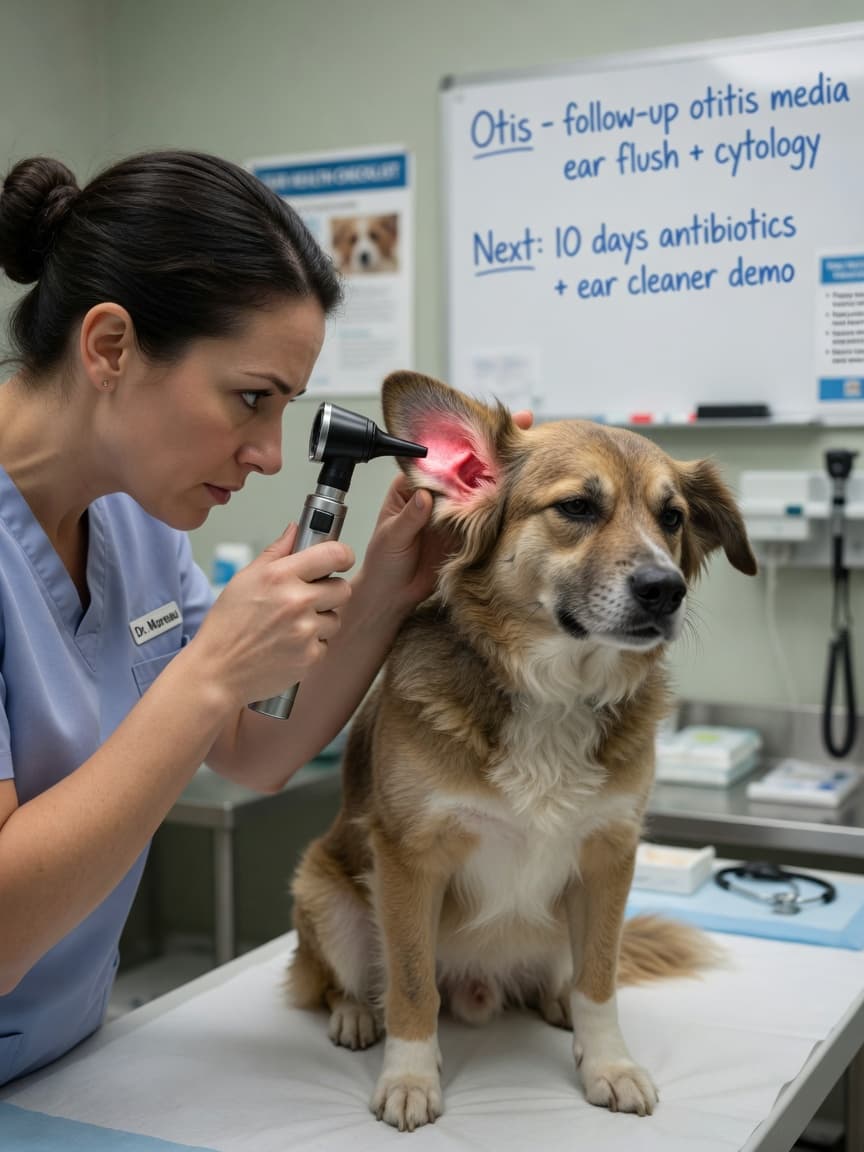
A proper diagnosis begins with an otoscopic examination of the ear canal, which allows the vet to visualize the eardrum and assess how deep the infection has spread. A sample of the ear discharge is typically taken and examined under a microscope — this cytology reveals whether bacteria or yeast (or both) are present and in what proportion. For chronic or treatment-resistant infections, the vet may send a culture sample to a laboratory to identify the exact organism and determine which antibiotics will be effective. If middle ear involvement is suspected, imaging such as X-rays or CT scans may be recommended.
Treatment Options
Treatment depends entirely on the type, severity, and underlying cause. For most cases of otitis externa, the vet will prescribe a topical medication — usually an ear drop containing an antibiotic (to combat bacteria), an antifungal (to address yeast), and a corticosteroid (to reduce inflammation). These are typically applied once or twice daily for 7–14 days. Severe infections, or those involving the middle ear, may require systemic oral antibiotics for four to eight weeks.
If an underlying allergy is identified, managing that condition is critical to preventing recurrence. A dog that returns to the vet every two months with an ear infection almost certainly has an unaddressed allergic condition. Your vet may recommend an elimination diet trial, allergy testing, or prescription medications like oclacitinib or lokivetmab to control the inflammatory response. If ear mites are the culprit, a single dose of a mite-specific treatment (such as selamectin or milbemycin) is usually curative.
How to Clean Your Dog's Ears at Home
Ear cleaning is an important part of prevention and routine care, but it must be done correctly to avoid pushing debris deeper or damaging the eardrum. Use a veterinarian-approved ear cleaning solution — never hydrogen peroxide, vinegar, or rubbing alcohol. Tilt your dog's head so the affected ear faces up, fill the ear canal generously with the solution, then gently massage the base of the ear for 20–30 seconds — you should hear a squelching sound as the liquid loosens debris. Allow your dog to shake their head (stand back!), then use a cotton ball to wipe out the visible debris from the outer canal. Never insert cotton swabs into the canal. Clean ears only as often as your vet recommends; over-cleaning can irritate the canal lining.
Breeds Prone to Ear Infections
Any dog can develop an ear infection, but certain breeds are anatomically predisposed. Dogs with long, floppy ears — Cocker Spaniels, Basset Hounds, Beagles, and Golden Retrievers — have reduced airflow in the ear canal, creating a warm, moist environment where microbes thrive. Dogs with narrow or hairy ear canals, like Poodles and Schnauzers, also face elevated risk. Water-loving breeds such as Labrador Retrievers and Portuguese Water Dogs are particularly susceptible to moisture-related infections.
Prevention Strategies
Prevention revolves around controlling moisture, addressing allergies, and maintaining routine ear hygiene. Dry your dog's ears thoroughly after every bath or swimming session. Schedule regular ear checks — monthly is ideal for high-risk breeds. Feed a high-quality diet appropriate for your dog's allergy status. Keep floppy ears gently lifted to allow air circulation. And schedule annual (or twice-yearly for prone breeds) veterinary ear exams, even if no symptoms are present.
Recommended Ear Care Products
Regular ear cleaning with a quality veterinary-grade solution is one of the best preventive measures available. Zooplus stocks a wide range of ear cleaning solutions, wipes, and ear care accessories approved for routine canine ear hygiene. Browse their selection to find a product suited to your dog's needs.
Key Takeaways
- Ear infections range from mild (otitis externa) to severe (otitis interna) — accurate diagnosis by a vet is essential.
- Bacteria and yeast are the most common culprits, often triggered by underlying allergies or moisture accumulation.
- Head shaking, odor, discharge, and scratching are the hallmark signs that warrant a vet visit.
- Correct ear cleaning technique — using a vet-approved solution and avoiding cotton swabs in the canal — is crucial for both treatment and prevention.
- Floppy-eared and water-loving breeds require more frequent ear monitoring.
References
- Saridomichelakis MN, et al. "Aetiology of canine otitis externa: a retrospective study of 100 cases." Vet Dermatol. 2007;18(5):341-7. PMID: 17845734
- Cole LK. "Otoscopic evaluation of the ear canal." Vet Clin North Am Small Anim Pract. 2004;34(2):397-410. PMID: 15032126