
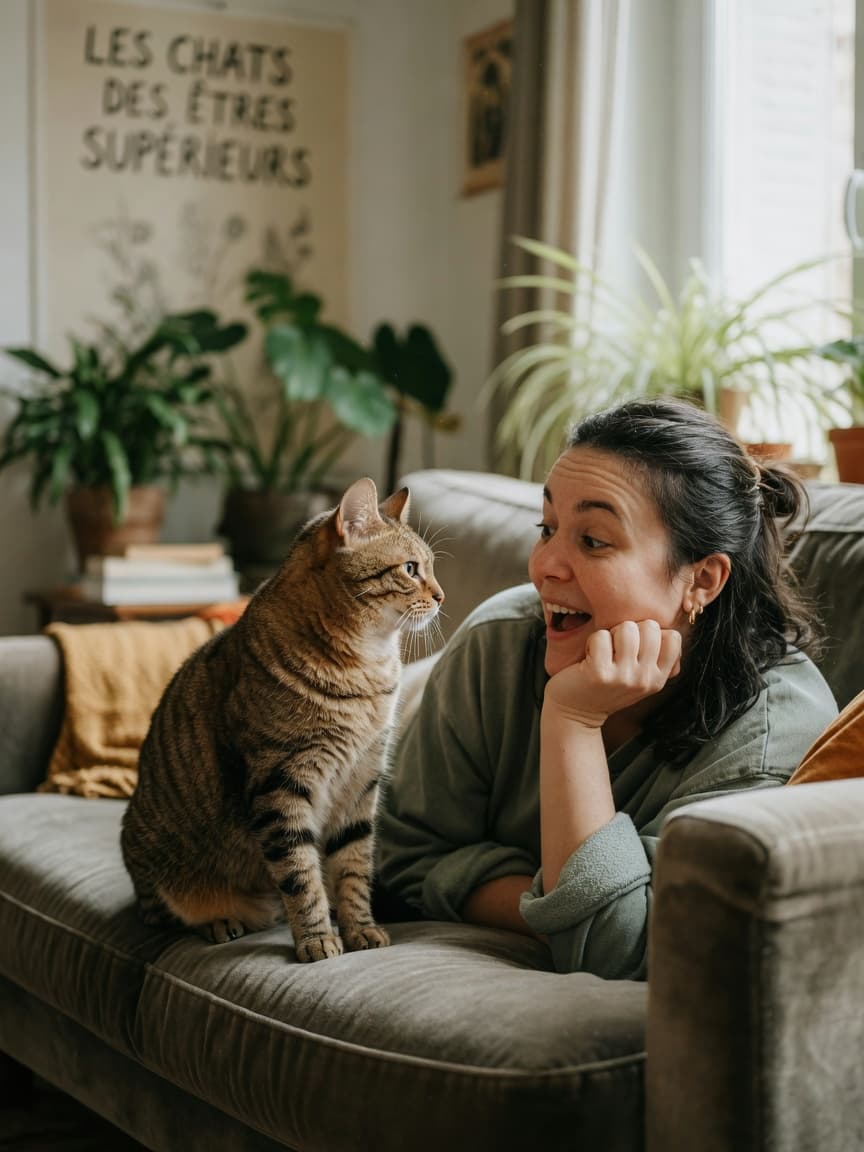
Have you ever caught yourself meowing back at your cat, only to feel a bit silly afterwards? You're certainly not alone. Many cat owners engage in this peculiar form of feline communication, but questions naturally arise: Are we actually communicating with our cats, or are we just making amusing sounds? More importantly, could this behaviour be confusing or even harmful to our beloved feline companions? The answer, according to feline behaviour experts, is far more nuanced than a simple yes or no.
What Your Cat Actually Hears When You Meow
When you meow at your cat, you're essentially attempting to enter their world of vocalisations. However, here's the fascinating part: cats don't actually meow at each other in the way they meow at humans. Adult cats primarily use meowing to communicate with people, not with other felines. In the cat world, body language, scent marking, and chirps are far more prevalent forms of communication.
Research suggests that cats have learned meowing as a means to manipulate and communicate with their human caregivers. Your cat meows at you because they've learned it gets results—whether that's food, attention, or access to their favourite window perch. When you meow back, your cat likely recognises it as an attempt at interaction, though they may interpret it differently than another cat would.
The Potential Confusion Factor
While meowing at your cat isn't inherently harmful, there are some considerations worth understanding:
- Mixed signals: Your cat may become confused about your intentions, particularly if your meow doesn't match the context—for instance, meowing playfully when they're trying to tell you they need the litter tray cleaned.
- Reinforcement patterns: If you meow back whenever your cat meows, you might inadvertently reinforce excessive vocalisations, especially in breeds prone to chattiness, such as Siamese or Bengal cats.
- Misinterpreted emotions: Cats are sensitive to vocal tone and pitch. An inappropriate meow might communicate the wrong emotional message.
When Meowing at Your Cat Actually Works
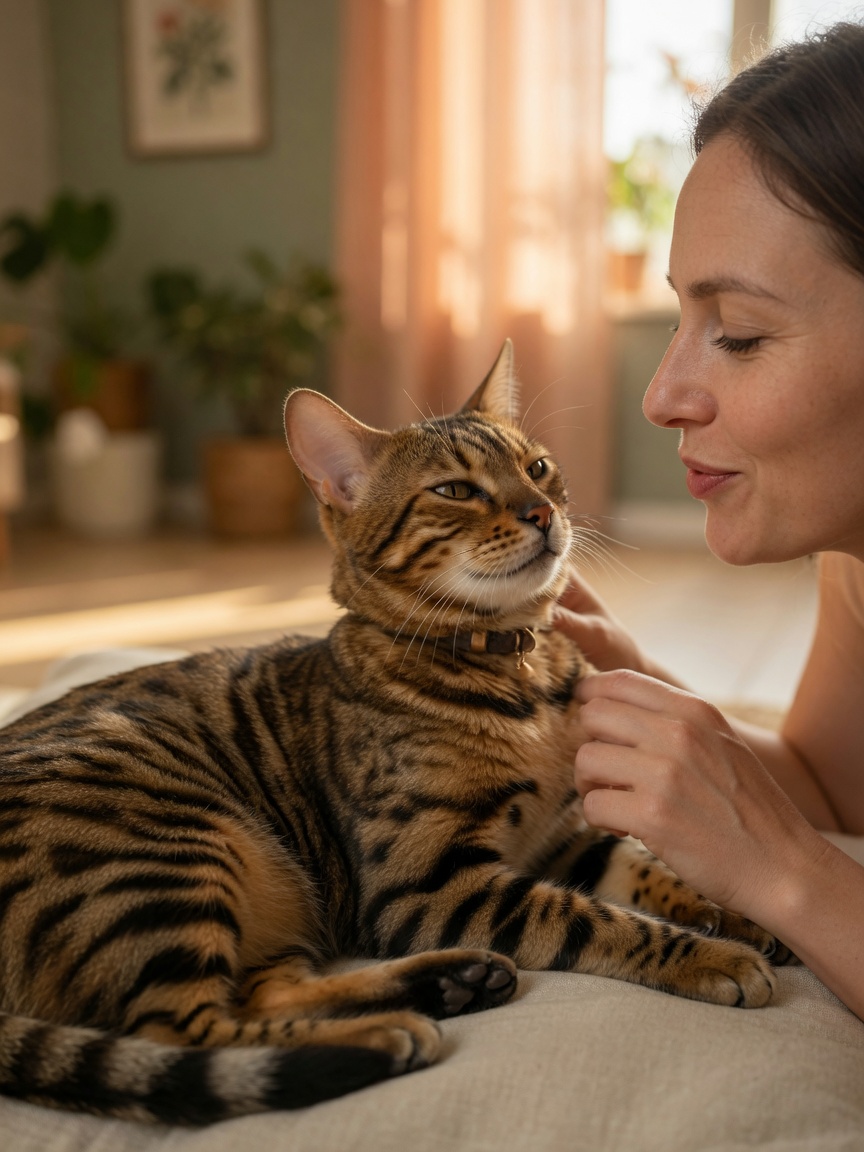
Despite these considerations, meowing at your cat can be beneficial in several contexts. Many behaviourists suggest that meowing, combined with appropriate body language and tone, can strengthen the human-feline bond. Some cats genuinely enjoy the interaction and respond positively when their owners "speak their language."
The key is consistency and context. If you meow at your cat in a gentle, high-pitched tone whilst simultaneously making eye contact or offering affection, you're likely creating a positive interaction that your cat understands as friendly engagement.
Expert Recommendations for Cat Communication
- Use meowing selectively: Reserve meowing for specific, positive interactions rather than as a constant form of communication.
- Combine with body language: Pair meows with slow blinks, head bumps, and relaxed posture to reinforce the friendly message.
- Match the situation: Don't meow when disciplining or addressing unwanted behaviour—use a different tone or other deterrents instead.
- Observe your cat's response: If your cat moves away or displays signs of stress, adjust your approach.
- Prioritise other communication methods: Hand signals, clicker training, and environmental management are often more effective than vocalisations.
The Bottom Line: Is It Bad?
Meowing at your cat isn't bad—it's simply one tool in your communication toolkit. The issue arises only when it's overused, poorly timed, or used inconsistently. Most cats tolerate their owners' meowing attempts with good humour, and many genuinely enjoy the interaction.
Key Takeaways
- Cats meow primarily to communicate with humans, not other cats
- Meowing at your cat can strengthen your bond when done appropriately
- Context and consistency matter more than perfecting your meow
- Combine meows with positive body language for best results
- Observe your individual cat's preferences and adjust accordingly