

Dog Summer Safety: Signs of Overheating & How to Keep Cool
Summer brings long walks, beach trips, and outdoor adventures with your dog. But rising temperatures also bring serious risks. Dogs cannot cool themselves as efficiently as humans; they rely almost entirely on panting and a small degree of sweating through their paw pads. When the environment is too hot and humid, that system fails — sometimes fatally. Understanding the dangers and knowing how to prevent and respond to overheating could save your dog's life.
Recognising the Signs of Heatstroke
Heatstroke occurs when a dog's core body temperature rises above 40°C (104°F). The progression can be rapid, so knowing the early warning signs is critical.
Early signs: Excessive, frantic panting; heavy drooling and thick, ropy saliva; bright red gums and tongue; restlessness and agitation; slowed or uncoordinated movement.
Advanced signs: Vomiting and diarrhoea (sometimes bloody); pale or bluish gums; glassy eyes; muscle tremors and seizures; loss of consciousness. At this stage, organ damage is occurring rapidly.
Emergency First Aid for Heatstroke
If you suspect heatstroke, act immediately — every minute matters.
- Move your dog to shade or air conditioning. Get them out of the heat source instantly.
- Apply cool (not cold) water. Use a hose, wet towels, or a bowl of cool water on the neck, armpits, groin, and paw pads. Ice-cold water can cause blood vessels to constrict and slow cooling, so aim for cool tap water.
- Fan your dog while applying water to promote evaporative cooling.
- Offer small sips of cool water if your dog is conscious and able to swallow.
- Call your vet immediately. Even if your dog appears to recover, internal organ damage — especially to the kidneys — may not be visible. Veterinary assessment is essential.
Do not leave your dog unattended during cooling, and never give human medications like paracetamol or aspirin, which are toxic to dogs.
The Most Dangerous Situations
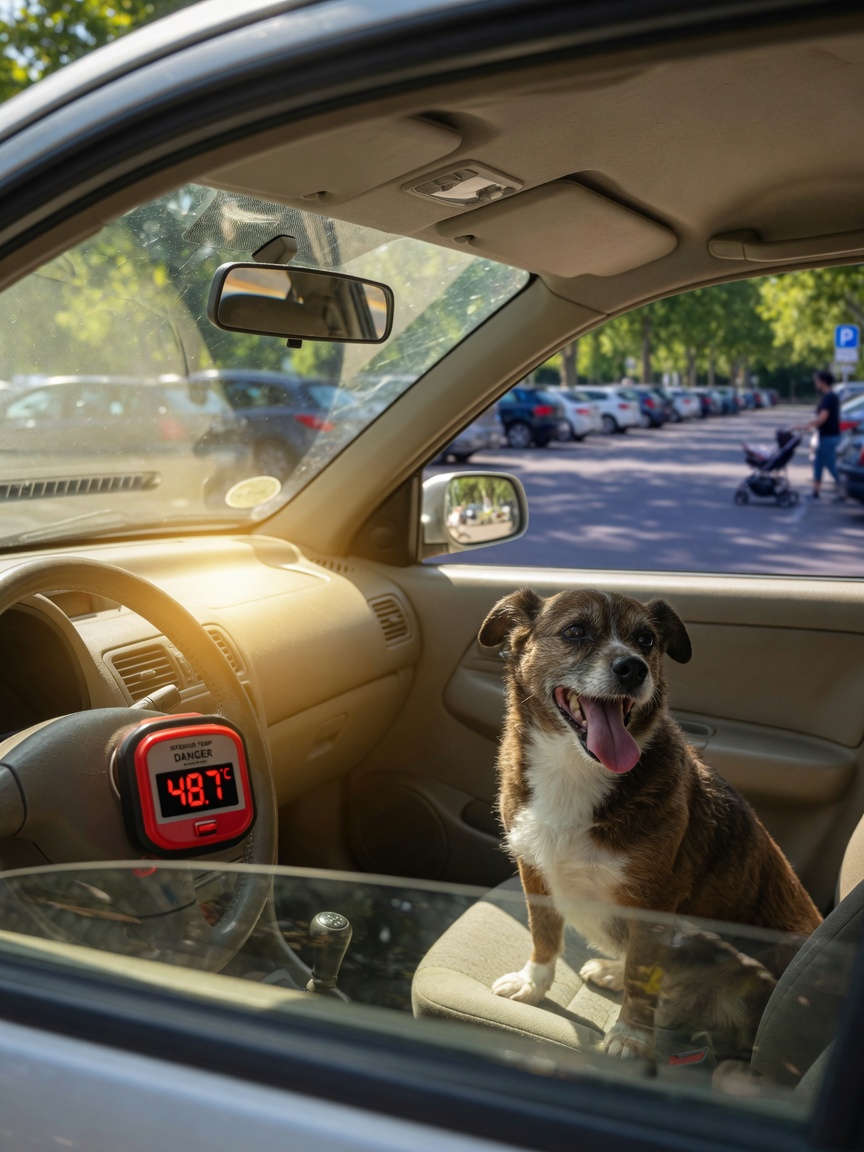
Hot Cars
Leaving a dog in a parked car is one of the leading causes of canine heatstroke deaths. On a 25°C (77°F) day, the inside of a car can reach 40°C (104°F) within 10 minutes. Cracked windows provide negligible relief. No errand is worth the risk — leave your dog at home or take them with you.
Asphalt and Pavement Burns
Asphalt can reach temperatures of 60°C (140°F) on a sunny day when the air temperature is only 30°C (86°F). A simple test: hold the back of your hand on the pavement for 7 seconds. If it's too hot for your hand, it's too hot for your dog's paws. Walk dogs in the early morning or evening, or choose grassy routes.
Effective Cooling Methods
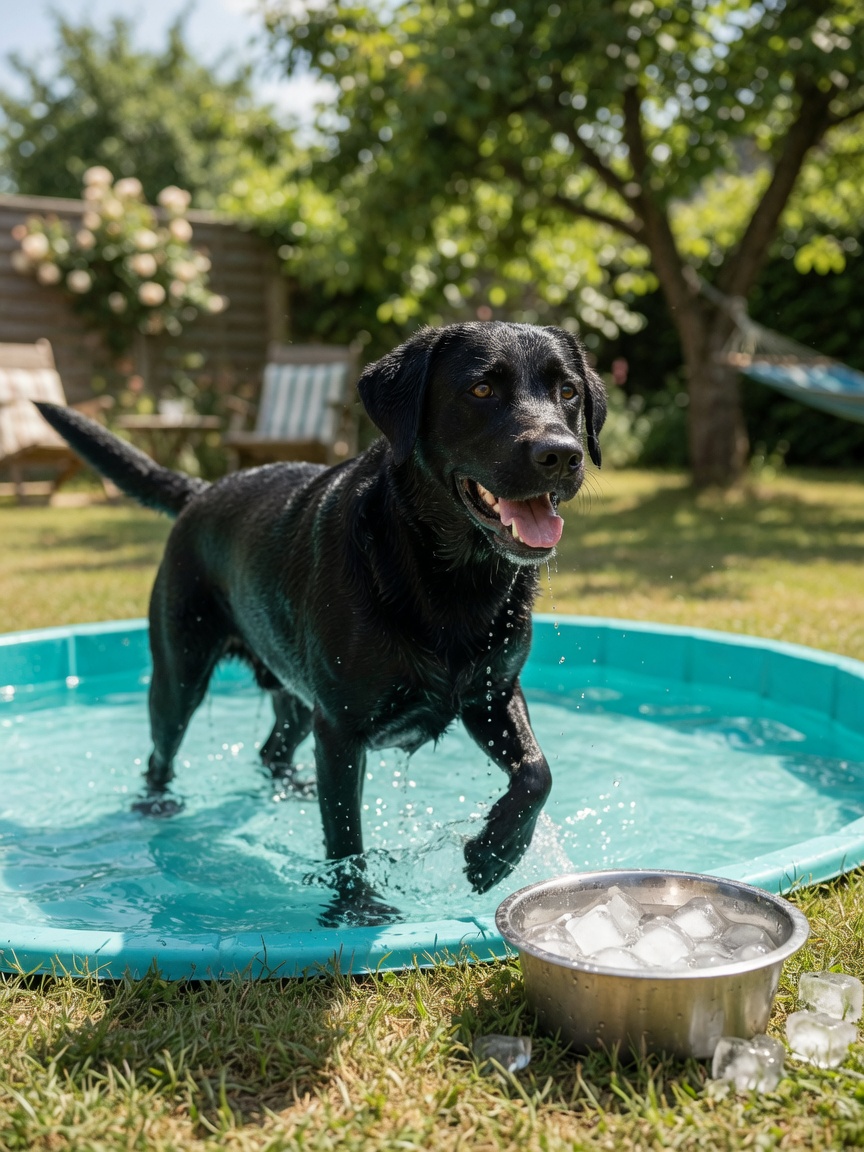
Shade: Always ensure access to shaded areas, particularly during peak sun hours (10am–4pm). Natural shade from trees is more effective than tarpaulins, which can trap heat.
Water: Paddling pools and sprinklers are excellent cooling tools. Many dogs enjoy wading through shallow cool water. Keep fresh, cool drinking water available at all times — add ice cubes to keep it cold during the day.
Cooling mats: Gel-filled or water-activated cooling mats provide a consistently cool surface for dogs to rest on, without requiring refrigeration. They're ideal for indoors and outdoors.
Summer cooling essential: A good cooling mat can make a significant difference for dogs in warm weather. Browse a wide selection of cooling mats and portable water bowls at Zooplus — ideal for home and outdoor adventures.
Exercise Timing and Brachycephalic Breed Warnings
Adjust your dog's exercise schedule in summer: walk in the early morning (before 8am) or after sunset. Keep midday exercise to a minimum — short toilet breaks only.
Brachycephalic (flat-faced) breeds — including Bulldogs, French Bulldogs, Pugs, Shih Tzus, and Boston Terriers — are at dramatically increased risk of heatstroke. Their shortened airways make efficient panting impossible. These dogs should have severely restricted outdoor time in warm weather and must never be left in a car or warm room without air conditioning. Consult your vet about breed-specific summer management.
Older dogs, overweight dogs, and dogs with heart or respiratory conditions also have reduced heat tolerance and require extra caution.
Hydration Tips
Dehydration compounds the risk of heatstroke. Signs include loss of skin elasticity (skin tenting), dry or tacky gums, and sunken eyes. To keep your dog well-hydrated:
- Provide multiple water bowls around the home and garden, refreshed frequently.
- Carry a portable dog water bottle or collapsible bowl on walks.
- Add a small amount of low-sodium chicken broth to water to encourage drinking in reluctant drinkers.
- Consider wet food or adding water to kibble to increase overall fluid intake.
- Frozen treats — such as dog-safe ice lollies made with plain yoghurt and fruit — are a fun and hydrating summer snack.
For more information on preventing heatstroke and recognising emergencies, visit the AVMA's guidance on pets in hot cars and the AKC's summer safety guide.
Key Takeaways
- Heatstroke is a medical emergency — signs include frantic panting, red gums, and collapse.
- Cool your dog with cool (not cold) water and contact a vet immediately.
- Never leave a dog in a parked car — temperatures become lethal within minutes.
- Test pavement temperature with your hand before walking your dog.
- Walk during early morning or evening; brachycephalic breeds need extra protection.
- Keep fresh water available at all times and carry water on walks.
References
1. Bruchim Y, et al. "Pathophysiology, diagnosis, and treatment of heatstroke in dogs." Veterinary Clinics of North America: Small Animal Practice. PMID: 17950316
2. Hall EJ, et al. "Brachycephalic obstructive airway syndrome and heat-related illness in dogs: clinical features and outcomes." Journal of Veterinary Internal Medicine. PMID: 30311686