
Dog Shedding: How to Manage It & When It's a Problem
What Is Normal Shedding?
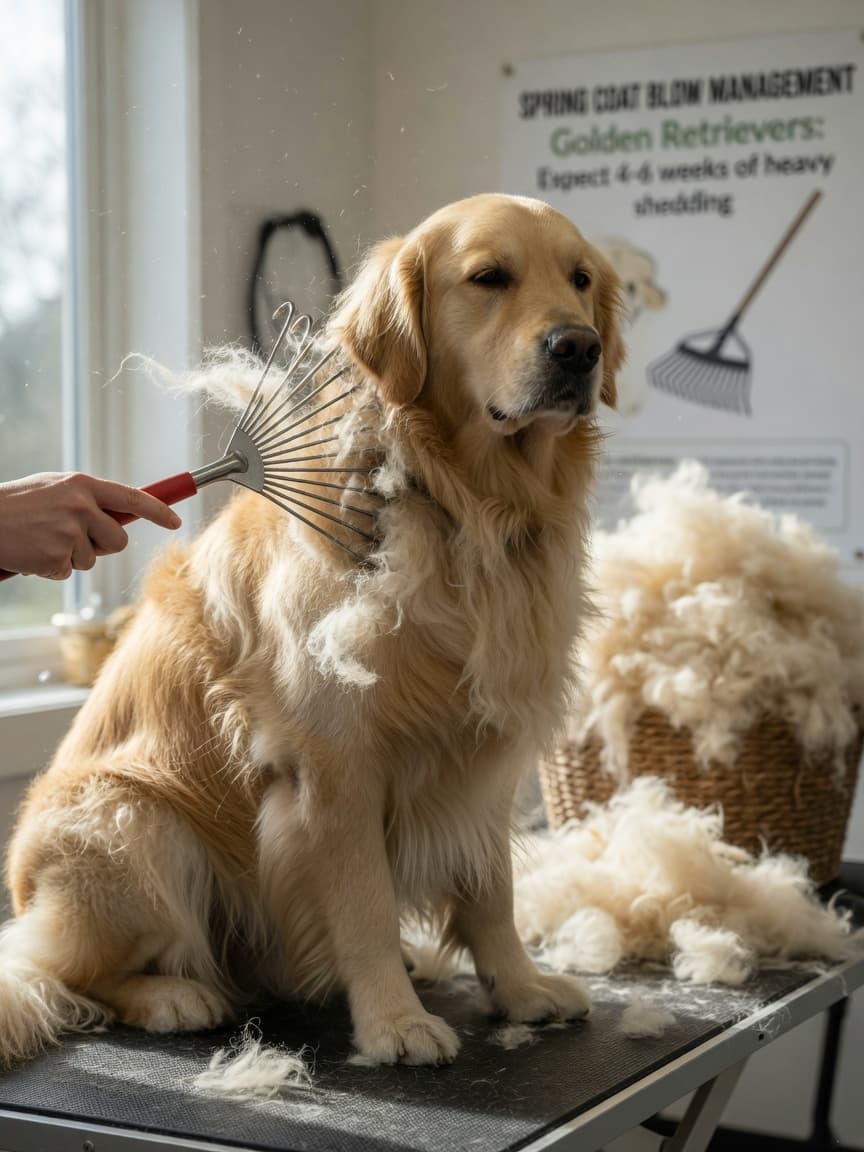
Shedding is the natural cycle in which old or damaged hair falls out and new hair grows in its place. The rate is controlled by photoperiod — the length of daylight hours — as well as temperature, hormones, nutrition, and genetics. Most dogs shed year-round to some degree, with two peak periods in spring and autumn when they swap between their lighter summer coat and heavier winter undercoat. These peaks are often called coat blows, and in double-coated breeds such as the Siberian Husky or German Shepherd they can look alarming — literally clumps of undercoat releasing over a two-to-four week period.
Research published on PubMed (PMID 22381179) confirms that photoperiod is the dominant driver of the canine hair-growth cycle, with nutritional status acting as a secondary modulator. In short: your dog is designed to shed, and fighting it entirely is not possible. Managing it is.
High-Shedding vs. Low-Shedding Breeds
Breed type determines baseline shedding more than almost any other factor:
- Heavy shedders — German Shepherd, Golden Retriever, Labrador, Akita, Corgi, Siberian Husky, Bernese Mountain Dog. These dogs have dense double coats and will leave hair on every surface year-round, with dramatic coat blows twice yearly.
- Moderate shedders — Border Collie, Australian Shepherd, Beagle, Boxer. Regular grooming keeps hair manageable.
- Light or minimal shedders — Poodle, Bichon Frise, Shih Tzu, Yorkshire Terrier, Portuguese Water Dog. These breeds have hair rather than fur; hair grows continuously and sheds minimally, though they require more frequent clipping and combing to prevent mats.
The American Kennel Club breed explorer lists shedding level as a searchable trait — useful if you are choosing a new dog with allergies or cleaning constraints in mind.
Deshedding Tools That Actually Work
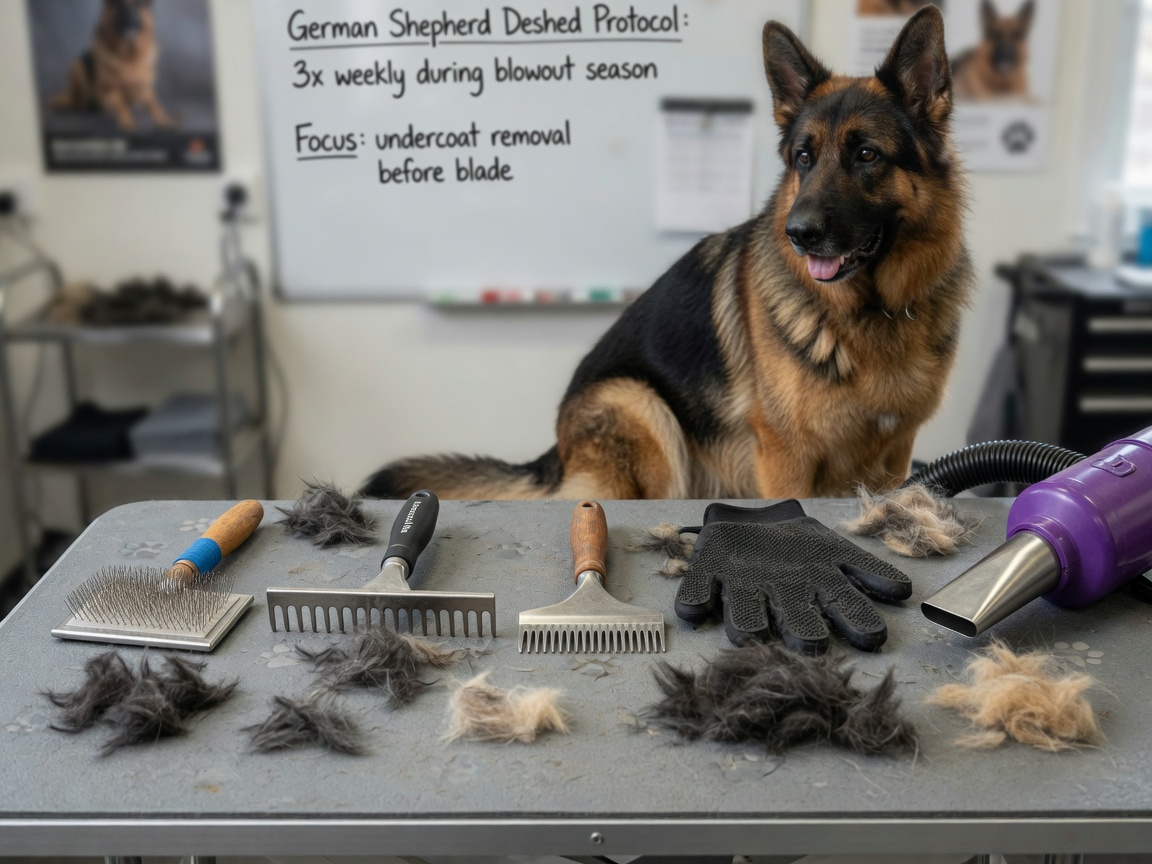
The market is flooded with grooming products. These are the tools that professional groomers and evidence-based owners consistently recommend:
- Slicker brush — fine, short wire pins on a flat pad. Best for removing loose surface hair from most coat types.
- Undercoat rake — widely-spaced stainless-steel teeth that penetrate the topcoat and drag out dead undercoat. Essential for double-coated breeds during coat blows.
- Deshedding blade (e.g. Furminator-style) — a serrated stainless edge that strips loose undercoat efficiently. Very effective but use gently: pressing hard or over-using can irritate the skin or damage the guard hairs.
- Rubber grooming mitt — grips loose hair via static friction; ideal for short-coated breeds like Labradors and Boxers, and for dogs who resist traditional brushes.
- High-velocity dryer — used after bathing to blast loose undercoat out before it falls on your sofa. Widely used by professional groomers during seasonal coat blows.
For double-coated breeds in full coat-blow season, a combination of undercoat rake followed by a deshedding blade, then a high-velocity blow-dry, removes significantly more dead coat in one session than months of daily casual brushing.
For a well-stocked range of deshedding brushes, rakes, and grooming kits at competitive prices, browse Zooplus — one of Europe's largest online pet retailers with fast delivery across the UK and EU.
Diet and Coat Health: The Nutritional Link

A poor diet is one of the most overlooked causes of excessive shedding. The coat is made almost entirely of protein (primarily keratin), and a dog eating insufficient high-quality protein will sacrifice coat quality to maintain organ function. Similarly, deficiencies in specific fatty acids, vitamins, and minerals produce characteristic coat changes:
- Omega-3 fatty acids (EPA & DHA) — reduce inflammatory shedding, improve skin barrier function, and add shine. Found in oily fish, fish oil supplements, and algae-based alternatives.
- Biotin (Vitamin B7) — supports keratin synthesis; deficiency causes dull, brittle coat and increased hair loss.
- Zinc — required for normal skin cell turnover; zinc-responsive dermatosis is seen particularly in Huskies and Malamutes.
- Vitamin E — antioxidant that protects skin cell membranes from oxidative damage.
If your dog's food already meets FEDIAF or AAFCO complete-and-balanced standards and shedding is still high, a dedicated omega-3 supplement can make a meaningful difference. Products such as those from HolistaPet combine omega fatty acids with natural botanical support for skin and coat in a palatable, easy-to-dose format.
Bathing Frequency and Shedding
Regular bathing with a gentle, moisturising dog shampoo loosens dead hair so it washes away rather than falling on your floor over the following week. For heavy shedders, a bath every four to six weeks (or more frequently during coat blows) noticeably reduces ambient hair. Use a deshedding shampoo and conditioner, which typically contain hydrolysed proteins and omega fatty acids to reinforce the skin barrier while releasing undercoat.
Avoid human shampoos: the pH of human skin is around 5.5, while dog skin sits between 6.5 and 7.5. Using human products strips the canine skin's acid mantle, leading to dry skin, itching and — counterintuitively — increased shedding.
When Shedding Signals a Health Problem
The following patterns should prompt a vet visit rather than a grooming session:
- Symmetrical hair loss — bald patches appearing in the same place on both sides of the body often indicate a hormonal disorder such as hypothyroidism or hyperadrenocorticism (Cushing's disease).
- Patchy, asymmetrical hair loss — ringworm (a fungal infection), mange mites (Demodex or Sarcoptes), or bacterial folliculitis can all present this way.
- Hair loss with skin changes — redness, scaling, thickening, or a greasy feel alongside shedding suggests dermatitis, allergy, or infection.
- Sudden increase in shedding without seasonal explanation — stress (a house move, new pet, bereavement) can trigger telogen effluvium, where a large proportion of hairs simultaneously enter the resting/shedding phase.
- Shedding in intact females after whelping or a phantom pregnancy — hormonal hair loss in these circumstances is normal and temporary, but worth confirming with your vet.
The British Veterinary Association advises owners to seek professional advice whenever hair loss is accompanied by changes in behaviour, appetite, thirst, or skin appearance, as these combinations suggest systemic disease.
A 2021 review in Veterinary Dermatology (PubMed PMID 34110655) found that hypothyroidism accounts for a significant proportion of non-seasonal alopecia cases referred to dermatology services in dogs, with bilateral symmetrical hair loss over the trunk as the most common presenting sign.
Practical Household Management
Even with excellent grooming and nutrition, some shedding will reach your furniture. A few practical measures help:
- Vacuum with a pet-hair attachment two to three times per week rather than waiting for visible accumulation.
- Wash dog beds weekly — these trap shed hair and dander that recirculates into the air.
- Use microfibre cloths on hard surfaces; they capture hair electrostatically rather than redistributing it.
- Air purifiers with HEPA filters measurably reduce airborne dog dander — relevant for allergy sufferers in the household.
Key Takeaways
- Shedding is normal and driven by photoperiod, breed genetics, hormones, and nutrition — it cannot be stopped, only managed.
- Double-coated breeds shed most intensely in spring and autumn; use an undercoat rake and high-velocity dryer during these coat blows.
- Omega-3 fatty acids, biotin, and zinc are the most important nutrients for coat quality and reducing excessive shedding.
- Symmetrical hair loss, patchy baldness, or shedding accompanied by skin changes or systemic symptoms warrants a vet appointment.
- Regular bathing (every 4–6 weeks), the right tools, and a complete-and-balanced diet will keep manageable shedding manageable.
Julia Wrenfield is a Pet Wellness Researcher with over a decade of experience advising pet owners on evidence-based approaches to canine and feline health.