
Yorkshire Terrier Health: Teeth, Trachea & Liver Shunts
Updated June 2026
- Lifespan: 13–16 years
- Top Health Risks: Periodontal disease, tracheal collapse, portosystemic shunts (liver shunts), patellar luxation, hypoglycaemia
- Genetic Tests Recommended: Patella evaluation, bile acid testing (liver shunt screening), ophthalmological exam
Yorkshire Terriers may be small enough to fit in a handbag, but they carry a big personality and a set of health challenges that demand attentive ownership. Despite being among the longest-lived dog breeds — many Yorkies reach 14–16 years — they pack a remarkable number of medical conditions into their tiny frames. Dental disease, tracheal problems, and liver shunts are the conditions most unique to the breed, while patellar luxation and hypoglycaemia round out the most common clinical concerns seen by vets.
Most Common Health Problems in Yorkshire Terriers
Periodontal disease is the single most common — and most underestimated — health problem in Yorkshire Terriers. Their small mouths cause severe tooth crowding, accelerating plaque accumulation and gum disease. Tracheal collapse, where the cartilage rings supporting the windpipe weaken and flatten, is a breed hallmark causing a characteristic "goose honk" cough. Portosystemic shunts (PSS) — abnormal blood vessels that bypass the liver — are more common in Yorkshire Terriers than any other breed, causing neurological and gastrointestinal signs often from puppyhood. Patellar luxation and hypoglycaemia, especially in very small "teacup" individuals and puppies, complete the priority concern list.
Periodontal Disease
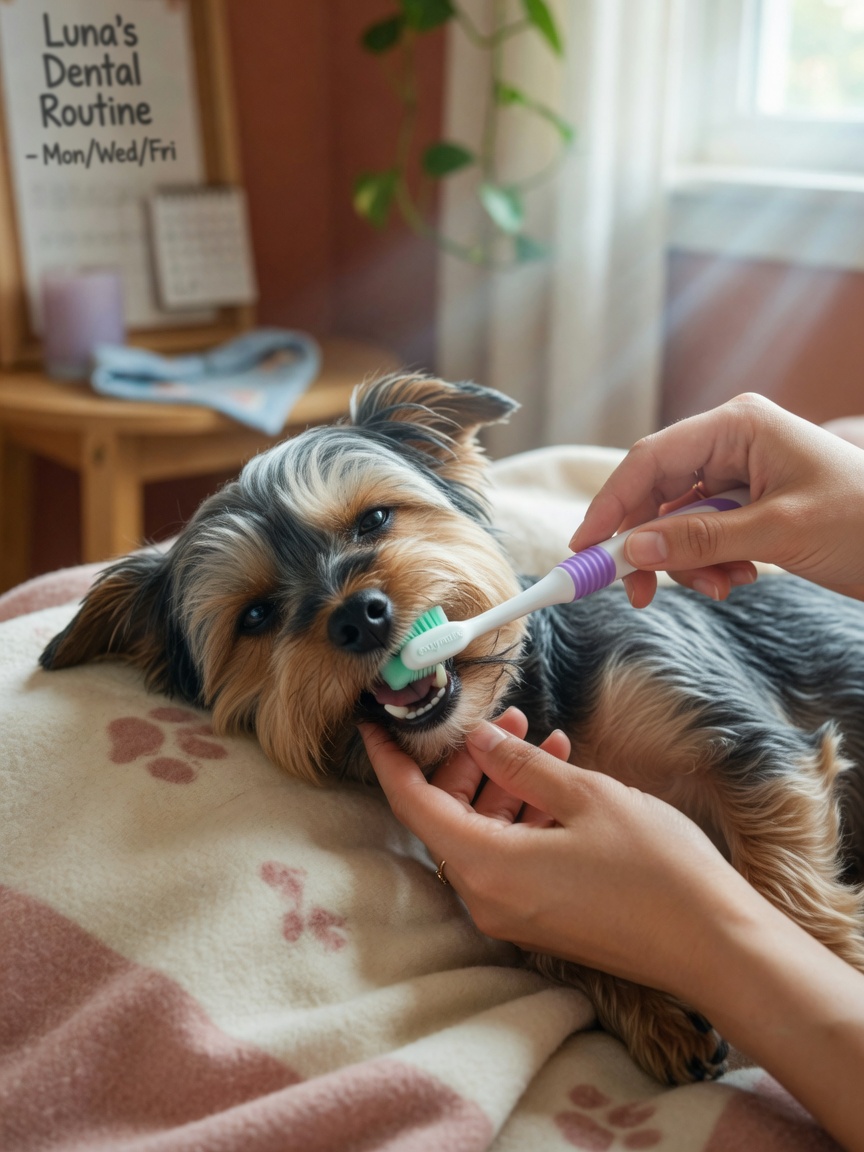
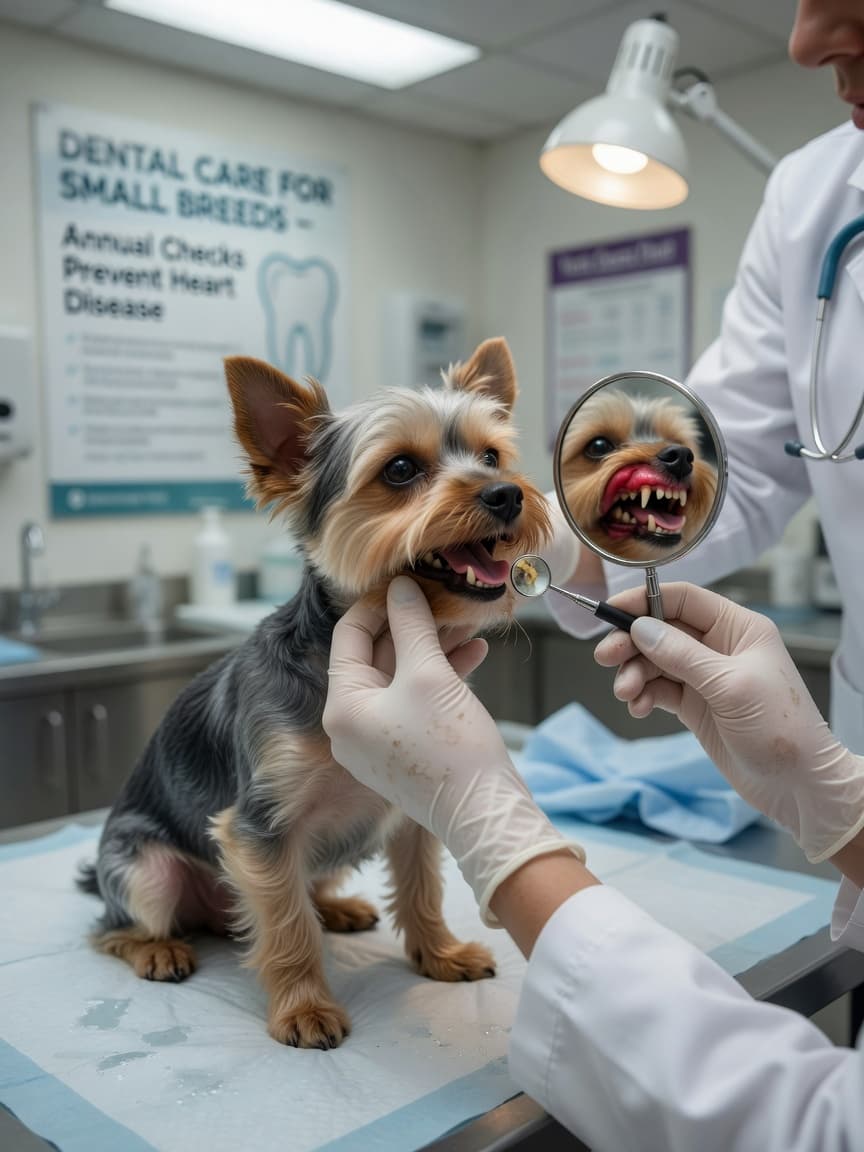
A Yorkshire Terrier's mouth contains the same number of adult teeth as a Great Dane, crammed into a jaw a fraction of the size. The resulting overcrowding causes food and bacteria to accumulate at the gumline at an accelerated rate, leading to calculus build-up, gingivitis, and ultimately periodontal disease that can destroy the bone supporting the teeth. Studies show that small-breed dogs develop significant periodontal disease by age three in many cases. The consequences extend beyond the mouth — periodontal bacteria entering the bloodstream are associated with heart valve disease, kidney disease, and systemic inflammation. Prevention requires daily tooth brushing with a canine enzymatic toothpaste (begun in puppyhood so the dog accepts it), annual professional dental cleanings under anaesthesia from around two years of age, and dental chews that carry the VOHC (Veterinary Oral Health Council) seal of approval.
Tracheal Collapse

Tracheal collapse occurs when the C-shaped cartilage rings of the windpipe lose rigidity and flatten during inhalation, narrowing the airway. In Yorkies, this appears to be a congenital abnormality with a strong hereditary component. The classic symptom is a dry, harsh cough that sounds like a goose honk, worsened by excitement, pulling on a collar, heat, and obesity. Mild to moderate cases are managed medically with bronchodilators (such as theophylline), cough suppressants, and weight management. Avoiding collar pressure — using a harness instead — is essential. Severe cases in younger dogs may benefit from intraluminal stent placement by a specialist. Obesity dramatically worsens tracheal collapse by reducing thoracic compliance, so maintaining a lean body condition is both preventive and therapeutic.
Portosystemic Shunts (Liver Shunts)
A portosystemic shunt is an abnormal blood vessel that diverts portal blood — carrying nutrients, toxins, and ammonia from the gastrointestinal tract — around the liver rather than through it. Without hepatic processing, these substances accumulate in the systemic circulation and brain, causing hepatic encephalopathy. Yorkshire Terriers have the highest prevalence of congenital extrahepatic PSS of any breed. Affected puppies may appear smaller than littermates, show strange behaviour after eating (circling, vocalising, apparent blindness), have intermittent gastrointestinal upset, and are slow to recover from anaesthesia. Diagnosis is confirmed with pre- and post-prandial bile acid testing, ultrasound, or CT angiography. Surgical ligation of the shunting vessel is the definitive treatment and offers the best long-term prognosis; medical management with a low-protein diet and lactulose can temporise but is rarely curative.
Patellar Luxation and Hypoglycaemia
Grade 1–2 patellar luxation (intermittently slipping kneecaps) is extremely common in Yorkshire Terriers and in many cases causes no long-term problems. Grades 3–4 with continuous luxation cause progressive cartilage damage and lameness, requiring surgical stabilisation. Hypoglycaemia — dangerous drops in blood sugar — occurs most often in puppies and in very small adults during periods of stress, fasting, or cold exposure. Yorkies under three months should be fed every 4–6 hours; owners should keep corn syrup or a glucose gel on hand to rub on the gums of a dog showing signs of hypoglycaemia (trembling, weakness, glazed eyes, collapse) while contacting their vet.
Prevention and Proactive Care
Begin dental care from day one — let the puppy chew on a soft toothbrush before moving to brushing. Use a harness rather than a collar for all walks, permanently. Request a bile acid test at six months of age if you notice any neurological signs or growth retardation — early diagnosis of PSS dramatically improves surgical outcomes. Keep "teacup" Yorkies on a strict feeding schedule and monitor them closely in cold weather. Annual veterinary exams should include patellar evaluation, heart auscultation, and dental scoring.
Recommended Supplements for Yorkshire Terriers
Omega-3 fatty acids (fish oil at 20 mg/kg EPA+DHA) support the skin and coat of this fine-haired breed and provide systemic anti-inflammatory benefits for dogs with early joint disease. For Yorkies with liver shunts managed medically, SAMe (S-adenosylmethionine) and milk thistle (silymarin) are liver-protective supplements that many veterinary internists recommend alongside dietary management — always under veterinary supervision. Dental chews with proven plaque-reducing efficacy are a valuable daily supplement for a breed where dental disease is near universal.
Some owners report benefits from CBD oil for joint discomfort — always discuss with your vet first and choose a THC-free product like Candid Tails.
For high-quality breed-specific nutrition and supplements, browse the selection at Zooplus — one of Europe's leading pet supply retailers.
Key Takeaways
- Periodontal disease is nearly universal in Yorkies — daily brushing from puppyhood and annual professional cleanings are essential.
- Tracheal collapse causes a characteristic goose-honk cough — always use a harness rather than a collar to avoid triggering episodes.
- Liver shunts (PSS) are more common in Yorkshire Terriers than any other breed; bile acid testing should be done if any neurological signs appear.
- Hypoglycaemia is a risk in young puppies and small adults — maintain a strict feeding schedule and keep glucose gel available.
- Despite their many health challenges, Yorkies are one of the longest-lived breeds — proactive care pays dividends over a potentially 15+ year lifespan.
References
- Berent AC, Tobias KM. Portosystemic vascular anomalies. Vet Clin North Am Small Anim Pract. 2009;39(3):513-541. PMID: 19932349
- Niemiec BA. Periodontal disease. Top Companion Anim Med. 2008;23(2):72-80. PMID: 18504046