
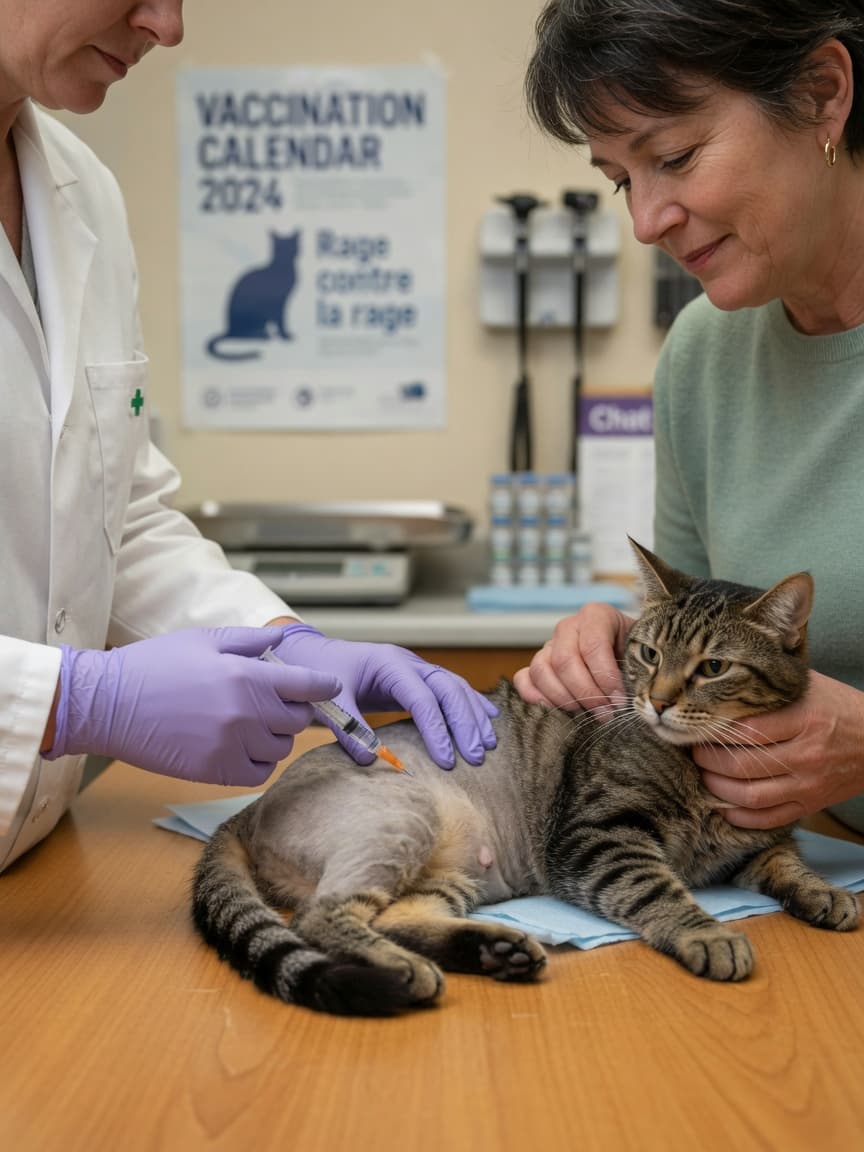
Vaccinated Cats That Still Get Sneezing and Runny Eyes
It is one of the most common frustrations in feline medicine: an owner presents a vaccinated cat with classic cat flu symptoms — sneezing, nasal discharge, weepy eyes — and wants to know why the vaccine did not work. The answer requires understanding what cat flu actually is, what the vaccine is designed to do, and why the two are not always perfectly aligned. This is not a failure of vaccination; it is a reflection of how these viruses behave.
What Cat Flu Actually Is
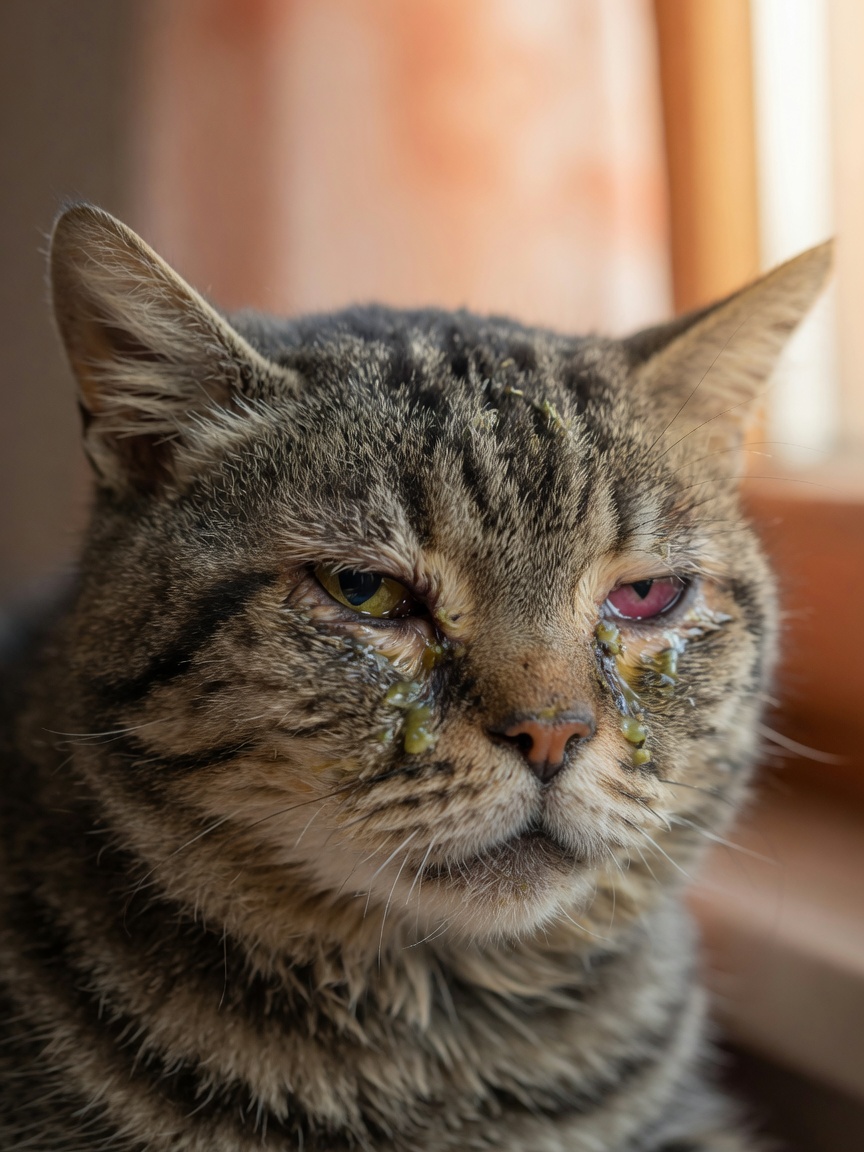
Cat flu is not a single disease caused by a single pathogen. It is a clinical syndrome — a set of symptoms — produced primarily by two distinct viruses: feline herpesvirus type 1 (FHV-1) and feline calicivirus (FCV). Between them, these two pathogens account for the vast majority of upper respiratory tract infections in cats globally.
Feline Herpesvirus (FHV-1)
FHV-1 is a highly contagious virus that causes acute rhinotracheitis — inflammation of the nasal passages and trachea. Signs include severe sneezing, nasal congestion, ocular discharge and conjunctivitis. In young kittens, infections can be severe and occasionally fatal. The characteristic feature of FHV-1 is latency: once a cat is infected, the virus establishes a permanent residence in nerve ganglia. It never leaves. During periods of stress — a house move, the arrival of a new pet, illness — the virus can reactivate and cause recurrent episodes of clinical signs, even in vaccinated cats.
Feline Calicivirus (FCV)
FCV causes similar upper respiratory signs but is particularly associated with oral ulceration, which is a useful distinguishing feature. Unlike FHV-1, FCV does not establish the same persistent latent infection, but it does mutate rapidly. There are numerous strains of calicivirus in circulation, and their genetic diversity is significant. A virulent systemic strain, sometimes called VS-FCV, has been associated with severe outbreaks with high mortality, though this remains uncommon.
What Vaccination Actually Does
Standard core feline vaccines include protection against both FHV-1 and FCV. This is almost always delivered as part of a combined vaccine alongside feline panleukopaenia virus. Vaccination is highly effective at preventing severe disease and death, but this is not the same as preventing all infection or all symptoms.
For FHV-1, vaccination significantly reduces the severity and duration of illness but does not prevent infection in all exposed cats, and critically, it does not prevent viral latency. A cat vaccinated before its first FHV-1 exposure will likely experience a milder first infection, but the virus can still become latent and reactivate later in life. In cats that were infected before vaccination began — which includes most rescue cats — vaccination helps manage disease but cannot eliminate the virus already present.
For FCV, the challenge is strain diversity. Vaccines are formulated using representative strains and typically offer good cross-protection, but they cannot guarantee protection against every circulating variant. In multi-cat environments with high viral pressure, a vaccinated cat may still become infected with a strain sufficiently different from the vaccine strains to partially evade immunity.
Why Cats in Multi-Cat Environments Are More Vulnerable
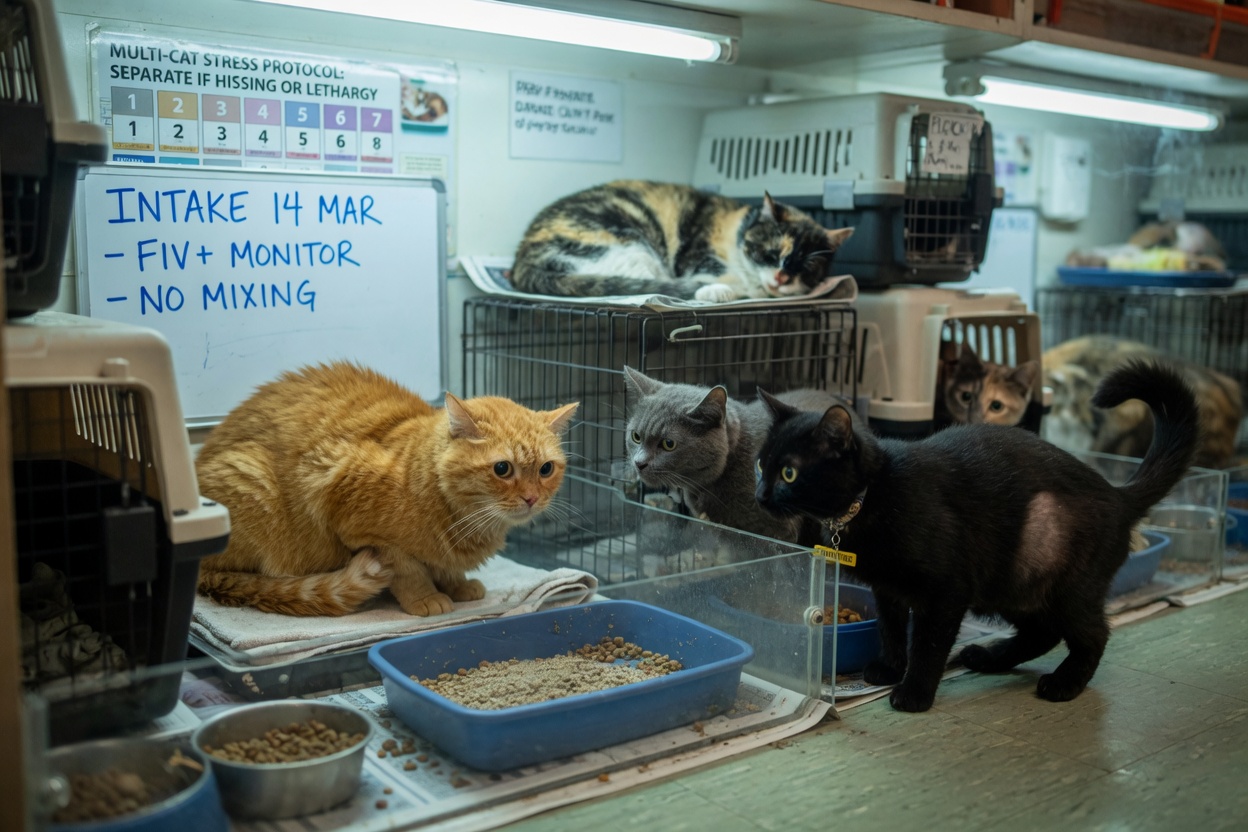
Catteries, rescue centres and multi-cat households represent the highest-risk settings for cat flu. The sheer density of cats — and therefore viral shedding — means exposure pressure is far higher. Stress, which is unavoidable in these environments, directly triggers FHV-1 reactivation. Even if every individual cat is vaccinated, the combination of latent virus, new viral introductions, and stress-induced shedding creates conditions where clinical signs are almost inevitable in some animals.
This does not mean vaccination is pointless in these settings — quite the opposite. Without vaccination, outcomes would be significantly worse, particularly in young kittens. Vaccination reduces severity, duration and mortality even when it does not prevent every sneezing episode.
Recognising When Cat Flu Needs Veterinary Attention
Mild sneezing without systemic signs in a vaccinated adult cat often resolves with supportive care — warmth, gentle cleaning of discharge, and encouraging food and fluid intake. However, certain signs warrant prompt veterinary assessment.
- Any cat that stops eating for more than 24 to 48 hours, particularly in a household with other cats
- Kittens under 12 weeks showing respiratory signs — these can deteriorate rapidly
- Obvious eye ulceration, which can occur secondary to FHV-1 and requires treatment to prevent permanent damage
- Mouth ulcers causing significant pain or drooling — a sign of calicivirus
- Laboured breathing or persistent high fever
Secondary bacterial infections are common with cat flu and often require antibiotic treatment. Antiviral medications, including lysine (though its evidence base is now questioned) and licensed antivirals, may be considered by your vet in chronic or severe FHV-1 cases.
Vaccination Schedule and Boosters
The primary kitten course typically begins at eight to nine weeks, with a second dose three to four weeks later. A booster is given at twelve months. After that, the frequency of cat flu boosters depends on lifestyle. Cats with outdoor access, cats in multi-cat households or those that visit catteries are generally recommended to have annual boosters for the respiratory viruses. Indoor-only cats with no contact with other cats may be able to follow a less frequent schedule for some components — your vet can advise based on your cat's specific situation.
Managing FHV-1 Recurrence in Affected Cats
For cats that have established latent FHV-1 infection and experience recurrent flare-ups, management focuses on minimising stress triggers and supporting the immune system. Practical measures include maintaining a stable routine, providing adequate space in multi-cat homes, using feline pheromone diffusers during known stressors such as fireworks or building work, and ensuring prompt veterinary attention when signs appear.
Key Takeaways
- Cat flu vaccines protect against severe disease and death — not necessarily every mild symptom
- FHV-1 can become latent after first infection and reactivate throughout life, even in vaccinated cats
- FCV has many strains; vaccines offer broad but not absolute cross-protection
- Stress is the primary trigger for FHV-1 reactivation — managing it reduces episodes
- Keep vaccinations up to date, especially for cats with outdoor access or multi-cat exposure
- Consult your vet if a cat stops eating, shows eye changes or is a young kitten with respiratory signs
Talk to your vet about your cat's specific history, particularly if they were rescued or have had prior infections. Vaccination remains the cornerstone of protection — it simply works differently with respiratory viruses than with diseases like panleukopaenia, and understanding that difference helps set realistic expectations.