

Golden Retriever & Cancer: Prevention, Early Detection & The Morris Study
If you share your life with a Golden Retriever, there is one health reality you need to understand from day one: this beloved breed faces the highest cancer burden of any dog breed in the world. More than six in ten Golden Retrievers will develop cancer at some point in their lives, compared to roughly one in four dogs across all breeds. Understanding why this happens, what types of cancer are most common, and how you can act preventively are the most important things you can do as a Golden owner.
The Scale of the Problem
The statistics are sobering. The Morris Animal Foundation Golden Retriever Lifetime Study, launched in 2012, is the largest, most comprehensive dog health study ever undertaken. It enrolled 3,044 Golden Retrievers across the United States and has been tracking them from puppyhood through death, collecting data on diet, environment, lifestyle, genetics, and health events. As of its most recent publications, the study confirms what breeders and veterinarians have long suspected: cancer mortality in this breed is dramatically elevated. Hemangiosarcoma, lymphoma, osteosarcoma, and mast cell tumors account for the vast majority of cancer deaths in Golden Retrievers.
Hemangiosarcoma — a malignant tumor of blood vessel cells — is particularly devastating because it typically grows silently in the spleen or heart until it ruptures, causing sudden internal bleeding. Lymphoma, which affects the lymphatic system, is more detectable early because it presents as enlarged lymph nodes. Osteosarcoma is an aggressive bone cancer, most commonly affecting the limbs, that spreads rapidly to the lungs. Mast cell tumors are skin tumors that vary widely in grade and behavior.
The Morris Animal Foundation Golden Retriever Lifetime Study
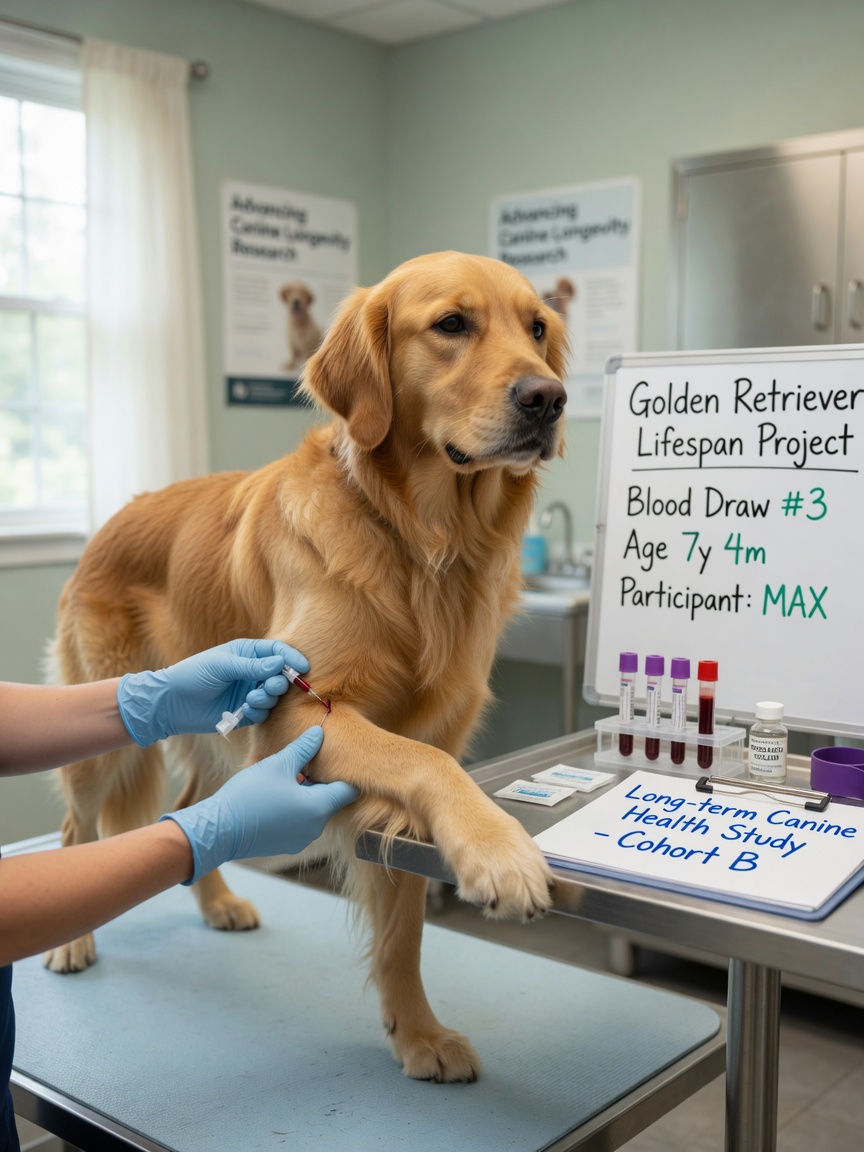
The Morris study represents a turning point in canine cancer research. Enrolled dogs receive annual veterinary exams, and owners complete regular questionnaires about their dog's diet, environment, and activities. Blood, urine, and tissue samples are banked for future analysis. The study's goals include identifying genetic, environmental, and dietary risk factors for cancer and other diseases.
Key early findings have pointed toward several promising directions. Dogs living in environments with greater pesticide exposure appear to have elevated cancer risk. Certain genetic variants are being identified that increase susceptibility to specific tumor types. The study is also exploring the role of nutrition, including the impact of ultra-processed pet foods versus whole-food diets, on long-term cancer outcomes.
Genetic vs. Environmental Factors
Golden Retrievers carry a relatively narrow gene pool due to the breed's founding bottleneck. Several cancer-predisposing gene variants are widespread throughout the breed. However, genetics is not destiny. Epigenetic factors — how genes are expressed based on environment and lifestyle — play a significant role. This means your choices as an owner genuinely matter.
Known environmental risk factors include exposure to lawn herbicides (particularly 2,4-D), secondhand tobacco smoke, flea and tick chemicals applied indiscriminately, and potentially certain industrial solvents. While you cannot eliminate all risk, reducing unnecessary chemical exposure in your dog's environment is a prudent, evidence-informed step.
Nutritional Prevention Strategies

Diet is one of the most powerful levers available to owners. Omega-3 fatty acids, particularly EPA and DHA from fish oil, have demonstrated anti-inflammatory and potentially anti-tumor properties in multiple studies. A dose of approximately 40 mg EPA+DHA per kilogram of body weight daily is commonly cited by veterinary oncologists for cancer prevention support.
Antioxidant-rich vegetables such as broccoli, blueberries, and leafy greens can be added to your Golden's diet in modest quantities. Some oncologists recommend limiting simple carbohydrates and refined sugars, as cancer cells preferentially metabolize glucose. A diet with moderate protein from quality animal sources, healthy fats, and low glycemic carbohydrates is a reasonable preventive approach. Always transition dietary changes gradually and discuss them with your vet.
Early Detection: What to Watch For
Knowing the warning signs of the four most common Golden cancers can save your dog's life. For hemangiosarcoma, watch for sudden collapse, extreme pallor of the gums, abdominal distension, or episodes of weakness that seem to resolve quickly (these can be signs of small, self-limiting bleeds). For lymphoma, feel along the jaw, neck, armpits, and groin for firm, round, non-painful lumps larger than a pea. For osteosarcoma, unexplained lameness in a large-breed dog over six years old, particularly if accompanied by a visible or palpable swelling on the leg, demands immediate radiographs. For mast cell tumors, any new skin lump or bump that grows, shrinks, or changes should be biopsied rather than monitored casually.
The golden rule: any new lump in a Golden Retriever gets a fine-needle aspirate the first time it is found. Do not wait to see if it grows.
Screening Recommendations
Beginning at age six, most veterinary internists recommend annual abdominal ultrasound for Golden Retrievers to screen for splenic masses before they rupture. Chest radiographs can detect early pulmonary metastasis. Routine bloodwork including a complete blood count and comprehensive chemistry panel should be run twice yearly in middle-aged and senior Goldens. Some academic veterinary centers now offer liquid biopsy tests that detect circulating tumor DNA in blood, providing a non-invasive screening tool.
Key Takeaways
- Over 60% of Golden Retrievers develop cancer; the four most common types are hemangiosarcoma, lymphoma, osteosarcoma, and mast cell tumors.
- The Morris Animal Foundation Golden Retriever Lifetime Study is the largest dog health study ever conducted and is actively identifying risk factors.
- Reducing chemical exposure (lawn pesticides, unnecessary flea treatments) is a concrete preventive step.
- Omega-3 fatty acids (EPA+DHA) have anti-inflammatory properties that may help reduce cancer risk.
- Annual abdominal ultrasound should begin at age six; any new lump gets aspirated immediately.
- Know the warning signs: pale gums and collapse (hemangiosarcoma), firm lymph nodes (lymphoma), leg swelling with lameness (osteosarcoma), changing skin masses (mast cell).
A Proactive Partnership with Your Vet
Cancer in Golden Retrievers is not something you can fully prevent, but it is something you can fight strategically. Enrolling your dog in the Morris Golden Retriever Lifetime Study (now tracking enrolled cohorts longitudinally) or supporting the foundation financially contributes to the research that will eventually improve outcomes for all Goldens. Finding a veterinarian who understands breed-specific oncology risks and building a prevention plan together is the single best investment you can make for your Golden's long-term health.
Scientific References
- Decker B, et al. "Homozygosity and the role of cancer-related mutations in the Golden Retriever." PLOS Genetics. 2015;11(11):e1005540. PMID: 26540184
- Reif JS, et al. "Residential exposure to magnetic fields and risk of canine lymphoma." American Journal of Epidemiology. 1995;141(4):352-359. PMID: 7840099