
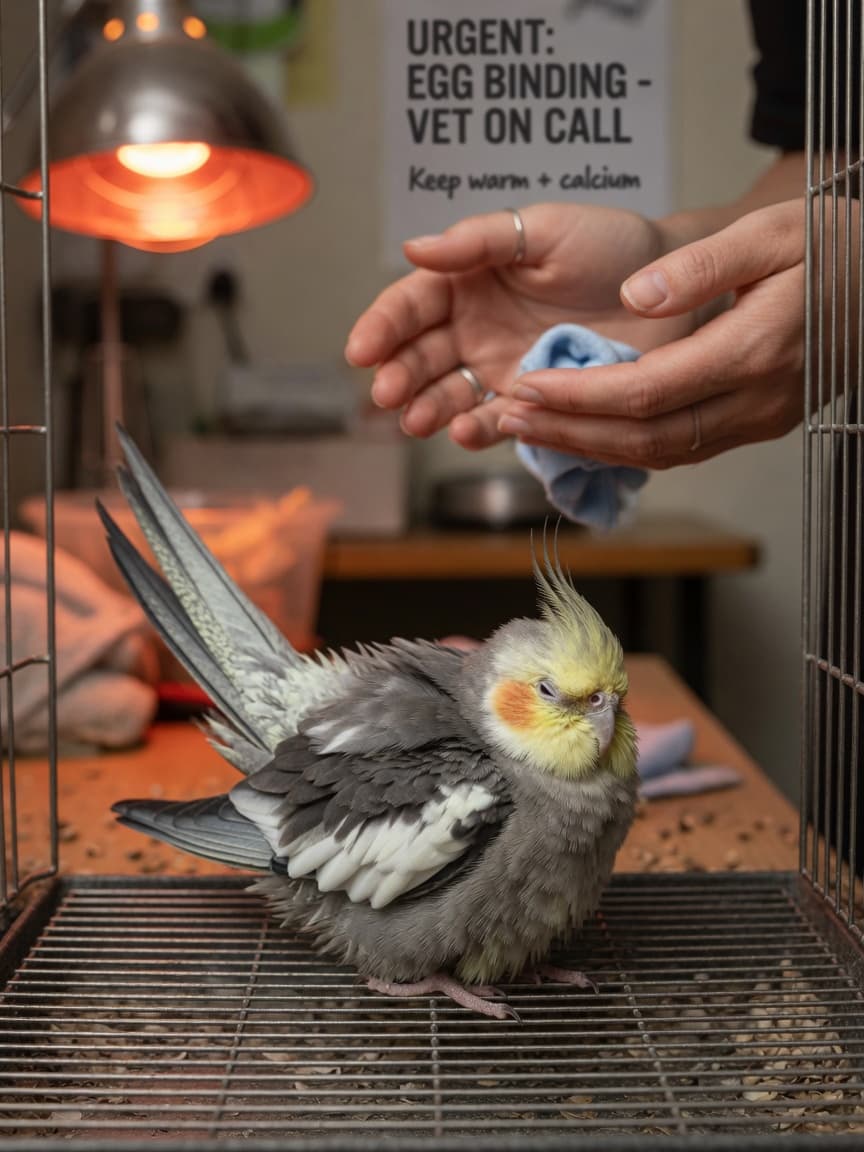
What Is Egg Binding?
Egg binding occurs when a female bird is unable to pass a fully or partially formed egg through the reproductive tract within a normal timeframe. The egg becomes lodged inside the oviduct, causing progressive physical distress and, if untreated, death within 24 to 48 hours in many cases. It is one of the true veterinary emergencies in avian medicine.
A common misconception is that egg binding only affects birds kept with a male. In reality, female birds can develop and attempt to lay eggs without ever having been in contact with a male. These unfertilised eggs are physiologically identical in the demands they place on the body. Any sexually mature female bird is potentially at risk, regardless of whether she has a mate.
Species that are commonly affected include budgerigars, cockatiels, lovebirds, canaries, and finches, though egg binding can occur in any species. Smaller birds tend to deteriorate more rapidly than larger ones, making rapid action especially critical in birds such as finches and budgies.
Recognising the Signs
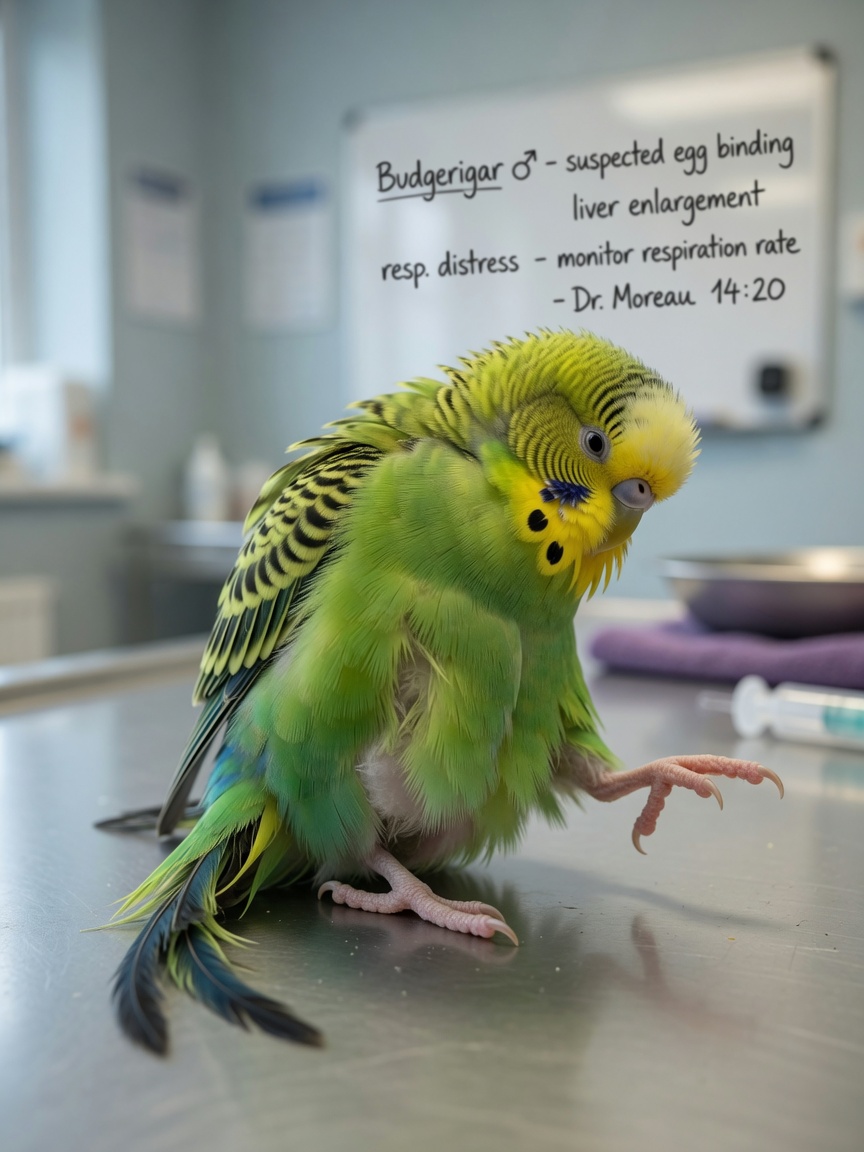
Early identification of egg binding is essential. The signs can be subtle at first but deteriorate quickly. Key indicators to watch for include:
- Repeated squatting and straining, as if attempting to pass a dropping or lay an egg, without success
- Tail bobbing — a rhythmic pumping movement of the tail that indicates respiratory or muscular effort
- Fluffed up feathers and a hunched posture, indicating the bird is in pain or feeling unwell
- The bird sitting on the floor of the cage rather than on a perch — a significant warning sign in any bird
- Distension or swelling of the abdomen, which may be visible or palpable as a firm mass
- Weakness or partial paralysis of one or both legs
The last point is particularly important to understand. A large egg pressing against the sciatic nerve as it passes through the pelvic canal can cause partial or complete paralysis of the legs. A bird found unable to grip a perch or dragging a leg should be assessed for egg binding immediately, even if other signs are not immediately apparent.
If you observe any combination of the above signs in a female bird, treat it as an emergency. Do not wait overnight to see if the bird improves.
What to Do Immediately
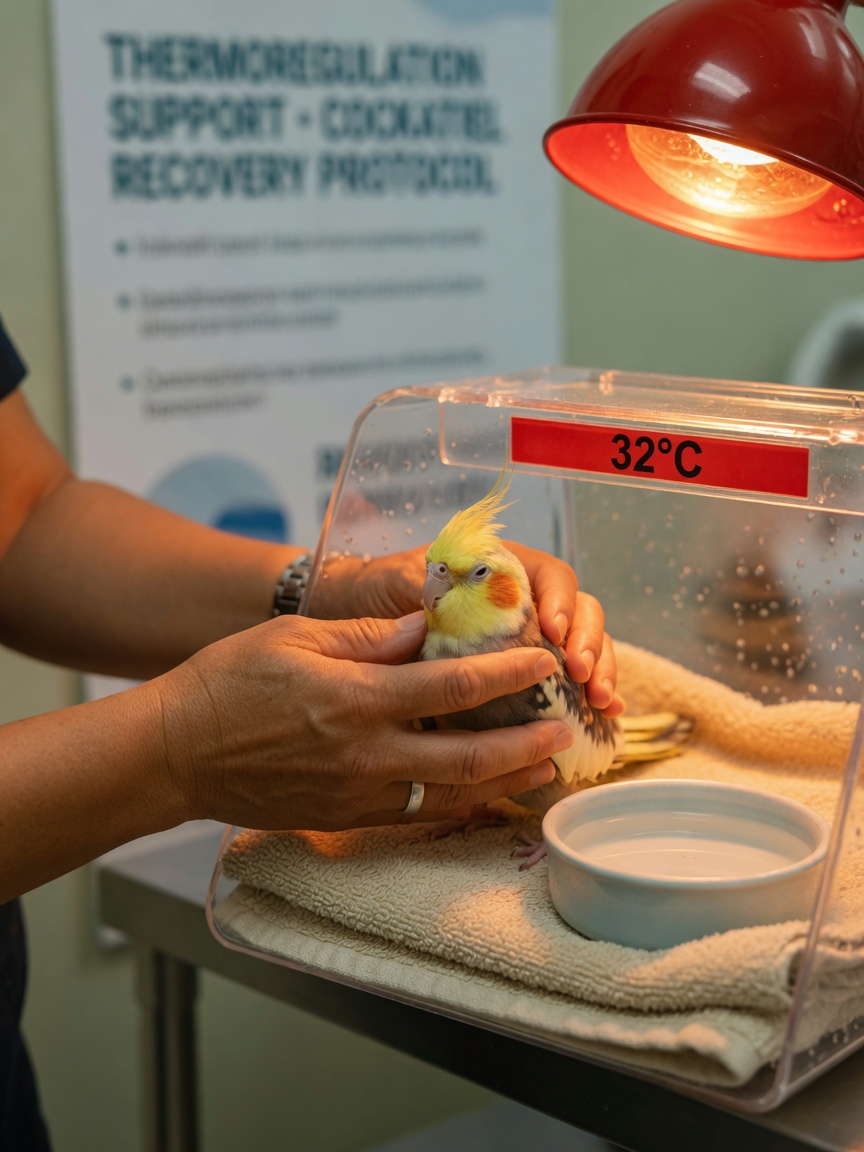
Whilst arranging urgent veterinary care, there are supportive measures you can take at home that may ease the bird's distress and help stabilise her:
- Keep the bird warm. Place her in a small, draught-free container and aim for an ambient temperature of around 32°C. A heat lamp positioned at a safe distance, or placing the carrier near a warm radiator, can help. Warmth relaxes the smooth muscle of the oviduct and may facilitate natural passage of the egg.
- Ensure she has access to fresh water but do not force feeding or drinking.
- Minimise handling. Repeated handling adds stress and can worsen the situation. Observe rather than hold.
- Contact an avian vet immediately and inform them you suspect egg binding so they can prepare accordingly.
Do not attempt to manually express or remove the egg yourself. An improperly handled egg can rupture inside the bird, releasing yolk material into the body cavity and causing life-threatening peritonitis.
Veterinary Diagnosis and Treatment
The vet will confirm the diagnosis through physical examination and radiography (X-ray). An X-ray will reveal the egg's location, size, and whether it is intact. It will also show whether the egg has calcified normally or is a soft-shelled egg, which presents differently and may require a different approach.
Treatment depends on the condition of the bird and the position of the egg. A staged approach is common:
- Supportive care: the bird is warmed, hydrated via fluid therapy if necessary, and may receive calcium supplementation by injection. Calcium is critical for oviduct muscle contractions and is commonly deficient in egg-bound birds.
- Hormonal intervention: if the cervix is sufficiently dilated, the vet may administer oxytocin or prostaglandins to stimulate oviduct contractions and help the egg pass naturally.
- Ovocentesis: if the egg is preventing movement but the shell is intact, the vet may carefully aspirate the contents of the egg with a needle to collapse it, making passage easier. This is performed under sedation.
- Surgery: in cases where the egg cannot pass and medical management has failed, surgical removal via coeliotomy may be necessary. This carries significant anaesthetic risk in a compromised bird but is sometimes the only option.
Preventing Egg Binding
Many cases of egg binding are preventable through environmental and dietary management. The aim is to reduce the hormonal stimulation that drives egg production in the first place:
- Reduce light exposure to no more than 12 hours per day. Longer days mimic spring and summer conditions, triggering the reproductive cycle. Using a cage cover to enforce a consistent light schedule is one of the most effective preventive measures available.
- Remove nesting materials from the cage. Nesting boxes, shredded paper, and other materials that a bird uses as nesting substrate encourage egg laying. Remove them if your bird has been laying persistently.
- Avoid stroking along the back and base of the tail. This area is sensitive and tactile stimulation here mimics mating behaviour, elevating reproductive hormones. Limit petting to the head and neck.
- Ensure adequate calcium intake. Feed a varied, nutritionally complete diet that includes calcium-rich foods such as dark leafy greens, and consider a calcium supplement for species prone to chronic egg laying.
- Consult your vet about hormonal implants or injections if your bird is a persistent layer. Leuprolide acetate implants can suppress the reproductive cycle safely and effectively in many species.
After Recovery
A bird that has experienced egg binding once is at increased risk of future episodes. Follow-up with your avian vet is important to establish a long-term prevention plan. In some birds with persistent reproductive problems, surgical sterilisation may ultimately be the most appropriate long-term solution, and this is worth discussing with a specialist avian vet if recurrence is a concern.