
Understanding Mange in Dogs
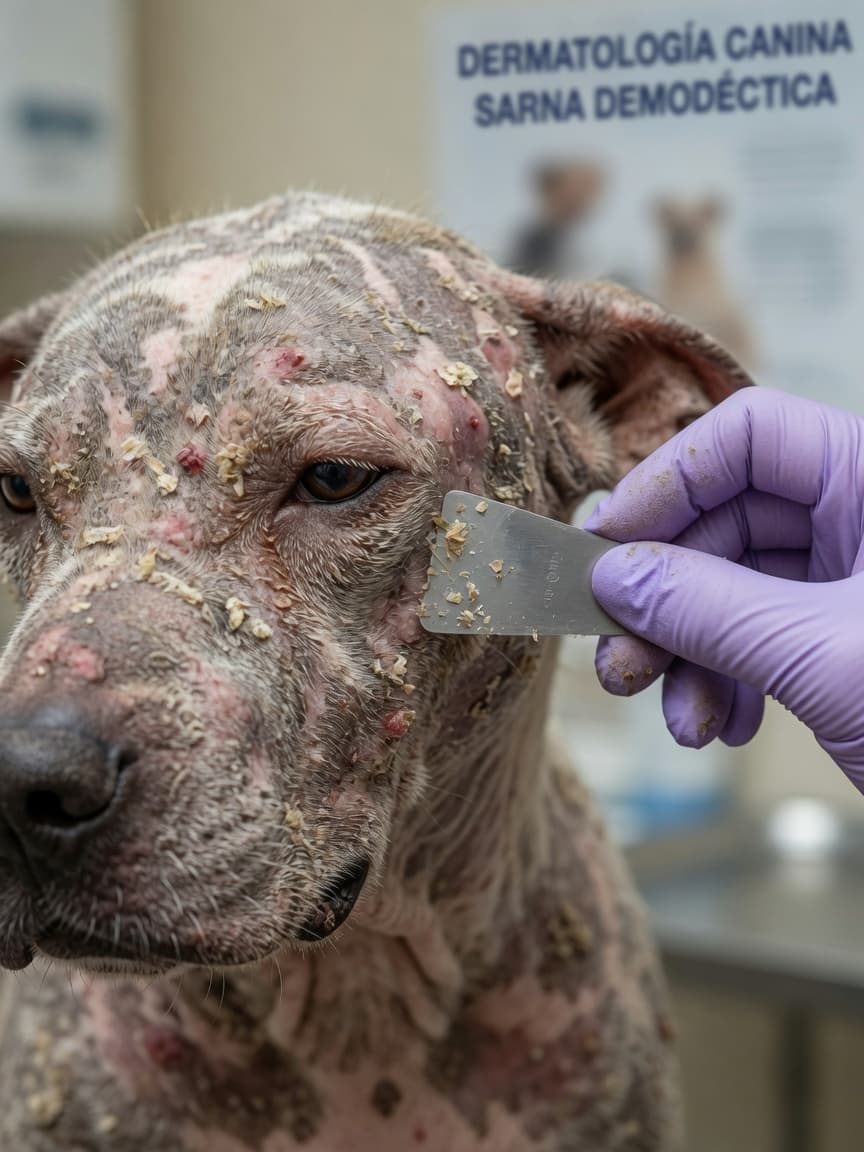
Mange is a term used to describe skin disease caused by mite infestation. In dogs, two distinct types are most commonly encountered: demodectic mange and sarcoptic mange. Although both cause significant skin problems, they differ fundamentally in their cause, how they spread, their risk to humans, and how they are treated. Understanding these differences is essential for appropriate management and for protecting other animals — and people — in the household.
Demodectic Mange
What Causes It?
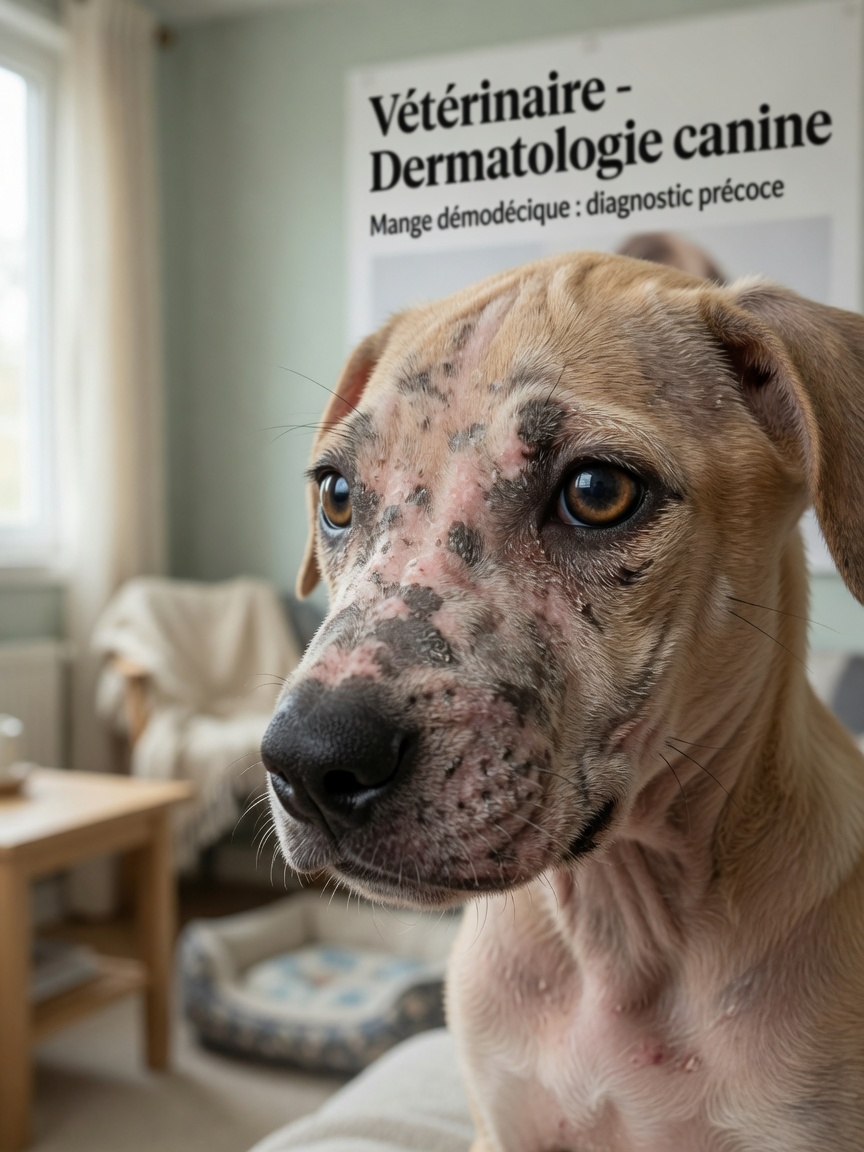
Demodectic mange is caused by Demodex canis, a cigar-shaped mite that lives in the hair follicles and sebaceous (oil) glands of dogs' skin. Crucially, this mite is a normal resident of healthy dogs — small numbers of Demodex mites are present in virtually all dogs without causing any problems. Demodectic mange only develops when the population of these mites increases to abnormal levels, which typically happens when the dog's immune system is unable to keep the mite population in check.
This is why demodectic mange is most commonly seen in puppies (whose immune systems are still maturing), young dogs going through the stress of rehoming or vaccination schedules, and adult or older dogs with underlying immune suppression caused by illness, long-term steroid use, or cancer. It is not contagious between adult dogs under normal circumstances, and it poses no zoonotic risk to humans — Demodex canis does not survive or reproduce on human skin.
Localised vs Generalised Demodectic Mange
Demodectic mange is classified as either localised or generalised, and the distinction matters for prognosis and management.
Localised demodectic mange presents as one to several small, well-defined patches of hair loss, most often on the face (around the eyes and muzzle) or on the legs. There is usually little or no itching, and the skin may appear slightly scaly or reddened but is not severely inflamed. In puppies, localised demodectic mange frequently resolves on its own as the immune system matures, though veterinary monitoring is recommended.
Generalised demodectic mange is more serious. It involves large areas of skin or the entire body, and is frequently complicated by secondary bacterial infections (pyoderma), which cause significant inflammation, crusting, odour and pain. Generalised disease in young dogs may also resolve with treatment, but when it occurs in adult or older dogs, it is often a signal of an underlying health problem that requires investigation. ESCCAP guidelines recommend that adult dogs with generalised demodectic mange are assessed for potential underlying immunosuppressive conditions.
Signs of Demodectic Mange
- Patchy hair loss, often starting around the eyes, muzzle and front legs
- Redness and scaling of affected skin
- Relatively little itching in uncomplicated cases
- Pustules, crusting, thickening and odour if secondary bacterial infection develops
- Swollen lymph nodes in severe generalised cases
Sarcoptic Mange
What Causes It?
Sarcoptic mange is caused by Sarcoptes scabiei var. canis, a mite that burrows into the superficial layers of the skin to lay its eggs. Unlike Demodex, Sarcoptes scabiei is not a normal resident of dogs — it is an external parasite acquired through contact with an infected animal. Sarcoptic mange is highly contagious and can spread rapidly between dogs through direct contact, shared bedding, grooming equipment or kennelling.
It is also a zoonotic condition, meaning it can temporarily infect humans. When Sarcoptes scabiei var. canis transfers to a human host, it causes intensely itchy, raised, red lesions — often on the arms, abdomen and chest. The mites cannot complete their life cycle on human skin, so the infestation is self-limiting in people once the source (the infected dog) is treated, but it can cause considerable discomfort in the interim. Anyone living with a dog diagnosed with sarcoptic mange should consult their GP or a dermatologist.
In some European Union member states, sarcoptic mange in certain wild animal populations (particularly foxes) is a notifiable condition and is subject to surveillance. In domestic dogs, notification requirements vary by country, but vets may be required to report clusters of cases.
Signs of Sarcoptic Mange
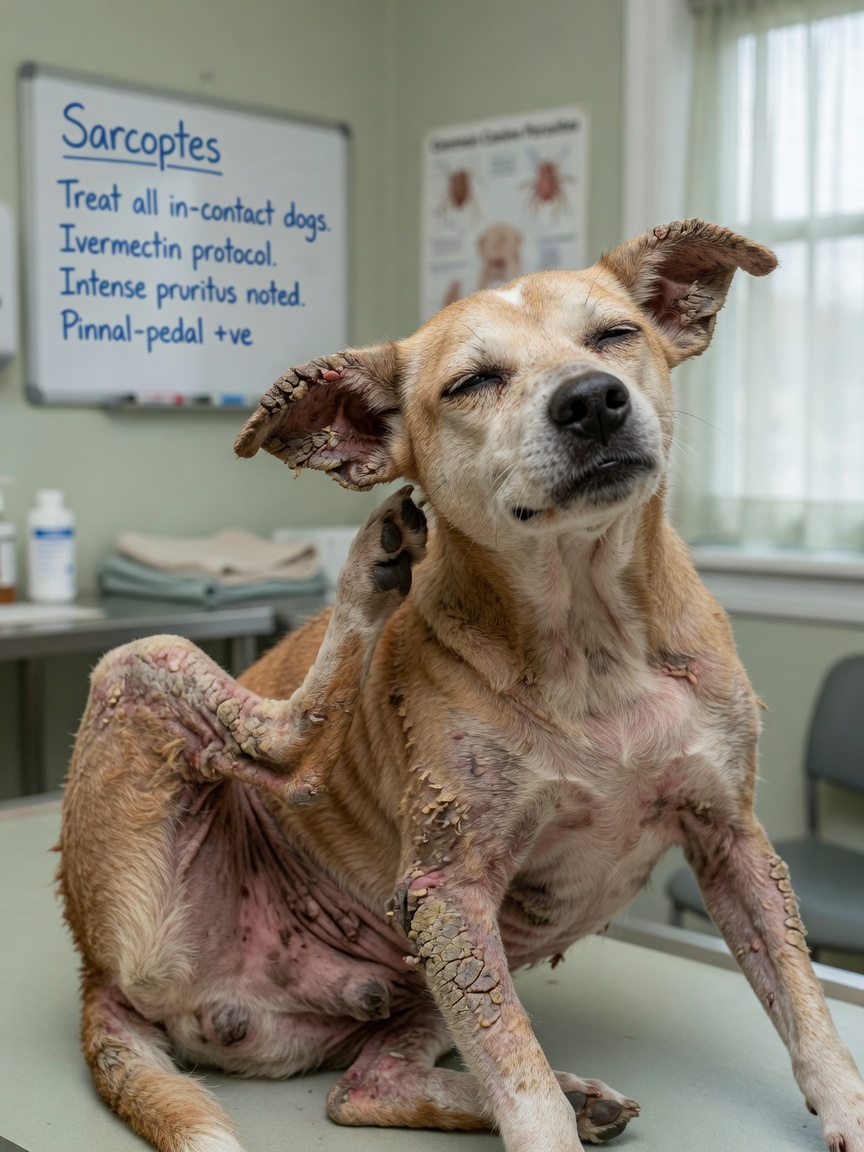
The hallmark of sarcoptic mange is intense, relentless itching — often dramatically more severe than any of the other skin conditions described in this guide. The itching is caused by the immune system's reaction to the mites, their eggs and their waste products, and it can be present even before significant skin changes are visible. Typical signs include:
- Severe, persistent itching — often described by owners as the worst they have ever seen
- Redness, crusting and scaling, particularly at the ear margins, elbows, hocks and abdomen
- Thickening and wrinkling of the skin with advanced disease
- Hair loss across large areas
- Restlessness and sleep disturbance in severely affected dogs
- Rapid weight loss and debilitation in untreated cases
A useful clinical indicator is the pinnal-pedal reflex: scratching at the ear margin of a dog with sarcoptic mange often causes the dog to reflexively scratch with its hind leg. This test is not definitive, but a positive response increases clinical suspicion of sarcoptic mange significantly.
Diagnosis
Skin Scraping
The traditional diagnostic method for mange is a superficial or deep skin scraping examined under a microscope. Deep scrapings (which draw a small amount of blood) are used for demodectic mange, as Demodex mites live deep in the follicles. For sarcoptic mange, multiple superficial scrapings are taken from the edge of lesions, though false negatives are common — the mites can be difficult to find even in heavily infected dogs.
PCR Testing
PCR (polymerase chain reaction) testing of skin samples or surface tape strips can detect mite DNA with greater sensitivity than microscopy alone. This is particularly useful when sarcoptic mange is strongly suspected clinically but scrapings have been negative. PCR testing for mange is increasingly available through veterinary diagnostic laboratories in the UK and EU.
Response to Treatment
Because sarcoptic mange can be so difficult to confirm by scraping, many vets diagnose it clinically and confirm the diagnosis by observing a positive response to appropriate treatment.
Treatment
Isoxazolines
The isoxazoline class of antiparasitics — which includes fluralaner (Bravecto), sarolaner (Simparica) and afoxolaner (NexGard) — has become the first-line treatment for both demodectic and sarcoptic mange in the UK and EU. These licensed veterinary medicines are highly effective, with clinical studies showing excellent efficacy for both types of mange. They are administered orally or as spot-on treatments and are generally well tolerated. ESCCAP guidance supports the use of licensed isoxazolines as first-line therapy for both types of canine mange.
Ivermectin
Ivermectin has historically been used to treat mange, particularly sarcoptic mange, at higher doses than those used for general parasite prevention. However, its use requires significant caution. Dogs carrying the MDR1 (ABCB1) gene mutation — a mutation common in Collies, Shetland Sheepdogs, Australian Shepherds, and related herding breeds — can experience severe, potentially fatal neurological toxicity at high ivermectin doses. Genetic testing is available and should be considered before using ivermectin in any breed at risk. Given the safety and efficacy of licensed isoxazolines, ivermectin is now rarely the preferred option in routine clinical practice.
Treating the Environment and In-Contact Animals
For sarcoptic mange, all in-contact dogs should be treated simultaneously, and bedding, grooming equipment and soft furnishings should be thoroughly washed or replaced. The environment should be treated with an appropriate veterinary insecticide spray.
Key Differences at a Glance
- Demodectic mange is caused by a normal skin resident mite and is not contagious between dogs or to humans
- Sarcoptic mange is caused by a burrowing mite acquired from infected animals and is highly contagious to both dogs and people
- Sarcoptic mange causes far more intense itching than demodectic mange
- Both types respond well to licensed isoxazoline treatments when diagnosed correctly
- Adult dogs with generalised demodectic mange should be investigated for underlying immune suppression