
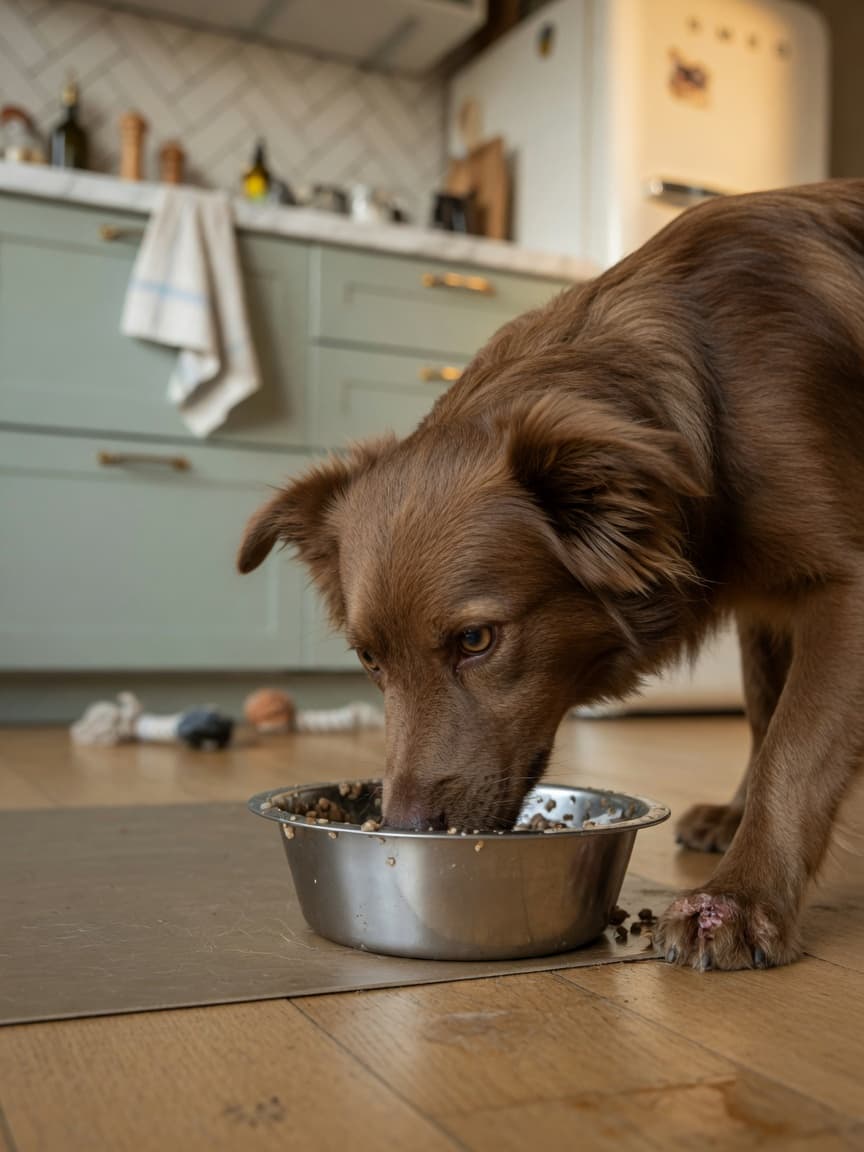
Dog Paw Injury: Types, Home Care & When to See a Vet
By Julia Wrenfield, Pet Wellness Researcher
A dog's paws absorb enormous mechanical stress every day — running on abrasive surfaces, tolerating extreme temperatures, and investigating potentially hazardous environments. Paw injuries are among the most common reasons owners seek veterinary advice. The good news: many minor paw injuries respond well to careful home care. The challenge is accurately distinguishing "minor" from "needs a vet."
Common Types of Dog Paw Injuries
Pad Lacerations and Cuts
The footpads are thick but can be cut by glass, sharp rocks, metal edges, or even shells. Pad lacerations bleed profusely because the pads have a rich blood supply, which can make the injury look more severe than it is. The pads also have reduced sensation compared to other skin, so dogs may not react dramatically to a significant cut.
Abrasions and Burns
Hot pavement in summer (asphalt can reach 145°F/63°C on a 90°F day), ice salt and de-icing chemicals in winter, and rough terrain can strip the surface of the pad. Affected pads appear raw, pink, or peeled. The dog may limp or lick the paw persistently.
Cracked Pads
Dry air, low humidity, and frequent contact with rough surfaces cause pad dryness and cracking. Superficial cracks are cosmetic; deep cracks bleed and are painful.
Torn or Broken Nails
Nails can catch on carpet, fencing, or ground cover and tear partially or completely. A partially torn nail is extremely painful and prone to infection. Complete avulsions bleed significantly but are less painful once the nail is gone.
Foreign Bodies
Thorns, glass splinters, grass awns (foxtails), and gravel can become embedded in the pad or between the toes. Grass awns are particularly dangerous — they continue to migrate through tissue and can cause deep abscesses or travel to internal organs if not removed.
Interdigital Cysts and Furunculosis
Painful fluid-filled nodules between the toes, usually caused by bacterial or fungal infection, ingrown hairs, or allergies. Require veterinary diagnosis and treatment.
Step-by-Step Home Care for Minor Paw Injuries
Step 1 — Control Bleeding
Apply firm, direct pressure with a clean cloth or sterile gauze. Hold for 5–10 minutes without lifting the cloth to check (lifting disturbs clot formation). If blood soaks through, add more cloth on top — do not remove the first layer. Elevate the paw above heart level if the dog allows it.
Step 2 — Clean the Wound
Once bleeding is controlled, rinse the wound gently with clean, lukewarm water or sterile saline solution for 2–3 minutes to flush out debris. Do not use hydrogen peroxide (damages tissue and delays healing), neat rubbing alcohol, or iodine at full strength. A diluted povidone-iodine solution (colour of weak tea) is acceptable for initial cleaning.
Step 3 — Examine the Wound
Look for embedded foreign material, wound depth, and wound edges. A laceration where you can see into a deeper layer, where edges gape more than 1 cm, or where you cannot see the full depth needs veterinary assessment — it may require stitches.
Step 4 — Apply Antiseptic and Bandage
Apply a thin layer of veterinary antiseptic or plain chlorhexidine solution. Cover the wound with a non-stick sterile pad, then wrap with conforming bandage. Finish with a layer of cohesive bandage (Vetrap). The bandage should be snug but not tight — you should be able to slide one finger underneath. Check the toes every few hours; swelling above the bandage indicates it is too tight.
Step 5 — Protect the Paw
Place a clean sock or dog boot over the bandage before outdoor trips to keep it clean and dry. Change the bandage once or twice daily, or whenever it gets wet or soiled. Inspect the wound at each change for signs of healing or infection.
Step 6 — Prevent Licking
An Elizabethan collar (cone) or a properly fitted recovery suit prevents licking, which introduces bacteria and delays healing. Licking a wound is one of the primary reasons minor injuries become infected.
Dealing With a Torn Nail
A partially torn nail should be examined by a vet — the hanging fragment is painful and prone to catching and re-tearing. If the nail is almost fully detached and will fall off on its own, clean the area and bandage to prevent infection. Do not attempt to yank the nail off unless you have veterinary guidance. Complete nail avulsions bleed heavily; apply pressure and see a vet for pain management and bandaging.
Signs of Wound Infection — Go to the Vet
- Increasing pain rather than decreasing over 24–48 hours
- Swelling spreading up the leg
- Discharge that is green, yellow, or has an odour
- Excessive warmth at the site
- The dog becomes feverish or lethargic
Seasonal Paw Protection
- Summer: Walk on grass where possible; test pavement temperature with your palm (7 seconds rule — if you can't hold your hand there, it's too hot for paw pads). Apply a paw balm before and after walks.
- Winter: Rinse paws after walks to remove ice salt and de-icers; use dog boots in severe conditions; apply protective wax or balm pre-walk.
A quality paw balm or wax creates a protective barrier against hot pavement, ice salt, and dry cracking. Look for beeswax-based formulas without essential oils, which can be irritating to some dogs.
- Pad lacerations bleed heavily but often look worse than they are — apply firm pressure for 10 full minutes.
- Never use hydrogen peroxide or neat alcohol on wounds — both damage tissue and delay healing.
- Wounds that gape, are deep, or will not stop bleeding need veterinary stitches.
- A cone or recovery suit is essential — licking turns minor wounds into infected ones.
- Check bandages every few hours; swollen toes above the bandage mean it is too tight.
- Grass awns (foxtails) require veterinary removal — they migrate through tissue and can be fatal if left untreated.
- Swaim SF, Welch JA, Gillette RL, Sartin EA. Evaluation of a wound treatment product for dog footpad injuries. Vet Med. 2001;96(7):576-586. PMID: 11451098
- Hedlund CS. Surgery of the integumentary system. In: Fossum TW, ed. Small Animal Surgery. 4th ed. Elsevier Mosby; 2013. PMID: 24098867
- Pavletic MM. Atlas of Small Animal Wound Management and Reconstructive Surgery. 3rd ed. Wiley-Blackwell; 2010. PMID: 20345487