
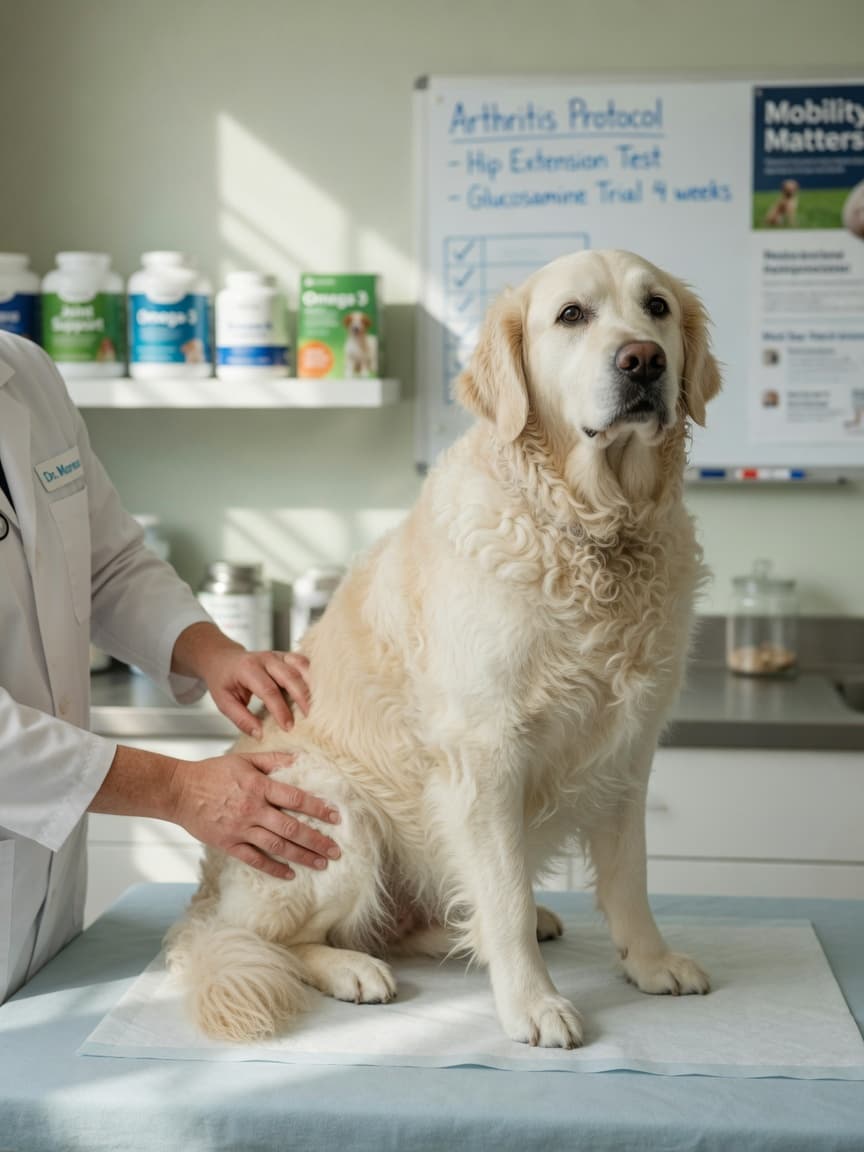
Joint Health in Dogs: Why It Matters More Than You Might Think
Osteoarthritis is one of the most common conditions affecting dogs across Europe. Studies suggest that up to 20 per cent of dogs over one year of age are affected, with prevalence rising sharply in older animals. Yet because dogs are instinctively stoic creatures, the signs of joint discomfort are often subtle — a reluctance to climb stairs, a slight stiffness after rest, a reduced enthusiasm for walks that owners may initially attribute to age alone.
Understanding joint health and the role of nutritional supplements is therefore not a luxury for concerned owners; it is an important part of responsible long-term care. Organisations such as WSAVA (the World Small Animal Veterinary Association) and FECAVA (the Federation of European Companion Animal Veterinary Associations) increasingly emphasise preventive and supportive approaches to managing chronic conditions like osteoarthritis alongside conventional treatment.
Understanding Canine Joints: Cartilage, Synovial Fluid and Inflammation
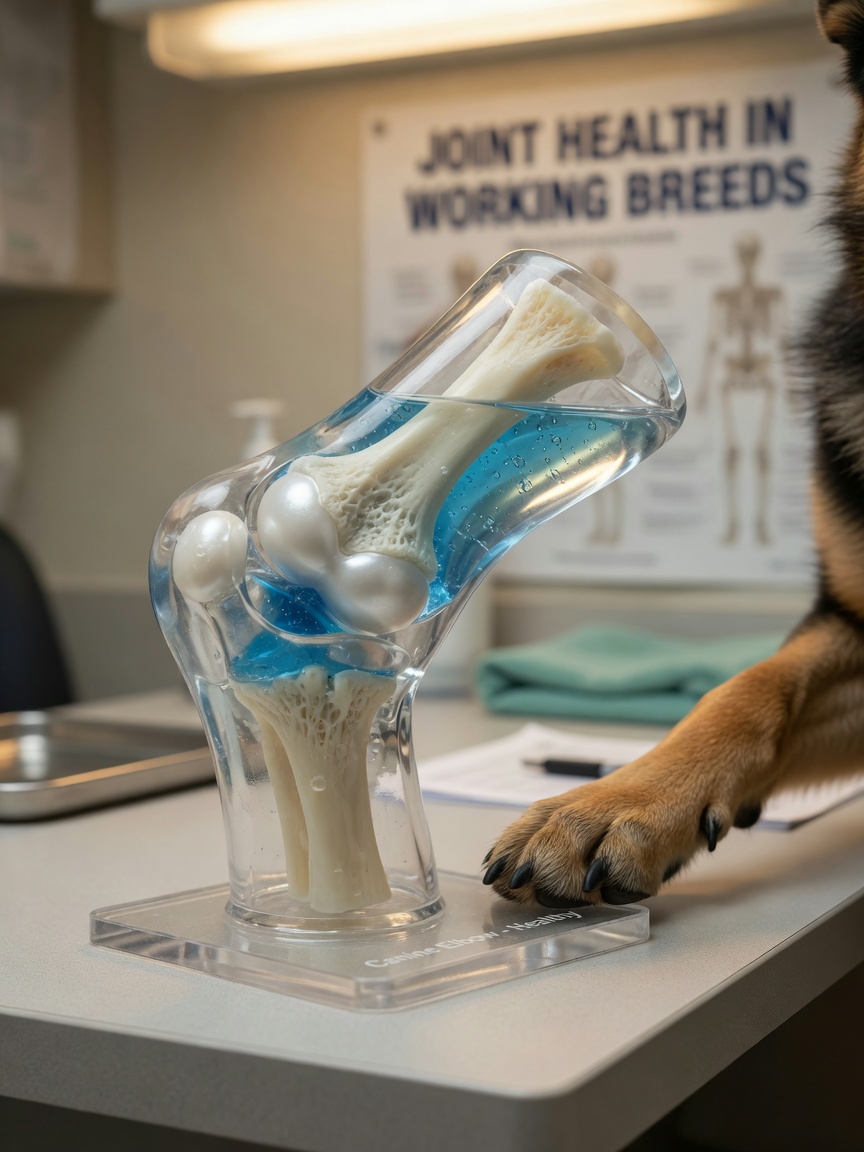
To appreciate how supplements work, it helps to understand what is happening inside an affected joint. Healthy joints are cushioned by articular cartilage — a smooth, resilient tissue that allows bones to glide against one another without friction. Surrounding the joint is the synovial membrane, which produces synovial fluid to lubricate and nourish the cartilage.
In osteoarthritis, this system breaks down. Cartilage begins to degrade faster than the body can repair it. The synovial membrane becomes inflamed, producing enzymes and inflammatory mediators that accelerate further damage. Over time, the joint loses its smooth surfaces, and bone-on-bone contact causes pain, reduced range of motion and altered gait.
Joint supplements do not reverse this process, but certain compounds have been shown to slow its progression, reduce inflammation, and support the natural rebuilding of cartilage. This is where the evidence for specific ingredients becomes critical.
Key Joint Supplements: What the Evidence Shows

Glucosamine
Glucosamine is arguably the most widely used joint supplement in both human and veterinary medicine. It is a naturally occurring amino sugar that serves as a building block for glycosaminoglycans — the structural components of cartilage. Supplemental glucosamine, typically derived from shellfish, is thought to support cartilage synthesis and inhibit the enzymes responsible for cartilage breakdown.
Clinical trials in dogs have shown variable but broadly encouraging results. The most commonly studied form is glucosamine hydrochloride. Typical maintenance doses for dogs range from around 500 mg daily for small breeds to 1500 mg or more for large breeds, though veterinary guidance on dosing is always recommended, particularly for dogs with existing health conditions.
Chondroitin Sulphate
Chondroitin sulphate is a glycosaminoglycan found naturally in cartilage. It works synergistically with glucosamine — the two are frequently combined in commercial supplements precisely because they appear to act through complementary mechanisms. Chondroitin helps attract water into cartilage tissue, maintaining its elasticity and shock-absorbing properties. It also inhibits certain degradative enzymes within the joint environment.
Research in both human and veterinary contexts supports the combination of glucosamine and chondroitin as more effective than either compound alone. When selecting a product, checking that the chondroitin is derived from a reputable source — such as bovine trachea or shark cartilage — and that the concentration is clearly stated on the label is worth the extra effort.
Omega-3 Fatty Acids: EPA and DHA
Omega-3 fatty acids, particularly eicosapentaenoic acid (EPA) and docosahexaenoic acid (DHA), have one of the stronger evidence bases among joint supplements. Unlike glucosamine and chondroitin, which primarily target cartilage structure, omega-3s work by modulating the inflammatory cascade within the joint.
EPA and DHA are incorporated into cell membranes and compete with arachidonic acid, reducing the production of pro-inflammatory prostaglandins and leukotrienes. Several controlled studies in dogs have demonstrated that fish oil supplementation can reduce lameness scores, improve weight-bearing and decrease the need for non-steroidal anti-inflammatory drugs (NSAIDs) in osteoarthritic dogs.
Marine sources — such as salmon oil or anchovy oil — provide EPA and DHA in their most bioavailable form. Plant-based omega-3 sources contain ALA, which dogs convert to EPA and DHA very inefficiently, making them a poor substitute.
Green-Lipped Mussel
Green-lipped mussel (Perna canaliculus), native to New Zealand, has attracted considerable scientific interest in recent years. It is uniquely rich in a combination of compounds beneficial for joint health: omega-3 fatty acids including EPA and DHA, as well as eicosatetraenoic acid (ETA) — a rare omega-3 that shows particular promise in inhibiting both COX and LOX inflammatory pathways simultaneously.
Green-lipped mussel also contains glycosaminoglycans, chondroitin sulphate and a range of vitamins and minerals. The combination of these compounds in a single whole-food ingredient may explain why several veterinary studies have found it effective at reducing signs of joint discomfort in dogs. It is generally well tolerated and has a good safety profile.
How to Choose a Quality Joint Supplement
The supplement market is large and poorly regulated compared to licensed veterinary medicines. WSAVA guidance strongly encourages an evidence-based approach: look for products from manufacturers who have conducted or sponsored peer-reviewed clinical trials, publish their quality control processes, and clearly state the concentration of active ingredients per dose.
Avoid products that make sweeping claims without substantiation — phrases such as "clinically proven" or "veterinary strength" are marketing terms unless backed by published data. Reputable manufacturers will list exact milligrams of glucosamine, chondroitin and omega-3 fatty acids per serving, rather than hiding them in proprietary blends.
Zooplus offers a well-curated range of joint supplements for dogs, including options containing glucosamine, chondroitin, omega-3 and green-lipped mussel from brands with established quality standards. For owners looking for a reliable, convenient source of joint support products, it is a practical starting point — with the benefit of competitive pricing and wide availability across Europe.
Breeds That Benefit Most From Joint Support
While any dog can develop joint problems, certain breeds carry a significantly elevated risk due to genetic predisposition.
- Labrador Retrievers are among the most commonly affected breeds, with high rates of both hip dysplasia and elbow dysplasia. Their tendency to carry excess weight compounds joint stress considerably.
- German Shepherds are predisposed to hip dysplasia as well as degenerative myelopathy — a progressive neurological condition that also affects mobility. Early joint support may help preserve quality of life as these dogs age.
- Golden Retrievers share a susceptibility to hip dysplasia and are also prone to cranial cruciate ligament disease, which places additional strain on the stifle joint. Owners of Golden Retrievers often find joint supplements beneficial from middle age onward.
For high-risk breeds, many veterinarians recommend beginning joint supplements as a preventive measure before clinical signs appear, typically from around two to three years of age.
Lifestyle Factors That Work Alongside Supplements
Supplements are most effective when they form part of a broader approach to joint health. Weight management is arguably the single most impactful intervention available to owners: every kilogram of excess weight places disproportionate load on joints, accelerating cartilage wear. A body condition score assessment by a veterinarian can help determine whether weight loss is indicated.
Gentle, consistent exercise — such as lead walking on soft surfaces, hydrotherapy or controlled off-lead activity — helps maintain muscle mass around the joint, which provides important stabilising support. Physiotherapy and canine rehabilitation are growing fields across Europe, and FECAVA-affiliated veterinary practices increasingly offer referral to certified physiotherapists.
When to See Your Vet
Joint supplements are a supportive measure, not a treatment. If your dog is showing signs of pain, significant lameness, or a sudden change in mobility, a veterinary consultation is essential before or alongside starting any supplement regimen. Your vet may recommend imaging, pain relief, or specialist referral depending on the severity of the condition.
ESCCAP (the European Scientific Counsel Companion Animal Parasites) and broader European veterinary bodies consistently emphasise that preventive health strategies — including appropriate supplementation — work best within the context of regular veterinary check-ups, not as a replacement for them. A dog whose joint health is monitored, well supported nutritionally and managed with appropriate exercise is a dog who can continue to enjoy a full and active life well into old age.