

If you're considering bringing a Soft Coated Wheaten Terrier into your home, one of your first questions might be about shedding. The good news? Wheatens are classified as low-shedding dogs, making them an excellent choice for those concerned about loose hair on furniture and clothing. However, "low-shedding" doesn't mean "no-shedding," and understanding the nuances of their coat care will help you maintain a healthy, beautiful dog and a cleaner home. Let's explore what you need to know about Wheaten shedding patterns and how to manage their grooming needs effectively.
Understanding the Wheaten Coat: Structure and Shedding Pattern
Wheaten Terriers have a single-layered, silky coat that's distinctly different from double-coated breeds. This single coat means they lack the dense undercoat that most shedding breeds possess. Their hair grows continuously and doesn't undergo the dramatic seasonal shedding cycles you'll see in Labradors or German Shepherds.
That said, Wheatens do shed minimally year-round. You'll notice slightly increased shedding during spring and autumn when their coat naturally transitions, but it's far less noticeable than with many other breeds. The texture of their coat—soft and slightly wavy—means individual hairs are less likely to tumble across your floors like those from coarser-coated breeds.
Shedding Severity: What to Expect
On a scale of shedding intensity, Wheatens rank quite low. They're often compared favourably to Poodles and Bichon Frises in terms of minimal hair loss. However, individual dogs may vary slightly based on genetics, diet, and health status. Poor nutrition or underlying skin conditions can increase shedding beyond normal levels, so maintaining your dog's overall health is crucial.
If you or family members have mild to moderate dog allergies, a Wheaten might be suitable, though no dog is truly hypoallergenic. Their low shedding does mean fewer allergens circulating through your home compared to heavy shedders.
Essential Grooming Practices to Minimise Shedding
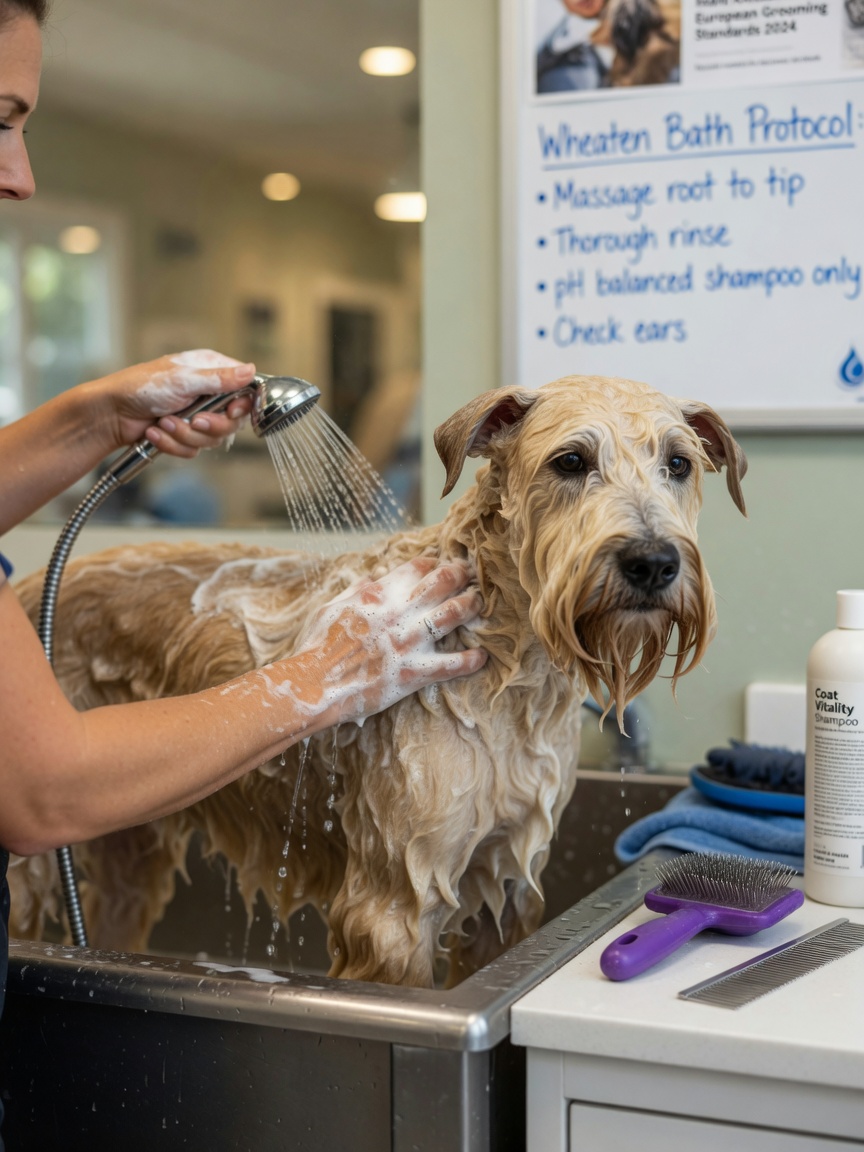
Regular grooming is your greatest tool for managing Wheaten shedding. Professional grooming every 6-8 weeks helps remove loose hairs before they fall around your home. Between appointments, follow this routine:
- Brush twice weekly with a slicker brush and metal comb to remove loose hairs and prevent matting
- Bathe monthly with a high-quality dog shampoo designed for coat health
- Dry thoroughly after bathing, as damp skin is prone to matting
- Check ears regularly for moisture and debris, as Wheatens are prone to ear infections
- Trim nails monthly to maintain proper foot health and gait
Consistent brushing not only reduces loose hair but also improves blood circulation to the skin and distributes natural oils throughout the coat, promoting healthier hair growth and skin.
Diet and Health: Hidden Factors in Shedding

A nutritionally complete diet rich in omega-3 and omega-6 fatty acids supports skin and coat health, potentially reducing excessive shedding. Look for dog foods listing high-quality protein sources as primary ingredients. Deficiencies in vitamins, minerals, or fatty acids can lead to poor coat quality and increased hair loss.
Regular veterinary check-ups are equally important. Conditions like hypothyroidism, allergies, or parasites can cause abnormal shedding. If you notice sudden increases in hair loss, bald patches, or skin irritation, consult your vet promptly.
Lifestyle Considerations for Wheaten Owners
Beyond grooming, consider these practical aspects:
- Wheatens are active, playful dogs requiring daily exercise and mental stimulation
- They're social animals that thrive on human companionship
- Their friendly nature makes them poor guard dogs but excellent family companions
- They typically live 12-14 years, requiring a long-term commitment
Key Takeaways for Prospective Wheaten Owners
Wheaten Terriers are genuinely low-shedding companions, making them ideal for those seeking a relatively hair-free home. Their minimal shedding combined with their affectionate, spirited personality creates an appealing package for many families. Success with a Wheaten comes down to consistent grooming, quality nutrition, and regular veterinary care. If you're prepared to invest time in their coat maintenance and provide the attention these intelligent, loving dogs deserve, you'll be rewarded with a healthy, happy companion and noticeably less dog hair on your furniture.