
Puppy Socialisation: The Critical Window (3–16 Weeks)
Socialisation is possibly the most important thing you will do for your puppy — more influential in the long term than any training class, diet choice or enrichment toy. And yet it is the area where most new owners either over-compensate (flooding an overwhelmed puppy with too many experiences at once) or under-invest (waiting until vaccinations are complete before letting the puppy experience the world). This guide gives you the science and the practical roadmap for getting socialisation right during the critical 3–16 week window.
What Is Socialisation and Why Does the Window Close?
In the early weeks of life, a puppy's brain is particularly plastic — it categorises new stimuli as benign by default. Puppies exposed to a wide variety of sounds, sights, textures, people, animals and environments during this period grow into dogs that approach novelty with curiosity rather than fear. After roughly 12–16 weeks (the exact timing varies by breed, with some working breeds having a somewhat earlier closure), the brain shifts to a more cautious default: new things are treated with suspicion until proven safe. This is an evolutionary adaptation — in the wild, a young animal that remains curious beyond the period when its mother can protect it would be dangerous vulnerable.
The practical implication is that any stimulus your puppy has not been positively exposed to by 16 weeks is likely to be something they will require patient, gradual desensitisation to as an adult. Fear-related behaviour problems — which are the most common cause of relinquishment and euthanasia in dogs across Europe — are largely the result of inadequate early socialisation.
Week 3–4: The Breeder's Responsibility
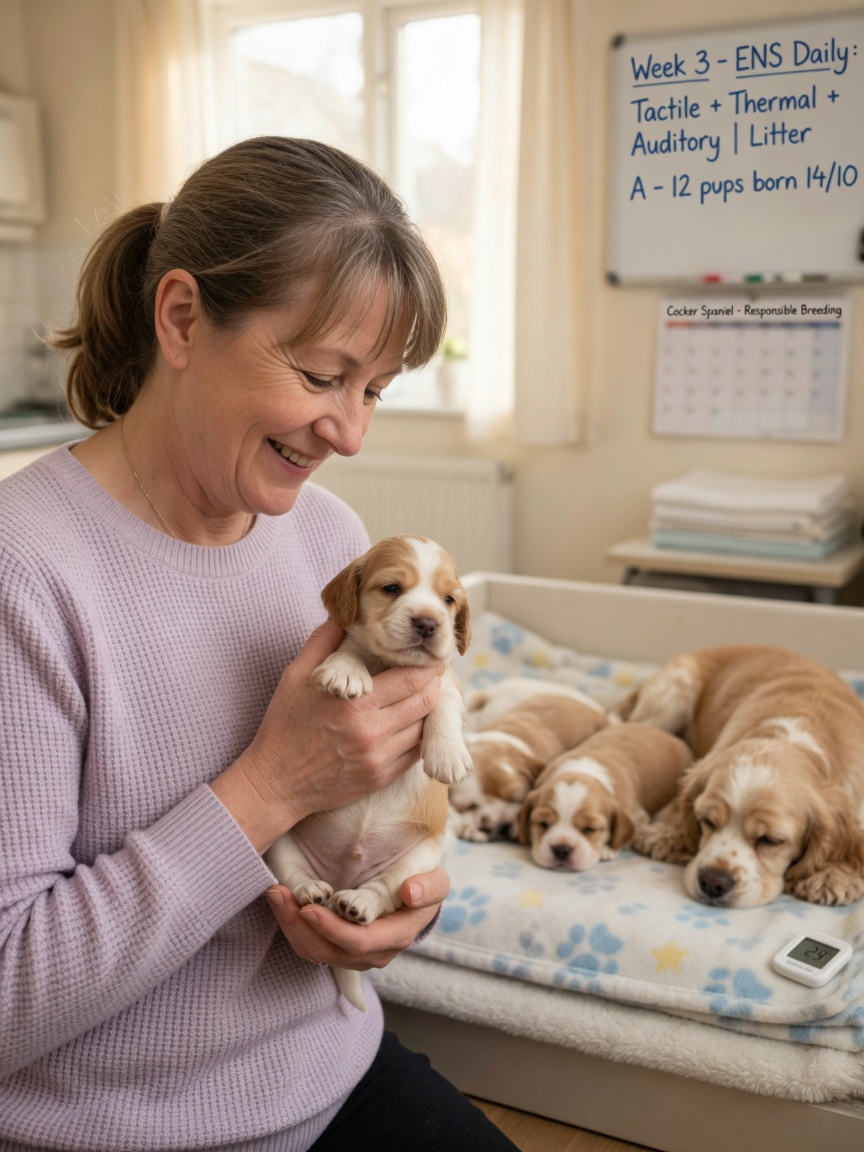
The socialisation window actually opens at around three weeks — while the puppy is still with its mother and littermates. This is why choosing a responsible breeder matters enormously. Reputable breeders in the UK, Germany, Netherlands and elsewhere begin "Early Neurological Stimulation" exercises from day three to sixteen of life and then transition to socialisation activities: handling by different people, exposure to household sounds, different floor textures, brief car journeys, and small challenges like a mild incline or a rustling bag. When evaluating a breeder, ask to see evidence of these activities — photos, video or a written puppy curriculum.
Weeks 5–7: Littermate Socialisation and Bite Inhibition
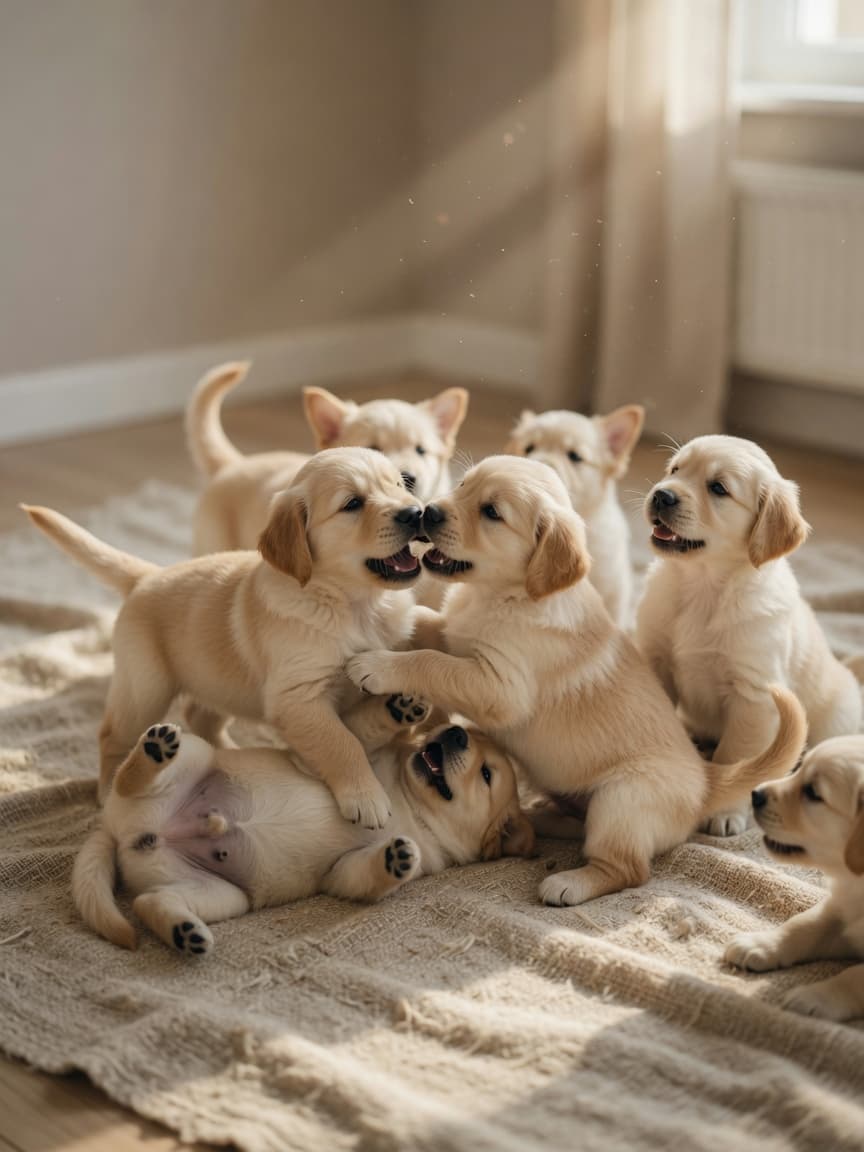
During this period, puppies are learning from each other. Play with littermates teaches bite inhibition — the ability to modulate bite pressure — which is one of the most critical social skills a dog can have. A puppy that bites too hard receives a yelp and social withdrawal from the sibling; it learns that excessive pressure ends play. This is why puppies should not leave their litter before eight weeks under any circumstances. In many European countries, including Germany, France, Belgium and the Netherlands, selling a puppy before eight weeks of age is illegal. In the UK, the Lucy's Law reforms similarly prohibit sales below eight weeks.
Weeks 8–12: The Window Is Open — Don't Wait for Full Vaccination
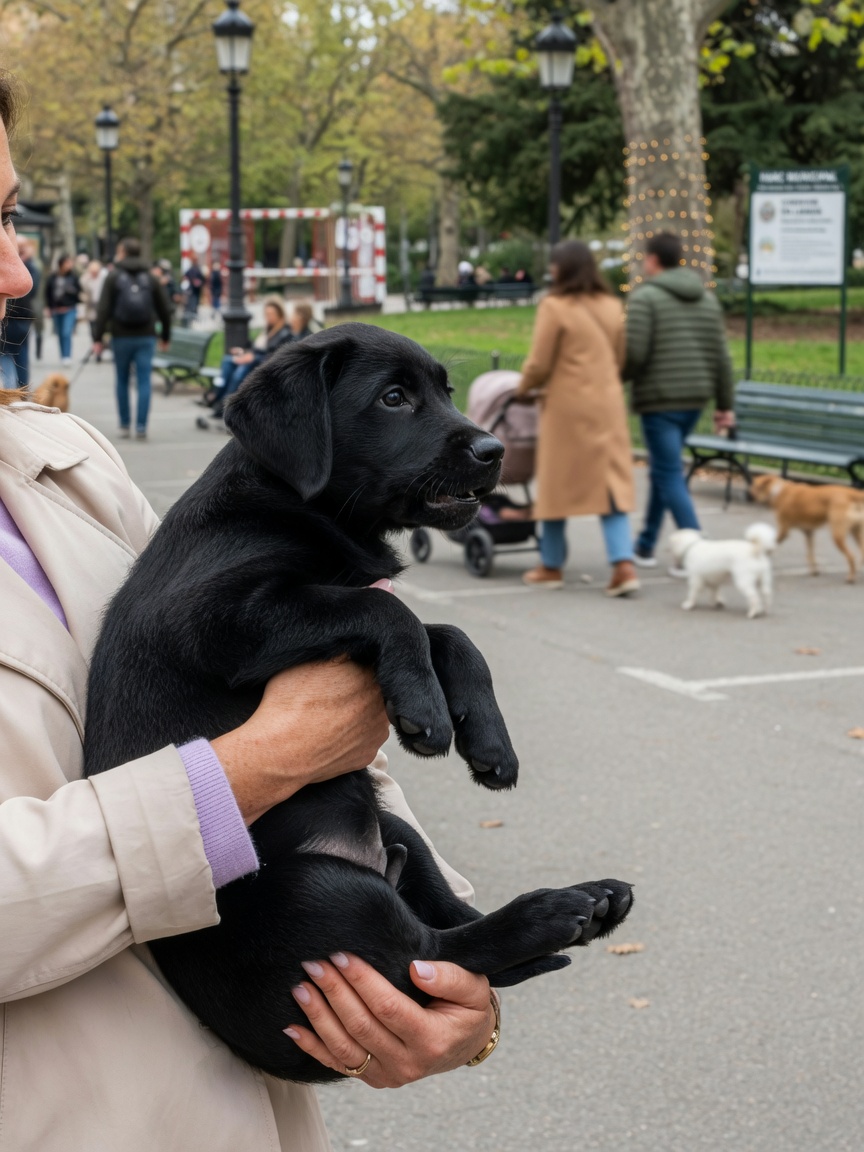
This is the most socially sensitive period of a dog's life — and it overlaps with the period when most puppies have not completed their vaccination course. The traditional advice of "keep the puppy home until fully vaccinated" has been recognised by behavioural science as causing more harm than the disease risk it prevents. The WSAVA socialisation guidelines explicitly state that the risks of behavioural problems from inadequate socialisation outweigh the risks of disease in most circumstances.
What this means practically:
- Carry your puppy in areas where unknown dogs may have been — public parks, pavements — so they experience sights and sounds without ground contact
- Attend puppy socialisation classes in verified clean indoor facilities (most veterinary practices across Europe now run these — they are considered the safest option as they exclude obviously unwell dogs and require first-vaccine proof)
- Visit the homes of vaccinated, healthy, calm adult dogs — garden introductions are ideal
- Sit outside cafés, near schools, at train stations — anywhere with varied stimuli
What Your Puppy Needs to Meet: A Socialisation Checklist
The goal is breadth and positive association — not quantity. A puppy that meets twenty strangers but is frightened each time learns the opposite of what you intend. Every interaction should end positively. Use high-value treats, maintain calm body language, and always allow the puppy to retreat if overwhelmed.
People
- Adults of different ages (elderly, young adults, teenagers)
- Children of different ages (always supervised; teach children to approach calmly)
- People with facial hair, hats, helmets, high-visibility vests, uniforms
- People using mobility aids: wheelchairs, crutches, canes
- People of different ethnicities — puppies raised in monocultural environments can show fear responses toward unfamiliar presentations of people
Animals
- Vaccinated, calm adult dogs of different breeds and sizes
- Cats (controlled exposure — do not allow chasing)
- Small animals from a safe distance if the puppy will live with them
- Livestock, horses (at a safe distance), if the dog will ever be in rural areas
Sounds
- Traffic, lorries, motorcycles, buses
- Fireworks and thunder (use desensitisation recordings during this period — the PDSA provides excellent fireworks guidance)
- Vacuum cleaner, washing machine, hairdryer
- Crowds, markets, city soundscapes
- Children playing, crying, shouting
Environments
- Different floor surfaces: tiles, carpet, grass, gravel, wooden decking, grates
- Stairs, lifts, escalators (carry for escalators)
- Vet clinic (even just for a social visit — a happy visit where nothing unpleasant happens is enormously valuable)
- Car travel
- Urban and rural environments
How to Socialise Without Overwhelming
The concept of "flooding" — overwhelming a puppy with stimuli until they give up reacting — is outdated and harmful. Watch for signs of stress: yawning when not tired, lip-licking, ears flattened, tail tucked, freezing or attempting to hide. If you see these signals, create distance from the trigger and let the puppy settle before any further exposure. Behavioural experts speaking to The Guardian consistently emphasise that socialisation quality matters far more than quantity: five calm, positive exposures are worth more than fifty stressful ones.
Weeks 12–16: Consolidation and Post-Vaccination Freedom
As the vaccination course completes, your puppy can finally go to the ground in public spaces. Continue the socialisation curriculum but now add dog-to-dog play in appropriate, supervised settings. Puppy classes are ideal at this stage — look for reward-based trainers certified through organisations such as the UK's Association of Pet Dog Trainers (APDT) or equivalent bodies in Spain, Germany and France. Structured puppy play should involve pauses to prevent over-arousal, size-matching where possible, and monitoring for bullying.
Shop puppy training treats & toys on Zooplus →After 16 Weeks: Is It Too Late?
The window closes — but it does not slam shut. Desensitisation and counter-conditioning (systematically pairing a feared stimulus with something the dog loves, at sub-threshold intensity) can help dogs overcome socialisation gaps at any age. It requires patience and consistency, and professional help from a qualified behaviourist is strongly recommended for significant fear responses. But prevention during the critical window remains incomparably easier than treatment afterwards.
Key Takeaways
- The socialisation window runs from approximately three to sixteen weeks — don't wait for full vaccination to begin
- Carry unvaccinated puppies in public to allow sensory exposure without ground contact risk
- Prioritise quality over quantity — every experience should end positively
- Watch for stress signals and always allow the puppy to retreat if overwhelmed
- Attend puppy socialisation classes — they are safe, valuable and start building crucial dog-to-dog social skills
- Desensitise to fireworks and loud sounds using recordings during the sensitive period