
Zinc Poisoning in Dogs: Coins, Sunscreen & Hemolytic Anemia
ASPCA Poison Control: (888) 426-4435
Pet Poison Helpline: (855) 764-7661
Available 24/7. Zinc poisoning causes rapid destruction of red blood cells — call immediately if your dog may have ingested zinc.
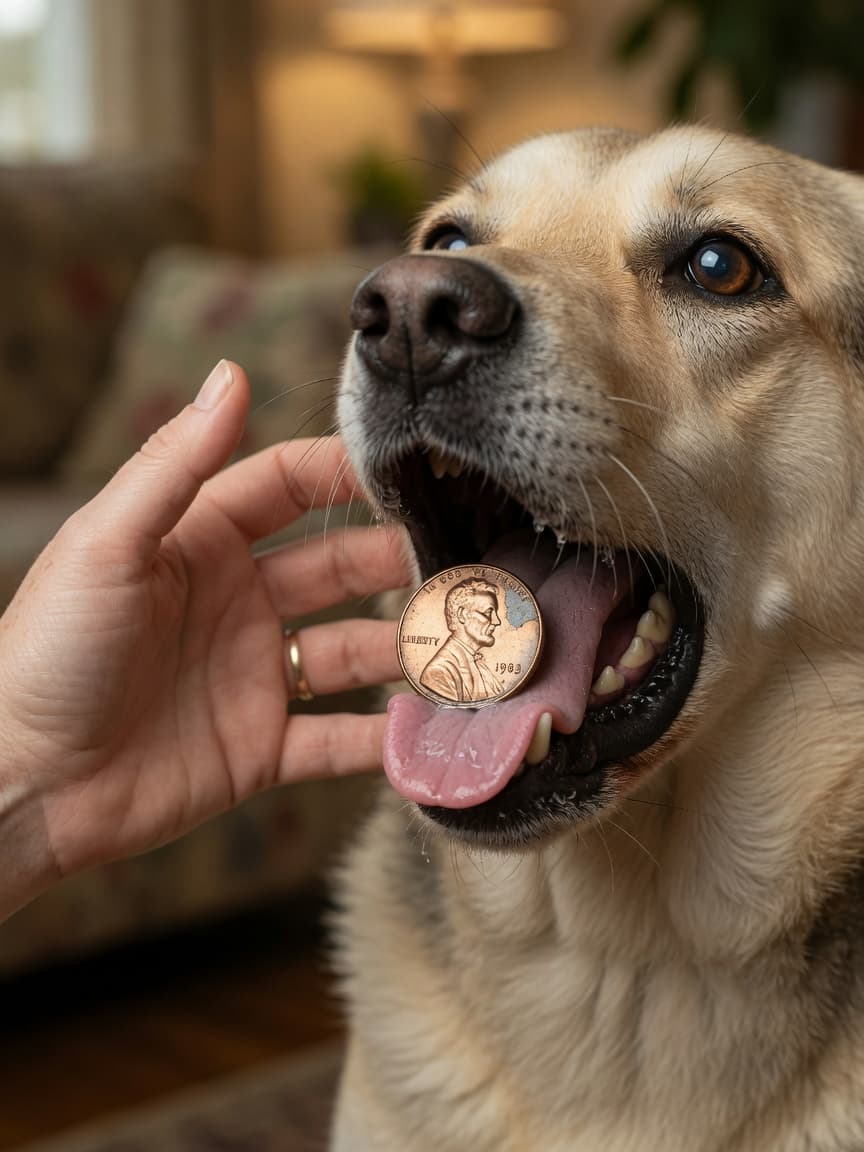
Zinc poisoning in dogs is a serious and underappreciated toxicological emergency. Unlike many poisons that lurk in medicine cabinets or under kitchen sinks, zinc hides in plain sight: in the coins in your pocket, the sunscreen on your bathroom shelf, the zinc oxide diaper cream in the nursery, and even some bolts and hardware on toys and crates. Dogs ingest zinc objects with frightening ease — particularly the penny, which since 1982 has been composed of 97.5% zinc with only a thin copper coating. A swallowed post-1982 US penny is a medical emergency. Zinc rapidly dissolves in stomach acid and releases free zinc ions that destroy red blood cells from the inside out, causing a catastrophic anemia that can be fatal within days.
Sources of Zinc Exposure in Dogs
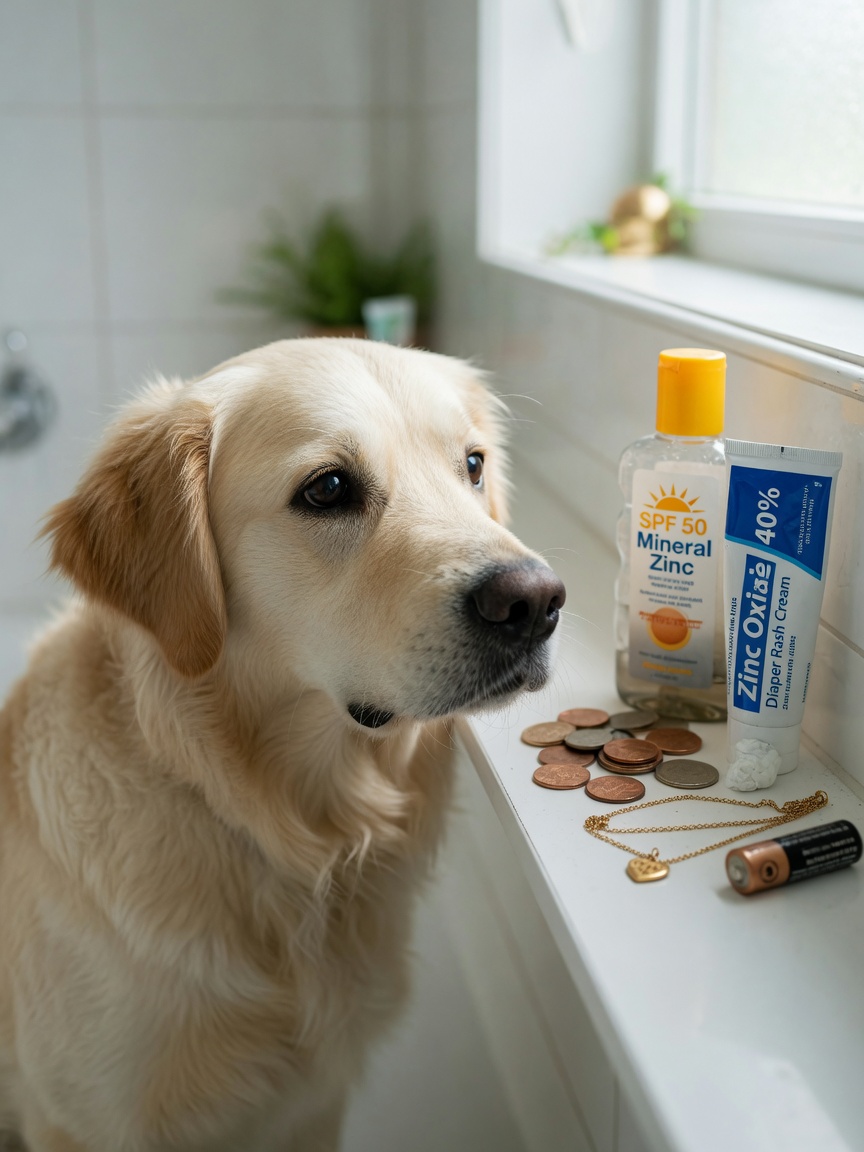
The range of zinc-containing materials dogs may ingest is broad and often surprising. The most significant sources include:
Post-1982 US pennies: Since 1982, US pennies have been manufactured with a zinc core (97.5% zinc) and a thin copper plating. Pre-1982 pennies are primarily copper and pose negligible zinc toxicity risk. The thin copper coating on modern pennies dissolves quickly in the acidic environment of the stomach, releasing a large bolus of zinc. A single penny can cause fatal zinc toxicity in a small dog. Dogs that swallow pennies may show few immediate signs, making the problem easy to overlook until severe anemia develops.
Other zinc-containing metal objects: Some game tokens, board game pieces, zippers, jewelry, and hardware items (nuts, bolts, washers) are made with zinc alloys. Metal crate hardware has been implicated in zinc poisoning in dogs that chew persistently on cage bars or fittings. Battery acid from certain battery types, metal staples, and galvanized metal objects (coated with zinc) are additional sources.
Zinc oxide topical products: Zinc oxide is used extensively in sunscreens, diaper rash creams, calamine lotion, and certain antifungal creams. Dogs that lick sunscreen off their own skin (or off a human's skin), or that get into tubes of diaper cream, can ingest significant quantities. The concentrations in some products are high — diaper creams often contain 10–40% zinc oxide.
Dietary supplements and fortified foods: Multivitamins containing zinc, zinc supplements, and some zinc-fortified foods can cause toxicity if a dog consumes multiple doses or the entire bottle.
The Mechanism: How Zinc Destroys Red Blood Cells
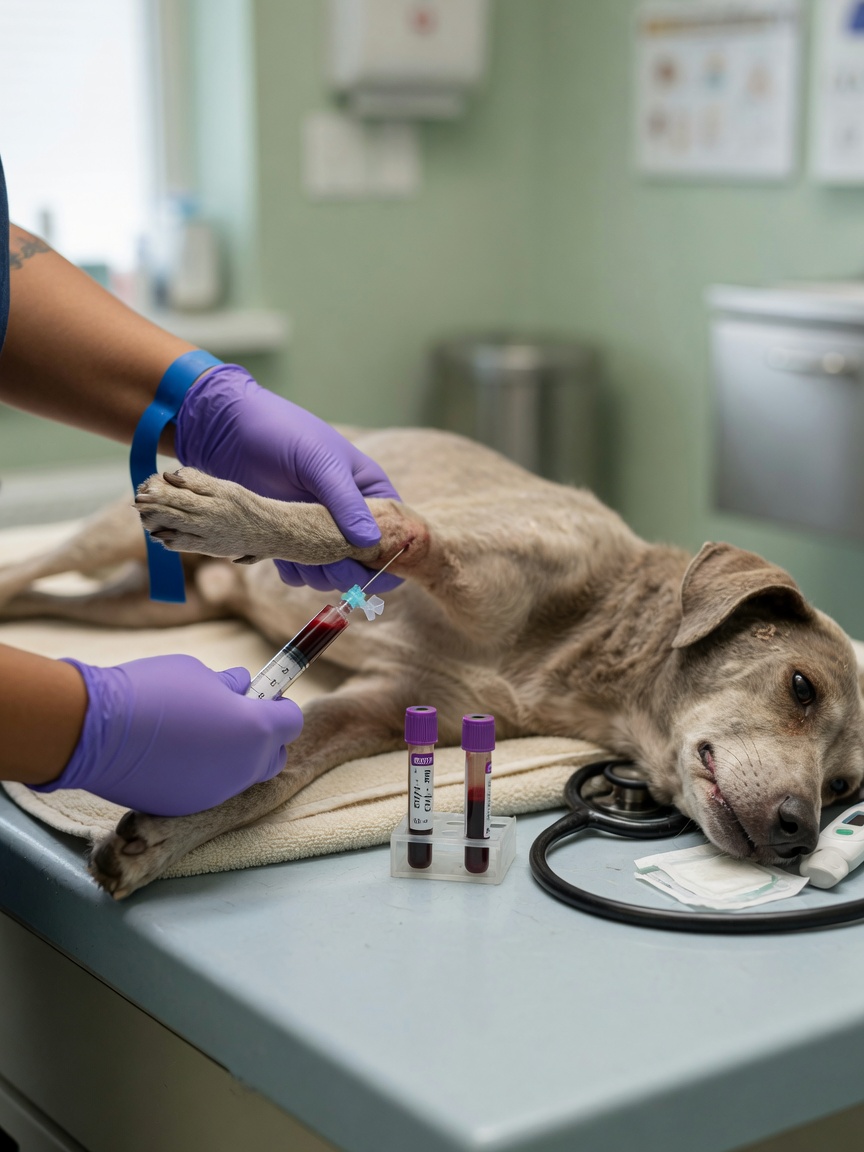
Once absorbed, free zinc ions cause a condition called hemolytic anemia — the premature destruction of red blood cells. Zinc appears to oxidize the hemoglobin inside red blood cells, converting it to methemoglobin (which cannot carry oxygen) and causing the formation of Heinz bodies — abnormal aggregates of denatured protein within the red cell that mark the cell for destruction by the spleen and immune system. The fragile, oxidatively damaged cells rupture and are cleared from circulation at a rate that overwhelms the bone marrow's capacity to produce replacements. The result is a rapidly progressing, severe anemia.
Zinc also has direct toxic effects on the liver and kidneys. As hemolysis releases free hemoglobin into the bloodstream, this protein clogs and damages the renal tubules, causing kidney injury. Liver enzymes become markedly elevated as zinc-induced oxidative stress damages hepatocytes. In severe cases, disseminated intravascular coagulation (DIC) — a catastrophic clotting disorder — can develop, causing simultaneous bleeding and clotting throughout the body.
Symptoms of Zinc Toxicity
Symptoms typically develop within 24–48 hours of ingestion of a zinc object, though onset may be delayed by several days if the object is slow to dissolve. GI signs appear first: vomiting, diarrhea (sometimes bloody), drooling, and loss of appetite. These may seem non-specific — a dog that swallowed a penny might appear to have an upset stomach. As hemolysis progresses: pale or white gums (a critical indicator of severe anemia), extreme lethargy and weakness, rapid breathing and heart rate as the body tries to compensate for decreased oxygen-carrying capacity, orange or dark reddish-brown urine from hemoglobin released by destroyed red blood cells (hemoglobinuria), jaundice in some cases, and collapse. A dog with pale gums and orange urine is in a life-threatening emergency.
Diagnosis and Treatment
Diagnosis involves abdominal radiographs (X-rays) to detect metal objects in the GI tract — a penny appears as a distinct radiopaque object, and its shape and density can often be distinguished from other foreign objects. Bloodwork reveals severe anemia with low packed cell volume (PCV/hematocrit), elevated liver enzymes, and kidney values. Urinalysis shows hemoglobinuria. Serum zinc levels confirm the diagnosis.
Treatment must address both the source of ongoing zinc absorption and the resulting anemia. The zinc object must be physically removed — by endoscopy if it is in the stomach, or by surgery if it has passed further. While removal is arranged, aggressive supportive care includes IV fluids to protect the kidneys, blood or packed red cell transfusions to replace destroyed red blood cells (often urgently needed in severe cases), oxygen supplementation, gastroprotectants (to reduce gastric acid and slow zinc dissolution pending removal), and chelation therapy with drugs such as calcium disodium EDTA or D-penicillamine in some cases. Dogs with severe anemia who do not receive transfusions in time may die. Dogs treated promptly before severe anemia develops generally recover well.
Prevention
Keep all coins out of reach — pick up any dropped coin immediately. Store sunscreens, diaper creams, and zinc-containing cosmetics in closed cabinets. Inspect dog crates and toys for zinc-containing hardware, especially if your dog is a persistent chewer. If your dog swallows any metal object, seek radiographic evaluation immediately — even if the dog seems fine.
Key Takeaways
- Post-1982 US pennies are 97.5% zinc — a single swallowed penny can be fatal for a small dog.
- Zinc causes hemolytic anemia — rapid destruction of red blood cells — which can be life-threatening within days.
- Key warning signs: pale gums, extreme weakness, dark or orange-colored urine.
- The zinc source (coin, cream, hardware) must be physically removed — supportive care alone is insufficient.
- Zinc oxide in sunscreens and diaper creams is a common, often overlooked source of toxicity.
- Call ASPCA Poison Control (888-426-4435) or Pet Poison Helpline (855-764-7661) immediately if zinc ingestion is suspected.
References
- Torrance AG, Fulton RB Jr. "Zinc-induced hemolytic anemia in a dog." Journal of the American Veterinary Medical Association. 1987;191(4):443–444. PMID: 3654516.
- Breitschwerdt EB, Armstrong PJ, Robinette CL, Dillman RC, Karl ML, Stewart FD. "Three cases of acute zinc toxicosis in dogs." Veterinary and Human Toxicology. 1986;28(2):109–117. PMID: 3704025.
About the Author: Julia Wrenfield is a Pet Wellness Researcher with over 12 years of experience in companion animal health. She writes for ForPetsHealthcare.com to help pet owners make informed, evidence-based decisions for their animals.