
Cat Anxiety: Signs, Causes & Natural Solutions
By Julia Wrenfield, Pet Wellness Researcher
Cats are often portrayed as aloof and self-sufficient — animals that care little about what goes on around them. The reality is very different. Cats are sensitive creatures with complex emotional lives, and anxiety is far more common in the feline population than most owners realize. Studies suggest that approximately 20–25% of domestic cats experience some degree of clinically significant anxiety at some point in their lives. Many more live with milder, chronic stress that subtly undermines their quality of life.
The challenge is that cats rarely advertise their distress. Unlike dogs, they don't pace and whine visibly. Instead, they withdraw, over-groom, or develop subtle behavioral changes that are easy to miss or attribute to other causes. Knowing what to look for is the first step toward helping them.
Signs of Anxiety in Cats
Cat anxiety manifests across a broad spectrum of behavioral and physical signs. Look for clusters of changes rather than single symptoms:
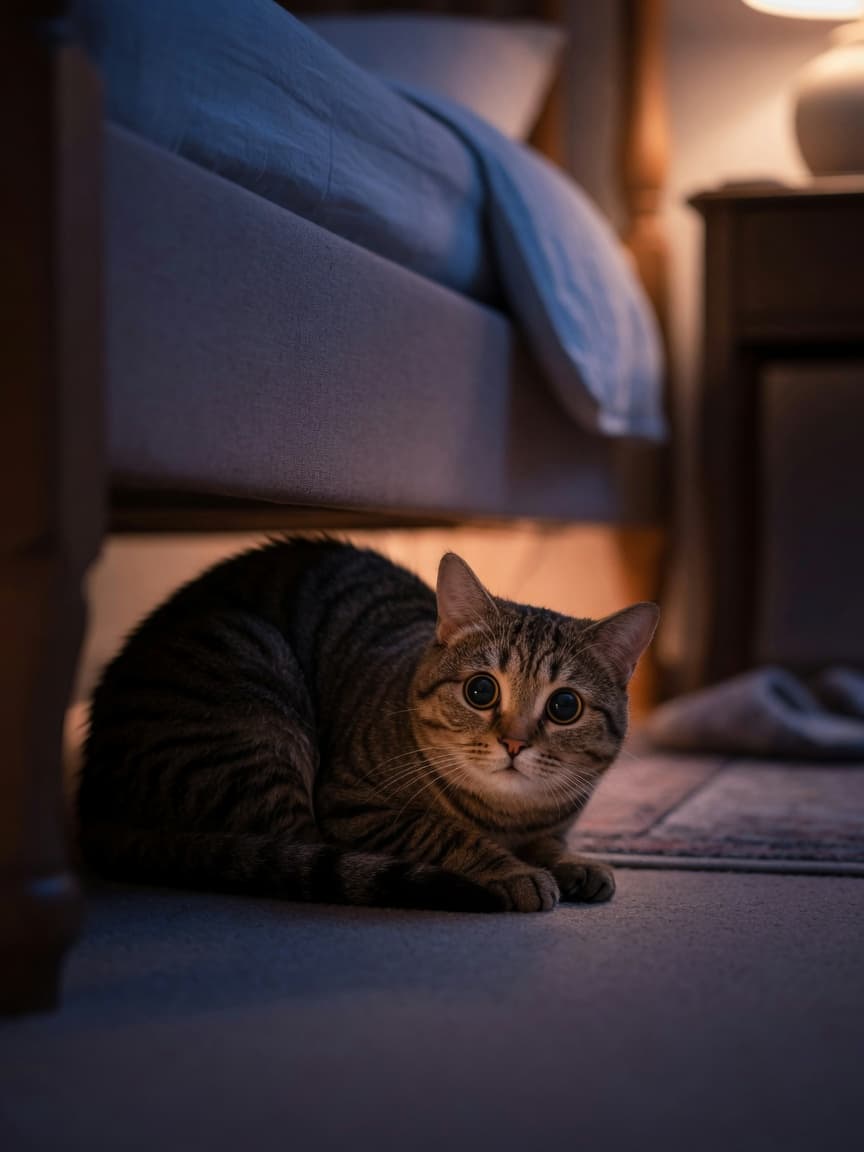
Hiding and withdrawal. An anxious cat retreats — under beds, into closets, behind furniture. Increased hiding, particularly after a change in the household, is one of the most reliable early indicators of stress.
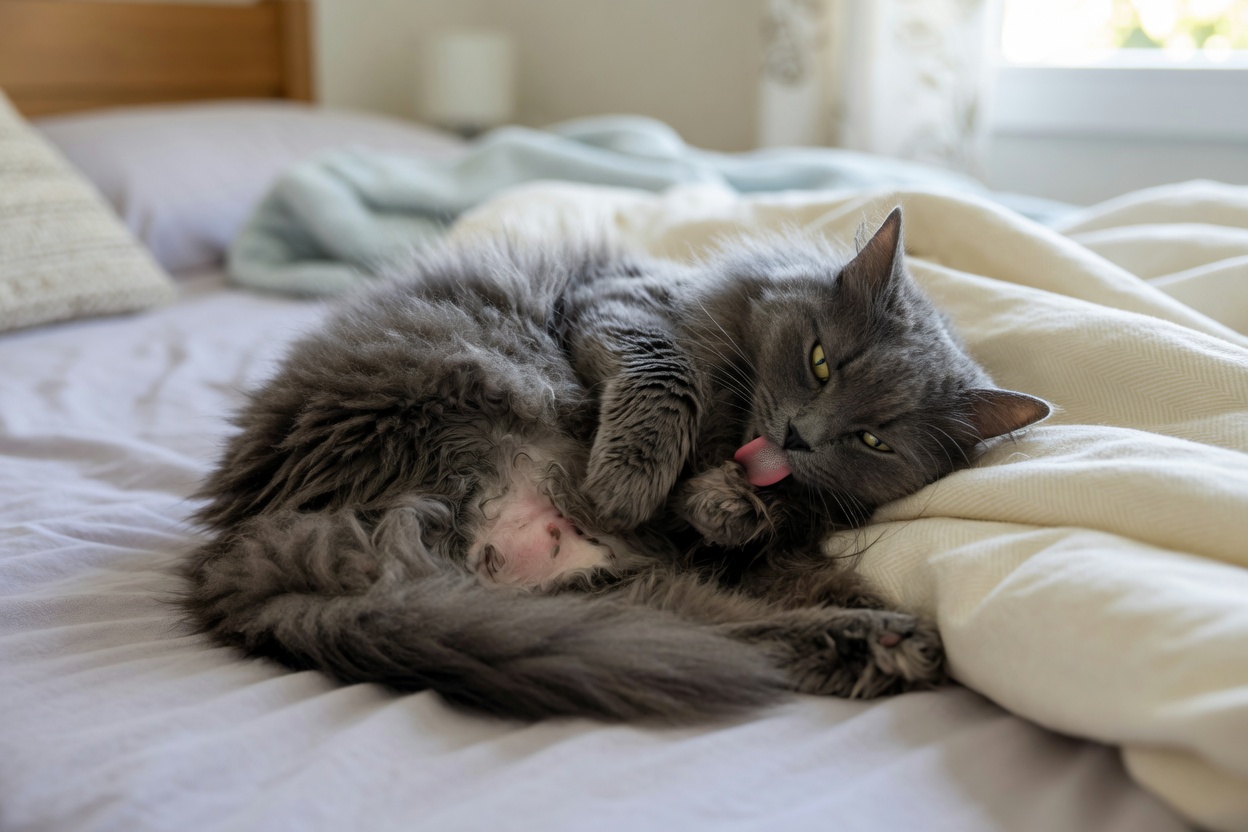
Over-grooming (psychogenic alopecia). Excessive licking, often focused on the belly, inner thighs, and forelegs, can result from anxiety. The repetitive motion appears to release endorphins and functions as a self-soothing behavior. Over time, it causes hair loss, skin irritation, and can progress to open sores.
Inappropriate elimination. Urinating or defecating outside the litter box — particularly on soft surfaces like beds or sofas — can signal anxiety, especially when medical causes have been ruled out. Some cats urinate on their owner's belongings when stressed by separation.
Aggression. An anxious cat may become irritable and prone to redirected aggression — lashing out at other pets or family members when they cannot respond to the actual source of their fear.
Excessive vocalization. Increased yowling, crying, or meowing — especially at night — can indicate distress. This is particularly common in older cats, where cognitive decline or pain may be contributing factors alongside anxiety.
Changes in appetite. Both reduced and increased eating can reflect chronic stress. Some cats become comfort eaters; others lose interest in food entirely.
Physical body language. Dilated pupils, flattened ears pressed against the skull, tail tucked tightly against the body, crouching posture, whiskers pulled back — these are acute fear signals. In chronic anxiety, the cat may simply appear perpetually tense, with a hunched posture even at rest.
Common Causes of Cat Anxiety
Separation anxiety is more common in cats than previously thought, particularly in single-cat households where the cat has formed a strong bond with one person. Signs emerge when the owner is away — inappropriate elimination, destructive behavior, excessive grooming — and resolve when the owner returns.
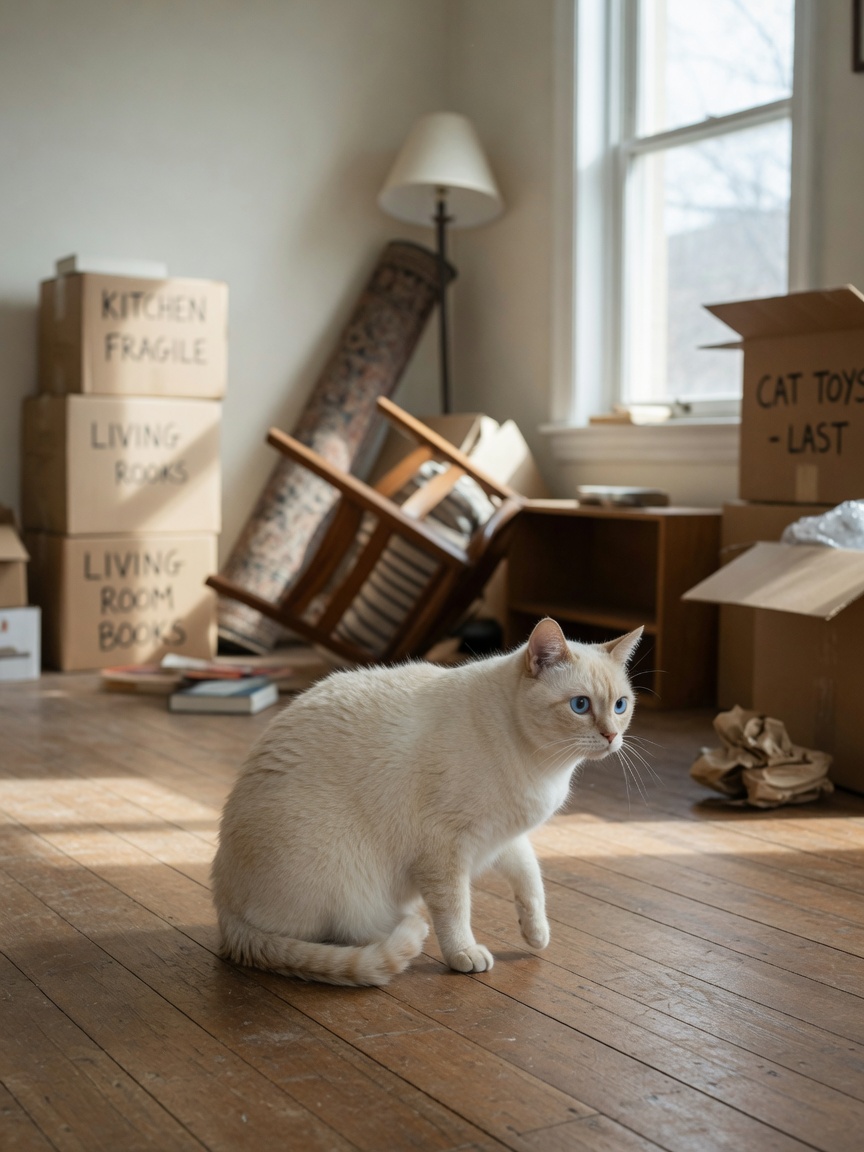
Environmental changes are a major trigger. Moving house, rearranging furniture, home renovations, or even a new piece of furniture can destabilize a cat that relies on environmental predictability for its sense of security.
New household members — a new baby, a partner moving in, a visiting relative, or a new pet — disrupt established social dynamics and territorial security. New cats in the household are a particularly potent trigger.
Noise phobias. Thunderstorms, fireworks, construction noise, and loud music are common precipitants. Unlike dogs, cats rarely display obvious panic; instead they disappear entirely and may not emerge for hours after the noise subsides.
Past trauma. Cats rehomed from shelters or with unknown histories may carry anxiety rooted in past negative experiences. These animals may startle easily, avoid being touched in certain ways, or react fearfully to specific stimuli that recall previous trauma.
Insufficient enrichment. A cat with no outlet for natural behaviors — hunting, climbing, exploring, playing — accumulates chronic stress. An understimulated cat in a barren environment is a cat at risk for anxiety-related behavioral problems.
Natural Solutions for Cat Anxiety
Environmental Enrichment
The single most impactful long-term intervention is creating an environment that meets your cat's behavioral needs. This means vertical space — cat trees, wall-mounted shelves, and elevated perches that allow cats to observe their territory from a safe height. It means window perches overlooking outdoor activity (bird feeders placed outside are an effective "cat TV"). It means puzzle feeders and food-dispensing toys that engage the cat's problem-solving instincts and mimic the cognitive challenge of hunting. And it means regular, daily interactive play sessions using a wand or feather toy — at least 10–15 minutes per session.
Routine and Predictability
Cats are creatures of habit. Feeding, play, and interaction at consistent times each day creates a predictable structure that significantly reduces baseline anxiety. When you know a stressful event is coming (a vet visit, a move, a new arrival), prepare the cat with gradually increasing exposure rather than sudden change.
Pheromone Diffusers
Feliway Classic diffusers release a synthetic analog of the facial pheromone cats deposit when they rub their cheeks on familiar objects — a signal associated with safety and comfort. Feliway MultiCat (which contains a different pheromone analog based on the appeasing pheromone queens release to calm kittens) is appropriate for multi-cat households experiencing inter-cat tension. Plug the diffuser into the room where the cat spends the most time, and allow 2–4 weeks for full effect. Clinical studies show meaningful reductions in anxiety-related behaviors in approximately 70% of treated cats.
Calming Music
Music designed specifically for cats — such as the iCalmCat system, developed by veterinary neurologist Susan Wagner — uses species-specific acoustic elements (frequencies in the range of cat vocalizations, slower tempos) to reduce physiological stress markers. Standard human relaxation music is less effective; the acoustic elements that soothe humans don't necessarily translate across species.
Play Therapy
Structured play is not optional enrichment — it is a therapeutic intervention for anxious cats. Hunt-catch-kill play sequences (chasing, pouncing, catching, and "killing" a wand toy) fulfill predatory drive and provide a controlled outlet for tension and arousal. End each session with a small food reward to complete the hunt sequence and prevent frustration.
CBD for Cats: An Emerging Option
CBD (cannabidiol) products formulated for cats represent a growing category of natural supplements. CBD interacts with the endocannabinoid system — a regulatory network present in all mammals, including cats — which plays a role in modulating anxiety, pain, and inflammatory responses.
The research in cats specifically is still limited, but anecdotal clinical reports and early studies suggest CBD may reduce anxiety-related behaviors in some cats without significant side effects. If considering CBD for your cat, look for: products formulated specifically for cats (not dogs or humans), third-party laboratory testing for both potency and purity (no pesticides, heavy metals, or residual solvents), and products with undetectable or very low THC (THC is toxic to cats). Always consult your veterinarian before starting any supplement, particularly if your cat takes other medications.
Explore HolistaPet CBD for Cats →
When to See a Veterinarian
Natural and environmental interventions work well for mild to moderate anxiety, but some cats need more support. Consult your vet if natural approaches have not produced improvement after 4–6 weeks of consistent application, if the anxiety is severe enough to significantly impair quality of life, or if self-injurious over-grooming is occurring.
Your veterinarian may recommend pharmaceutical options as an adjunct to behavioral management. Buspirone, a non-sedating anxiolytic, is commonly prescribed for generalized and situational anxiety. Fluoxetine (Prozac) is effective for chronic separation anxiety and compulsive over-grooming. Gabapentin is used for acute situational anxiety (vet visits, travel, fireworks) and provides both anxiolytic and mild analgesic effects. These medications work best in combination with the environmental and behavioral interventions described above — they reduce anxiety enough for the cat to learn new, calmer response patterns, rather than simply sedating the animal.
Key Takeaways
- An estimated 20–25% of cats experience clinically significant anxiety; many more experience subclinical chronic stress.
- Key signs include hiding, over-grooming, inappropriate elimination, aggression, and excessive vocalization.
- Always rule out medical causes (hyperthyroidism, pain, UTI) before attributing signs to anxiety.
- Environmental enrichment — vertical space, puzzle feeders, daily play — is the most impactful long-term intervention.
- Feliway diffusers reduce anxiety-related behaviors in approximately 70% of cats in clinical studies.
- CBD products for cats may offer natural support — choose cat-specific, third-party-tested, THC-free products.
- For severe anxiety, veterinary-prescribed medications (buspirone, fluoxetine, gabapentin) can be effective when combined with behavioral management.
References
- Amat M, Camps T, Manteca X. Stress in owned cats: behavioural changes and welfare implications. J Feline Med Surg. 2016;18(8):577-586. PMID: 26811234
- Kry K, Casey R. The effect of hiding enrichment on stress levels and behaviour of domestic cats (Felis sylvestris catus) in a shelter setting and the implications for adoption potential. Anim Welf. 2007;16(3):375-383. PMID: not indexed — available via Universities Federation for Animal Welfare. See also: Grigg EK, Pick L, Nibblett B. Litter box preference in domestic cats: covered versus uncovered. J Feline Med Surg. 2013;15(4):280-284. PMID: 23104683