
Moving House with a Cat: The Room Method & Settling In
Why Cats Struggle with Moving More Than Dogs
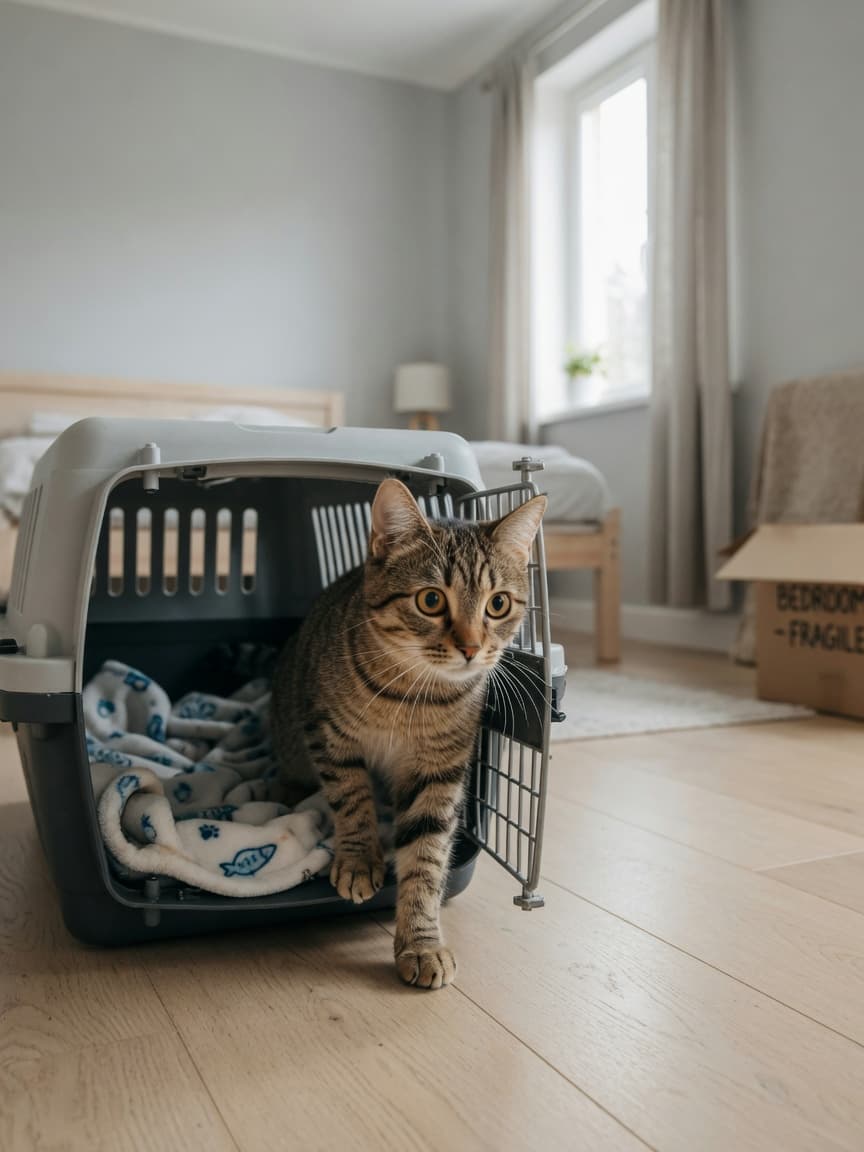
Cats are fundamentally territorial animals. Unlike dogs, whose social bond with their owner is central to their sense of security, cats bond deeply with their physical space. Every surface, corner, and doorframe in your current home carries your cat's scent markings — an invisible map that tells them "this is mine, this is safe." Moving erases that map entirely and replaces it with a foreign-smelling environment full of unknown stimuli. This is why cats often hide for days after a move, why they may stop eating, and why outdoor cats have been known to travel remarkable distances trying to find their way back to the old territory.
The good news is that with the right approach — specifically, the base room method — most cats adapt within two to three weeks, and many settle comfortably within a week.
The Base Room Method: Step by Step
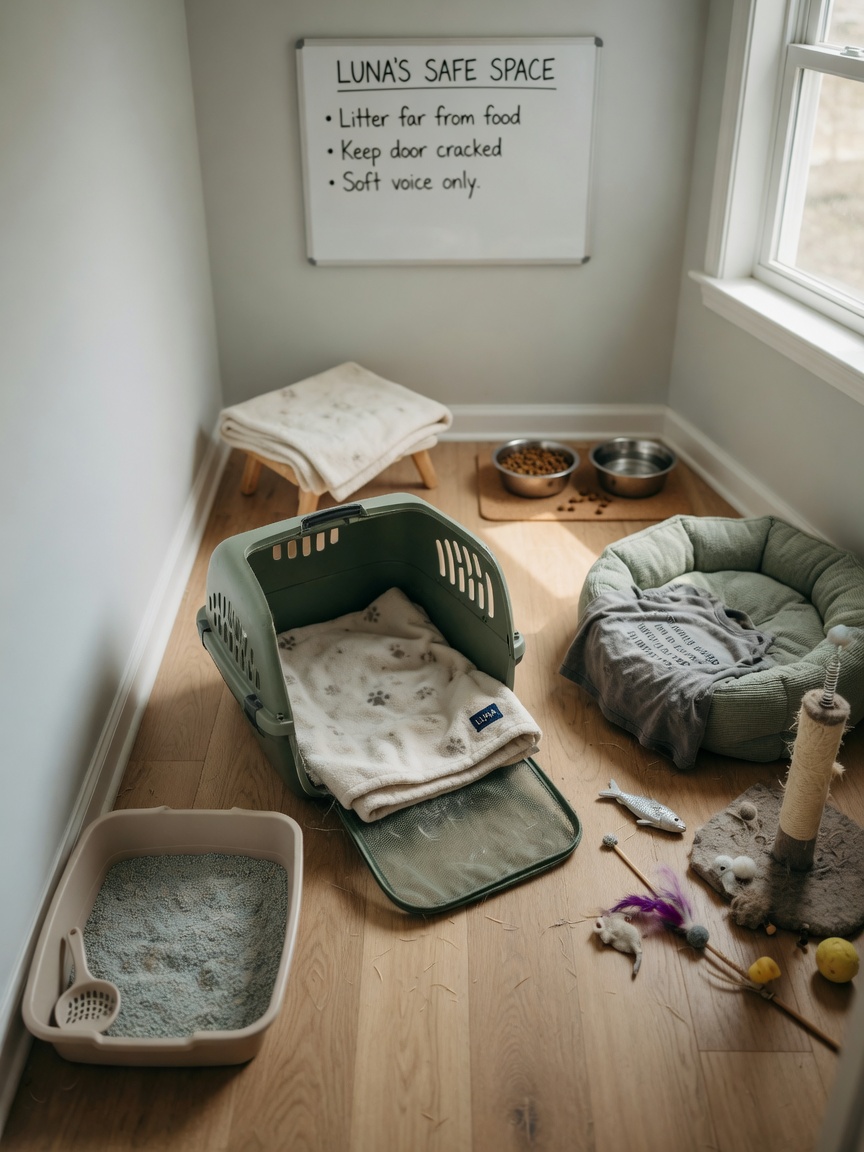
The base room method is the most widely recommended strategy by feline behaviourists for moving cats to a new home. The principle is simple: rather than releasing your cat into an overwhelming new environment, you give them one room to own completely before gradually expanding their territory.
- Choose the right room. Select a quiet room away from the main moving traffic — a spare bedroom or study works well. Avoid rooms with large windows facing a busy street, which can be over-stimulating.
- Set it up before your cat arrives. Place their litter tray, food and water bowls (on opposite sides of the room — cats dislike eating near their toilet), bed, scratching post, and favourite toys inside before the cat enters.
- Add familiar-smelling items. Bring their unwashed blanket, a worn item of your clothing, and any toys from the old home. The familiar scent is immediately reassuring.
- Let your cat come out of the carrier on their own terms. Place the open carrier in the room and sit quietly nearby. Do not pull your cat out. Let them emerge and explore at their own pace.
- Keep the door closed for 24–48 hours minimum. Even if your cat seems curious and confident, resist the urge to open the rest of the home too soon.
- Expand gradually. Once your cat is eating regularly, using the litter tray, and showing relaxed body language (grooming, lying stretched out, slow blinking), open the door to one adjacent room. Add rooms one at a time over several days.
How Cats Use Scent to Feel Safe
Cats have scent glands on their cheeks, forehead, chin, and paw pads. When a cat rubs their face on furniture or kneads a blanket, they are depositing pheromones that signal "I have been here, this is familiar territory." You can support this natural process:
- Feliway Classic diffuser: Feliway is a synthetic version of the feline facial pheromone. Plug a diffuser in the base room before your cat arrives and leave it running for at least four weeks. Multiple diffusers around the home can help during the full exploration phase. Studies show Feliway reduces hiding time and increases feeding behaviour in newly homed cats.
- Feliway spray: Spray on key surfaces — doorframes, corners of furniture, the carrier interior — 30 minutes before use. Do not spray directly on your cat.
- Worn clothing: Place a worn t-shirt or pillowcase in the base room. Your scent is as calming for cats as Feliway, if not more so.
- Cheek-cloth transfer: Gently rub a soft cloth on your cat's cheeks while they are calm, then wipe it on surfaces in the new home at nose height. This "pre-deposits" their own scent and speeds up the territorial mapping process.
Make the move easier on your cat. Zooplus stocks a full range of feline calming products including Feliway diffusers, calming sprays, and well-ventilated carriers approved for both car and air travel. Free delivery available on orders over the threshold.
Shop cat carriers & calming products at Zooplus →Timeline: What to Expect Week by Week

Week 1
Most cats will hide for some or all of the first few days. This is completely normal. Provide hiding spots (a cardboard box with a blanket works perfectly) — forcing your cat out of hiding prolongs the process. Visit the base room frequently but quietly, sitting on the floor and letting your cat approach you. Speak softly. Do not stare directly at your cat; slow blinking signals safety in feline body language. Eating may be reduced — offer highly palatable wet food or warming food slightly to enhance the aroma.
Week 2
Most cats begin to emerge from hiding during daylight hours in week two. They will start actively scent-marking the base room — rubbing on furniture and scratching the post. This is excellent progress. You can begin opening the base room door for supervised exploration of adjacent rooms, but always leave the base room accessible as a safe retreat.
Week 3
The majority of cats are reasonably settled by week three. They should be eating normally, using the litter tray reliably, and showing some playful or affectionate behaviour. You can continue expanding access to the full home. Some cats — particularly older cats or those with a history of anxiety — may take four to six weeks to fully settle.
Outdoor Cat Considerations
If your cat previously had outdoor access, you will need to delay this for a minimum of three to four weeks — longer is safer. During this time, your cat must become thoroughly familiar with the smell and layout of the new home so that they can find their way back. When you do allow outdoor access for the first time:
- Go out with your cat for the first several sessions rather than opening the door and hoping for the best.
- Choose a quiet time of day with no loud traffic or garden machinery.
- Feed your cat before going out — a full stomach motivates return.
- Never use a cat flap until your cat reliably returns when called.
For further guidance on safe outdoor introductions and feline territorial behaviour, the ASPCA's guide on moving with cats and resources from International Cat Care are excellent references.
Signs Your Cat Is Not Coping
While some stress is expected, the following signs warrant a veterinary consultation:
- Complete refusal to eat for more than 48 hours (cats can develop hepatic lipidosis — a serious liver condition — if they stop eating)
- Not using the litter tray for more than 24 hours, or straining to urinate (a potential emergency in male cats)
- Persistent hiding with no improvement after two weeks
- Excessive grooming leading to bald patches
- Aggression that is entirely new
Key Takeaways
- Cats bond to territory, not just people — losing their home environment is genuinely stressful for them.
- The base room method — one room, fully set up, before gradual expansion — is the most effective settling strategy.
- Feliway diffusers and worn clothing in the base room significantly reduce hiding time and encourage eating.
- Expect hiding for the first few days; do not force your cat out — let them approach on their own terms.
- Most cats are well settled by week three; older cats may need four to six weeks.
- Keep outdoor cats inside for at least three to four weeks, then supervise initial outdoor sessions.
- Not eating for 48+ hours or urinary straining requires immediate veterinary attention.
References
- Griffith CA, Steigerwald ES, Buffington CA. "Effects of a synthetic facial pheromone on behavior of cats." Journal of the American Veterinary Medical Association. 2000;217(8):1154–1156. PubMed 11043684
- Amat M, Camps T, Manteca X. "Stress in owned cats: behavioural changes and welfare implications." Journal of Feline Medicine and Surgery. 2016;18(8):577–586. PubMed 26179200