
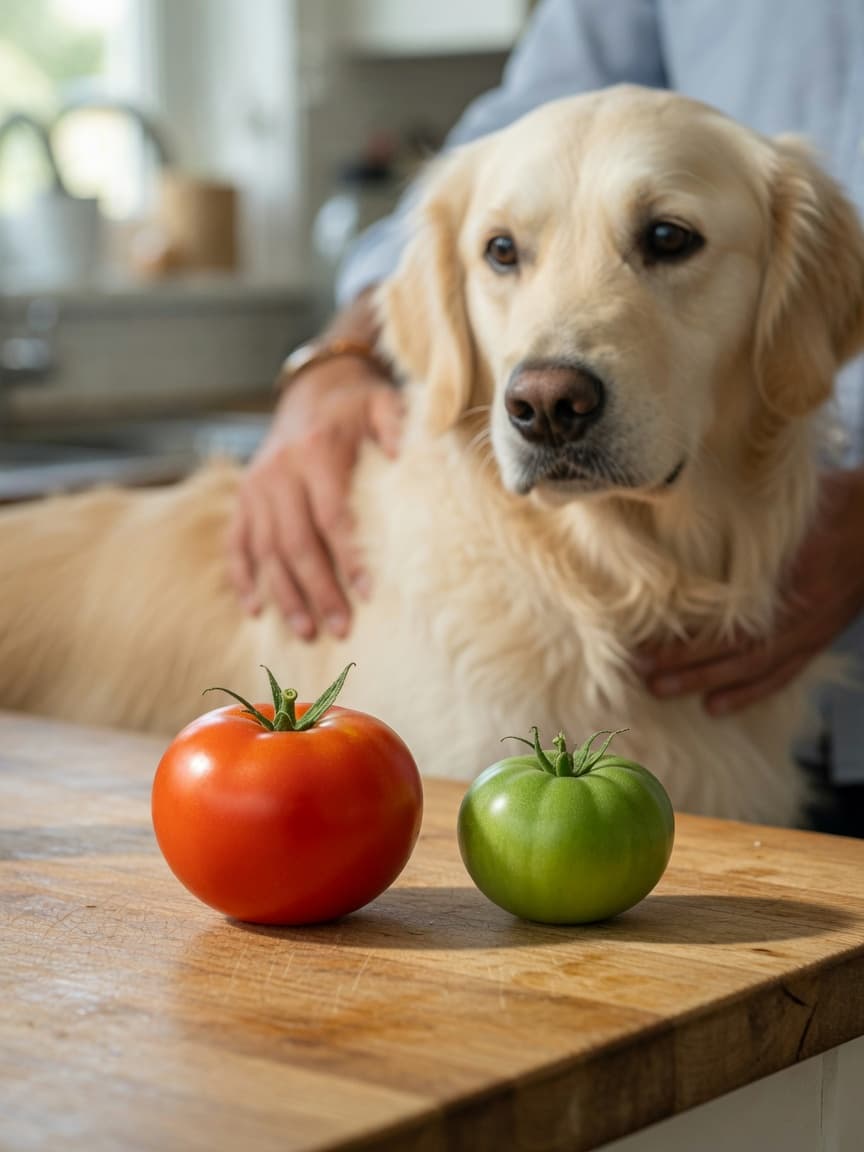
Can Dogs Eat Tomatoes? Ripe Ones Yes — But Green Tomatoes and Plants Are Toxic
By Julia Wrenfield, Pet Wellness Researcher — June 2025
A ripe, red tomato given in small amounts is unlikely to harm your dog. However, green or unripe tomatoes contain solanine and tomatine — compounds toxic to dogs. Tomato plants (leaves, stems, and unripe fruit) are dangerous and should be kept completely out of reach. The fruit-vs-plant distinction is critical.
Tomatoes are one of the most misunderstood foods when it comes to canine nutrition. Some sources say they are completely fine; others warn they are toxic. The truth, as is often the case, lies in the details. The ripeness of the tomato and the part of the plant involved make all the difference between a harmless snack and a veterinary emergency.
Understanding this distinction is especially important for dog owners who grow tomatoes at home — garden access to tomato plants is a genuine safety risk that many pet owners overlook.
Are Tomatoes Safe for Dogs?
The answer depends entirely on which part of the tomato plant you are talking about:
Ripe Red Tomatoes (the Fruit)
Fully ripe, red tomatoes are generally considered safe for dogs in small quantities. They are low in calories, contain lycopene (a powerful antioxidant), and provide modest amounts of vitamin C, potassium, and folate. The riper the tomato, the lower its concentration of potentially problematic compounds. Many reputable commercial dog food brands include tomato or tomato pomace as an ingredient, which is a reasonable indicator of its baseline safety in appropriate amounts.
That said, tomatoes are not a food that needs to be actively added to your dog's diet. If your dog steals a bite of a ripe tomato, there is no need for alarm. But intentionally feeding large quantities is unnecessary and could cause mild gastrointestinal upset in sensitive dogs due to acidity.
Green and Unripe Tomatoes
This is where real danger begins. Green and unripe tomatoes contain significant concentrations of solanine and tomatine — alkaloid compounds that belong to the nightshade family of toxins. These compounds are present as a natural plant defense mechanism and decrease substantially as the tomato ripens and turns red.
In dogs, solanine and tomatine ingestion can cause:
- Gastrointestinal upset (vomiting, diarrhea, abdominal pain)
- Lethargy and weakness
- Tremors or muscle weakness
- Cardiac effects (irregular heartbeat) in severe cases
- Loss of coordination
Tomato Plants (Leaves, Stems, and Vines)
The most dangerous part of the tomato is not the fruit at all — it is the plant itself. Tomato leaves, stems, and vines contain very high concentrations of tomatine and solanine. Even small amounts of plant material can cause significant toxicity in dogs. A dog that chews on a tomato plant in the garden may ingest enough to require urgent veterinary care.
If you grow tomatoes at home, ensure your garden is securely fenced off or use raised beds that your dog cannot access. This applies even if the tomatoes on the plant are ripe — the leaves and stems remain toxic at all stages of growth.
Nutritional Benefits of Ripe Tomatoes for Dogs
While tomatoes are not a necessary addition to your dog's diet, ripe tomatoes do offer some genuine nutritional value:
- Lycopene: A carotenoid antioxidant that gives tomatoes their red color. Research in humans suggests lycopene supports cardiovascular health and has anti-cancer properties; while canine-specific research is limited, the antioxidant benefit is plausible.
- Vitamin C: Supports immune function and acts as a free radical scavenger.
- Potassium: Supports healthy heart and muscle function.
- Folate: Important for cell division and DNA synthesis.
- Low calorie: A medium tomato contains only around 22 calories, making it a guilt-free occasional snack.
- High water content: Over 90% water, contributing to hydration.
How to Safely Serve Tomatoes to Your Dog
If you choose to share tomatoes with your dog, follow these guidelines carefully:
- Use only fully ripe, red tomatoes. The fruit should be uniformly red with no green patches. Discard any tomato that is even partially green or unripe.
- Remove all stems, leaves, and the green calyx (the leafy crown at the top of the fruit). These contain concentrated levels of tomatine.
- Give only the flesh. Small pieces of plain tomato flesh, with seeds removed if you prefer (seeds are not toxic but some dogs find them hard to digest).
- Serve plain. No salt, garlic, onion, herbs, or sauces. Many human tomato preparations (salsa, pasta sauce, ketchup) contain ingredients that are harmful to dogs.
- Start with a tiny amount. Some dogs have sensitive stomachs and may react to tomato acidity even when ripe. A small piece is enough to test tolerance.
- Do not make it a regular habit. An occasional bite is fine, but tomato should not be a dietary staple.
Portion Guide: Safe Amounts of Ripe Tomato for Dogs
| Dog Size | Weight | Max Serving (ripe only) | Frequency |
|---|---|---|---|
| Small | <10 kg | 1–2 small pieces (cherry tomato size) | Occasional treat only |
| Medium | 10–25 kg | 2–3 slices | 1–2 times per week |
| Large | >25 kg | Half a small tomato | 1–2 times per week |
Tomato should always be considered an occasional treat rather than a regular dietary component. There are many other dog-safe vegetables (like carrots, green beans, and pumpkin) that offer equal or greater nutritional benefits with fewer safety considerations.
Ver snacks para perros en Zooplus
- Fully ripe, red tomatoes are generally safe for dogs in small amounts — but are not a necessary part of their diet.
- Green and unripe tomatoes contain solanine and tomatine, which are toxic to dogs and can cause serious symptoms.
- Tomato plants (leaves, stems, vines) are highly toxic at all stages — keep dogs away from the garden.
- Always remove the green calyx (stem end) before giving any tomato to your dog.
- Never give processed tomato products (ketchup, sauce, salsa) — they contain salt, garlic, onion, and other harmful ingredients.
- If your dog eats any green tomato or plant material, contact your vet immediately.
References
- Gwaltney-Brant S. "Food Toxicoses in Small Animals." Vet Clin North Am Small Anim Pract. 2018;48(6):1003–1020. PMID: 30119775
- Milewski LM, Khan SA. "An overview of potentially life-threatening poisonous plants in dogs and cats." J Vet Emerg Crit Care (San Antonio). 2006;16(1):25–33. PMID: 29516679
- Arey BJ. "The role of glycoalkaloids in nightshade toxicosis." Vet Med. 2017;112(4):102–109.