
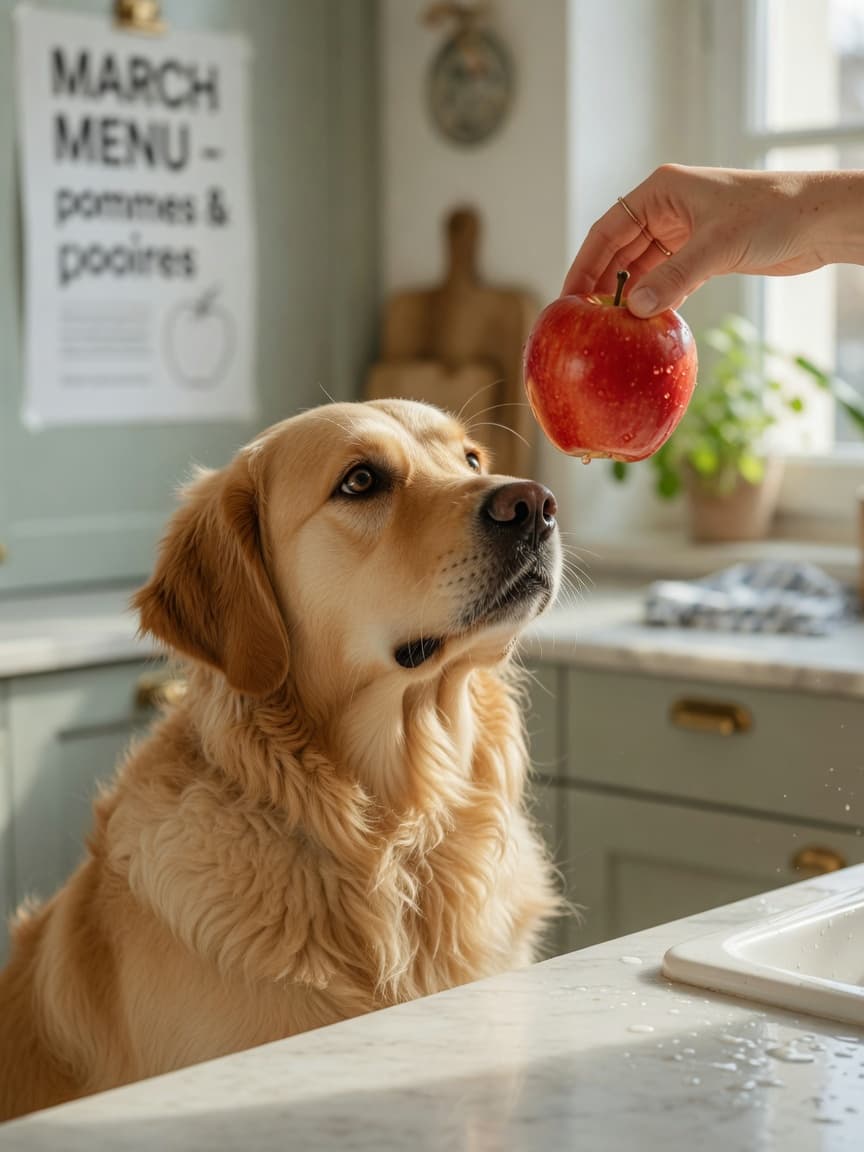
Can Dogs Eat Apples? Yes — With One Important Precaution
By Julia Wrenfield, Pet Wellness Researcher — June 24, 2026
Apples are a healthy, low-calorie treat for dogs. However, you must remove the seeds and core before serving. Apple seeds contain amygdalin, a compound that releases cyanide when metabolized. The flesh and skin are completely safe and nutritious.
Apples are one of the most popular fruits in the world, and if you've ever snacked on one near your dog, you've probably seen those hopeful eyes staring up at you. The good news is that apples are genuinely good for dogs — packed with vitamins, fiber, and antioxidants. The key is knowing how to prepare them safely so your dog gets all the benefits without any of the risks.
In this guide, we'll cover everything you need to know: which parts of the apple are safe, how much to give based on your dog's size, and how to serve apples in creative ways your dog will love.
Are Apples Safe for Dogs?
Yes — the flesh and skin of an apple are entirely safe for dogs to eat. Apples are non-toxic and appear on the ASPCA's list of pet-safe foods. The danger lies exclusively in the seeds and the core.
Apple seeds contain amygdalin, a cyanogenic glycoside. When chewed and metabolized, amygdalin breaks down and releases hydrogen cyanide. While a dog would need to consume a significant quantity of seeds to experience acute toxicity, there is no benefit whatsoever to allowing seed consumption, and chronic exposure can accumulate over time. The rule is simple: always core and deseed the apple before offering it to your dog.
The core presents a separate risk — it is tough, fibrous, and can pose a choking hazard, particularly for small breeds. It can also contribute to intestinal blockages if swallowed in chunks. Remove it entirely.
The skin, contrary to some myths, is safe and even beneficial. It contains quercetin and other polyphenols that support immune function. Just make sure the apple is washed thoroughly to remove any pesticide residue.
Nutritional Benefits of Apples for Dogs
Apples offer a surprisingly solid nutritional profile for a treat food. Here's what your dog gets from a serving of fresh apple:
- Vitamin A (as beta-carotene): Supports skin health, coat quality, immune function, and vision. Beta-carotene is a potent antioxidant that helps neutralize free radicals at the cellular level.
- Vitamin C: Although dogs synthesize their own vitamin C, additional dietary sources can support immune response during periods of stress or illness. It also acts as an antioxidant.
- Dietary fiber: The pectin found in apple flesh supports healthy gut motility and may help regulate blood sugar levels. It also feeds beneficial gut bacteria, contributing to a balanced microbiome.
- Low calorie density: Apples are about 86% water and contain roughly 52 calories per 100g — making them a guilt-free treat option for dogs on a weight management plan.
- Malic acid: This mild acid can help reduce bacteria on tooth surfaces, supporting fresher breath and reducing plaque buildup between dental cleanings.
- Phosphorus and calcium: Present in modest amounts, these minerals contribute to bone and dental health.
Apples are also naturally free from fat and sodium, which makes them a superior alternative to many commercial treats for dogs with heart conditions or pancreatitis.
How to Serve Apples to Your Dog
Preparation is straightforward, but following these steps every time ensures your dog's safety:
- Wash the apple thoroughly under running water. If possible, choose organic apples to minimize pesticide exposure.
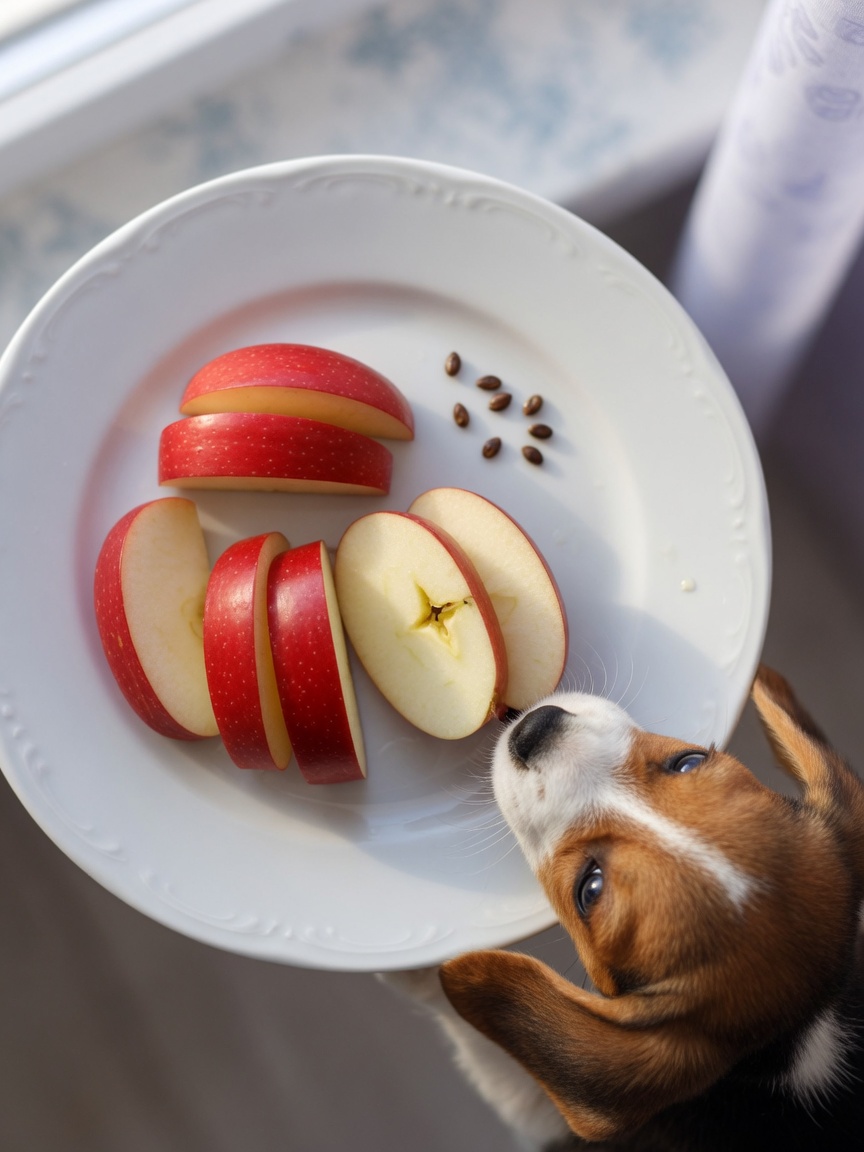
- Remove the core completely. Use an apple corer or slice around it. The core includes the seeded cavity and the tough central fibrous column.
- Remove all seeds. Double-check every slice. Seeds can hide in the flesh near the core.
- Slice into appropriate sizes. For small dogs, cut into thin bite-sized pieces. For medium and large dogs, larger slices or wedges work fine. Avoid giving a whole or half apple — the risk of the dog biting into seeds or core increases dramatically.
- Serve fresh. Avoid applesauce (often contains added sugar or xylitol), apple juice (concentrated sugars, no fiber), dried apples (calorie-dense), or apple-flavored products (artificial flavoring, additives).
Fun serving ideas:
- Freeze apple slices for a refreshing summer treat
- Mix small apple chunks into your dog's regular meal as a topper
- Stuff a Kong toy with apple pieces and a little peanut butter (xylitol-free)
- Use tiny apple cubes as high-value training treats for small-breed dogs
Portion Guide: How Much Apple Can My Dog Eat?
Treats — even healthy ones — should make up no more than 10% of your dog's total daily caloric intake. This is the widely accepted guideline among veterinary nutritionists. The table below gives safe serving sizes based on body weight:
| Dog Size | Weight | Recommended Serving | Frequency |
|---|---|---|---|
| Small | <10 kg | 1–2 thin slices (approx. 20–30g) | 2–3 times per week |
| Medium | 10–25 kg | 3–4 slices (approx. 50–70g) | 3–4 times per week |
| Large | >25 kg | ½ apple (approx. 80–100g) | Daily if desired |
Note: Dogs with diabetes should consult a veterinarian before introducing apples due to their natural sugar content (fructose). Dogs with irritable bowel syndrome may experience loose stools if given too much fiber at once — start with a small amount and monitor.
When to Avoid Apples
Despite their benefits, apples are not appropriate for every dog in every situation:
- Diabetic dogs: The natural fructose content may spike blood sugar — always consult your vet first.
- Dogs with sensitive stomachs: Too much fiber at once can cause gas, bloating, or diarrhea. Introduce slowly.
- Puppies under 8 weeks: Stick to puppy-formulated food exclusively during early development.
- Dogs with allergies: Rare, but apple allergies exist. If you notice itching, swelling, or GI distress after first introduction, discontinue and consult a vet.
- Apples are safe for dogs — the flesh and skin are nutritious and non-toxic.
- Always remove seeds and the core before serving — seeds contain amygdalin which releases cyanide.
- Apples provide vitamins A and C, fiber, and malic acid (supports dental hygiene).
- Serve fresh, plain, sliced apple only — avoid applesauce, juice, or dried products.
- Follow the 10% treat rule: small dogs get 1–2 slices, large dogs can have up to half an apple.
- Dogs with diabetes or GI sensitivities should be introduced to apples cautiously and under vet guidance.
Looking for healthy, vet-approved treats to complement fresh fruit? Check out our recommended snack options for dogs:
Ver snacks para perros en Zooplus
References
- Bates N, et al. "Cyanogenic glycoside toxicity in companion animals." Veterinary Record. 2020;186(14):456–461. PMID: 32269093.
- Xu C, et al. "Polyphenols from apple (Malus domestica) modulate gut microbiota composition in companion animals: a pilot study." Journal of Animal Physiology and Animal Nutrition. 2022;106(3):612–621. doi:10.1111/jpn.13648.
- Fascetti AJ, Delaney SJ. Applied Veterinary Clinical Nutrition. Wiley-Blackwell; 2012. Chapter 9: Micronutrient requirements in dogs.