
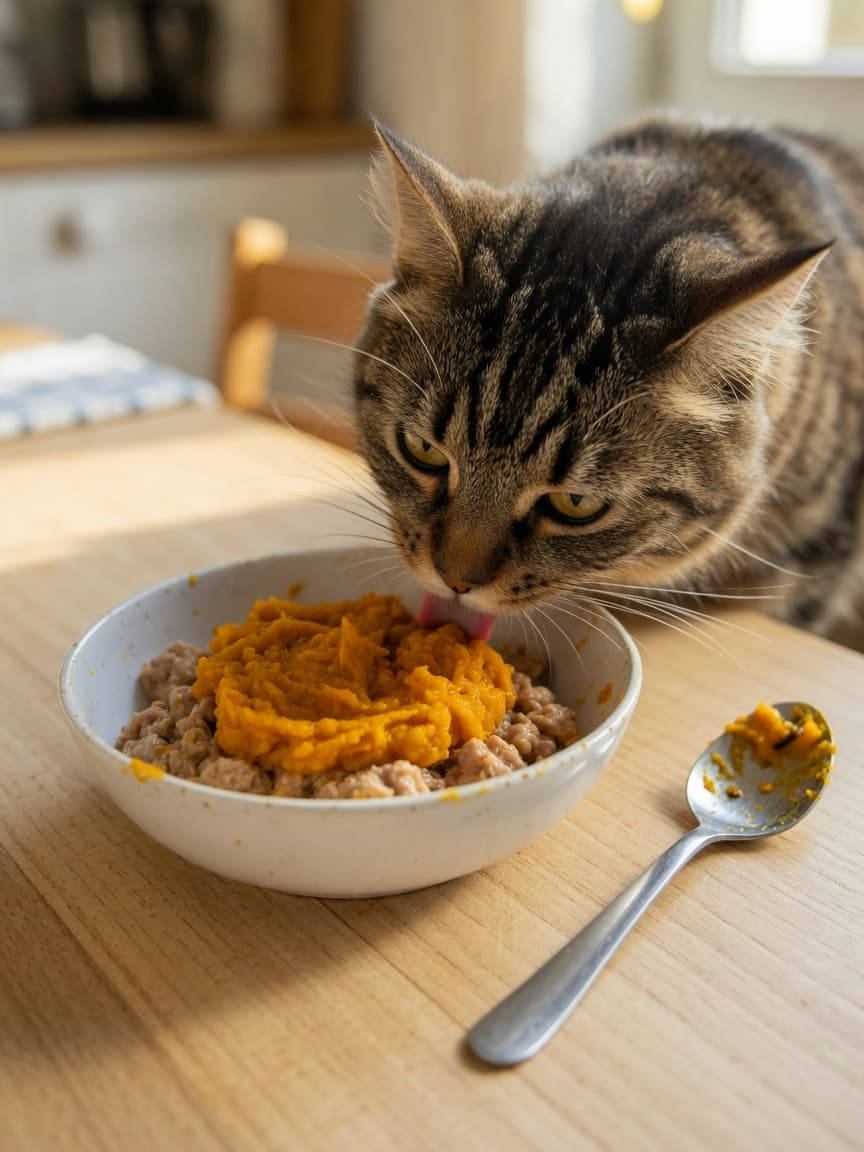
A Vegetable That Actually Does Something Useful for Cats
Most vegetables offered to cats are tolerated at best and pointless at worst — cats are obligate carnivores with limited ability to derive meaningful nutrition from plant matter. Pumpkin is a genuine exception. It has earned its place in veterinary nutritional advice not because cats need vegetables, but because its fibre profile addresses two of the most common digestive complaints seen in domestic cats: constipation and hairballs. The mechanism is simple, the evidence is consistent, and the risk profile is low.
Why Pumpkin Works: The Fibre Mechanism
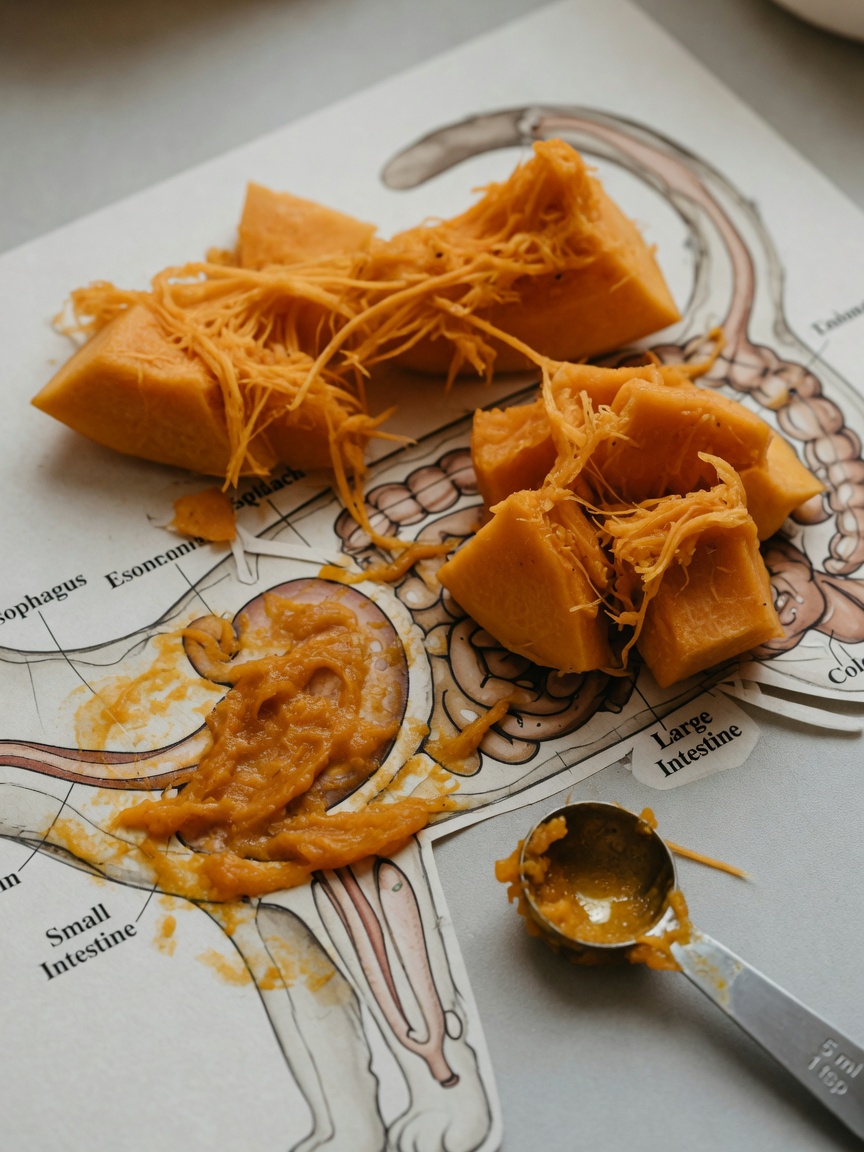
Plain cooked pumpkin flesh is approximately 92% water and contains both soluble and insoluble dietary fibre. Soluble fibre absorbs water and forms a gel-like substance in the gut, softening stool and slowing transit where needed. Insoluble fibre adds bulk and accelerates movement through the intestinal tract when the system is sluggish. This dual action is what makes pumpkin more versatile than single-fibre supplements.
Addressing Constipation
Constipation in cats — defined as infrequent or difficult defecation — is particularly common in middle-aged to older cats, those on dry food diets, and cats with reduced mobility. One to two teaspoons of plain pumpkin puree added to food can stimulate bowel movement within 24 to 48 hours in mildly constipated cats. It works by drawing water into the colon and lubricating passage of stool. This is not a substitute for veterinary assessment in chronic constipation, but it is a well-regarded first-line home measure.
Managing Hairballs
Hairballs form when ingested fur accumulates in the stomach rather than passing through the digestive tract. The insoluble fibre in pumpkin helps move fur through the intestinal system rather than allowing it to compact. Many cats with regular hairball issues benefit from a small amount of pumpkin added to their food several times a week. Results are gradual rather than immediate — expect improvement over one to two weeks of consistent use.
Nutritional Content Worth Noting
Beyond fibre, pumpkin provides beta-carotene (converted to vitamin A in the body, though cats do this conversion less efficiently than humans), vitamin C, potassium, and zinc. The caloric load is minimal — roughly 26 calories per 100g — making it suitable even for cats managing their weight. It is not nutritionally transformative, but it adds micronutrients without caloric or macronutrient penalty.
How to Serve Pumpkin Safely
- Use plain, cooked pumpkin puree or steamed fresh pumpkin flesh with no additives
- Tinned pumpkin is acceptable if it contains only pumpkin — read the label carefully
- Avoid pumpkin pie filling, which contains sugar, nutmeg, cinnamon, and other ingredients harmful to cats
- Seeds should be removed; raw seeds can be a choking hazard and are not necessary
- Start with half a teaspoon and increase gradually to assess tolerance
When Pumpkin Is Not Enough
Pumpkin is appropriate for mild, occasional digestive irregularity. It is not a treatment for underlying disease. If your cat is straining repeatedly without producing stool, if there is blood in the stool, if vomiting accompanies constipation, or if the issue recurs frequently, veterinary assessment is essential. Obstipation — severe, complete constipation — is a medical emergency. Do not attempt to manage it with diet alone.
Similarly, if hairballs are occurring more than once or twice a month or if your cat is retching without producing a hairball, this warrants investigation. Excessive hairballs can indicate over-grooming due to anxiety, skin conditions, or gastrointestinal motility issues.
Practical Summary
- Plain pumpkin is safe, low-calorie, and genuinely effective for mild feline constipation and hairball management
- Start with half a teaspoon mixed into food; up to two teaspoons daily is generally well tolerated
- Always use plain pumpkin — never pie filling or sweetened products
- Expect results within 24 to 48 hours for constipation; allow one to two weeks for hairball improvement
- Persistent, worsening, or bloody digestive issues require a vet visit, not a dietary intervention