
Best Cat Food for Weight Loss: Low-Calorie Picks Compared
By Julia Wrenfield, Pet Wellness Researcher | Updated June 2026
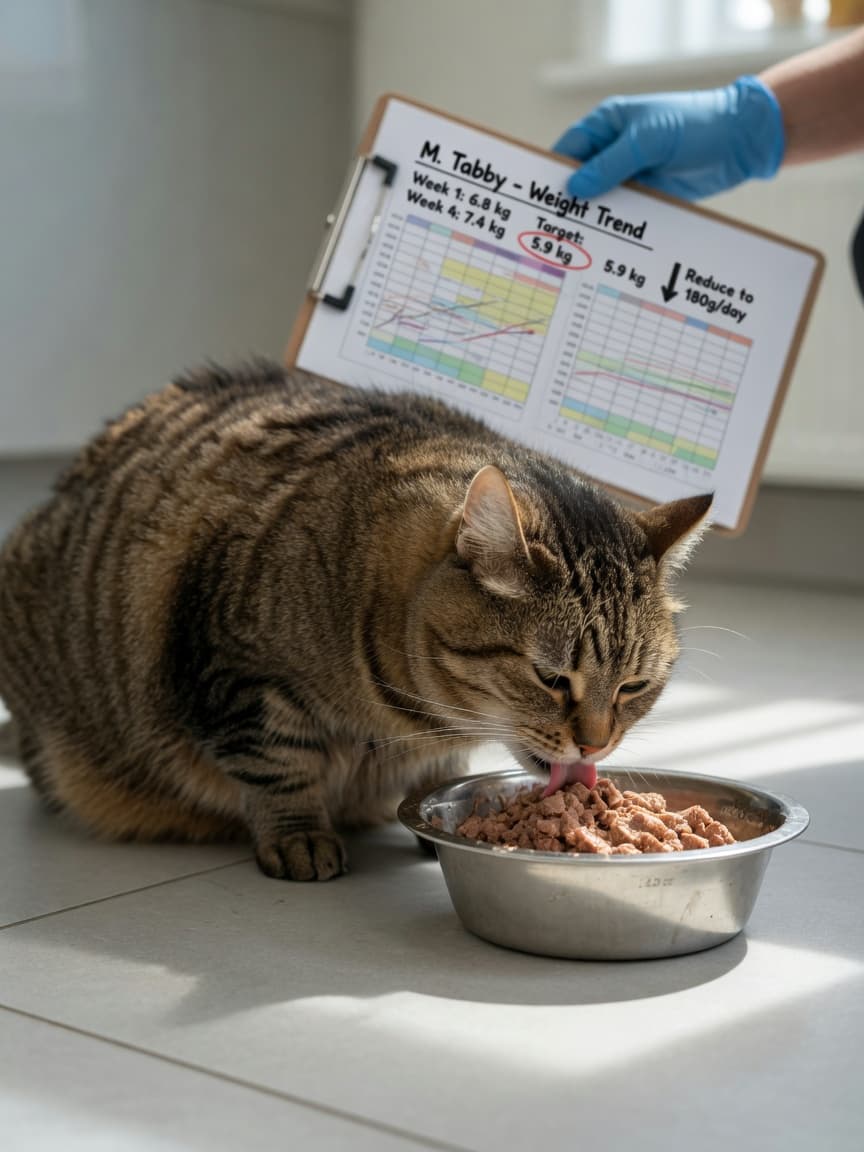
Cat obesity is an epidemic. Estimates suggest that 40–60% of pet cats in Europe and North America are overweight or obese, making it the most common preventable health problem in feline medicine. Yet many cat owners don't recognise the issue — a roly-poly cat is culturally cute, not alarming. That perception needs to change.
Obese cats are at significantly elevated risk of diabetes mellitus, arthritis, hepatic lipidosis, lower urinary tract disease, and reduced life expectancy. The good news: with the right food and a structured feeding plan, most cats can safely lose weight and substantially improve their quality of life.
Why Cat Obesity Is Different from Dog Obesity
Cats are obligate carnivores — their metabolic machinery is built around protein and fat, not carbohydrates. This creates unique challenges for weight management. Unlike dogs, cats have a limited ability to regulate calorie intake in response to food energy density. Put a bowl of high-calorie dry food in front of a cat, and many will overeat. The sedentary indoor lifestyle compounds this: an indoor cat may burn only 50–70 kcal per kilogram of body weight per day.
The other feline complication is that reducing protein to cut calories is genuinely dangerous for cats. Protein is not just a building block — it's a primary fuel source and is essential for maintaining muscle mass during weight loss. A cat food designed for weight loss must be low in calories and fat, but high in protein. This is the opposite of how human weight-loss foods typically work.
Wet vs. Dry Food for Weight Loss
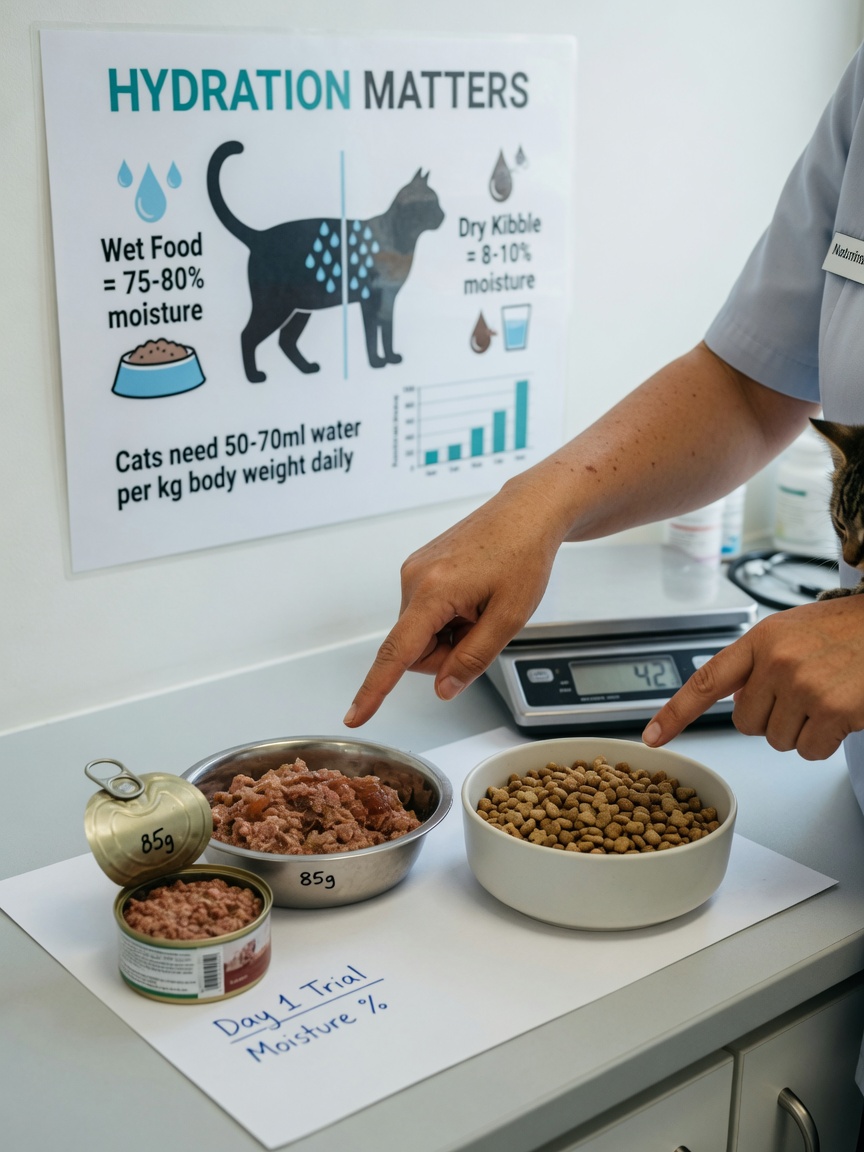
This is one of the most important decisions in feline weight management, and the answer strongly favours wet food. Here's why:
Water content reduces caloric density. Wet food is 70–80% moisture, meaning a 100-gram portion contains far fewer calories than 100 grams of dry food. Cats on wet food naturally consume fewer calories for the same volume of food.
Cats often drink too little water. Cats evolved in arid environments and have a low thirst drive. Many chronically mildly dehydrated cats are eating dry food exclusively. Wet food addresses both calorie reduction and hydration simultaneously.
Portion control is more intuitive. A 100-gram tin is a measurable, finite meal. A bowl of dry kibble is an invitation to grazing.
If your cat refuses wet food, transitioning slowly (mixing increasing proportions of wet into dry over 2–4 weeks) usually works. The weight-loss dry foods in this comparison are still better than standard dry food, and portion control is essential with any dry formula.
The 5 Best Cat Weight-Loss Foods Compared
| Product | Calories/cup (dry) or per 100g (wet) | Protein % | Fat % | Fiber % | Price/kg (approx.) |
|---|---|---|---|---|---|
| Hill's Prescription Diet w/d | 269 kcal/cup | 38.5% | 8.5% | 7.1% | €9.00–€12.00 |
| Royal Canin Satiety Weight Management | 316 kcal/cup | 37% | 9% | 12.6% | €7.50–€10.00 |
| Purina Pro Plan Weight Management | 352 kcal/cup | 45% | 12% | 5.5% | €6.00–€8.00 |
| Wellness Core Reduced Fat | 340 kcal/cup | 45% | 10% | 4% | €9.00–€12.00 |
| Blue Buffalo Weight Control | 336 kcal/cup | 34% | 10% | 7% | €7.00–€9.50 |
Product-by-Product Analysis
Hill's Prescription Diet w/d
The "w/d" stands for weight/diabetes, and this formula is one of the most clinically validated cat foods on the market. It requires a veterinary prescription in many countries, which itself signals its therapeutic intent. The 7.1% fibre content (a blend of cellulose and psyllium) promotes satiety, slows gastric emptying, and helps regulate blood glucose — making this the go-to option for overweight cats with concurrent diabetes risk. Protein is 38.5%, which is adequate if not exceptional. The caloric density of 269 kcal/cup is genuinely the lowest among dry weight-loss foods in this comparison. Con: Requires a vet prescription; chicken by-product meal and corn feature prominently. Not a clean-label product. The prescription model also makes it more expensive and less convenient than over-the-counter options.
Royal Canin Satiety Weight Management
Royal Canin's satiety formula takes a different approach from Hill's, relying on the highest fibre content in this comparison at 12.6% — a combination of psyllium husks, pea fibre, and cellulose — to keep cats feeling full on restricted portions. The strategy works: cats on this food typically show reduced food-seeking behaviour within 2–3 weeks. Protein at 37% is respectable. The formula also contains L-carnitine (discussed below) to support fat metabolism. Con: The caloric density of 316 kcal/cup is higher than Hill's w/d, so it must be portioned carefully. The ingredient quality reflects Royal Canin's approach — functional over premium: dehydrated poultry protein, maize, and wheat dominate the list.
Purina Pro Plan Weight Management
This is the highest-protein weight-loss formula in the comparison at 45%, making it my preferred choice for cats where muscle preservation is the priority — which should be most overweight cats. Chicken is the first ingredient. The formula is enriched with L-carnitine and contains a higher fat percentage (12%) than the clinical formulas, which reflects the philosophy that quality fat from animal sources supports satiety without the spike-and-crash of high carbohydrate. The caloric density (352 kcal/cup) means portion control is non-negotiable. Con: Fibre is relatively low at 5.5%, which means some food-motivated cats may continue to beg. The weight loss will be driven by calorie restriction rather than fibre-induced satiety.
Wellness Core Reduced Fat
Wellness Core applies its grain-free, high-protein philosophy to weight management here. At 45% protein and 10% fat, the macro profile is strong. The ingredient list is clean: deboned chicken, turkey meal, chicken meal — no grains, no by-products. If you prefer feeding your cat a premium ingredient profile, this is the weight-loss option that delivers without compromise. Con: Fibre at 4% is the lowest in this comparison, which limits satiety. Caloric density is moderate. The legume-based carbohydrate sources (peas, chickpeas) carry the same mild cardiac-risk concern in cats as in dogs, though the evidence base for cats is thinner. Price is at the top of the over-the-counter range.
Blue Buffalo Weight Control
Blue Buffalo's Healthy Weight formula positions itself as a natural, wholesome option. Real chicken is the first ingredient, and the formula avoids corn, wheat, and soy. The "LifeSource Bits" — Blue Buffalo's signature antioxidant supplement blend — provide vitamins, minerals, and antioxidants in a separate kibble mixed into the main food. Protein at 34% is the lowest in this comparison, which is a meaningful drawback for a cat weight-loss food; it increases the risk of muscle loss during calorie restriction. Con: Lowest protein in the group; relies on sweet potatoes and peas as carbohydrate sources; the "LifeSource Bits" are largely a marketing feature rather than a meaningful nutritional differentiator. Caloric density (336 kcal/cup) is mid-range.
Portion Control: The Most Important Variable
No weight-loss food works without portion control. Many cat owners dramatically underestimate how much they're feeding — particularly with dry food, where a "full bowl" can mean three times the recommended daily allowance. A kitchen scale is your most important tool. For most overweight cats, target 60–70% of the daily energy requirement for ideal body weight (not current weight). Your vet can calculate the precise target, or use a validated online calculator as a starting point.
Feeding multiple small meals (2–3 per day) rather than free-choice access is strongly preferable. Puzzle feeders and slow-feed bowls can extend mealtimes and reduce anxiety-driven food seeking. Never leave food out all day for an overweight cat.
L-Carnitine: Does It Actually Help?
L-carnitine is an amino acid derivative that facilitates the transport of fatty acids into mitochondria for energy production. In theory, this supports fat burning while sparing lean muscle mass. Several of the foods in this comparison include it. The evidence in cats is modest but positive — studies show that dietary L-carnitine supplementation during calorie restriction can help maintain lean body mass. It is not a magic ingredient, and the amounts in commercial food are unlikely to be as effective as therapeutic supplementation, but it's a meaningful bonus worth noting when comparing products.
Why High Protein Matters Even in Weight Loss
Cats have an unusually high obligate protein requirement — even fasted cats continue to catabolise protein at rates higher than dogs or humans. During calorie restriction, the risk of muscle wasting is real and clinically significant. A 2011 study in the Journal of Veterinary Internal Medicine demonstrated that cats on higher-protein reduced-calorie diets maintained lean body mass significantly better than those on lower-protein formulas during weight loss. The practical implication: prioritise protein percentage when comparing weight-loss foods. A food with 45% protein and 340 kcal/cup is nutritionally better for a cat than one with 30% protein and 280 kcal/cup, even though the latter has fewer calories.
Key Takeaways
- Never crash-diet a cat — rapid weight loss causes hepatic lipidosis, which is life-threatening
- Wet food is strongly preferred for weight loss — lower caloric density, better hydration, easier portion control
- High protein is non-negotiable — cats must maintain lean muscle even while losing fat; target 40%+ protein
- Portion control with a kitchen scale matters more than which specific food you choose
- Hill's w/d is the most clinically backed option but needs a prescription; Purina Pro Plan and Wellness Core lead on OTC protein quality
- L-carnitine supports lean mass during calorie restriction — a useful ingredient to look for
- Obesity in cats raises risk of diabetes, arthritis, and FLUTD — weight loss significantly improves health outcomes
References
- Wei A, et al. "Effect of dietary protein level on body composition changes during weight management in cats." Journal of Veterinary Internal Medicine. 2011;25(3):555–559. PMID: 21615523. PubMed →
- German AJ, et al. "Obesity in domestic cats: prevalence, risk factors and comorbidities." Journal of Feline Medicine and Surgery. 2010;12(2):130-136. PMID: 20353908. PubMed →
Article by Julia Wrenfield, Pet Wellness Researcher. Content is for informational purposes only and does not substitute veterinary advice. Cat weight loss programmes should always be discussed with your veterinarian.