
Understanding the Parrot Beak
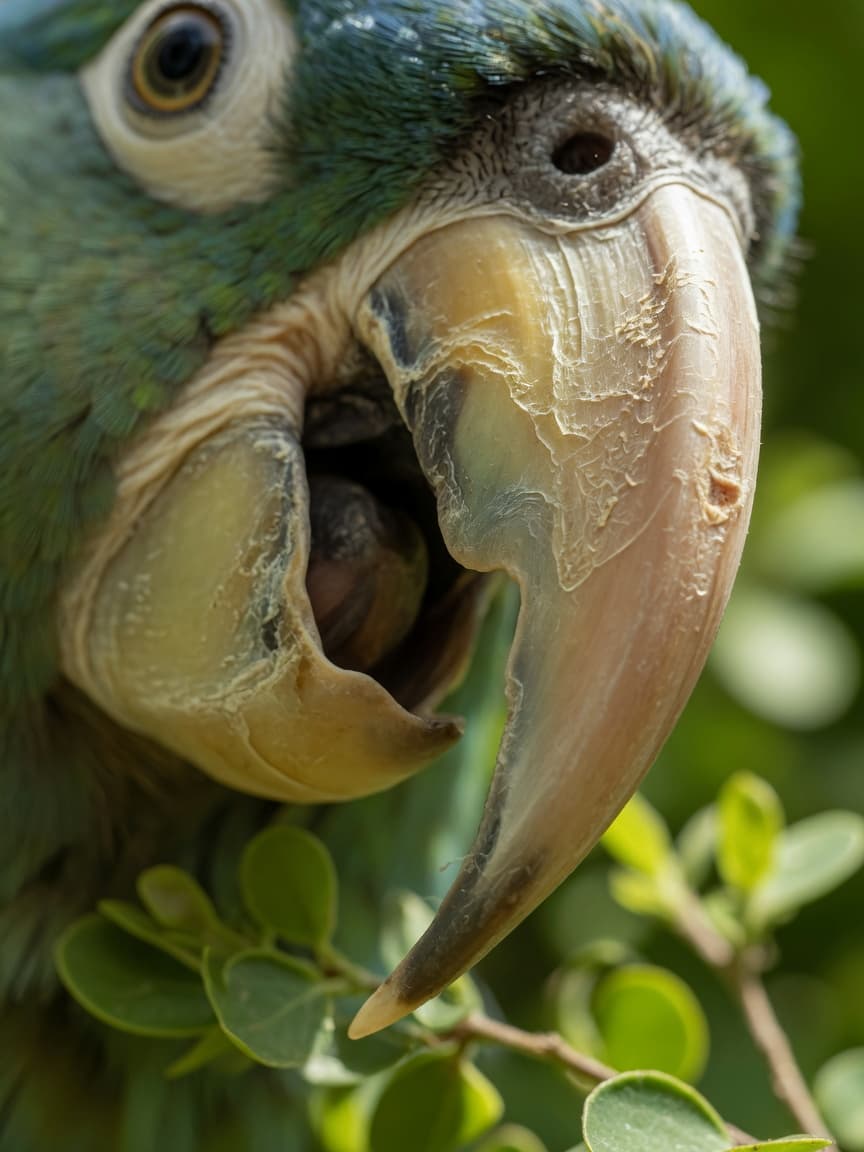
A parrot's beak is one of the most remarkable structures in the animal kingdom. It functions as a tool for foraging, climbing, preening, and communication, and it is in a constant state of growth throughout the bird's life. The upper mandible (rhinotheca) and lower mandible (gnathotheca) are composed of keratin — the same protein that forms human fingernails — layered over a bony core supplied with blood vessels and nerves. Because beaks grow continuously, problems can develop when normal wear is disrupted, when injury occurs, or when the diet fails to provide the right nutritional building blocks.
Beak disorders are among the most frequently missed health issues in companion parrots, partly because owners are unsure what a healthy beak actually looks like, and partly because changes can be gradual. Knowing the warning signs can make the difference between a simple corrective trim and a complex veterinary procedure.
Beak Overgrowth: Why It Happens
In the wild, parrots wear their beaks down naturally by stripping bark, cracking hard nuts, and manipulating fibrous plant material. Pet parrots eating soft, processed diets often lack the abrasive activity needed to keep the beak at its correct length. The result is overgrowth — particularly of the upper mandible, which can curve down dramatically and eventually impair the bird's ability to eat, drink, or preen.
Overgrowth is not always a lifestyle problem. It can also signal underlying disease. Liver disease is a well-documented cause of abnormal beak growth in parrots; the liver plays a central role in keratin metabolism, and when it is compromised, the beak may grow excessively or develop an unusual texture. Mites — specifically Knemidocoptes pilae, which causes scaly face and beak — can also deform the beak by burrowing into soft tissue at its base, producing a characteristic honeycomb or crusty appearance.
- Soft diet without adequate foraging activity
- Liver disease or hepatic lipidosis
- Knemidocoptic mange (scaly face mite)
- Psittacine beak and feather disease (PBFD)
- Nutritional deficiencies, particularly biotin and vitamin A
Beak trimming should only ever be performed by an avian veterinarian or experienced avian specialist. The beak contains blood vessels, and an incorrect cut can cause pain, bleeding, and permanent damage. Home trimming with nail clippers or files is not recommended.
Beak Injuries in Parrots
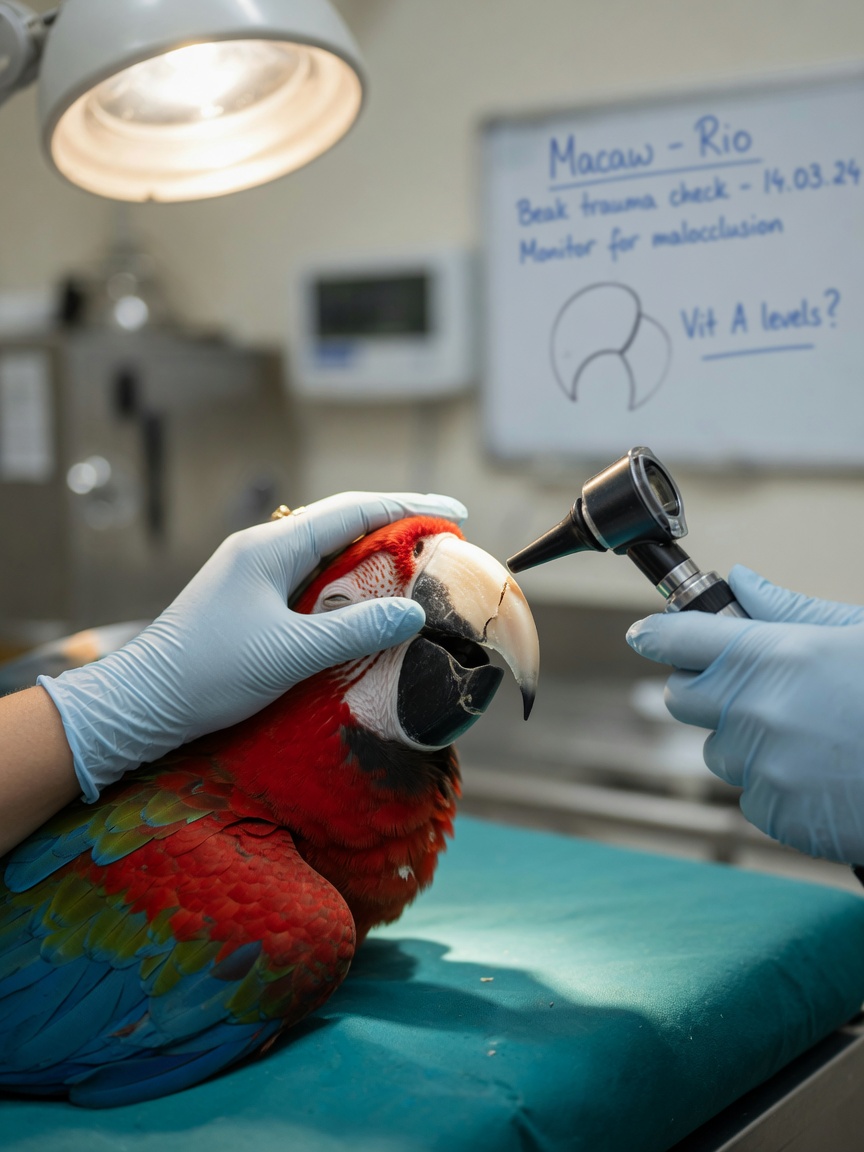
Trauma is another common cause of beak problems, particularly in households with multiple birds or where parrots have access to unsupervised environments. Bite wounds from other birds can fracture the beak or split the tip. Flying into windows, ceiling fans, or walls can cause blunt-force trauma severe enough to crack or partially avulse (tear away) a portion of the mandible.
A chipped beak tip is often manageable and may grow back with time, provided the damage has not extended to the quick. Fractures involving the base of the beak or the hard palate are considerably more serious and require prompt veterinary attention. Your avian vet may use dental-type acrylics or orthopaedic adhesives to repair structural damage while the tissue heals underneath.
If your parrot has sustained a beak injury, keep the bird calm and warm, minimise handling, and contact an avian vet the same day. Do not attempt to glue or bandage the beak yourself. Even a wound that looks superficial can be harbouring infection or concealing deeper structural injury.
Nutritional Causes of Poor Beak Condition
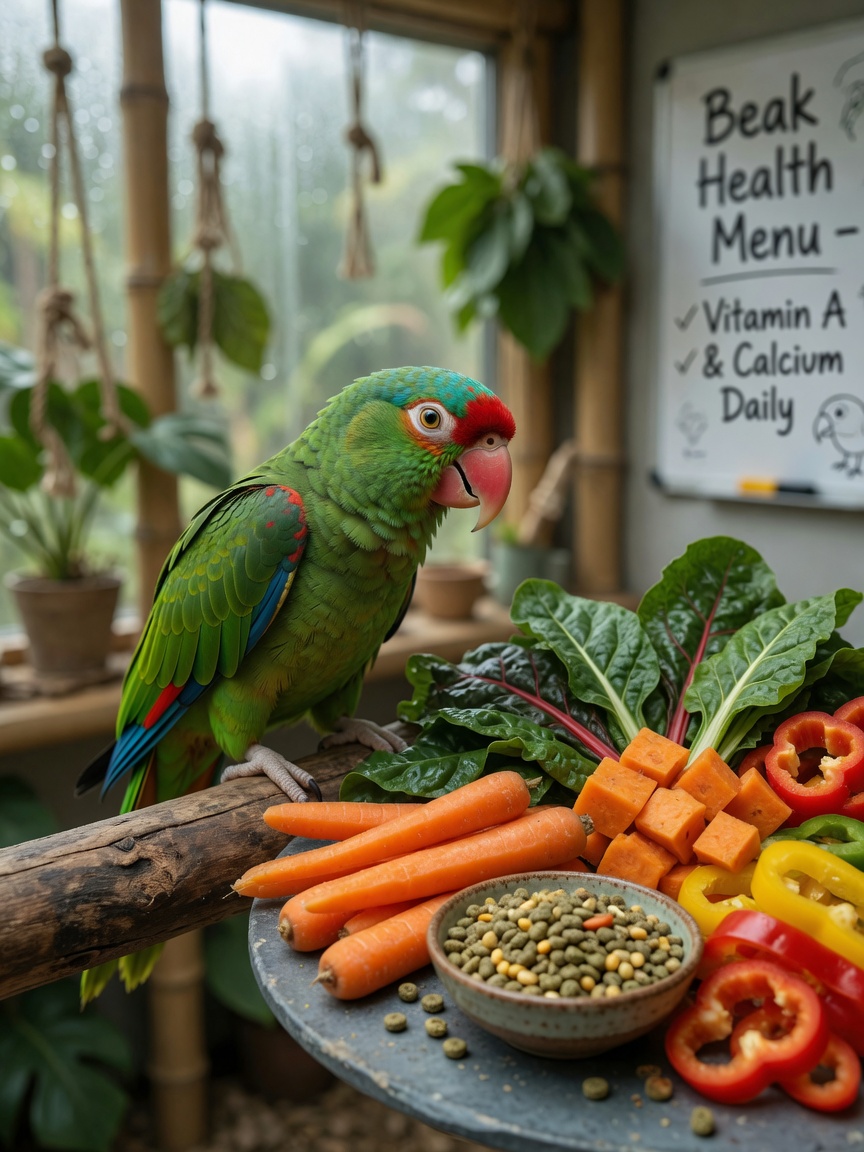
Diet is perhaps the single biggest controllable factor in parrot beak health. A seed-only diet — still unfortunately common in pet parrots in the UK — is deficient in vitamin A, calcium, and several B vitamins including biotin. These deficiencies manifest in the beak in a number of ways.
- Vitamin A deficiency leads to hyperkeratosis — a thickening and flaking of the beak surface — and increases susceptibility to infection
- Calcium and phosphorus imbalances affect bone density, including the bony core of the mandibles
- Biotin deficiency is associated with beak delamination, where the outer keratin layers split or peel
- Protein deficiency impairs keratin formation, producing a soft or discoloured beak
The gold standard diet for most companion parrots is a high-quality commercial pellet making up roughly 60 to 70 percent of the diet, supplemented with a wide variety of fresh vegetables, some fruit, and limited quantities of seeds and nuts as enrichment rather than staples. Dark leafy greens, carrots, sweet potato, and peppers are all rich in beta-carotene, which parrots convert to vitamin A. Calcium requirements are best met through dietary variety rather than supplements, which can be easily overdosed.
When to See an Avian Vet
Not all beak changes require emergency treatment, but several signs warrant same-day or urgent veterinary attention. If you notice any of the following, do not wait to see whether things improve on their own.
- Bleeding from the beak or around its base
- Visible fracture, crack, or partially detached piece of beak
- Asymmetry of the upper and lower mandibles (scissor beak)
- Crusty or spongy texture at the cere or beak base
- Inability to eat, drink, or close the beak properly
- Discharge from the nares (nostrils) alongside beak changes
Routine beak checks should be part of every annual avian health examination. An avian vet can assess wear patterns, identify early signs of nutritional or systemic disease, and perform corrective trimming under appropriate conditions. Beak problems caught early are almost always easier and less costly to address than those left to progress.
Providing your parrot with appropriate chewing enrichment — untreated hardwood perches, leather toys, foraging devices, and whole nuts in the shell — is one of the most effective ways to maintain natural beak wear and reduce the risk of overgrowth. A busy beak is, more often than not, a healthy one.