
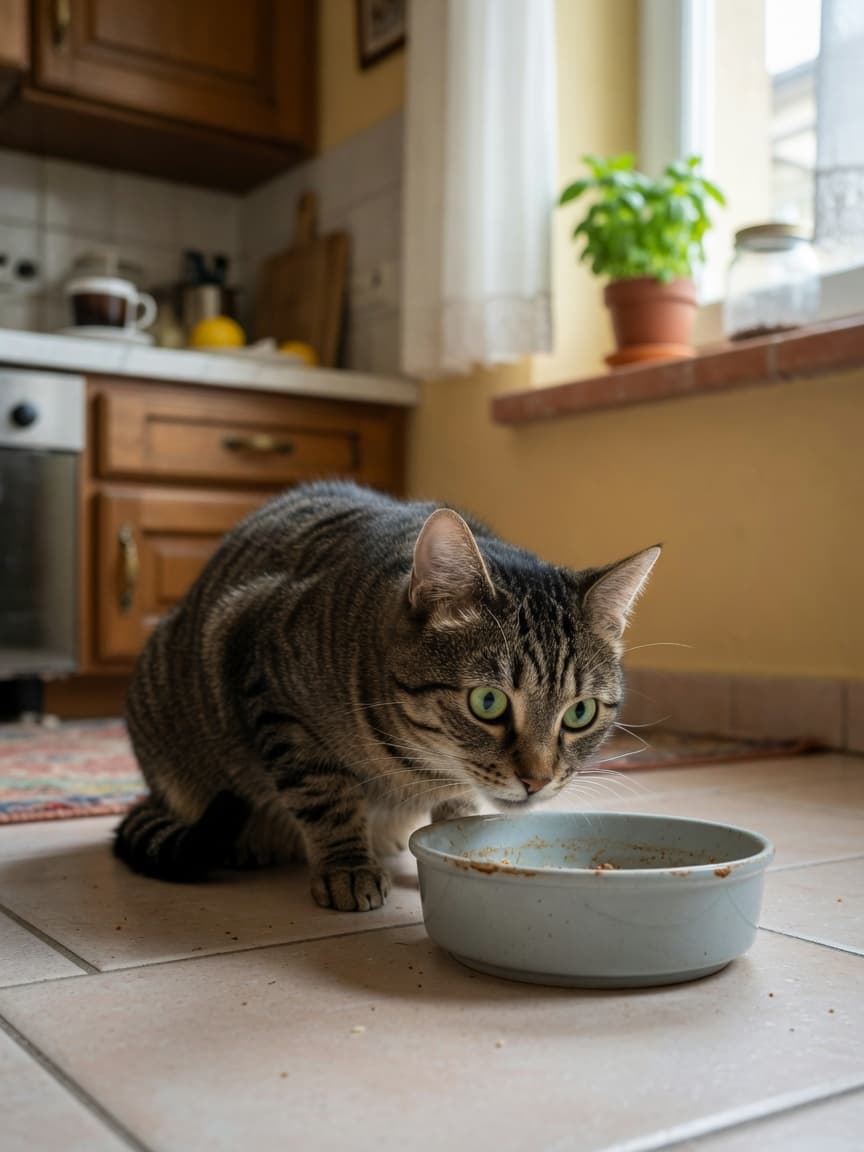
When a Cat Stops Eating, Time Is Not on Your Side
A cat that refuses food for 24 hours is cause for attention. A cat that has not eaten for 48 to 72 hours is a veterinary emergency — even if it appears otherwise well. Unlike dogs or humans, cats cannot safely fast for extended periods. Their metabolism is uniquely vulnerable to the consequences of caloric restriction, and the complication that results — hepatic lipidosis, or fatty liver disease — can be fatal without aggressive intervention. Understanding why cats stop eating and how quickly the situation becomes critical could save your cat's life.
True Anorexia Versus Pseudo-Anorexia
In veterinary medicine, anorexia simply means a loss of appetite or refusal to eat — it has no connection to the psychological eating disorder of the same name in people. It is useful to distinguish between two presentations. True anorexia occurs when a cat has no interest in food. Pseudo-anorexia describes a cat that is hungry and approaches food but cannot or will not eat — often due to oral pain, difficulty swallowing, or nausea. The distinction matters because it guides the diagnostic approach, though both require prompt attention.
The Hepatic Lipidosis Risk
Cats evolved as obligate carnivores consuming frequent small meals. When food intake stops, the body mobilises fat stores to compensate. In cats, this process is unusually rapid and poorly regulated — fat is mobilised faster than the liver can process it, leading to fat accumulation within liver cells. The result is hepatic lipidosis, which impairs liver function progressively and can become life-threatening within days. Overweight cats are at significantly higher risk because they have larger fat reserves to mobilise, but no cat is immune. Any cat that has not eaten for more than 48 hours should be seen by a vet on the same day, regardless of other symptoms.
Common Causes of Feline Anorexia
Medical Causes
- Dental pain and oral disease — tooth resorption, stomatitis, abscesses
- Gastrointestinal disease — inflammatory bowel disease, obstruction, pancreatitis
- Kidney disease — a major cause of chronic appetite suppression in older cats
- Hyperthyroidism — paradoxically can cause weight loss despite increased appetite in early stages
- Infection — upper respiratory illness impairs the sense of smell, making food unappealing
- Cancer — particularly lymphoma and other gastrointestinal tumours
- Nausea from any systemic illness
Environmental and Behavioural Causes
- Stress from changes in household composition, routine, or environment
- Food aversion — particularly in cats that were unwell when a new food was introduced
- Bowl placement near a litter tray or in a high-traffic area
- Competition from other pets
- Recent vaccination or medication side effects
When to Seek Veterinary Help
The threshold is lower than most owners assume. Contact your vet if your cat has not eaten for more than 24 hours. Do not wait to see if the appetite returns on its own. If your cat is also vomiting, lethargic, hiding, losing weight visibly, or showing signs of jaundice — yellow tinge to the skin inside the ears or the whites of the eyes — this is an emergency requiring same-day care. Never attempt to force-feed a cat at home without veterinary guidance; improper technique can cause aspiration pneumonia.
Veterinary Assessment and Treatment
Your vet will take a full history, including how long the cat has been off food, any recent changes in the household, and what food was last accepted. Blood work, urinalysis, and often imaging are used to identify underlying causes. Treatment depends entirely on the diagnosis. Where hepatic lipidosis is suspected or confirmed, nutritional support — typically via a feeding tube placed under anaesthesia — is the cornerstone of recovery. Feeding tubes allow adequate caloric delivery while the underlying condition is addressed, and most cats tolerate them surprisingly well. Recovery is possible with prompt, sustained treatment, but the window for intervention narrows with each passing day.
Practical Summary
- Monitor your cat's daily food intake. Any cat not eating for 24 hours warrants a call to your vet.
- Do not assume a fasting cat will eat when hungry enough — in cats, this reasoning can be fatal.
- Overweight cats are at the highest risk of hepatic lipidosis and should be monitored especially closely.
- Never put a cat on a crash diet without veterinary supervision — caloric restriction must always be gradual in cats.
- Address stress in multi-cat households by providing separate feeding stations and reducing competition at mealtimes.
- Upper respiratory infections impair smell — try warming food gently to increase aroma if your cat has a cold, and contact your vet if intake remains poor.
- Always consult a veterinarian before attempting any home management of an anorexic cat — early professional intervention dramatically improves outcomes.