
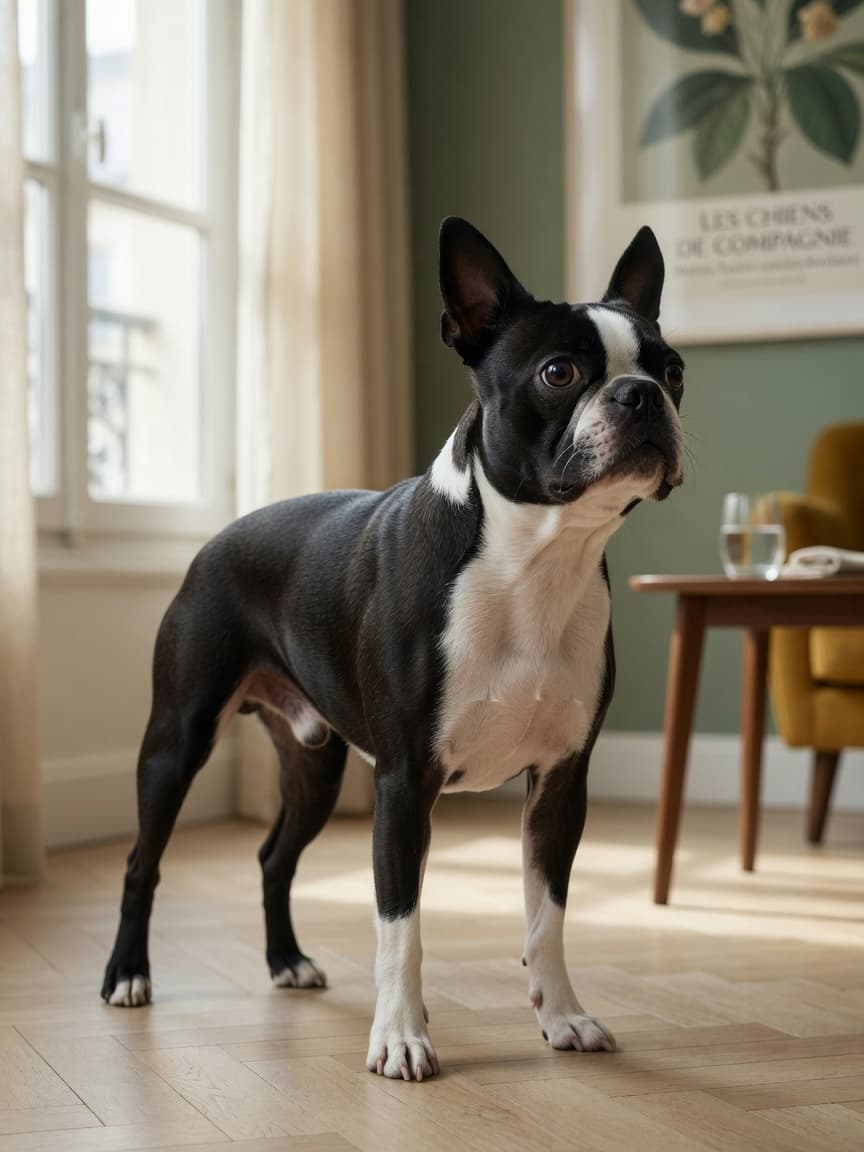
O Boston Terrier é um cão de companhia compacto e de bom carácter, mais adequado a donos que pretendem um animal de estimação afetuoso e adaptável para casa ou apartamento, com necessidades de exercício modestas, mas um forte desejo de companhia humana. A sua característica mais distintiva é um temperamento amigável e cómico envolvido numa pelagem distintiva semelhante a um smoking. A principal preocupação de saúde da raça é a forma do crânio braquicéfalo (de focinho curto), que está na origem de muitos dos problemas respiratórios e oculares observados nos Boston Terriers ao longo da vida.
Visão Geral da Raça
- Tamanho: Pequeno, tipicamente 4,5–11,3 kg, com cerca de 38–43 cm à cernelha
- Esperança de vida: Habitualmente indicada como 11–13 anos
- Pelagem: Curta, lisa e de baixa queda de pelo, tipicamente preta, tigrada ou selo com marcações brancas
- Origem: Desenvolvido nos Estados Unidos (Boston, Massachusetts) no final do século XIX a partir de cruzamentos entre English Bulldogs e English Terriers
Temperamento e Adequação à Família
Os Boston Terriers são frequentemente descritos como o "American Gentleman" do mundo canino, uma referência às suas marcações asseadas e ao seu comportamento geralmente educado e sociável. Tendem a ser afetivos, alertas e ansiosos por agradar, formando laços estreitos com as suas famílias e procurando frequentemente colo e contacto físico próximo. A maioria dos indivíduos é amigável com crianças, embora, como em qualquer raça pequena, as interações com crianças muito pequenas devam ser supervisionadas para evitar lesões acidentais no cão ou brincadeiras demasiado agitadas.
Esta raça é geralmente sociável com outros cães e pode adaptar-se bem a lares com vários animais de estimação quando devidamente apresentada. São inteligentes e recetivos ao treino, embora alguns possam manifestar um traço de teimosia, pelo que os métodos consistentes baseados em recompensas funcionam melhor. Como prosperam com a companhia, os Boston Terriers não se dão bem quando deixados sozinhos durante longos períodos e podem desenvolver ansiedade relacionada com a separação ou hábitos destrutivos se forem regularmente isolados por períodos prolongados.
A sua adaptabilidade torna-os uma boa escolha tanto para donos de primeira vez, como para adultos mais velhos e pessoas que vivem em apartamento, desde que as suas vulnerabilidades de saúde específicas (detalhadas abaixo) sejam compreendidas e geridas desde o início.
Problemas de Saúde nos Boston Terriers
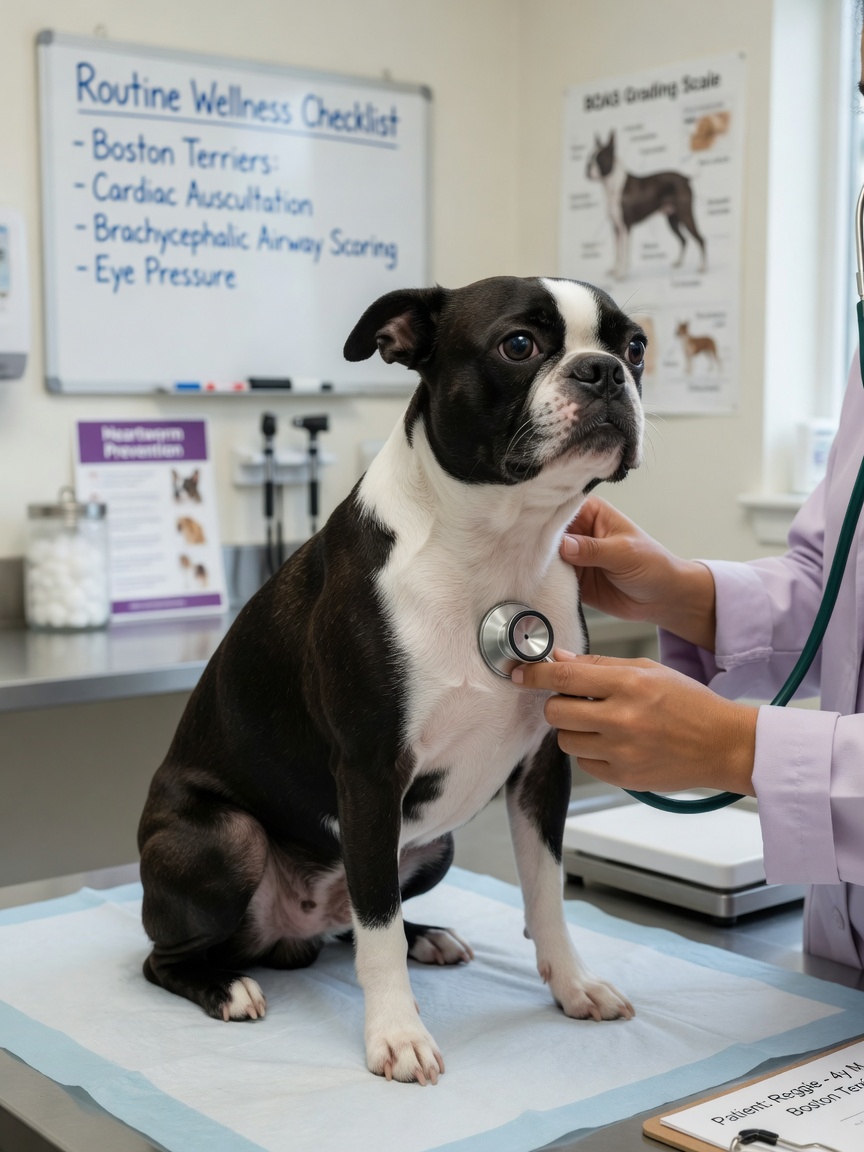
Como todas as raças de pedigree, os Boston Terriers têm um conjunto de problemas de saúde que surgem com maior frequência na raça do que na população canina em geral. Compreendê-los permite aos donos identificar sinais de alerta precoces e trabalhar de forma proativa com o seu veterinário.
Síndrome Obstrutiva das Vias Aéreas dos Braquicéfalos (BOAS)
A cara achatada e o focinho encurtado do Boston Terrier podem originar um conjunto de anomalias das vias aéreas coletivamente conhecido como BOAS. Os cães afetados podem ter narinas estreitas, um palato mole alongado ou uma traqueia mais pequena, todas as quais restringem o fluxo de ar normal.
Os sinais precoces incluem respiração ruidosa ou laboriosa, ressonar, bufar, intolerância ao exercício e dificuldade em lidar com o calor ou a humidade. Alguns cães também se engasgam ou têm arcadas, particularmente após as refeições ou durante a excitação.
Os donos podem ajudar mantendo o cão com um peso saudável, evitando o exercício durante o tempo quente, utilizando um peitoral em vez de uma coleira no pescoço para reduzir a pressão sobre as vias aéreas, e procurando uma avaliação veterinária de imediato se os sons respiratórios mudarem. Em casos mais graves, a cirurgia corretiva para alargar as narinas ou encurtar o palato mole pode melhorar significativamente a qualidade de vida.
Problemas Oculares (Úlceras da Córnea e Proptose)
Os olhos proeminentes e afastados do Boston Terrier são atraentes, mas estão mais expostos a lesões do que os de raças com órbitas oculares mais profundas. As úlceras da córnea (arranhões ou erosões na superfície do olho) são frequentemente relatadas e, em incidentes mais graves, o olho pode deslocar-se parcialmente da órbita (proptose), o que constitui uma emergência veterinária.
Os sinais precoces de problemas oculares incluem entrecerrar os olhos, lacrimejo excessivo, vermelhidão, turvação ou esfregar a cara com a pata. Qualquer alteração súbita na aparência dos olhos justifica atenção veterinária no próprio dia.
Os donos podem reduzir o risco mantendo a cara livre de pelo comprido ou de brincadeiras rudes perto dos olhos, evitando atividades que envolvam rolamentos bruscos com outros cães, e fazendo verificar qualquer irritação ocular cedo, em vez de esperar para ver se resolve por si só.
Luxação da Rótula
Esta é uma condição em que a rótula sai do seu sulco normal, causando claudicação intermitente ou persistente dos membros posteriores. É frequentemente observada em raças pequenas e toy, incluindo o Boston Terrier.
Os sinais incluem frequentemente uma marcha aos saltinhos ou aos saltos, especialmente após o descanso ou o exercício, e uma relutância ocasional em apoiar o peso numa pata traseira. Alguns cães apresentam apenas sintomas ligeiros e infrequentes durante anos, enquanto outros evoluem para uma claudicação mais constante.
Manter uma condição corporal magra reduz a sobrecarga nas articulações, e os donos devem mandar avaliar qualquer marcha persistente aos saltinhos por um veterinário, uma vez que os casos mais avançados podem beneficiar de correção cirúrgica. À medida que os cães envelhecem, os problemas articulares podem agravar-se com o desgaste geral, pelo que vale a pena conhecer opções mais amplas para a gestão da artrite em cães como consideração a longo prazo.
Doença do Disco Intervertebral (IVDD)
Os Boston Terriers, como muitas raças condrodistróficas com corpos compactos, podem estar predispostos à degeneração dos discos na coluna vertebral, o que pode levar a dor nas costas súbita ou progressiva, instabilidade, ou, em casos graves, fraqueza ou paralisia dos membros posteriores.
Os sinais precoces incluem relutância em saltar, as costas arqueadas, ganidos quando é levantado, ou relutância em subir escadas. Qualquer alteração súbita na mobilidade ou sinais de dor na coluna devem ser tratados como urgentes.
Reduzir os saltos repetitivos para cima e para baixo dos móveis, utilizar rampas ou degraus para carros e sofás, e manter um peso saudável pode ajudar a proteger a coluna. A avaliação veterinária imediata é essencial se surgirem sintomas, uma vez que a intervenção precoce melhora frequentemente os resultados.
Problemas Cardíacos
Os defeitos cardíacos congénitos e, menos frequentemente, as condições adquiridas que afetam a função do músculo cardíaco, são relatados na raça. As consultas veterinárias regulares incluem frequentemente a auscultação de sopros cardíacos, que podem ser um indicador precoce de um problema subjacente.
Os sinais a ter em atenção incluem cansaço invulgar, tosse, respiração laboriosa em repouso ou episódios de desmaio. Nem todos os sopros indicam uma doença grave, mas qualquer um destes sinais deve motivar uma avaliação cardíaca veterinária, que pode incluir exames de imagem adicionais se necessário.
As consultas veterinárias de rotina continuam a ser a ferramenta mais prática para a deteção precoce, a par da comunicação imediata ao veterinário de qualquer nova intolerância ao exercício.
Dermatite das Pregas Cutâneas e Alergias
As pregas faciais e a pelagem curta do Boston Terrier podem ser propensas a irritação, particularmente à volta das rugas do focinho, e alguns indivíduos também sofrem de alergias cutâneas ambientais ou relacionadas com a alimentação.
Os sinais incluem vermelhidão, odor, coçar ou secreção nas pregas cutâneas, bem como prurido mais generalizado, lamber das patas ou infeções de ouvidos recorrentes associadas a alergias. Se notar comichão persistente ou crises cutâneas recorrentes, o nosso guia de alergias cutâneas em cães aborda os fatores desencadeantes comuns e as abordagens de gestão com maior profundidade.
A limpeza e a secagem regulares das pregas faciais, a atenção imediata a qualquer vermelhidão e o trabalho com um veterinário para identificar os fatores desencadeantes de alergias, quando relevante, podem ajudar a manter a pele confortável e a reduzir a recorrência.
Sensibilidade ao Calor
Como raça braquicéfala, os Boston Terriers são menos eficientes a ofegar para se arrefecerem e podem sobreaquecer mais rapidamente do que cães com focinhos mais compridos, tornando o golpe de calor um risco real em condições quentes ou húmidas.
Os sinais de sobreaquecimento incluem ofegar excessivo, babar, gengivas vermelho-vivo, letargia e colapso nos casos graves. Isto progride rapidamente, pelo que a prevenção é muito preferível ao tratamento.
Os donos devem evitar exercitar o cão durante o pico de calor do dia, nunca o deixar num carro estacionado e proporcionar acesso constante a sombra e água fresca durante o tempo quente.
Nutrição e Alimentação
Os Boston Terriers dão-se bem com uma dieta completa e equilibrada adequada à sua fase de vida, com as porções ajustadas para manter uma condição corporal magra, uma vez que o excesso de peso agrava tanto a sobrecarga articular como a dificuldade respiratória. Os cachorros beneficiam de uma dieta formulada para o crescimento, e compreender o que esperar em termos de desenvolvimento pode ajudar nas decisões de alimentação; o nosso guia das fases de crescimento dos cachorros descreve o que é típico em cada fase.
Alguns Boston Terriers sofrem de sensibilidades alimentares a par dos seus problemas de pele e, nestes casos, o veterinário pode recomendar uma prova de eliminação ou uma dieta específica; o guia de ração hipoalergénica para cães explica como estas dietas funcionam e quando podem ser adequadas. À medida que os cães entram nos seus anos sénior, as necessidades calóricas tipicamente diminuem, enquanto os nutrientes de suporte articular se tornam mais valiosos, e o nosso guia da melhor ração para cães seniores aborda o que procurar durante esta fase da vida.
Alguns donos também exploram suplementos de suporte intestinal, como probióticos, particularmente para cães com digestão sensível; a evidência por detrás destas abordagens é discutida no nosso evidência sobre probióticos para cães artigo. Qualquer alteração alimentar significativa deve ser introduzida gradualmente e, quando existem problemas de saúde, discutida primeiro com um veterinário.
Higiene e Cuidados
A pelagem curta e lisa do Boston Terrier exige relativamente pouca manutenção, necessitando geralmente apenas de uma escovagem semanal para remover o pelo solto e manter a pelagem brilhante. O banho pode ser feito ocasionalmente, conforme necessário, em vez de num horário rigoroso.
As pregas faciais devem ser verificadas e suavemente limpas com regularidade para prevenir a acumulação de humidade e a irritação, e as orelhas devem ser verificadas periodicamente quanto à acumulação de cera ou odor. As unhas necessitam de corte regular, pois unhas demasiado compridas podem afetar a marcha e o conforto, e os cuidados dentários de rotina são importantes, uma vez que os cães de raças pequenas são geralmente propensos à acumulação de tártaro dentário ao longo do tempo.
Devido aos seus olhos proeminentes, vale a pena estar atento a qualquer vermelhidão, secreção ou entrecerrar dos olhos durante as sessões de higiene, detetando potenciais problemas precocemente.
Necessidades de Exercício e Treino
Os Boston Terriers têm necessidades de exercício moderadas, tipicamente satisfeitas com um ou dois passeios curtos por dia, juntamente com alguma brincadeira interativa. Devido à anatomia das suas vias aéreas, o exercício intenso ou prolongado, particularmente em tempo quente, deve ser evitado, e os donos devem estar atentos a ofegar excessivo ou fadiga como sinal para abrandar ou parar.
São geralmente inteligentes, motivados pela comida e recetivos a métodos de treino de reforço positivo, aprendendo frequentemente com facilidade a obediência básica e os bons modos em casa. A socialização precoce com pessoas, outros animais e situações do dia a dia ajuda a apoiar um temperamento equilibrado, e sessões de treino curtas e envolventes tendem a adequar-se melhor à sua capacidade de atenção do que exercícios repetitivos longos.
A estimulação mental através de comedouros puzzle, jogos de treino suaves e percursos de passeio variados pode ajudar a manter esta raça satisfeita, particularmente dada a sua natureza sociável, orientada para as pessoas, e a aversão à solidão prolongada.
Perguntas Frequentes
Os Boston Terriers dão-se bem com crianças?
Em geral sim, os Boston Terriers são tipicamente afetivos e tolerantes, o que os torna uma escolha familiar popular. Como em qualquer raça, as interações com crianças pequenas devem ser supervisionadas, tanto para proteger o cão de manuseamento rude como para garantir brincadeiras suaves de ambos os lados.
Os Boston Terriers largam muito pelo?
Não, a sua pelagem curta larga relativamente pouco pelo em comparação com muitas raças, e uma escovagem semanal regular é geralmente suficiente para gerir o pelo solto e manter a pelagem em bom estado.
Os Boston Terriers toleram o tempo quente?
Não muito bem. A estrutura braquicéfala das suas vias aéreas torna-os menos eficientes a regular a temperatura corporal, pelo que o exercício e o tempo ao ar livre devem ser limitados durante condições quentes ou húmidas, com sombra e água sempre disponíveis.
De quanto exercício precisa um Boston Terrier?
Tipicamente, exercício moderado, como um ou dois passeios diários curtos mais alguma brincadeira, é suficiente. O esforço intenso deve ser geralmente evitado, particularmente em tempo quente, devido à anatomia respiratória.
Este guia destina-se apenas a fins informativos gerais e não substitui o aconselhamento veterinário individual. Consulte sempre o seu veterinário para orientação específica sobre a saúde, o historial e as necessidades do seu cão.