
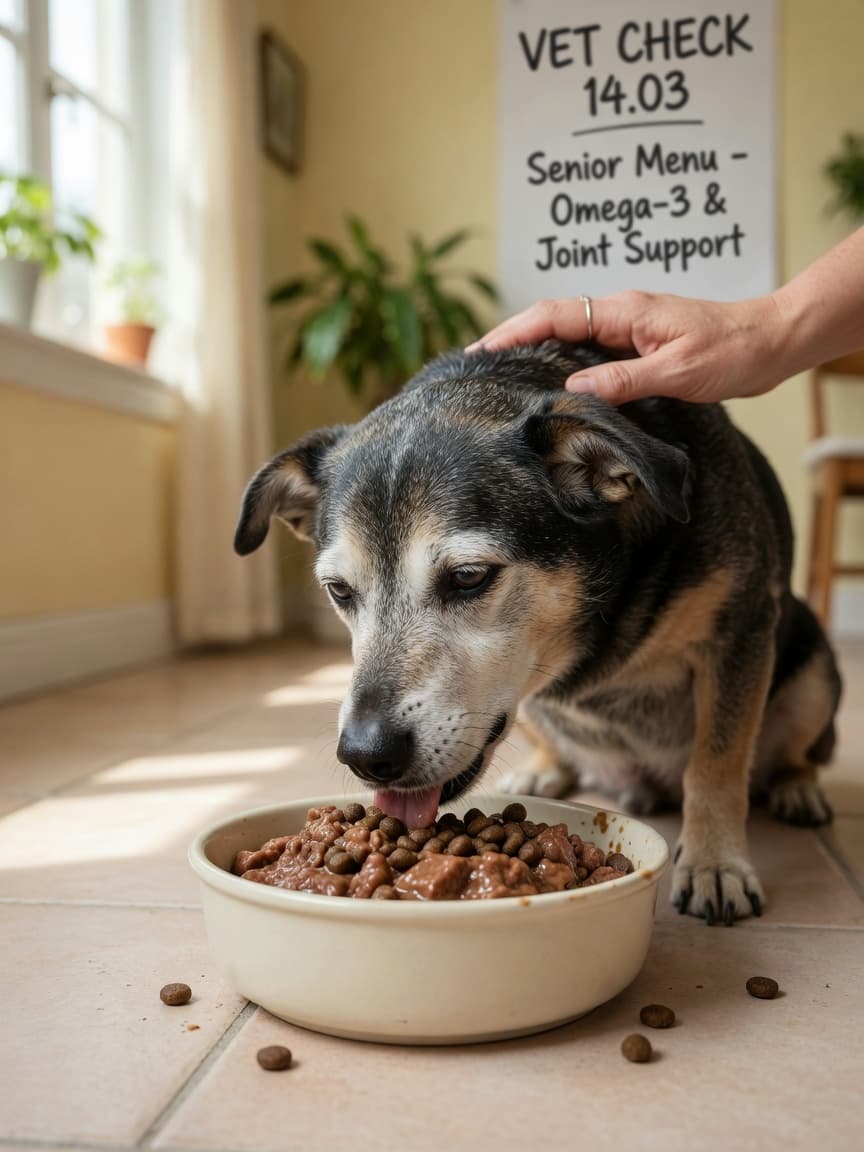
Best Dog Food for Senior Dogs: Nutrition Guide for Older Dogs in Europe
As dogs grow older, their bodies change in ways that directly affect what they need from their diet. Choosing the right food for a senior dog is one of the most meaningful things an owner can do to support their pet's comfort, mobility, and long-term health. This guide covers everything you need to know — from recognising when your dog qualifies as "senior" to understanding the science behind older dog nutrition.
When Is a Dog Considered Senior?
There is no single age at which all dogs become senior. The threshold depends heavily on breed size, because larger breeds age faster than smaller ones. As a general framework used by veterinary professionals across Europe:
- Small breeds (under 10 kg) — senior from around 10 to 12 years
- Medium breeds (10–25 kg) — senior from around 8 to 10 years
- Large breeds (25–45 kg) — senior from around 7 to 8 years
- Giant breeds (over 45 kg) — senior from as early as 5 to 6 years
The World Small Animal Veterinary Association (WSAVA) recommends that veterinarians begin discussing life-stage nutrition with owners well before a dog reaches these thresholds, so that dietary transitions can be planned proactively rather than reactively.
Physiological Changes in Older Dogs
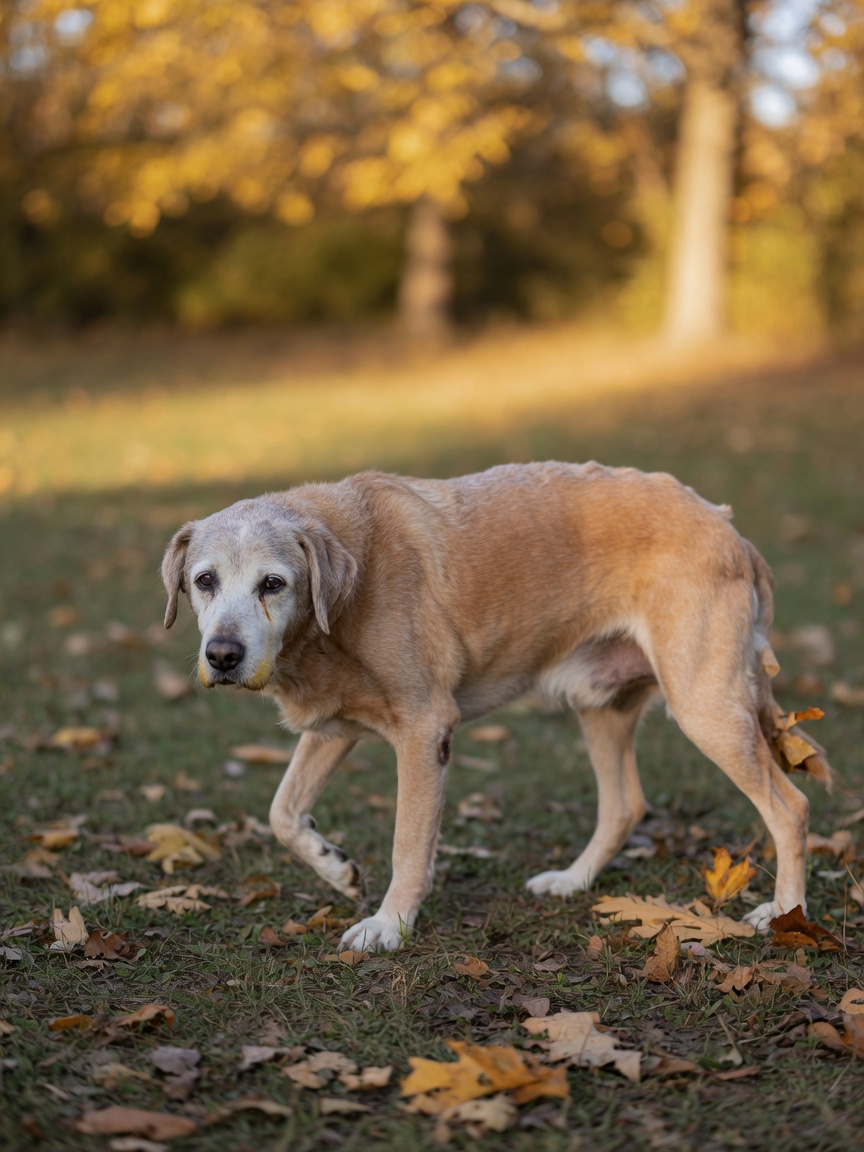
Understanding what happens inside an ageing dog's body helps clarify why their nutritional requirements shift so significantly.
Reduced Metabolic Rate
Older dogs typically have a lower resting metabolic rate. Combined with reduced activity levels, this means they are at greater risk of weight gain if fed the same caloric quantities as a younger adult dog. However, some senior dogs — particularly those in their final years — experience the opposite problem and struggle to maintain a healthy body weight.
Sarcopenia: Muscle Loss in Senior Dogs
Sarcopenia, the progressive loss of skeletal muscle mass, is one of the most clinically significant changes associated with canine ageing. It can reduce mobility, compromise immune function, and make recovery from illness slower. Counteracting sarcopenia requires adequate — and often increased — dietary protein, not reduced protein as was once widely advised.
Joint Changes and Mobility Decline
Osteoarthritis is extremely common in older dogs. Cartilage deteriorates over time, joint fluid changes in composition, and chronic low-level inflammation can significantly affect a dog's quality of life. Nutrition plays a direct role in managing these changes.
Dental Decline
Periodontal disease is prevalent in middle-aged and older dogs, often making it more difficult or painful to chew hard kibble. This can affect food intake and overall nutrition, which is one reason why wet food or softened diets become increasingly relevant for senior dogs.
Kidney Function
The kidneys of older dogs become less efficient at filtering waste products. Chronic kidney disease (CKD) is a leading cause of illness in senior dogs. While kidney disease requires specific dietary intervention, it is important to note that healthy senior dogs do not automatically need phosphorus or protein restriction — those modifications are appropriate only when renal impairment is confirmed by veterinary blood and urine testing.
Nutritional Needs of Senior Dogs
Protein: Quality and Quantity Matter
One of the most persistent myths in senior dog nutrition is that older dogs should receive less protein. Current evidence and guidance from WSAVA directly contradicts this. Healthy senior dogs need high-quality, highly digestible protein to maintain muscle mass and support immune function. The emphasis should be on the quality of protein sources — named meats and fish rank higher than anonymous "meat derivatives" — rather than on reducing protein overall.
FEDIAF (the European Pet Food Industry Federation) acknowledges that senior dogs may have altered requirements, and their nutritional guidelines support formulations that provide adequate protein from quality sources. If a dog has confirmed kidney disease, a veterinarian may recommend phosphorus moderation and a controlled protein intake — but this is a clinical decision, not a blanket rule for all older dogs.
Phosphorus Moderation and Kidney Health
For dogs with diagnosed renal insufficiency, reducing dietary phosphorus is a well-established approach to slowing disease progression. The European Food Safety Authority (EFSA) has reviewed evidence on phosphorus and renal health in companion animals, supporting the view that phosphorus management in confirmed CKD cases is clinically beneficial. However, owners should not restrict phosphorus without veterinary guidance, as unnecessarily low protein or phosphorus can itself cause muscle wasting.
Joint Support: EPA, DHA, and Glucosamine
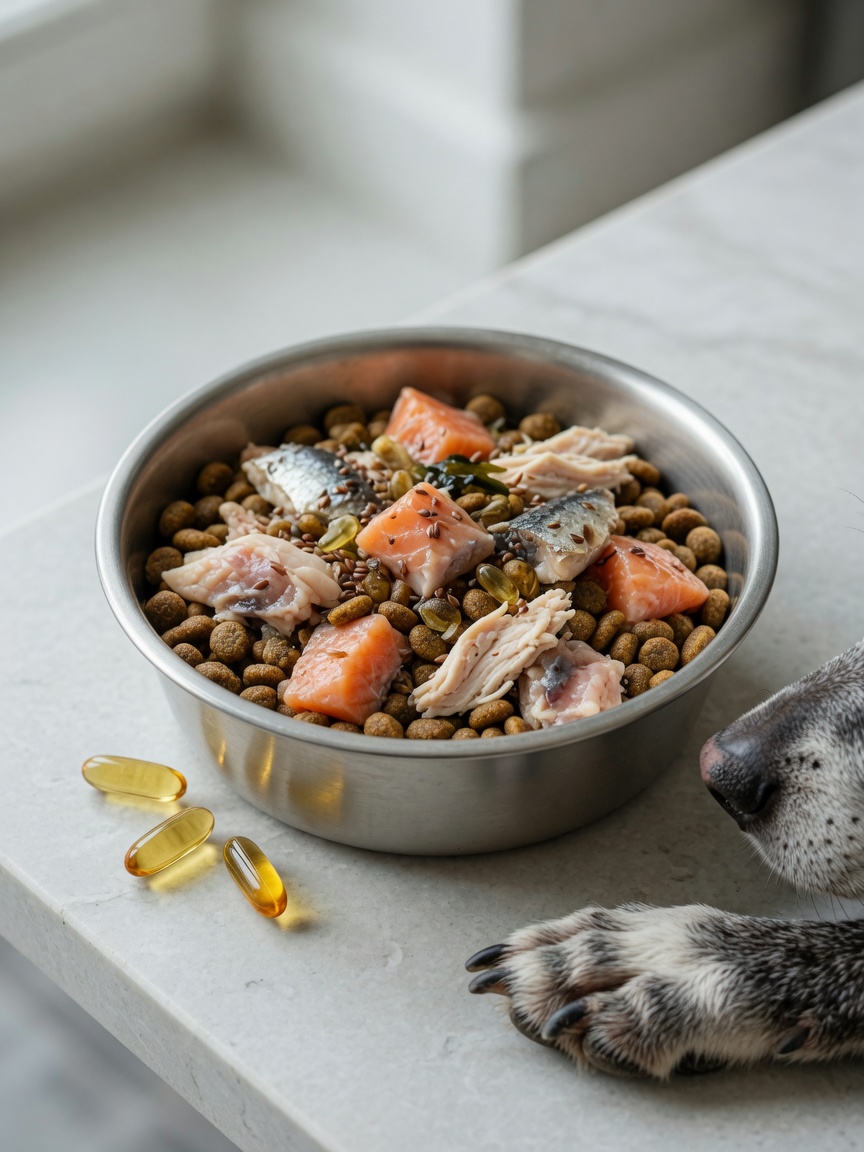
Omega-3 fatty acids — specifically EPA (eicosapentaenoic acid) and DHA (docosahexaenoic acid) derived from marine sources — have strong evidence behind their anti-inflammatory effects in dogs with osteoarthritis. Many senior dog food formulations incorporate fish oil for this reason. Glucosamine and chondroitin sulphate are also commonly included to support cartilage integrity, though their effect is more incremental and works best as a long-term dietary strategy rather than a short-term intervention.
Antioxidants
Ageing is associated with increased oxidative stress at the cellular level. Antioxidants such as vitamin E, vitamin C, beta-carotene, and selenium help neutralise free radicals and support immune health. Many quality senior dog foods include elevated levels of these nutrients, and their inclusion is endorsed in broader FEDIAF guidance on life-stage appropriate nutrition.
Digestibility and Fibre
The digestive efficiency of older dogs can decline. Highly digestible ingredients reduce the burden on the gut and ensure that nutrients are actually absorbed. Moderate levels of prebiotic fibre support gut microbiome health, which is increasingly recognised as central to overall wellbeing in dogs of all ages.
Wet vs Dry Food for Senior Dogs
Both wet and dry food can form a sound basis for a senior dog's diet, and many owners opt for a combination. Wet food is generally higher in moisture, which supports hydration — particularly relevant for dogs prone to urinary or kidney issues. It is also softer, making it easier for dogs with dental pain or missing teeth to eat comfortably. Dry food, or kibble, can support dental hygiene through its abrasive texture, though this benefit diminishes in dogs with significant dental disease. High-quality senior kibble also tends to be more calorie-dense per gram, which suits dogs maintaining a healthy weight on smaller portions.
Choosing Senior Dog Food in Europe: What to Look For
When selecting a senior dog food in Europe, look for products that comply with FEDIAF nutritional guidelines and are labelled as complete and balanced for senior or mature dogs. Named protein sources (chicken, salmon, lamb) should appear at the top of the ingredient list. Avoid products with excessive fillers or vague ingredient descriptions.
Zooplus is one of Europe's largest online pet retailers and stocks a wide range of senior dog foods from both established brands and newer specialist producers. Their senior dog food category includes options across wet, dry, and mixed feeding formats, making it straightforward to compare formulations, read ingredient lists, and order in bulk at competitive prices across most European countries.
Signs It May Be Time to Switch to Senior Food
- Your dog is reaching the age threshold for their size and breed
- You notice visible muscle loss or reduced body condition
- Your dog has been diagnosed with a joint condition or arthritis
- Weight gain is becoming difficult to manage on their current food
- Your vet has flagged early changes in kidney markers at a routine blood test
- Dental issues are making hard kibble difficult to eat
- Your dog seems less interested in their current food
Always Consult Your Vet
No online guide — however thorough — replaces a consultation with a qualified veterinarian. Senior dogs should ideally have check-ups every six months rather than annually, as health changes can develop quickly at this life stage. A vet can assess body condition score, run blood and urine panels, and recommend a specific dietary approach tailored to your dog's individual health profile. WSAVA recommends a nutritional assessment as a routine part of every veterinary visit for senior patients.
Transitioning to a senior food should be done gradually over seven to ten days to avoid digestive upset — mix increasing proportions of the new food with the old to allow your dog's gut to adjust comfortably.
Article written by Julia Wrenfield for ForPetsHealthcare.