
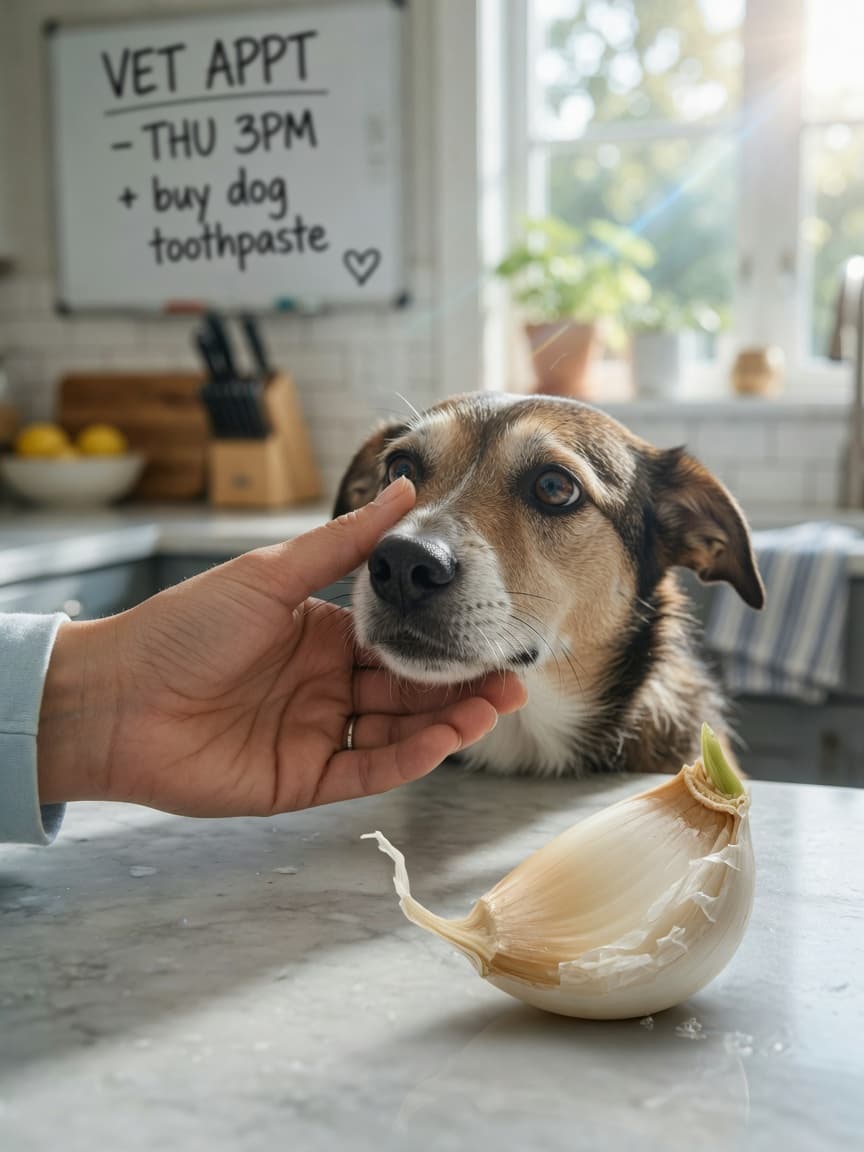
Les chiens peuvent-ils manger de l'ail ? Non — il est 5 fois plus toxique que les oignons et peut être fatal
L'ail est célébré dans la cuisine humaine pour sa saveur et ses prétendus bienfaits pour la santé. Pour les chiens, c'est un tueur silencieux. Malgré un mythe persistant et dangereux circulant en ligne selon lequel l'ail serait un « répulsif naturel contre les puces » ou un « stimulant immunitaire » pour les chiens, le consensus scientifique et vétérinaire est formel : l'ail est toxique pour les chiens, et aucune quantité ne doit jamais être donnée intentionnellement ou accidentellement.
Ce qui rend l'ail si particulièrement dangereux, c'est le délai trompeur des symptômes. Votre chien peut manger de l'ail aujourd'hui et paraître tout à fait normal pendant trois à cinq jours — alors qu'une attaque dévastatrice de ses globules rouges est déjà en cours dans son organisme. Lorsque les symptômes apparaissent, les dégâts sont graves et le traitement devient une course contre la montre urgente.
Pourquoi l'ail est si toxique pour les chiens — le mécanisme
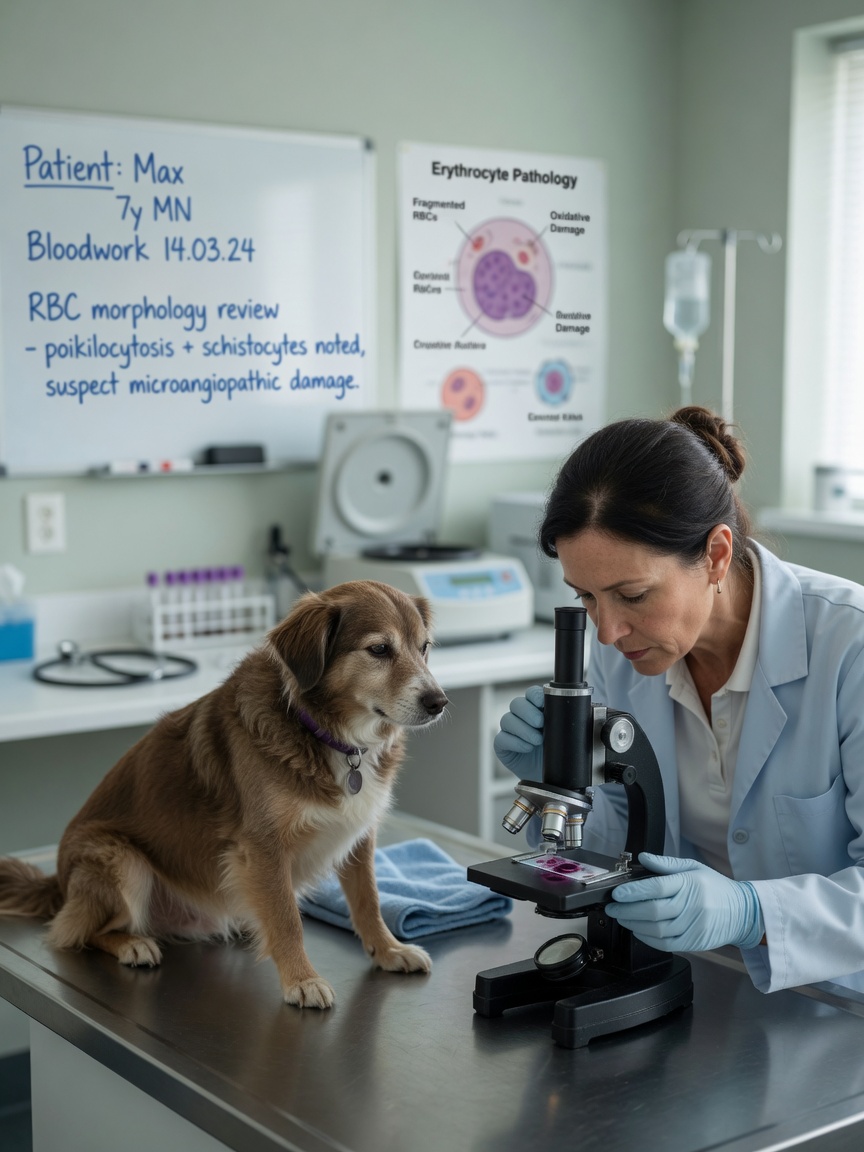
L'ail appartient à la famille des plantes Allium, qui comprend également les oignons, les échalotes, les poireaux et la ciboulette. Toutes les espèces d'Allium contiennent des composés organosoufrés nocifs pour les chiens. Dans l'ail en particulier, l'agent toxique principal est le N-propyl disulfide, ainsi que le thiosulfate et d'autres composés soufrés.
Ces composés oxydent l'hémoglobine à l'intérieur des globules rouges, formant des amas de protéines dénaturées appelés corps de Heinz. Les globules rouges contenant des corps de Heinz sont fragiles et sont rapidement détruits par le propre système immunitaire du chien, un processus appelé anémie hémolytique. Lorsque les globules rouges sont détruits plus vite que l'organisme ne peut les remplacer, la capacité de transport de l'oxygène du chien s'effondre — ce qui entraîne une faiblesse, une défaillance des organes et potentiellement la mort.
L'ail est environ 5 fois plus puissant que les oignons en poids dans sa capacité à provoquer cette destruction. Cela signifie que la quantité d'ail nécessaire pour causer une réaction toxique est nettement plus faible que ce que la plupart des gens imaginent.
Quelle quantité d'ail est dangereuse ?
Des études indiquent que seulement 15–30 grammes d'ail par kilogramme de poids corporel peuvent causer des lésions mesurables des globules rouges chez les chiens. Une gousse d'ail pèse environ 3–7 grammes. Pour un petit chien pesant 5 kg, cela signifie que moins de 3 gousses d'ail pourraient déclencher une réaction toxique. La poudre d'ail est bien plus concentrée — une cuillère à café de poudre d'ail contient l'équivalent d'environ 8–10 gousses d'ail frais, ce qui la rend extraordinairement dangereuse même en infimes quantités.
Une exposition répétée à de petites quantités est également dangereuse. La toxicité de l'ail est cumulative — de petites doses quotidiennes peuvent s'accumuler au fil du temps et déclencher une anémie tout aussi efficacement qu'une dose unique importante. Cela concerne particulièrement les propriétaires qui ajoutent « un peu d'ail » à la nourriture de leur chien sur la base de mauvais conseils en ligne.
Toutes les formes d'ail sont dangereuses
Il n'existe aucune méthode de transformation qui rende l'ail sans danger pour les chiens. Toutes les formes portent les composés toxiques :
- Ail cru — teneur en eau la plus élevée, mais toujours hautement toxique
- Ail cuit — la cuisson ne détruit pas les composés organosoufrés nocifs
- Ail rôti — toujours toxique
- Poudre d'ail — forme la plus concentrée et la plus dangereuse, gramme pour gramme
- Sel à l'ail — toxique, et le sodium ajouté crée des problèmes supplémentaires
- Huile d'ail et extraits d'ail — hautement concentrés, dangereux de façon aiguë
- Ail noir fermenté — contient toujours des composés toxiques
Sources cachées d'ail dans les aliments du quotidien
De nombreux empoisonnements de chiens par l'ail ne surviennent pas parce que le chien a volé une gousse, mais parce que des propriétaires bien intentionnés partagent de la nourriture humaine contenant secrètement de l'ail. Soyez extrêmement prudent avec :
- Pain à l'ail — un coupable fréquent, souvent donné comme « friandise »
- Pizza, sauce pour pâtes et cuisine italienne — contiennent presque toujours de l'ail
- Restes de restaurant ou de plats à emporter — composition des assaisonnements inconnue
- Soupes, ragoûts et bouillons
- Viandes assaisonnées — le poulet, le porc ou le bœuf marinés contiennent souvent de l'ail
- Aliments pour bébés — certains aliments pour bébés à base de viande contiennent historiquement de la poudre d'oignon et d'ail
- Dips et condiments — houmous, aïoli, tzatziki
- Chips et crackers aromatisés
Races à sensibilité accrue
Bien que l'ail soit toxique pour tous les chiens, certaines races japonaises sont génétiquement prédisposées à une sensibilité nettement plus élevée à la toxicité des Allium que les autres chiens. Il s'agit notamment de :
- Shiba Inu
- Akita
- Chin japonais
Chez ces races, même de plus petites quantités d'ail peuvent déclencher une anémie hémolytique grave. Si vous possédez l'une de ces races, soyez particulièrement rigoureux pour éliminer toute exposition à l'ail — y compris celle provenant des aliments et friandises préparés commercialement.
Symptômes de la toxicité de l'ail — ce qu'il faut surveiller
Le caractère insidieux de l'empoisonnement à l'ail réside dans son apparition retardée. Votre chien peut ne présenter aucun signe pendant 3 à 5 jours après l'ingestion, puis se détériorer rapidement. Surveillez :
Signes d'alerte précoces :
- Vomissements et nausées peu après l'ingestion
- Diarrhée
- Bavage
- Gêne abdominale
Signes retardés d'anémie hémolytique (jours 3–7) :
- Léthargie et faiblesse soudaines et profondes
- Gencives pâles, blanches ou teintées de jaune
- Respiration rapide ou laborieuse
- Fréquence cardiaque élevée
- Urine foncée, brun-rougeâtre ou orange (due aux pigments des globules rouges détruits)
- Évanouissement ou collapsus
- Perte d'appétit
Que se passe-t-il chez le vétérinaire ?
Si vous détectez l'ingestion d'ail tôt (dans les quelques heures), un vétérinaire peut provoquer des vomissements et administrer du charbon actif pour réduire l'absorption. Les analyses de sang permettront d'évaluer le nombre de globules rouges et de rechercher des corps de Heinz au microscope.
Si l'anémie s'est déjà développée, le traitement est de soutien : fluides IV, oxygène supplémentaire et, dans les cas graves, une transfusion sanguine pour rétablir le taux de globules rouges. La récupération dépend de la quantité ingérée, de la rapidité avec laquelle le traitement a commencé et de l'état de santé individuel du chien. Certains chiens se rétablissent complètement grâce à un traitement agressif ; d'autres ne survivent pas.
Le mythe de « l'ail comme répulsif contre les puces » — un mensonge dangereux
Une affirmation largement diffusée en ligne suggère que donner de petites quantités d'ail aux chiens éloigne les puces et stimule le système immunitaire. Il s'agit d'un conseil faux et potentiellement mortel. Il n'existe aucune preuve évaluée par des pairs étayant l'ail comme un moyen de prévention contre les puces efficace ou sûr pour les chiens. L'American Kennel Club, l'ASPCA et la majorité des toxicologues vétérinaires classent explicitement l'ail comme toxique pour les chiens. Ne suivez pas ce conseil. Utilisez plutôt des produits de prévention contre les puces approuvés par un vétérinaire.
- L'ail est 5 fois plus toxique pour les chiens que les oignons, provoquant une anémie hémolytique à corps de Heinz.
- Toutes les formes sont dangereuses : cru, cuit, en poudre et en extraits.
- La poudre d'ail est la forme la plus concentrée et la plus dangereuse de façon aiguë.
- Les symptômes sont retardés de 3–5 jours, mais les lésions commencent immédiatement après l'ingestion.
- Les races japonaises (Shiba Inu, Akita) sont particulièrement vulnérables.
- Appelez immédiatement votre vétérinaire si votre chien a consommé de l'ail — n'attendez pas les symptômes.
- Le mythe de « l'ail comme répulsif contre les puces » est faux et dangereux ; ne donnez jamais intentionnellement de l'ail aux chiens.
Références scientifiques
- Yamato O, Hayashi M, Yamasaki M, Maede Y. "Induction of onion-induced haemolytic anaemia in dogs with sodium n-propylthiosulphate." Vet Rec. 1998;142(9):216–219. PMID: 9533309.
- Lee KW, Yamato O, Tajima M, Kuraoka M, Omae S, Maede Y. "Hematologic changes associated with the appearance of eccentrocytes after intragastric administration of garlic extract to dogs." Am J Vet Res. 2000;61(11):1446–1450. PMID: 11108193.
- Cope RB. "Allium species poisoning in dogs and cats." Vet Med. 2005;100(8):562–566.