
Socialización de Cachorros: La Ventana Crítica & Cómo Hacerlo Bien
- Ventana crítica de socialización: 3–14 semanas de edad
- Ventana primaria (impacto más fuerte): 3–8 semanas
- Ventana secundaria: 8–14 semanas (cuando la mayoría de cachorros llegan a casa)
- Períodos de miedo: ~8–11 semanas y nuevamente ~6–14 meses
- Objetivo: Exposición positiva a 100+ estímulos antes de las 14 semanas
Por Julia Wrenfield, Investigadora y Redactora de Bienestar Animal | Publicado 25 de junio de 2026
El predictor más importante del comportamiento del perro adulto no es la genética, ni el adiestramiento, ni la raza — es la socialización durante la ventana crítica. Un cachorro que experimenta una variedad rica y positiva de personas, animales, sonidos, superficies y entornos antes de las 14 semanas tiene muchas más probabilidades de convertirse en un adulto confiado y adaptable. Un cachorro que experimenta aislamiento, miedo o trauma durante esta ventana puede llevar esas respuestas de por vida, independientemente del adiestramiento posterior. Comprender la neurociencia detrás de esta ventana cambia cómo piensas sobre todo desde las visitas al veterinario hasta las clases de cachorros.
¿Qué es la Ventana Crítica de Socialización?
Entre las 3 y las 14 semanas de edad, el cerebro del cachorro experimenta una fase de desarrollo única donde las nuevas experiencias se codifican con una eficiencia particular y con una respuesta de miedo relativamente baja. Esto es evolutivo: en estado salvaje, los cachorros necesitan aprender rápidamente qué es normal en su entorno, antes de que sus sistemas de miedo se activen completamente. Después de las 14 semanas, la respuesta de miedo madura y los estímulos novedosos se tratan como potencialmente amenazantes hasta que se demuestre que son seguros — lo opuesto a la dinámica de la ventana de socialización.
La investigación del especialista en comportamiento Dr. John Paul Scott y el Dr. John L. Fuller en los años 60 — replicada y expandida extensamente desde entonces — identificó esta ventana con precisión. Los hallazgos son inequívocos: los perros aislados del contacto humano hasta las 14 semanas a menudo no pueden ser completamente socializados, mientras que los perros con una exposición temprana rica muestran mayor resiliencia a los factores estresantes a lo largo de sus vidas.
Las Dos Fases de la Ventana de Socialización
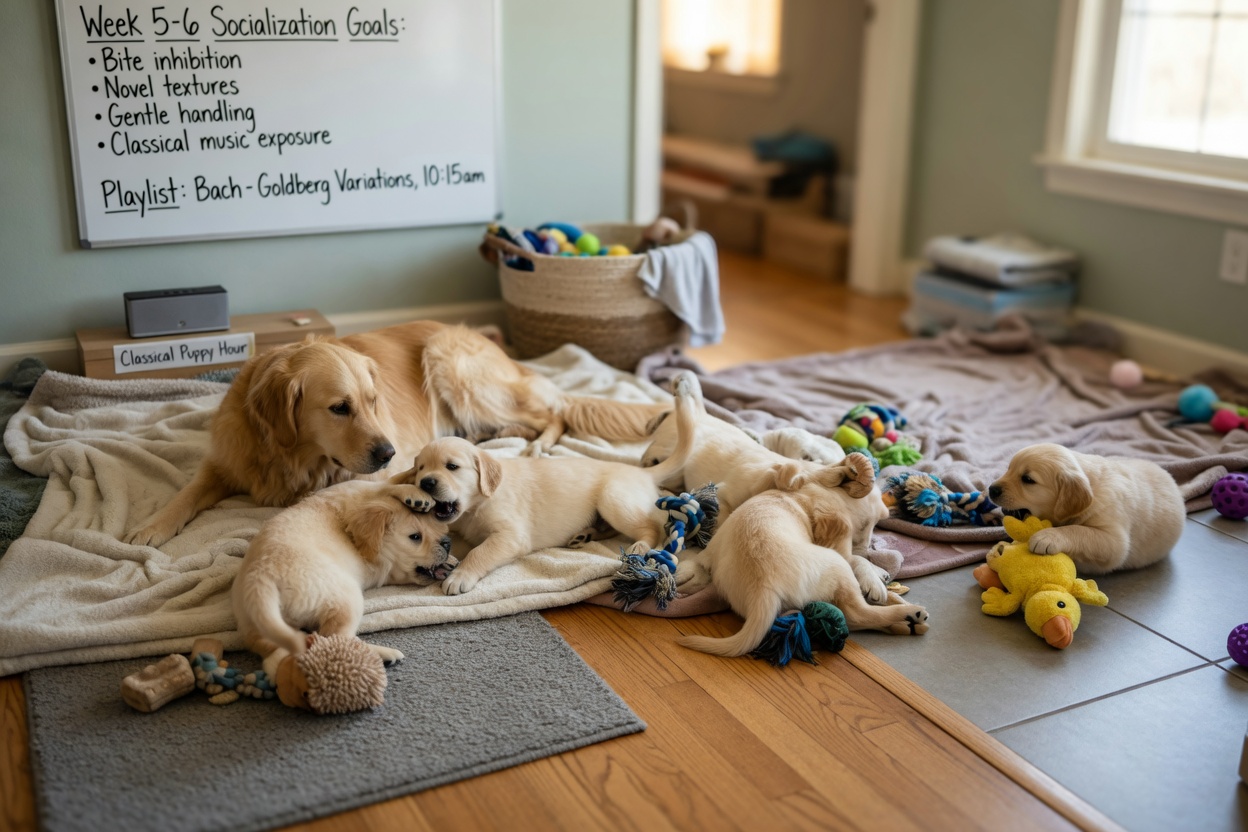
3–8 Semanas: Socialización Canina (Responsabilidad del Criador)
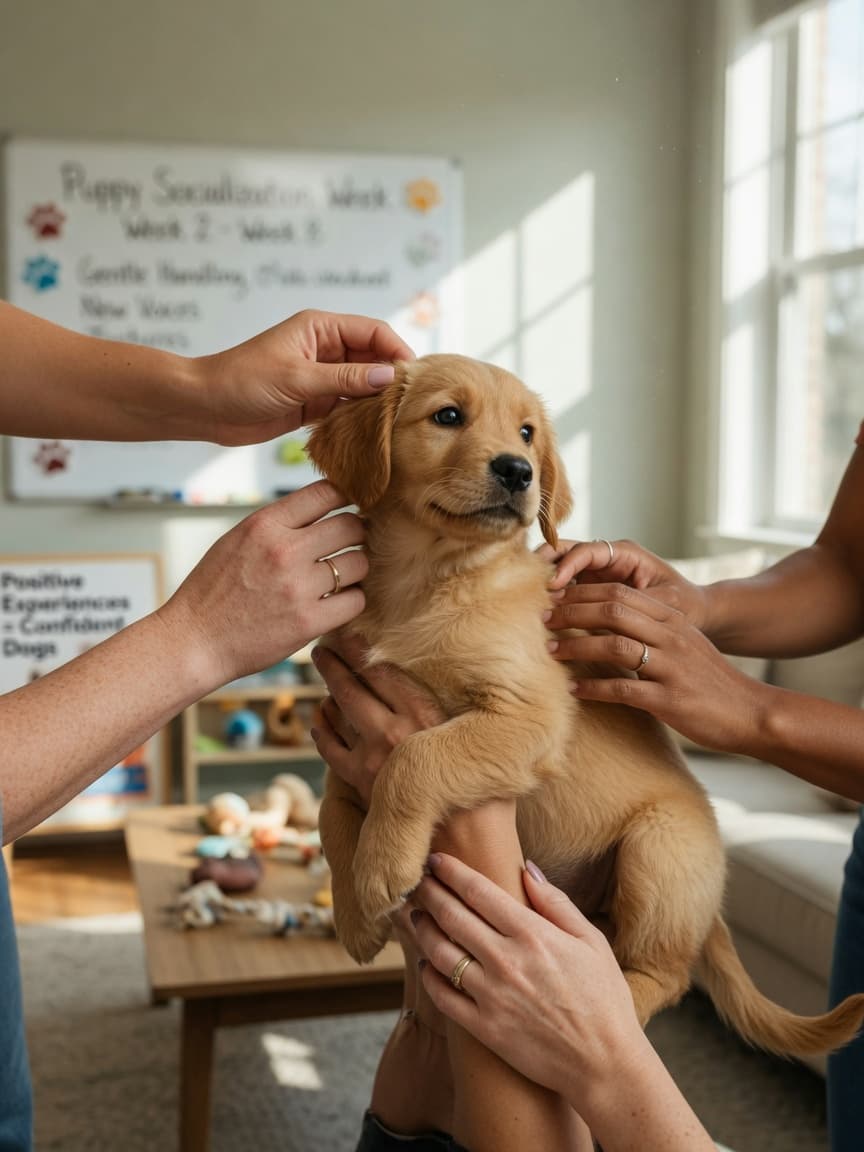
En la primera fase de la ventana, los cachorros están aprendiendo principalmente sobre otros perros. Todavía están con su madre y compañeros de camada, desarrollando inhibición del mordisco a través del juego y aprendiendo comunicación canina. Durante esta fase, los criadores responsables introducen manejo humano suave — Estimulación Neurológica Temprana (ENS) desde los días 3–16 — y exponen a los cachorros a sonidos variados, texturas y superficies. Por eso es tan importante elegir un criador que invierta en enriquecimiento temprano.
Los cachorros no deben abandonar su camada antes de las 8 semanas. Retirar un cachorro antes de las 8 semanas los priva del aprendizaje social canino crítico y está asociado con mayor agresión, miedos y problemas de comportamiento en la edad adulta.
8–14 Semanas: Socialización Humana (Responsabilidad del Nuevo Propietario)
Esta es la ventana a la que la mayoría de los nuevos propietarios tienen acceso. Cuando tu cachorro llega a las 8 semanas, tienes aproximadamente 6 semanas de tiempo de socialización óptimo. Cada experiencia positiva durante este período forma vías neurales. Cada oportunidad perdida es una ventana que se cierra un poco más cada día.
El desafío: esta ventana se superpone con la serie de vacunas estándar, lo que significa que tu cachorro no está completamente protegido contra enfermedades como el parvovirus. Esto crea una tensión real — y la comunidad veterinaria ha actualizado su orientación en consecuencia.
Socialización Antes de la Vacunación Completa: La Orientación Actualizada
La declaración de posición de la Sociedad Americana de Comportamiento Animal Veterinario (AVSAB) es clara: "los riesgos de que un perro desarrolle un problema de comportamiento como resultado de la falta de socialización durante el período de socialización son mucho mayores que los riesgos de infección". Esto no significa ignorar el riesgo de enfermedades — significa elegir oportunidades de socialización que sean de menor riesgo:
- Seguro: Clases de cachorros con requisitos de vacunación, hogares de perros vacunados, llevado en espacios públicos (parques, mercados)
- Riesgo moderado: Parques para perros bien mantenidos, solo para perros vacunados; patios de amigos con perros vacunados
- Mayor riesgo (evitar): Perros desconocidos en fuentes de agua comunales, áreas con historial conocido de parvovirus, perros no vacunados
Llevar a tu cachorro en espacios públicos, invitar perros vacunados a tu hogar y matricularse en clases de cachorros que requieran prueba de vacunación son excelentes estrategias de socialización que conllevan un riesgo de enfermedad mínimo.
A Qué Socializar a Tu Cachorro

Intenta exponer a tu cachorro a tantas de las siguientes opciones como sea posible, siempre con asociaciones positivas:
| Categoría | Ejemplos Específicos |
|---|---|
| Personas | Hombres, mujeres, niños, ancianos, personas con barba, sombreros, gafas, uniformes, sillas de ruedas, ropa oscura |
| Sonidos | Tráfico, truenos (grabaciones), fuegos artificiales (grabaciones), aspiradora, secador de pelo, construcción, ladridos, teléfono |
| Superficies y Texturas | Baldosas, madera dura, moqueta, grava, césped, linóleo, escaleras, rejillas de metal, puentes tambaleantes |
| Entornos | Clínicas veterinarias, mercados, parques, terrazas de cafés, jardines, playas, centros comerciales, estaciones de tren |
| Otros Animales | Perros adultos confiables, gatos, caballos, aves (siempre supervisado y a distancia segura) |
| Experiencias de Veterinario | Visitas sin procedimiento, manejo de patas, examen de orejas y boca, breve encuentro con la báscula |
| Actividades Cotidianas | Cepillado, corte de uñas, baño, viajes en automóvil, ir de compras en carrito de perro permitido, manejo del collar y la correa |
Los Períodos de Miedo: Lo Que Esperar
Incluso con una socialización excelente, la mayoría de los cachorros experimentan dos períodos predecibles de mayor sensibilidad al miedo:
- Primer período (~8–11 semanas): A menudo coincide con la llegada a casa. Los cachorros pueden volverse tímidos o asustadizos temporalmente. Esto es normal y pasará, pero es crucial no forzar la exposición — simplemente mantén las experiencias positivas y de baja presión.
- Segundo período (~6–14 meses): Ocurre a menudo alrededor de la adolescencia. Los miedos pueden reaparecer o surgir nuevos. De nuevo, mantener una exposición positiva y consistente es clave.
Durante estos períodos, evita dramatizar o reforzar el miedo. La reacción de un propietario anxioso a la reacción de miedo del cachorro puede solidificar el miedo. Mantén la calma, ofrece seguridad sin asustarte a ti mismo, y continúa exponiendo gradualmente.
Errores Comunes en la Socialización
Muchos propietarios bien intencionados cometen estos errores:
- Forzar experiencias: Presionar a un cachorro tímido a interactuar con un perro grande o una persona ruidosa puede reforzar el miedo. Permite que el cachorro se acerque a su propio ritmo.
- Solo socializar con perros similares: Un cachorro Golden Retriever que solo juega con otros Golden Retrievers puede ser extraño alrededor de terriers o razas pequeñas. Varía los tipos de perros.
- Confundir la sociabilidad con la confianza: Un cachorro que salta sobre extraños es sociable pero quizás no esté siendo socialmente adecuado. Enseña modales junto con la socialización.
- Detenerse después de las 14 semanas: Aunque la ventana crítica cierra, la socialización debe continuar a través de la adolescencia y la edad adulta. Los perros siguen aprendiendo.
- Esperar a la vacunación completa: Las guías actualizadas de AVSAB dicen que esperar es demasiado arriesgado. Socializa con inteligencia, no en una zona de riesgo innecesario, pero socializa.
Cómo Estructurar un Plan de Socialización Práctico
Semanas 8–10 (primeras dos semanas en casa):
- Invita a amigos y familiares a visitar tu hogar (con zapatos limpios, manos limpias)
- Expone a tu cachorro a sonidos grabados de bajo volumen (tráfico, truenos, fuegos artificiales) varias veces al día
- Transporta al cachorro en público: parques, mercados, cafés (en brazos o carrito)
- Inscribirse en una clase de cachorros acreditada, con verificación de vacunación
- Invita a amigos con perros vacunados a visitarte o a visitar sus espacios al aire libre
Lecturas relacionadas
Fuentes y lectura adicional
Este artículo se basa en investigación veterinaria revisada por pares y fuentes fiables de salud animal. Explora la ciencia de fondo en nuestra Biblioteca de Investigación.
Related articles
Las 19 Mejores Protectoras de Animales de Países Bajos (2026)
Mejores refugios de animales España: clínicas veterinarias, rescate de mascotas y protectoras con mejores valoraciones Google.
Read more →Las 48 Mejores Protectoras de Animales de Alemania (2026)
Refugios de animales en España: protección de mascotas, veterinarios y pienso. Análisis de clínicas veterinarias certificadas para cuidado animal.
Read more →Las 25 Mejores Protectoras de Animales de Italia (2026)
Mejores refugios y protectoras de animales en España: perros, gatos y mascotas rescatadas. Clínicas veterinarias y asociaciones de protección animal.
Read more →Las 32 Mejores Protectoras de Animales de Francia (2026)
Refugios y asociaciones de animales en España: rescate de mascotas, perros y gatos. Clínicas veterinarias y protectoras verificadas por opiniones.
Read more →Las 8 Mejores Protectoras de Animales de Portugal (2026)
Refugios de animales en España: perros, gatos y mascotas rescatadas por asociaciones y clínicas veterinarias. Ranking de mejores centros de recolha basado en reseñas Google.
Read more →Colapso traqueal en Yorkshire Terrier: Causas, signos y cuidados
Los Yorkshire Terriers son una de las razas más comúnmente afectadas por el colapso traqueal, en gran medida porque el cartílago de su tráquea es naturalmente más blando y más propenso a debilitarse que en perros más grandes. Esto significa que los anillos de cartílago que mantienen la vía aérea abierta pueden aplanarse durante la respiración, causando una tos característica seca y ronca...
Read more →