
How Often Should You Bathe Your Dog?
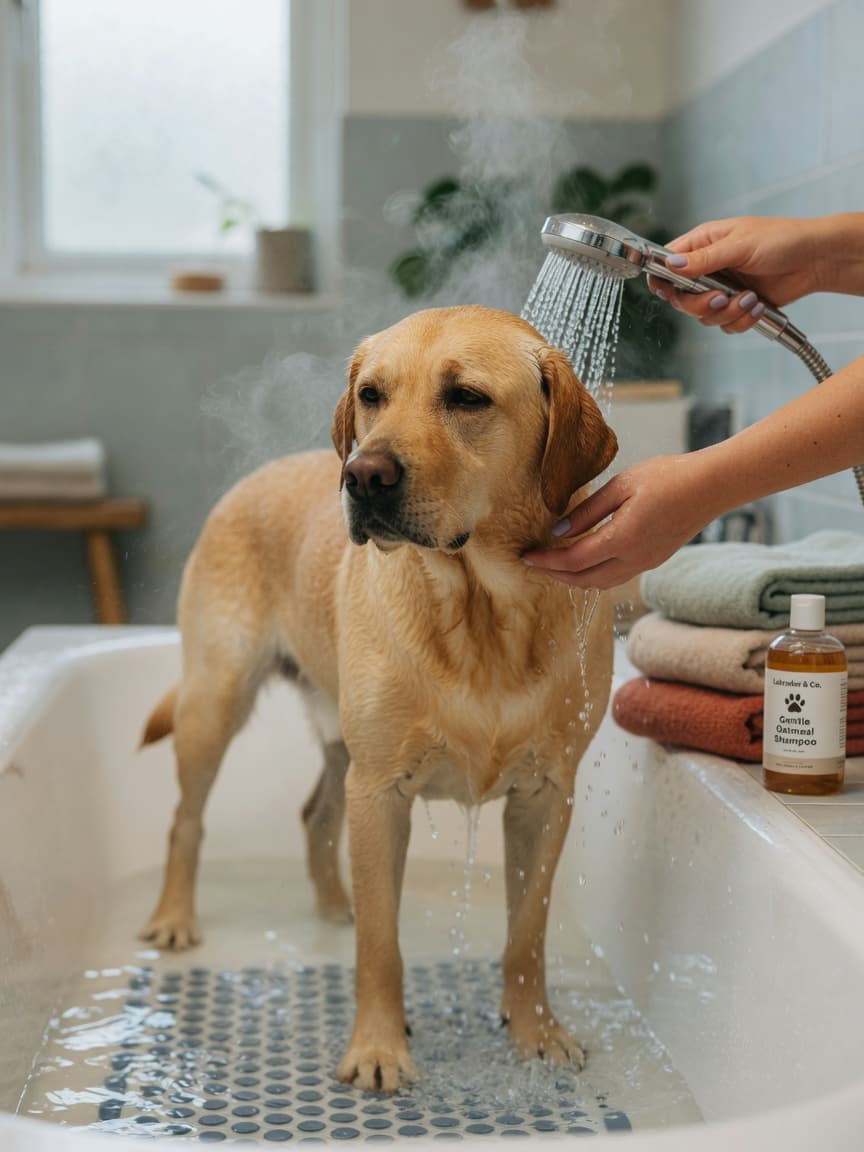
One of the most common questions dog owners ask is how often their pet actually needs a bath. The honest answer is: it depends. A Labrador who swims in muddy ponds every weekend needs washing far more frequently than a Maltese who rarely goes off-lead. Bathing too often strips the natural oils from your dog's coat and skin, causing dryness and irritation. Bathing too rarely, on the other hand, allows dirt, allergens, and bacteria to build up. Finding the right balance is key.
Bathing Frequency by Coat Type
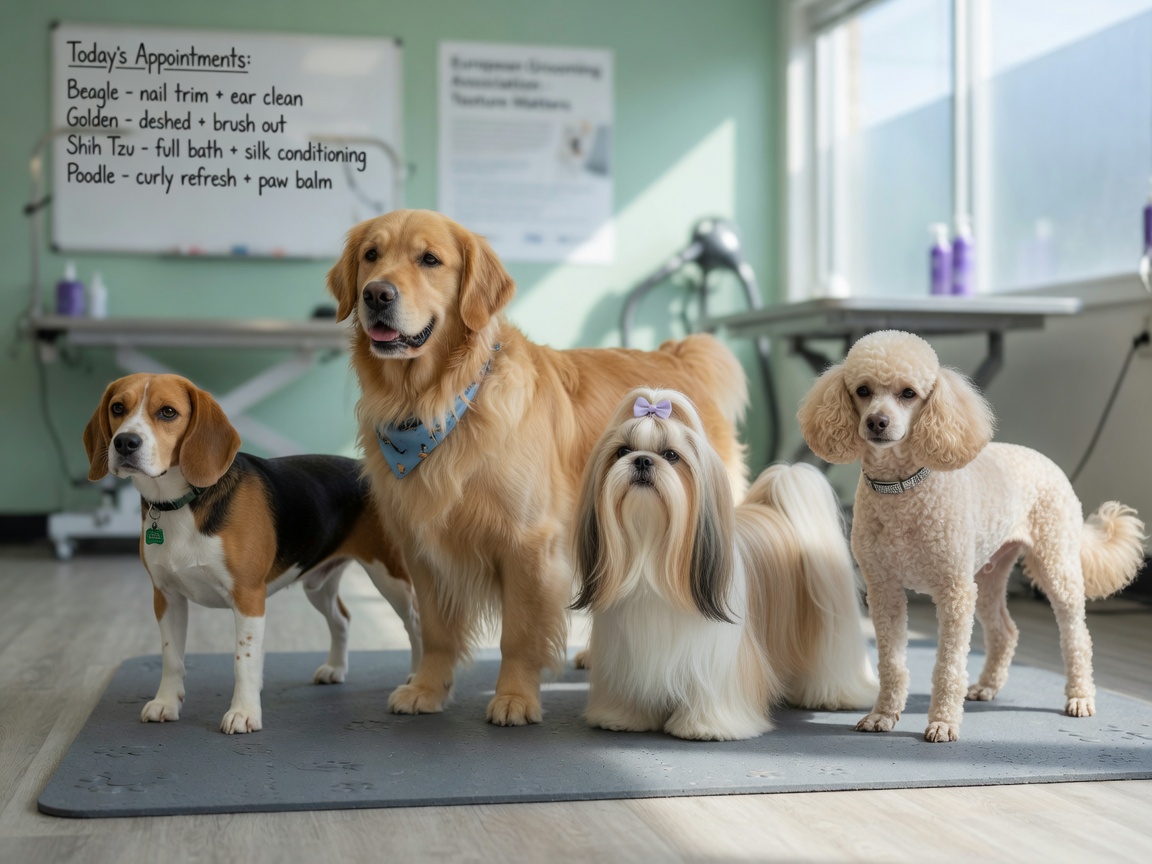
Your dog's coat is the single biggest factor in deciding how often to bathe them. Here is a general guide by coat type:
Short, Smooth Coats
Breeds such as Beagles, Boxers, and Dalmatians have low-maintenance coats that repel dirt naturally. These dogs typically need a bath every six to eight weeks, or only when visibly dirty or smelly. Over-bathing this coat type quickly leads to dry, flaky skin.
Double Coats
Breeds like Golden Retrievers, German Shepherds, and Huskies carry a dense undercoat beneath a weather-resistant outer layer. Bathing every four to six weeks works well for most double-coated dogs, though during moulting season you may want to bathe and blow-dry them to help shift loose fur more efficiently.
Long, Silky Coats
Yorkshire Terriers, Shih Tzus, and Afghan Hounds have beautiful coats that tangle easily and pick up debris. These breeds benefit from a bath every three to four weeks, followed by careful conditioning and detangling to prevent matts.
Curly and Wavy Coats
Poodles, Cockapoos, and Labradoodles have coats that do not shed in the traditional sense but grow continuously and trap dirt close to the skin. Aim for a bath every three to four weeks, combined with regular grooming appointments to prevent matting.
Wire Coats
Terriers with wiry coats, such as the Border Terrier or Welsh Terrier, generally need a bath every four to six weeks. Their coarse texture is somewhat self-cleaning but can develop an odour if left too long.
Signs Your Dog Needs a Bath
Rather than sticking rigidly to a calendar, learn to read your dog's signals. Bathe them when you notice any of the following:
- A noticeable doggy odour that does not disappear after a brush
- Visible dirt, mud, or debris matted into the coat
- Greasy or oily fur, particularly along the back
- Increased scratching that is not linked to fleas or allergies
- Rolling in something unpleasant — fox droppings being a classic European countryside hazard
- Dull coat that lacks its usual sheen
Step-by-Step Home Bathing Guide
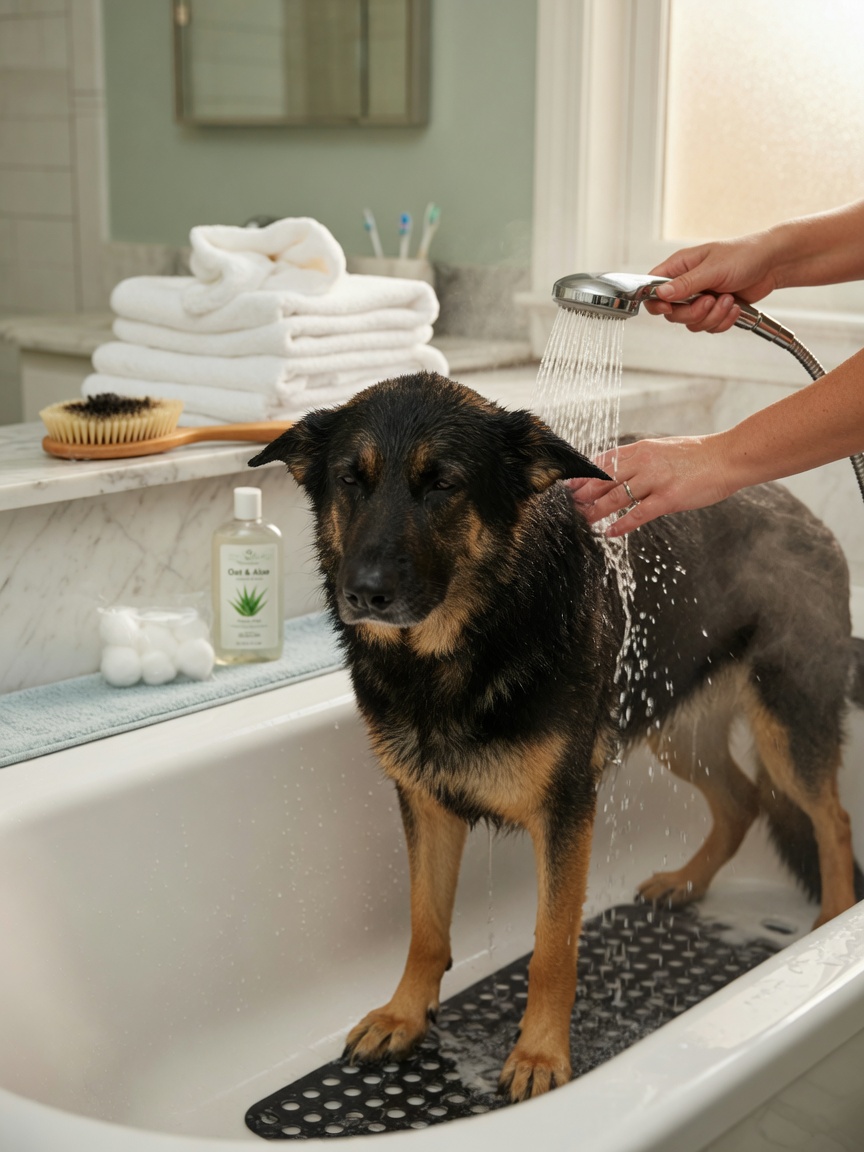
Bathing your dog at home saves money and helps your pet feel comfortable with the process from a young age. Follow these steps for a stress-free wash.
Step 1: Gather Your Supplies
Before you even turn on the tap, have everything ready. You will need a dog-specific shampoo, a conditioner (optional but recommended for longer coats), several towels, a non-slip mat for the bath or shower tray, a handheld shower head or jug, cotton wool balls for the ears, and treats. Products such as the Animology range or the Beaphar Conditioning Shampoo are widely available from Zooplus at competitive prices.
Step 2: Brush First
Always brush your dog thoroughly before bathing. Water causes existing tangles and matts to tighten and become almost impossible to remove. A good pre-bath brush removes loose fur and debris and makes the whole process much easier.
Step 3: Protect the Ears
Place a small piece of cotton wool loosely in each ear canal. This prevents water from entering and reduces the risk of ear infections, which are a common post-bath problem, especially in floppy-eared breeds.
Step 4: Wet the Coat Thoroughly
Use lukewarm water — never hot. Start at the neck and work backwards towards the tail, ensuring the coat is fully saturated down to the skin. Avoid spraying water directly into the face; instead, use a damp cloth to wipe the head.
Step 5: Apply Shampoo
Work the shampoo into a lather, starting at the neck and moving towards the tail and down the legs. Pay attention to armpits, groin folds, and between the toes — areas where dirt and bacteria accumulate. Use a rubber grooming mitt to help the product penetrate the coat and give your dog a pleasant massage at the same time.
Step 6: Rinse Thoroughly
Rinse until the water runs completely clear. Shampoo residue left in the coat is one of the most common causes of post-bath itching and skin irritation. Take longer than you think is necessary — particularly with dense or double coats.
Step 7: Condition If Needed
Apply conditioner to longer or curly coats, leave for the time stated on the packaging, then rinse again fully.
Step 8: Dry Carefully
Wrap your dog in a towel immediately and squeeze — do not rub — the excess water from the coat. For short-coated dogs, towel drying is often enough. For longer coats, use a pet-safe hairdryer on a low, cool setting, keeping it moving constantly to avoid overheating any one spot. Do not allow your dog outdoors in cold weather until fully dry.
Product Recommendations
Always choose a shampoo formulated specifically for dogs. Human shampoos have a different pH and will disrupt your dog's skin barrier. For general use, look for an oatmeal-based formula, which is soothing and suitable for most skin types. Medicated shampoos containing chlorhexidine or miconazole are available on veterinary recommendation for dogs with recurring skin infections. Zooplus stocks a broad range of dog shampoos and grooming products with delivery across Europe.
Tips for Dogs Who Hate Baths
Many dogs are anxious around bath time, particularly if they had negative early experiences. Here are practical strategies to make it easier:
- Start young if possible — puppies introduced to bathing gently tend to accept it as adults
- Use a lick mat spread with peanut butter or wet food stuck to the wall of the bath to keep your dog focused and still
- Keep sessions short at first, gradually building up duration
- Use a calm, cheerful voice throughout and reward generously with treats
- Never force or restrain your dog aggressively — this increases fear and makes future baths harder
- Consider a professional groomer for very anxious dogs until confidence improves
When to Bathe More or Less Frequently
Certain situations call for adjusting your routine. Dogs with skin conditions such as atopic dermatitis may be prescribed weekly medicated baths by their vet. Dogs recovering from surgery or with open wounds should not be bathed until cleared by a veterinarian. Elderly dogs or those with mobility issues may find the bathing process distressing; a waterless dry shampoo used between baths can help manage odour and cleanliness without the stress of a full wash.
With the right products, a calm approach, and a schedule matched to your dog's coat type, bath time can become a positive bonding experience for both of you.