

How Common Is Kidney Disease in Cats?
Chronic kidney disease (CKD) is one of the leading causes of illness and death in older cats across Europe and beyond. Studies estimate that CKD affects between 30 and 40 per cent of cats over twelve years of age, making it a condition that virtually every cat owner of a senior cat is likely to encounter. The kidneys are remarkable organs capable of compensating for significant loss of function before any signs become apparent — a double-edged situation, because it means the disease has often progressed substantially by the time an owner notices something is wrong.
CKD involves a progressive and irreversible decline in kidney function. The kidneys lose their ability to filter waste products from the blood, regulate fluid and electrolyte balance, and produce hormones involved in red blood cell production and blood pressure control. While the disease cannot be cured, early detection and thoughtful management can slow progression significantly and maintain quality of life for months to years.
The IRIS Staging System
The International Renal Interest Society (IRIS) has developed a widely adopted staging system for feline CKD, used by vets throughout Europe and endorsed by WSAVA. The system classifies the disease into four stages based on blood creatinine levels and, more recently, symmetric dimethylarginine (SDMA) — a biomarker that allows earlier detection of reduced kidney function than creatinine alone.
In Stage 1, SDMA may be elevated but creatinine remains within the normal range. Cats at this stage typically show no clinical signs, and the disease is detected incidentally through routine blood testing, which is why annual blood panels are so valuable for senior cats. Stage 2 involves mildly elevated creatinine with few or subtle clinical signs — perhaps slightly increased water intake or minor weight loss. Stage 3 represents moderate CKD with more noticeable clinical signs and a wider range of management considerations. Stage 4 is severe kidney disease with markedly elevated waste products, significant clinical illness, and a more guarded prognosis. IRIS also adds substages for blood pressure and protein in the urine, both of which influence prognosis and treatment decisions.
Recognising the Symptoms

In early stages, cats with CKD may appear entirely normal. As the disease progresses, the earliest signs owners typically notice are increased thirst and urination, as the kidneys lose their ability to concentrate urine effectively. Weight loss — especially loss of muscle over the spine — and a declining appetite follow. The cat may appear less active, spend more time resting, and show less interest in grooming, resulting in a dull or unkempt coat.
In moderate to advanced stages, nausea and vomiting become more frequent, often related to the build-up of uraemic toxins in the bloodstream. Cats may drool, show mouth ulcers, or develop a distinctive ammonia-like odour to their breath. Anaemia, caused by reduced production of erythropoietin by the damaged kidneys, leads to pallor of the gums, lethargy, and weakness. High blood pressure, a common complication of CKD, can cause sudden blindness due to retinal detachment — a change that can appear overnight and requires immediate veterinary attention.
Dietary Management
Diet is arguably the single most impactful management tool for cats with CKD. Renal prescription diets are specifically formulated to reduce the workload on the kidneys and slow disease progression. Their key features include reduced phosphorus content, as elevated phosphorus accelerates kidney damage and is independently associated with shorter survival times. These diets also contain moderately restricted — rather than severely restricted — protein of high biological quality, and are supplemented with omega-3 fatty acids, which have anti-inflammatory benefits for the kidneys.
The importance of phosphorus restriction cannot be overstated. Even in cats that resist renal diets, phosphorus binders can be added to regular food to reduce absorption from the gut. Your vet will advise on the most appropriate approach based on your cat's stage and individual circumstances.
Transition to a renal diet should be gradual — typically over two to four weeks — to encourage acceptance. Some cats resist the change, and forcing a reluctant cat to eat a renal diet is counterproductive, as not eating at all risks a life-threatening condition called hepatic lipidosis. Palatability is an important consideration. Zooplus stocks several veterinary renal diets in both wet and dry formulations, allowing you to find the presentation your cat will accept most readily.
Hydration and Supportive Care
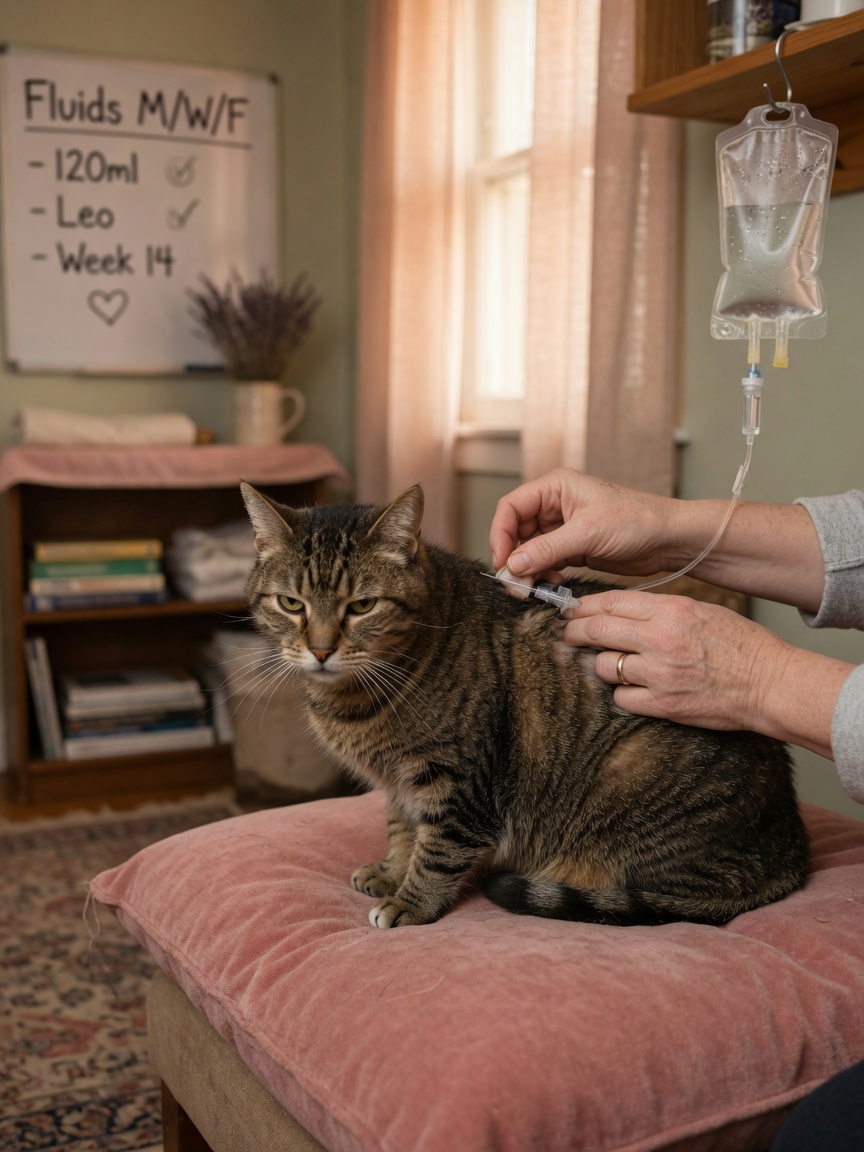
Adequate hydration is essential for cats with CKD, as concentrated urine puts additional strain on compromised kidneys. Encouraging water intake through provision of multiple water bowls, running water fountains, and offering predominantly wet food are practical strategies. Some owners learn to administer subcutaneous fluids at home — a technique that can be taught by the vet team and that many owners find manageable and enormously beneficial for their cat's comfort and wellbeing in more advanced stages of the disease.
Additional medications may be prescribed depending on the cat's needs. Phosphate binders reduce phosphorus absorption. Anti-nausea drugs improve appetite and quality of life. Antihypertensive medication controls blood pressure. Erythropoiesis-stimulating agents address anaemia. Potassium supplementation may be needed if levels are low. Managing CKD well requires regular monitoring and a willingness to adjust the treatment plan as the disease evolves.
Monitoring and Prognosis
Cats with CKD require regular blood and urine tests, typically every three to six months depending on stage, to monitor kidney values, electrolytes, blood pressure, and urine protein loss. These appointments allow the vet team to identify and address complications promptly.
The prognosis for CKD depends heavily on the stage at diagnosis, the presence of complications, and how well the cat responds to management. Cats diagnosed and managed at Stage 2 may live for many years with an excellent quality of life. Even cats in more advanced stages can often be maintained comfortably for a meaningful period with dedicated supportive care. The focus should always be on quality of life as much as quantity — your vet can help you assess this honestly and compassionately as the disease progresses.