
¿Pueden Comer Manzanas los Perros? Sí — Con Una Precaución Importante
Por Julia Wrenfield, Investigadora y Redactora de Bienestar Animal — 24 de junio de 2026
Las manzanas son una golosina saludable y baja en calorías para perros. Sin embargo, debes eliminar las semillas y el corazón antes de servir. Las semillas de manzana contienen amigdalina, un compuesto que libera cianuro cuando se metaboliza. La pulpa y la piel son completamente seguras y nutritivas.
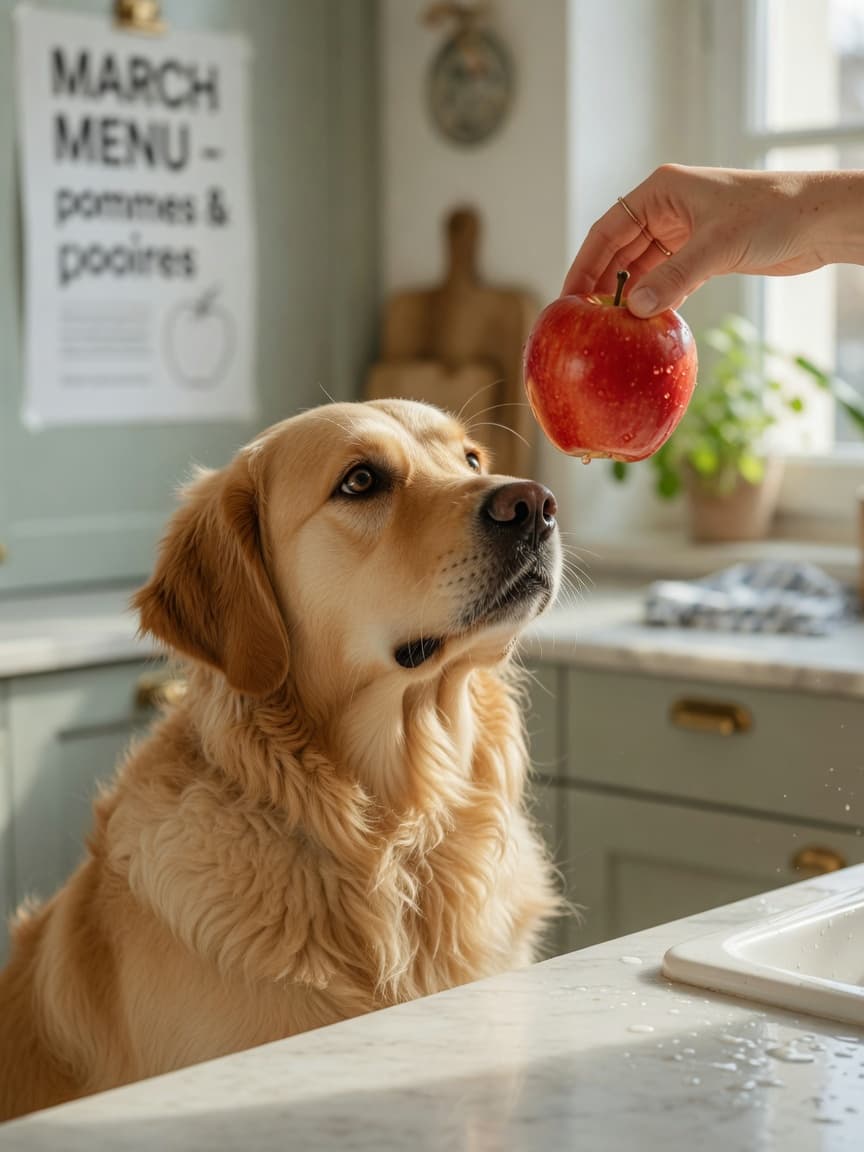
Las manzanas son una de las frutas más populares del mundo, y si alguna vez has tomado una cerca de tu perro, probablemente hayas visto esos ojos esperanzados mirándote. La buena noticia es que las manzanas son genuinamente buenas para los perros — llenas de vitaminas, fibra y antioxidantes. La clave es saber cómo prepararlas de forma segura para que tu perro obtenga todos los beneficios sin ninguno de los riesgos.
En esta guía, cubriremos todo lo que necesitas saber: qué partes de la manzana son seguras, cuánto dar según el tamaño de tu perro, y cómo servir manzanas de formas creativas que tu perro amará.
¿Son las Manzanas Seguras para los Perros?
Sí — la pulpa y la piel de una manzana son completamente seguras para que los perros las coman. Las manzanas no son tóxicas y aparecen en la lista de alimentos seguros para mascotas de la ASPCA. El peligro reside exclusivamente en las semillas y el corazón.
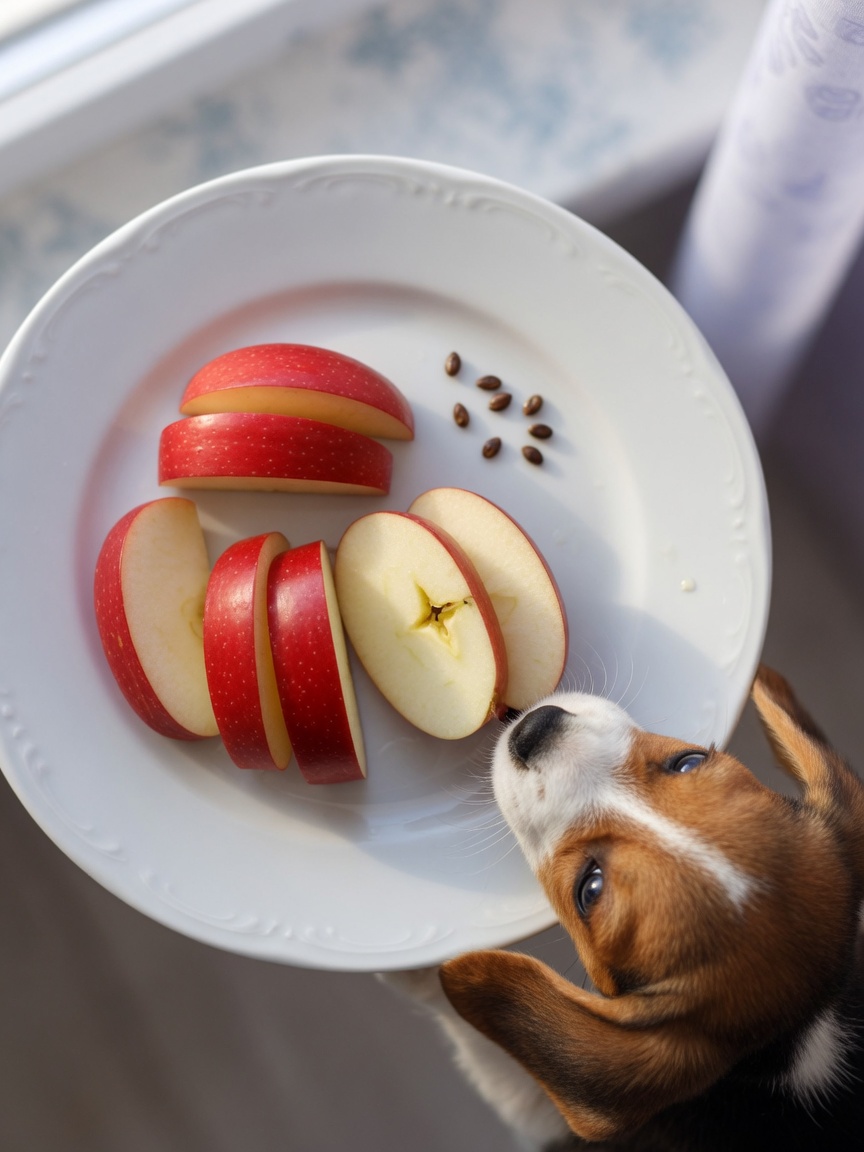
Las semillas de manzana contienen amigdalina, un glucósido cianogénico. Cuando se mastican y se metabolizan, la amigdalina se descompone y libera cianuro de hidrógeno. Aunque un perro necesitaría consumir una cantidad significativa de semillas para experimentar toxicidad aguda, no hay ningún beneficio en permitir el consumo de semillas, y la exposición crónica puede acumularse con el tiempo. La regla es simple: siempre descorazona y desemilla la manzana antes de ofrecerla a tu perro.
El corazón presenta un riesgo separado — es duro, fibroso y puede representar un peligro de asfixia, particularmente para razas pequeñas. También puede contribuir a obstrucciones intestinales si se traga en trozos. Retíralo completamente.
La piel, contrario a algunos mitos, es segura e incluso beneficiosa. Contiene quercetina y otros polifenoles que apoyan la función inmunológica. Solo asegúrate de que la manzana esté bien lavada para eliminar cualquier residuo de pesticidas.
Beneficios Nutricionales de las Manzanas para Perros
Las manzanas ofrecen un perfil nutricional sorprendentemente sólido para una golosina. Aquí está lo que tu perro obtiene de una porción de manzana fresca:
- Vitamina A (como beta-caroteno): Apoya la salud de la piel, la calidad del pelaje, la función inmunológica y la visión. El beta-caroteno es un antioxidante potente que ayuda a neutralizar los radicales libres a nivel celular.
- Vitamina C: Aunque los perros sintetizan su propia vitamina C, las fuentes dietéticas adicionales pueden apoyar la respuesta inmunológica durante períodos de estrés o enfermedad. También actúa como antioxidante.
- Fibra dietética: La pectina que se encuentra en la pulpa de la manzana apoya la motilidad intestinal saludable y puede ayudar a regular los niveles de azúcar en sangre. También alimenta las bacterias intestinales beneficiosas, contribuyendo a un microbioma equilibrado.
- Baja densidad calórica: Las manzanas son aproximadamente 86% agua y contienen aproximadamente 52 calorías por 100g — haciéndolas una opción de golosina sin culpa para perros en un plan de manejo de peso.
- Ácido málico: Este ácido suave puede ayudar a reducir las bacterias en las superficies de los dientes, apoyando un aliento más fresco y reduciendo la acumulación de placa entre limpiezas dentales.
- Fósforo y calcio: Presentes en cantidades modestas, estos minerales contribuyen a la salud ósea y dental.
Las manzanas también son naturalmente libres de grasa y sodio, lo que las hace una alternativa superior a muchas golosinas comerciales para perros con condiciones cardíacas o pancreatitis.
Cómo Servir Manzanas a tu Perro
La preparación es sencilla, pero seguir estos pasos cada vez asegura la seguridad de tu perro:
- Lava la manzana minuciosamente bajo agua corriente. Si es posible, elige manzanas orgánicas para minimizar la exposición a pesticidas.
- Retira el corazón completamente. Usa un descorazonador de manzanas o corta alrededor de él. El corazón incluye la cavidad de las semillas y la columna fibrosa central dura.
- Retira todas las semillas. Verifica dos veces cada rodaja. Las semillas pueden esconderse en la pulpa cerca del corazón.
- Corta en tamaños apropiados. Para perros pequeños, corta en trozos pequeños del tamaño de un bocado. Para perros medianos y grandes, rodajas o cuñas más grandes funcionan bien. Evita dar una manzana entera o media — el riesgo de que el perro muerda las semillas o el corazón aumenta dramáticamente.
- Sirve fresco. Evita la compota de manzana (a menudo contiene azúcar añadido o xilitol), jugo de manzana (azúcares concentrados, sin fibra), manzanas secas (densas en calorías), o productos con sabor a manzana (saborizantes artificiales, aditivos).
Ideas de servicio divertidas:
- Congela rodajas de manzana para una golosina refrescante de verano
- Mezcla pequeños trozos de manzana en el pienso regular de tu perro como complemento
- Rellena un juguete Kong con trozos de manzana y un poco de mantequilla de cacahuete (libre de xilitol)
- Usa diminutos cubos de manzana como golosinas de alto valor en el entrenamiento