
Whippet Health Guide: Common Conditions, DNA Tests, and EU Care Tips
The Whippet is classified under FCI Group 10 (Sighthounds), Section 3 (Short-Haired Sighthounds), Standard No. 162. Descended from Greyhounds and various terrier crosses, the Whippet was developed in northern England as a racing and small-game coursing dog. Today, Whippets are popular across Europe as elegant, gentle, and versatile companions. With a typical lifespan of 12 to 15 years, the Whippet is considered one of the healthier pedigree breeds — but the breed has specific physiological characteristics and hereditary conditions that EU owners and breeders must understand to provide appropriate care.
Anaesthetic Sensitivity in Whippets
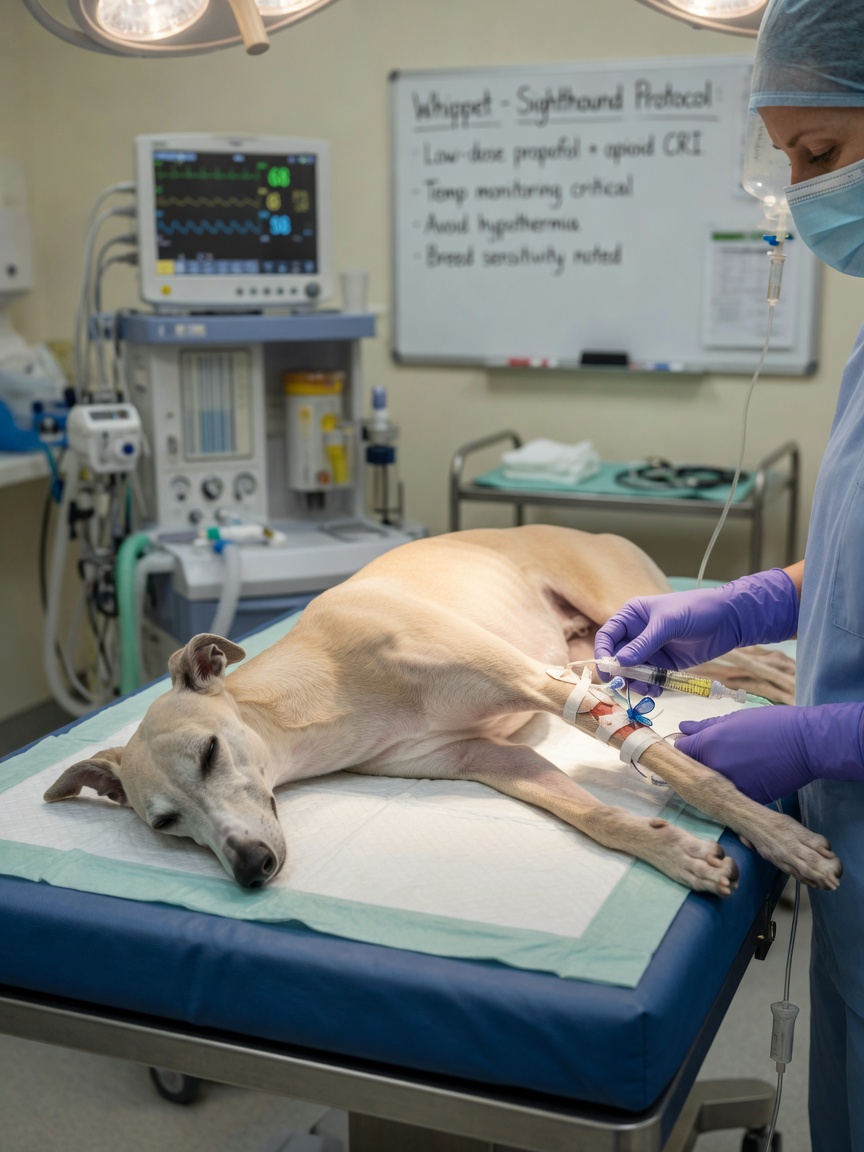
One of the most clinically important characteristics of the Whippet is its heightened sensitivity to general anaesthetics. This is a trait shared across the sighthound family, including Greyhounds, Salukis, and Italian Greyhounds, and is related to several interconnected physiological factors.
Whippets have a very low body fat percentage compared to most dog breeds, which means fat-soluble anaesthetic agents accumulate in a smaller reservoir and are metabolised more slowly, prolonging the drug's effect. Additionally, Whippets have a lower concentration of the liver enzyme CYP450, which is responsible for metabolising many anaesthetic agents. The combination of lean body mass and altered drug metabolism means that standard dosing protocols appropriate for other breeds can result in prolonged anaesthetic recovery or overdose in sighthounds.
It is absolutely essential that your EU veterinarian is aware that your dog is a Whippet before any sedation or general anaesthesia. Many European veterinary practices have adopted sighthound-specific anaesthetic protocols. Carry a note in your dog's vaccination passport or pet passport indicating sighthound sensitivity. This precaution is especially important when travelling between EU member states or seeking emergency veterinary care abroad.
Cardiac Disease: Mitral Valve Disease
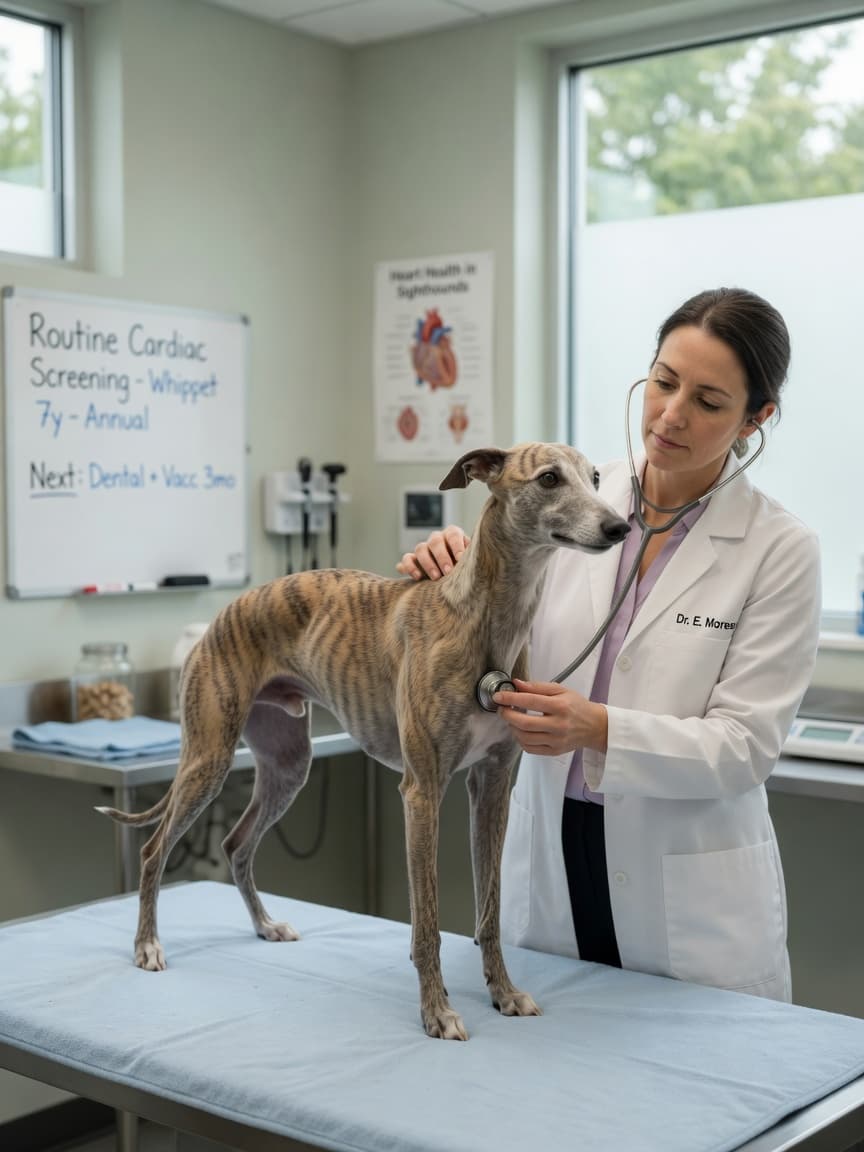
Mitral valve disease (MVD) is the most common acquired heart disease in dogs and can affect Whippets, particularly as they age. In MVD, the mitral valve that separates the left atrium from the left ventricle degenerates over time, causing a leak (regurgitation) that the heart must work progressively harder to compensate for. Early stages are often detected as a heart murmur during routine veterinary examination. Regular annual cardiac auscultation is recommended for Whippets over five years of age, and breeding dogs should undergo specialist cardiac screening.
The BVA/KC Heart Scheme provides for cardiac examination by approved specialist cardiologists. EU breeders should follow equivalent national protocols, and breed clubs in France, Germany, the Netherlands, and Scandinavia often mandate cardiac screening as a condition of breeding approval.
Eye Conditions: Multifocal Retinal Dysplasia
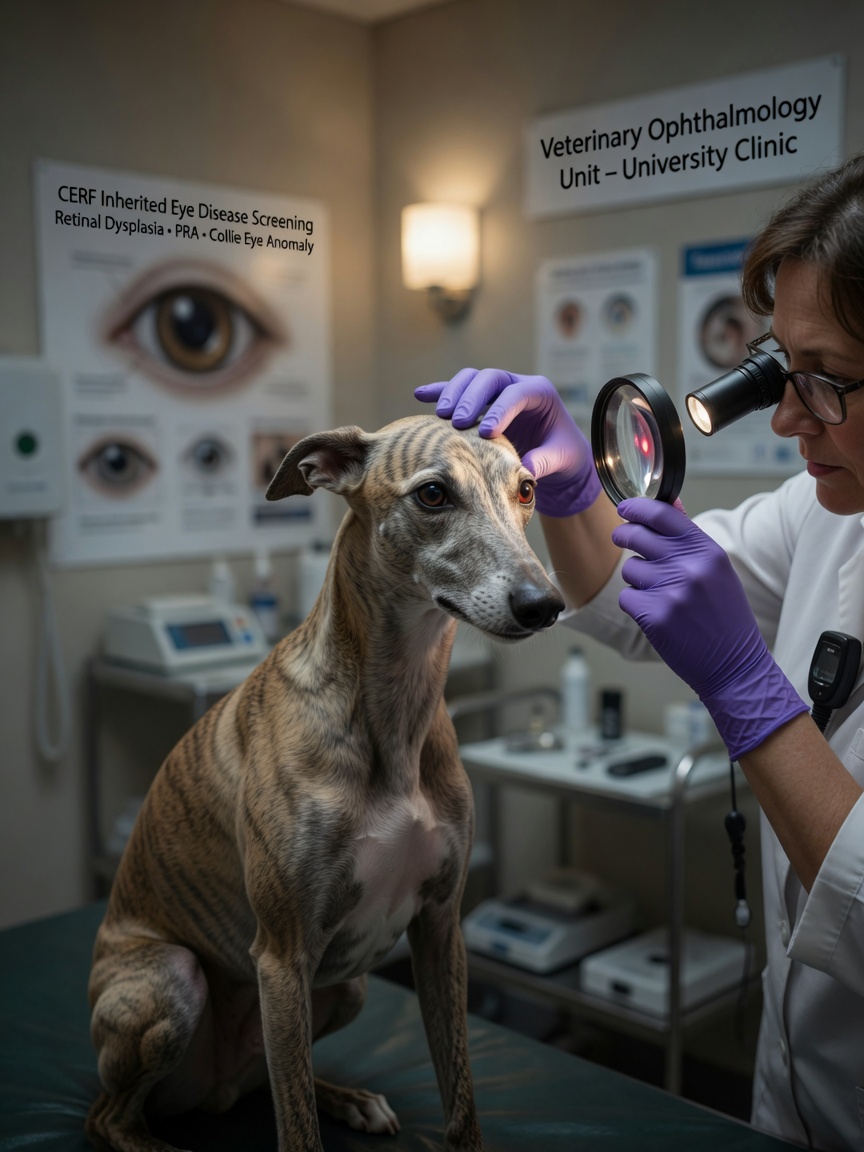
Multifocal retinal dysplasia (MRD) is an inherited condition in which areas of the retina develop abnormally, forming folds or rosettes in the retinal tissue. Mild forms may not noticeably affect vision, while more severe forms can cause significant visual impairment. MRD is detectable through specialist ophthalmological examination under the BVA/KC/ISDS Eye Scheme. Annual eye testing of breeding stock is recommended to monitor for MRD and other inherited eye conditions.
DNA tests for specific eye conditions in Whippets are under development. EU breeders and owners should consult Laboklin (Germany) and Antagene (France) for the most current panel of available tests. Both laboratories maintain updated test catalogues reflecting advances in canine genetics, and contacting them directly ensures you have the latest information on which conditions can be screened by DNA.
Deafness and BAER Testing
Congenital deafness associated with white or merle colouration can occur in Whippets, particularly those with significant white markings. The condition arises from an absence of pigment cells in the cochlea during development. BAER (Brainstem Auditory Evoked Response) testing is the definitive method for diagnosing deafness, including unilateral deafness which may go undetected without formal testing. Breeders producing puppies with white coat patterns should consider BAER testing before sale.
Hypothyroidism
Hypothyroidism — an underactive thyroid gland — occurs in Whippets and can cause weight gain, lethargy, poor coat quality, cold intolerance, and skin problems. Diagnosis is confirmed through blood testing of thyroid hormone levels (T4 and TSH). Treatment with daily oral levothyroxine is effective and well-tolerated, restoring normal thyroid function. If your Whippet develops unexplained weight gain, coat changes, or seems unusually sluggish despite an appropriate diet and exercise regime, ask your vet to include thyroid screening in their blood panel.
BVA and Kennel Club Health Schemes for Whippets
- BVA/KC/ISDS Eye Scheme — annual eye examination by a specialist panellist to screen for MRD and other inherited eye conditions
- BVA/KC Heart Scheme — cardiac examination by an approved specialist cardiologist, particularly important for breeding dogs and older Whippets
- BAER testing — recommended for white-marked or parti-coloured dogs
ESCCAP Parasite Prevention
Whippets are active outdoor dogs that benefit from a structured parasite prevention programme in line with ESCCAP guidelines for EU companion animals. Relevant recommendations include:
- Year-round tick prevention, as Whippets are frequently exercised in open countryside, grassland, and woodland where tick populations are highest
- Regular intestinal worm treatment for roundworm and tapeworm, with frequency determined by your vet based on local risk
- Lungworm prevention for dogs in areas with high slug and snail populations
- Heartworm prevention when travelling to or residing in southern European countries where Dirofilaria immitis is endemic
- Flea control maintained year-round, particularly in multi-pet households
Cold Sensitivity and Whippet Coats
The Whippet's single, short coat and minimal body fat make this breed highly susceptible to cold and wet weather. Unlike double-coated breeds that can regulate their body temperature effectively in low temperatures, Whippets chill rapidly and should wear a well-fitting dog coat whenever temperatures drop below approximately 7 degrees Celsius, or in wet and windy conditions regardless of temperature.
A well-made whippet coat that covers the neck, chest, and abdomen provides the most effective thermal protection. Zooplus stocks a wide selection of dog coats, including designs specifically suited to the Whippet's deep chest and narrow waist. Waterproof and fleece-lined options are particularly useful for the colder months and for early morning or evening exercise. Indoor Whippets may also appreciate a warm, draught-free bed with a fleece blanket, as they are inclined to seek out heat sources and curl tightly to conserve warmth.
Exercise and Enrichment
Despite their reputation as a racing breed, Whippets are content with moderate daily exercise — typically two good walks or runs of 30 to 60 minutes per day. They have a distinctive pattern of intense bursting speed followed by long rest periods, and are often described as the ideal dog for owners who enjoy an active lifestyle but also value a calm, quiet companion at home. Lure coursing, agility, and flyball are activities many Whippets enjoy enormously and provide both physical and mental enrichment.
With the right veterinary team, informed anaesthetic management, appropriate cold-weather clothing, and routine health screening, the Whippet is an exceptionally rewarding and healthy companion across its long life.