

Verdict: Yes — in Moderation, With Seeds Removed
Pears are a safe and reasonably nutritious treat for most healthy dogs. They are high in fibre and contain useful vitamins, making them a better option than many processed dog treats. The key rules: remove the seeds and core before serving, keep portions small, and always use fresh pears rather than tinned ones.
Nutritional Benefits of Pears for Dogs
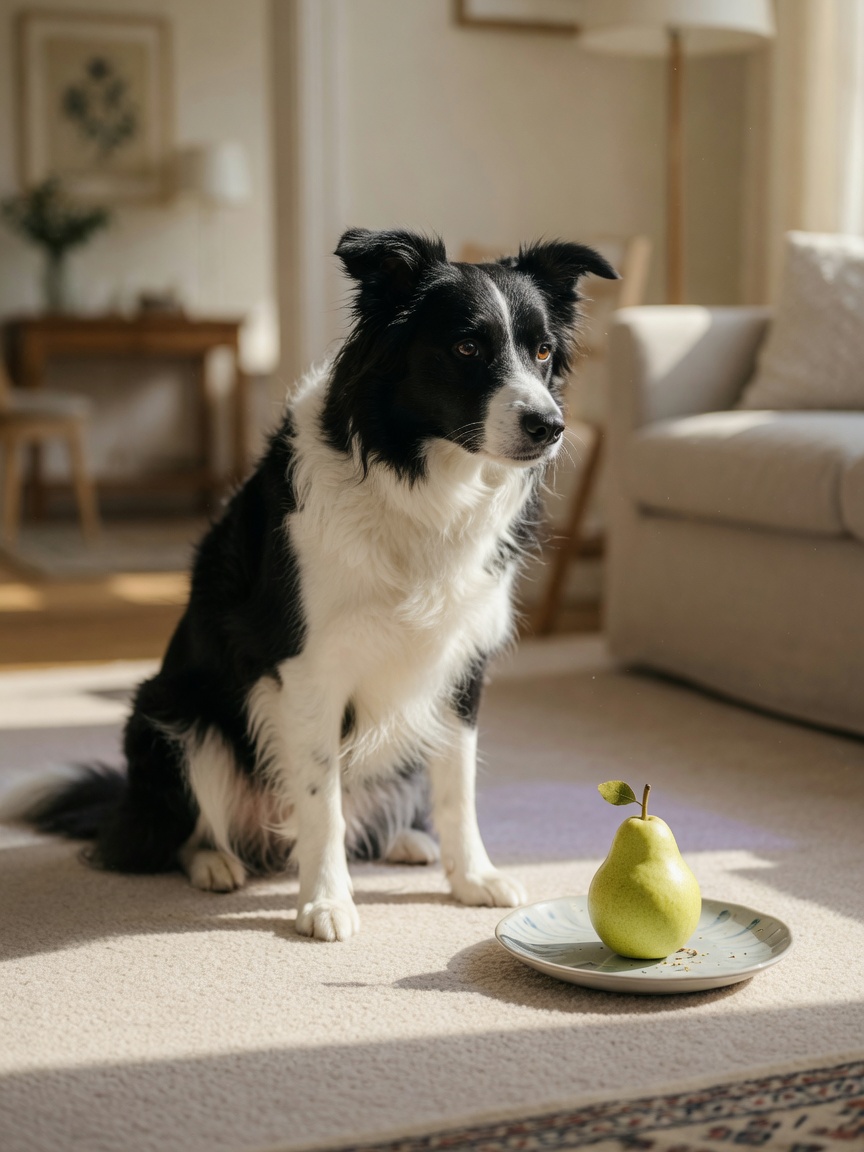
Pears offer a decent nutritional profile for a fruit:
- Fibre — supports healthy digestion and can help regulate bowel movements
- Vitamin C — an antioxidant that contributes to immune health and tissue repair
- Vitamin K — important for normal blood clotting and bone metabolism
- Copper — supports red blood cell formation and connective tissue health
- Potassium — essential for proper heart and muscle function
- Antioxidants — including flavonoids, which may help reduce oxidative stress
Dogs produce their own vitamin C, so they do not rely on dietary sources the way humans do. That said, the other nutrients and the high water content still make fresh pear a useful occasional snack — particularly as a low-calorie reward during warm weather.
The Risk: Seeds Contain Cyanide Compounds
Pear seeds contain amygdalin, the same cyanogenic compound found in apple seeds, cherry stones, and peach pits. When chewed and digested, amygdalin releases hydrogen cyanide. A dog would need to consume a significant number of seeds to reach dangerous levels, but there is no reason to take the risk when removing the seeds takes only seconds.
The core of the pear should also be removed. It is tougher than the flesh, harder to chew properly, and poses a choking risk — especially for smaller dogs or enthusiastic eaters who bolt their food without chewing thoroughly.
What About Tinned Pears?
Tinned pears are not toxic, but they are not suitable for dogs. They are typically packed in heavy syrup or fruit juice with added sugars, sometimes including artificial sweeteners. Xylitol — occasionally used in reduced-sugar products — is highly toxic to dogs and can cause a rapid drop in blood sugar and, in larger doses, liver failure.
Even without xylitol, the sugar content in tinned pears is far higher than in the fresh fruit. This makes them a poor choice for any dog, and a particularly bad one for dogs that are overweight, diabetic, or prone to digestive issues.
How to Serve Pears Safely
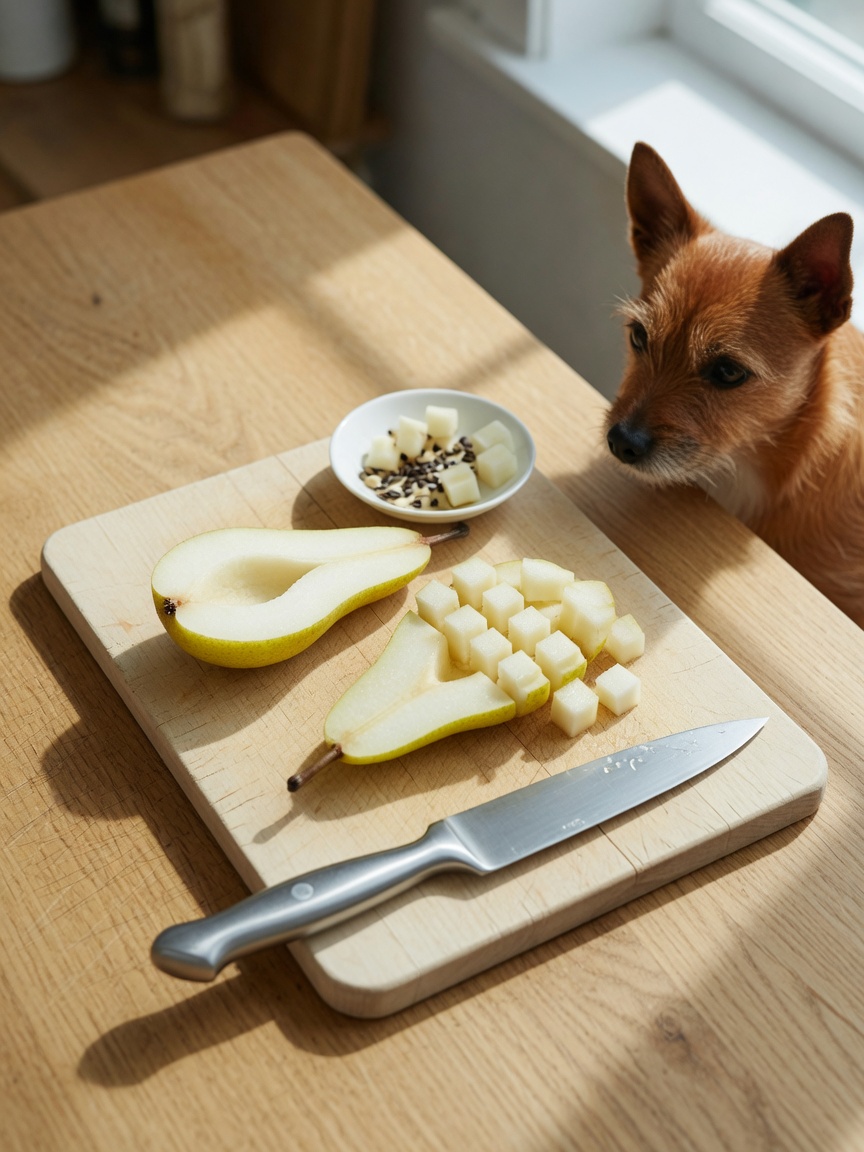
Preparing pears for your dog is simple:
- Wash the pear well to remove any surface pesticides or wax
- Remove the seeds and the core completely
- Cut the flesh into slices or small cubes, sized appropriately for your dog
- For large dogs, one or two slices is a reasonable portion
- For small breeds, a single small piece is plenty
- The skin can be left on as it contains additional fibre, but peel it if your dog has a sensitive stomach
- Serve raw and fresh — cooked pear loses much of its nutritional value and can become mushy and difficult to portion
Treats of any kind, including fruit, should make up no more than ten per cent of a dog's daily calorie intake. For most dogs, this means pears should appear a few times a week at most, not every day.
Dogs That Should Avoid Pears
For the majority of healthy dogs, pears are fine in small amounts. There are, however, some situations where it is better to skip them:
- Diabetic dogs — the natural sugar in pears can affect blood glucose levels
- Overweight dogs — pears add calories and sugar that are better avoided
- Dogs with a history of pancreatitis — although pears are low in fat, high-sugar foods can still trigger flare-ups in sensitive individuals
- Dogs with irritable bowel conditions — the high fibre content, while generally beneficial, may cause loose stools in dogs with digestive sensitivities
If your dog has any ongoing health condition, check with your vet before introducing new foods to their diet.
Signs of Overindulgence
Even when the seeds are safely removed, feeding too much pear at once can cause digestive upset. Watch for:
- Loose stools or diarrhoea
- Vomiting
- Bloating or flatulence
- Lethargy after eating
If these symptoms appear, reduce or eliminate pear from the diet and allow the digestive system to settle. Persistent symptoms warrant a vet check.
The Bottom Line
Pears earn their place as one of the more dog-friendly fruits. They are nutritious, well-tolerated by most dogs, and genuinely enjoyable for the majority of canine palates. The seed removal step is non-negotiable, and tinned pears should stay firmly off the menu. Get those two things right, keep portions sensible, and pear makes a fine occasional treat for your dog.