
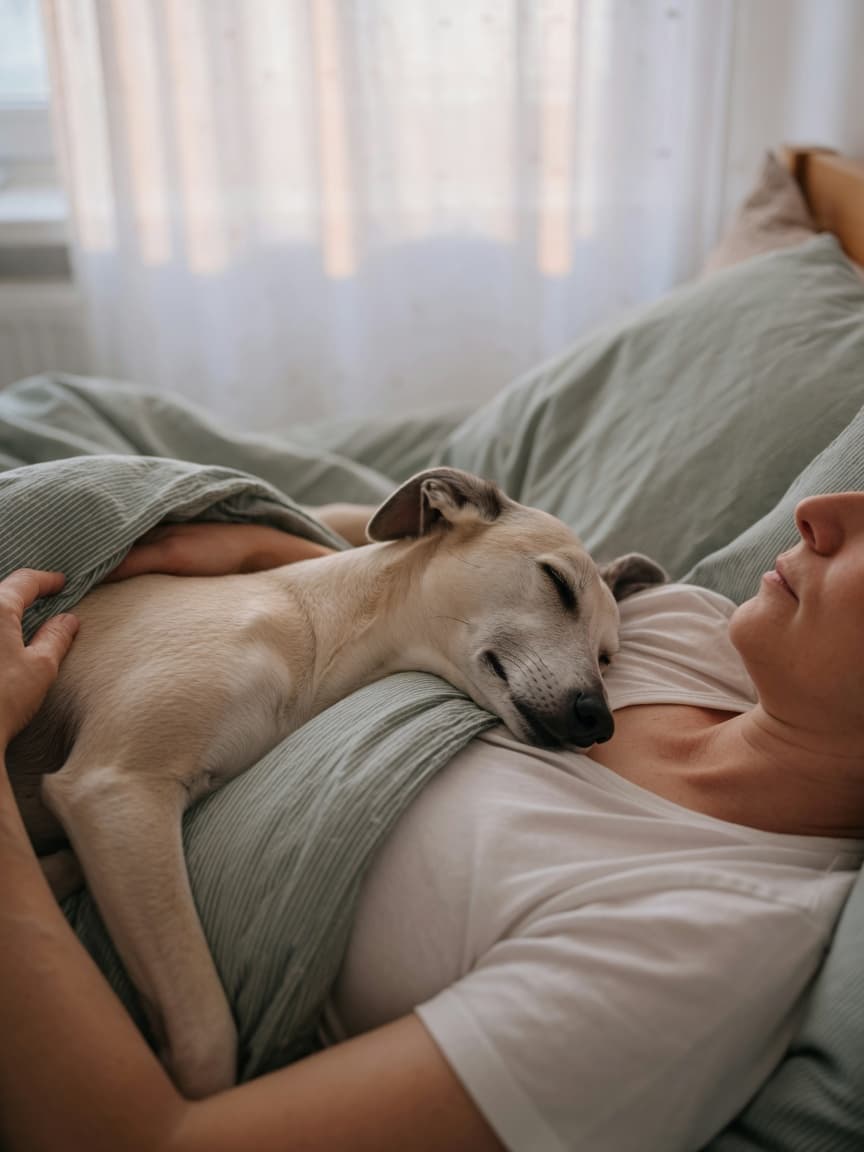
Why Does My Dog Sleep on Me? Comfort, Bonding & Temperature
Sleeping together science: A 2018 study from the Mayo Clinic found that 56% of pet owners share their sleep space with their pets — and the majority reported no negative impact on sleep quality. In fact, many participants described the presence of a dog in the bed as comforting and sleep-enhancing. Your dog agrees.
You've carefully provided your dog with an orthopaedic dog bed, a plush blanket, maybe even a heated mat for winter. And yet, somehow, every morning you wake up with fifteen kilograms of dog on your legs, or a warm snout tucked into your armpit, or — in the case of smaller breeds — a dog physically on top of your chest, rising and falling with your breathing. Why? Why will they not use the bed?
The answer is multi-layered and, honestly, quite moving. Dogs that sleep on or against their owners are expressing a range of powerful instincts and emotional bonds. Here's what's really going on.
Reason 1: The Oxytocin Connection
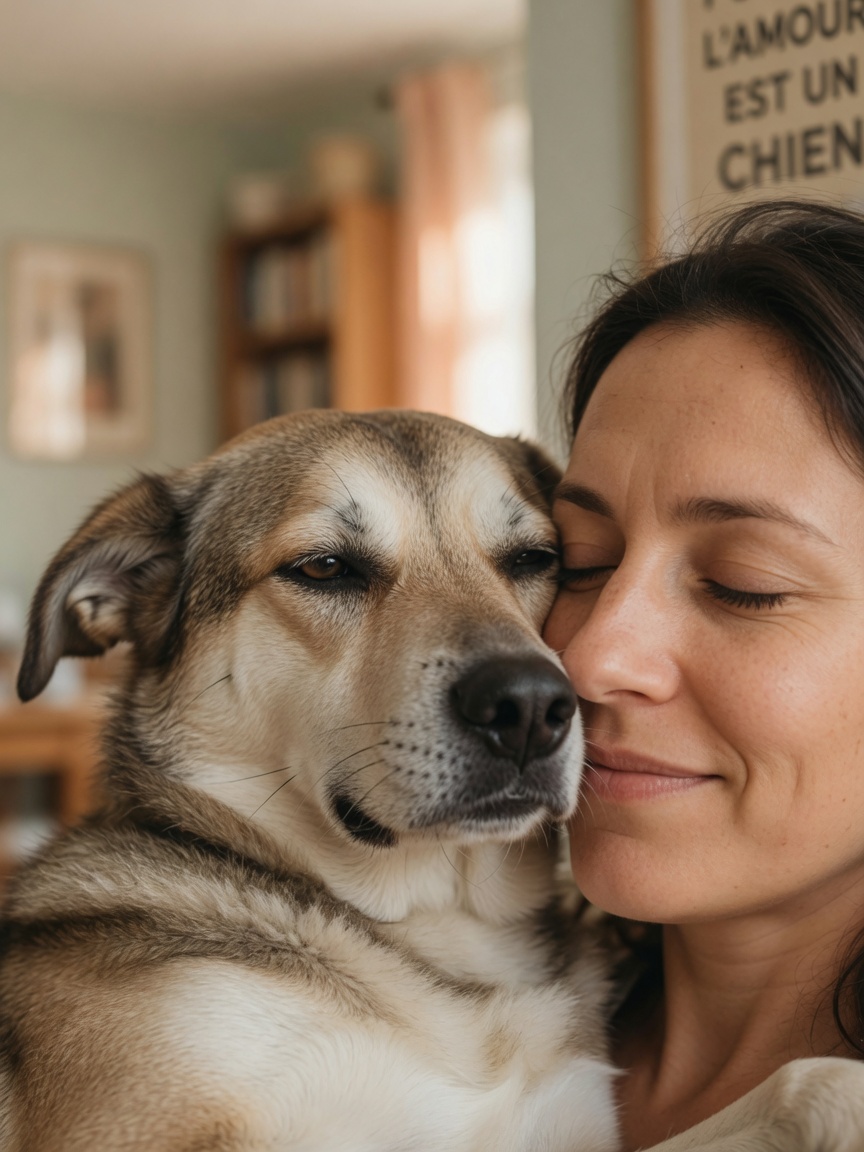
Physical contact between dogs and their humans triggers the release of oxytocin — the bonding hormone — in both species. This isn't just a metaphor or a warm feeling; it's measurable neurochemistry. The 2015 study by Nagasawa et al., published in Science, demonstrated that prolonged physical contact and mutual gaze between dogs and owners significantly elevated oxytocin in both parties.
Sleep is the longest period of uninterrupted physical closeness in most dog-owner relationships. Your dog isn't just comfortable — they're essentially bathing in bonding chemistry for eight hours. From their perspective, sleeping on you or against you is the most profound expression of attachment available to them.
Reason 2: Warmth-Seeking
Dogs have a slightly higher baseline body temperature than humans (around 38–39°C vs 37°C), but they still seek external warmth sources during sleep, particularly smaller breeds, short-haired breeds, and puppies. The human body — especially a warm body under a duvet — is an excellent heat source.
This is especially pronounced in the winter months or in cool households. If your dog gravitates to you specifically (rather than just the bed area), it's a combination of warmth-seeking and relationship preference. You're the warmest AND the most desirable sleeping companion. High praise.
Reason 3: Pack Sleeping Instinct
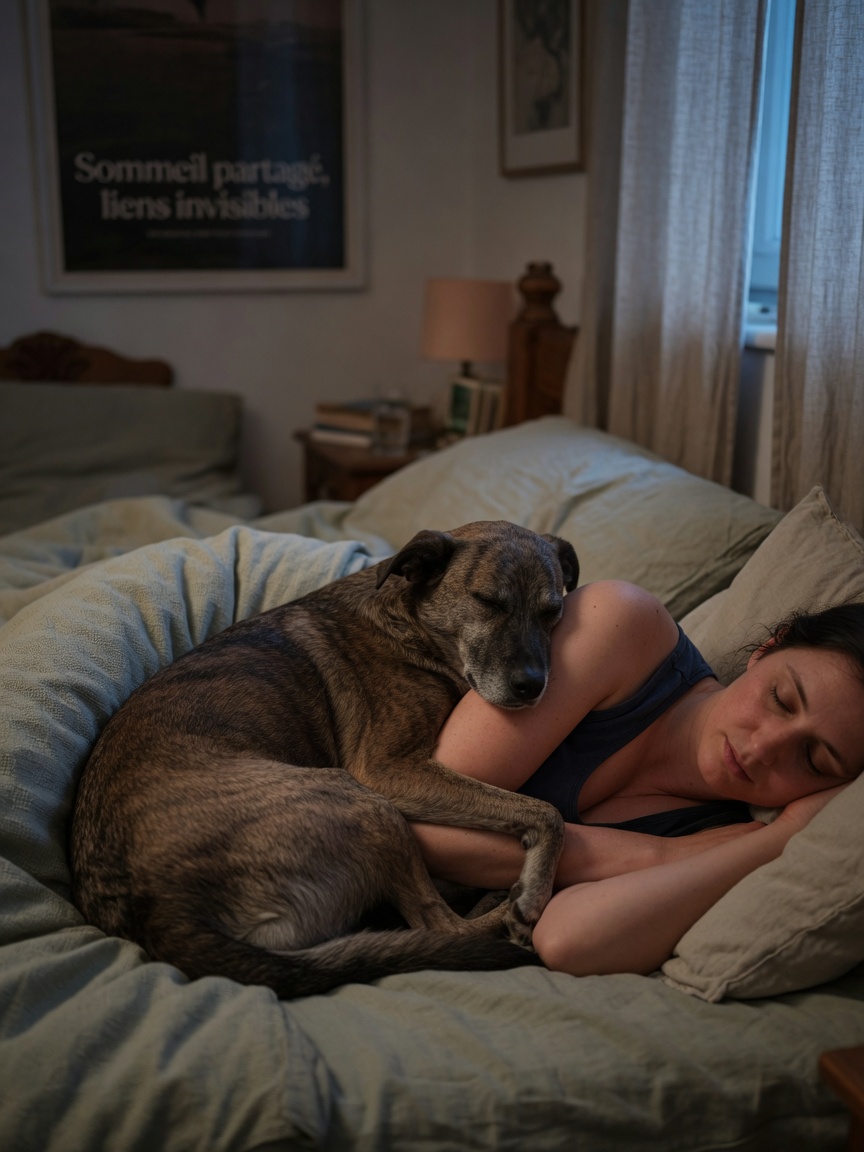
Wild canids — wolves, wild dogs, foxes — sleep in close physical contact with their social group. This pack sleeping serves multiple purposes: it conserves warmth, provides mutual protection, and reinforces social bonds. Even thousands of years after domestication, dogs retain this instinct strongly.
When your dog sleeps on you or directly against you, they're enacting a behaviour that's been selected for throughout canine evolutionary history. You are their pack. Sleeping separately from the pack is, from this perspective, mildly unnatural — which is why many dogs will keep trying to join you on the bed no matter how many times you redirect them.
The PDSA notes that social sleeping in dogs is a natural expression of pack bonding and generally poses no behavioural problems when the dog has a secure, non-dominant relationship with the owner.
Reason 4: Separation Anxiety
For some dogs, sleeping close to their owner isn't just a preference — it's an anxiety-driven need. Dogs with separation anxiety may become distressed when separated from their owner even during sleep, showing restlessness, whining, or destructive behaviour if excluded from the bedroom.
The key distinction from normal pack-sleeping preference is distress. A dog who happily settles on their own bed but occasionally chooses to join you is different from a dog who cannot settle unless physically touching you. If your dog shows signs of distress when separated at night, a consultation with your vet or a certified animal behaviourist is worthwhile.
According to research published in Applied Animal Behaviour Science, anxiety-driven sleeping behaviour is often part of a broader separation anxiety pattern and responds well to structured desensitisation protocols.
Reason 5: It Feels Safe
Vulnerability during sleep is one of the most universal concerns across mammalian species. Your dog — despite living in a thoroughly safe domestic environment — still carries the instinct to seek the most secure sleeping location available. And the most secure location, in their assessment, is wherever their trusted human is.
Research covered by ScienceDaily has shown that dogs who co-sleep with their owners often display lower stress hormones and more settled sleep patterns than dogs who sleep entirely alone, suggesting that proximity to their bonded human genuinely improves their subjective sense of safety.
The American Veterinary Medical Association (AVMA) acknowledges that co-sleeping with pets is a personal decision and that for most healthy dogs and owners, it poses minimal risks and can offer measurable emotional benefits to both parties.
Key Takeaways
- Physical contact during sleep triggers oxytocin release in both dogs and humans — it's a genuine chemical bond.
- Warmth-seeking is a practical motive, especially in smaller and short-coated breeds.
- Pack sleeping instinct is ancient and deeply embedded — sleeping separately from the group runs counter to canine wiring.
- Anxiety-driven sleeping behaviour (where distress occurs if separated) needs professional assessment and support.
- Dogs sleep closest to the human they feel most safe with — treat it as a compliment.
If you'd like your dog to have a comfortable alternative sleeping spot (even if they choose to ignore it), orthopedic dog beds with memory foam are excellent for joint health — especially in larger breeds. Browse top-rated options at Zooplus. Shop dog beds at Zooplus →
References
- Nagasawa M, et al. (2015). Oxytocin-gaze positive loop and the coevolution of human-dog bonds. Science, 348(6232), 333–336. PMID: 25883356
- Kinsman RH, et al. (2020). Canine separation-related problems: a UK-based study of prevalence, risk factors and co-occurrence of related behaviours. PLOS ONE, 15(10), e0240suite. PMID: 33048962