
The Fold That Comes at a Price
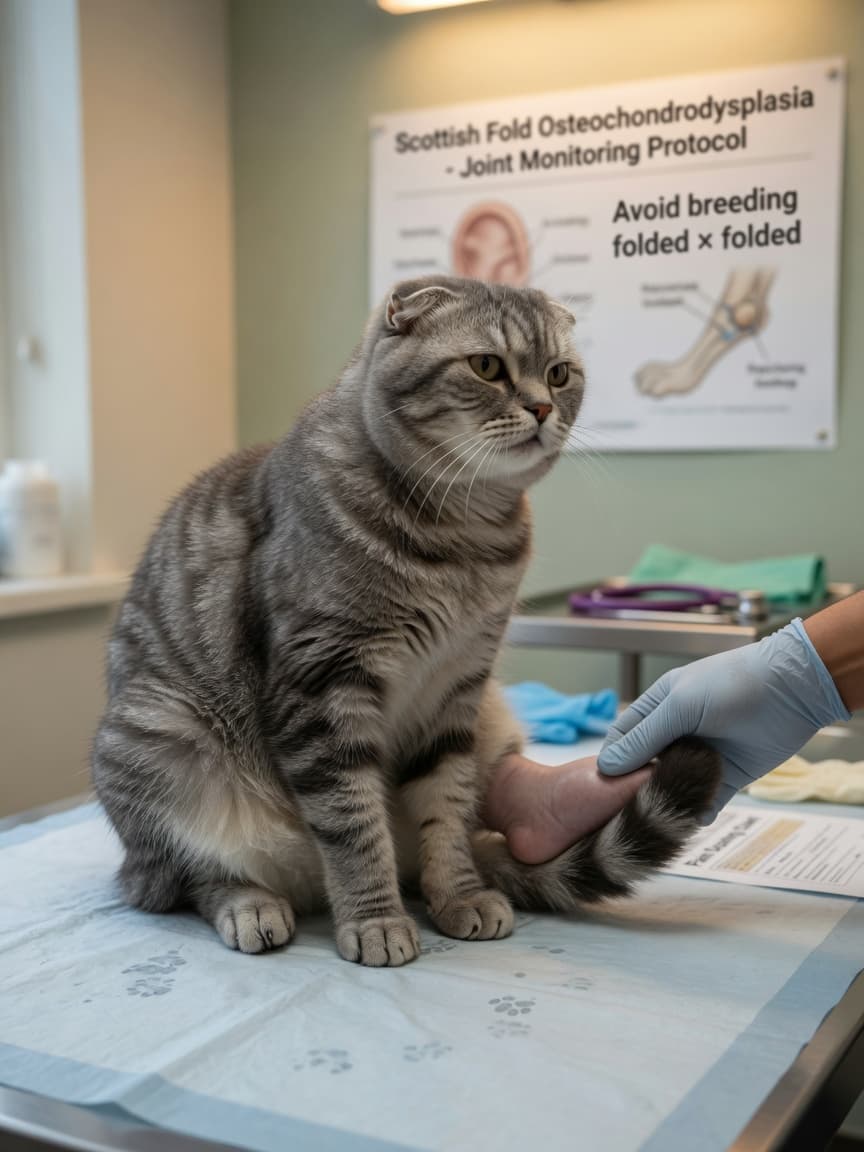
Few cat breeds have risen to global fame as rapidly as the Scottish Fold. Those distinctive folded ears, combined with a round face and gentle temperament, have made the breed enormously popular — particularly since social media brought these cats to millions of screens. But behind that appealing aesthetic lies a serious welfare concern that veterinary bodies across Europe have been raising for years: the genetic mutation responsible for the folded ear does not stop at the ear. It affects cartilage and bone throughout the entire body, causing a progressive, painful skeletal disease from which there is no escape for affected cats.
The Genetics of the Fold
The folded ear phenotype is caused by a dominant mutation in the TRPV4 gene, which disrupts the normal development of cartilage. A single copy of the mutant allele (heterozygous state) produces the characteristic fold. Two copies (homozygous state) results in a far more severe and rapidly progressive form of the disease. The condition caused by this mutation is called osteochondrodysplasia — abnormal development of bone and cartilage — and it affects every Scottish Fold to some degree, regardless of whether the cat appears outwardly comfortable.
Straight-eared Scottish Folds are not exempt
Many people are unaware that Scottish Folds with straight ears — sometimes called Scottish Straights — produced in the same litters also carry the mutant allele and can develop osteochondrodysplasia. The presence or absence of the ear fold does not reliably indicate the cat's skeletal status. Any cat carrying one or two copies of the TRPV4 mutation is at risk.
Osteochondrodysplasia: What Happens Inside the Body
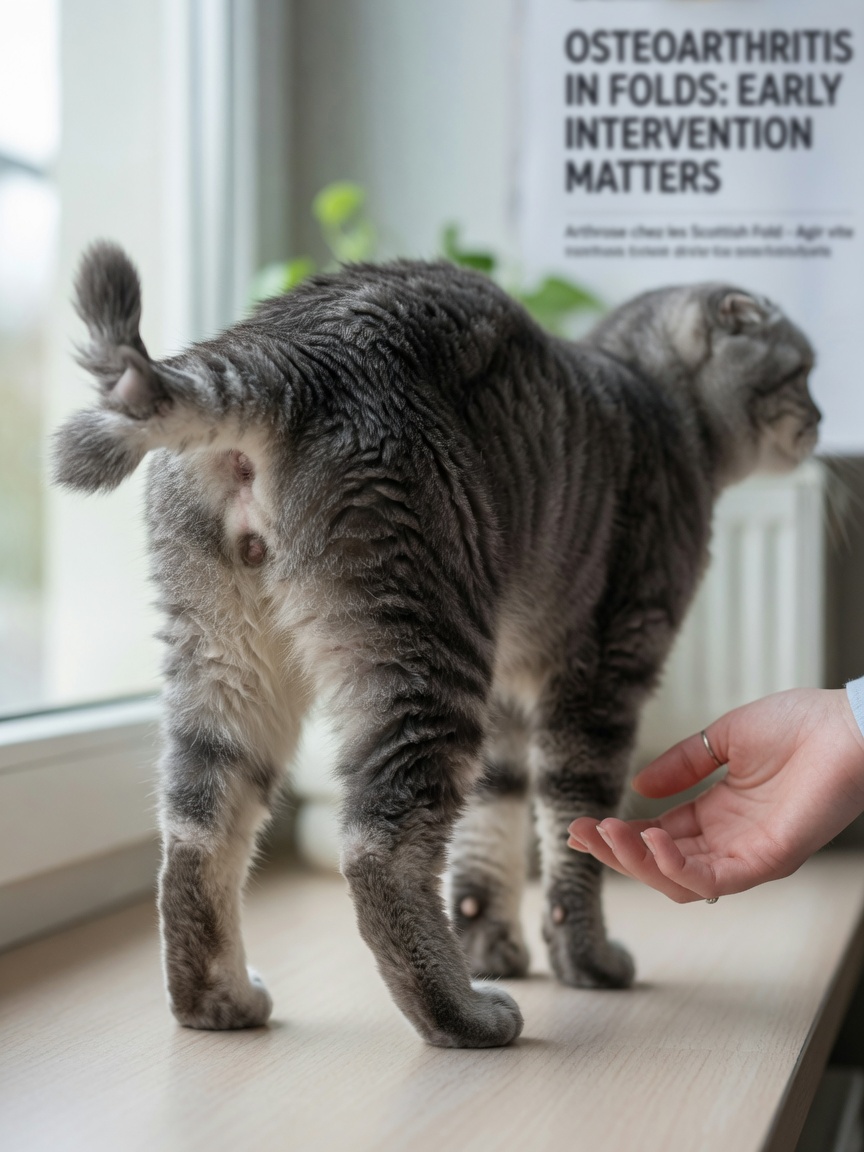
The cartilage abnormality caused by the TRPV4 mutation does not confine itself to the ear pinnae. It disrupts the normal growth and remodelling of cartilage and bone throughout the skeleton, most severely affecting the joints of the tail, ankles, and hind limbs. Abnormal bony proliferation develops progressively in these areas, causing fusion of the vertebrae and joints, gross swelling, and severe, chronic pain.
How the disease progresses
In heterozygous cats, signs may not become apparent until middle age, but radiographic changes are detectable much earlier. In homozygous cats, severe disease typically manifests before two years of age. Affected cats may show reluctance to jump or climb, stiff or stilted gait, an unwillingness to be touched on the tail or hind limbs, a shortened or thickened tail, reduced grooming of the hindquarters, and a hunched posture. Because cats are instinctively adept at masking pain, many owners underestimate the degree of discomfort their cat is experiencing.
Radiographic findings
X-rays of affected cats typically reveal exostoses (abnormal bony outgrowths), joint fusion, and vertebral changes that are pathognomonic — meaning they are so characteristic that they confirm the diagnosis. Veterinary assessment including radiography is the appropriate diagnostic approach for any Scottish Fold showing mobility changes.
Pain Management and Welfare Considerations
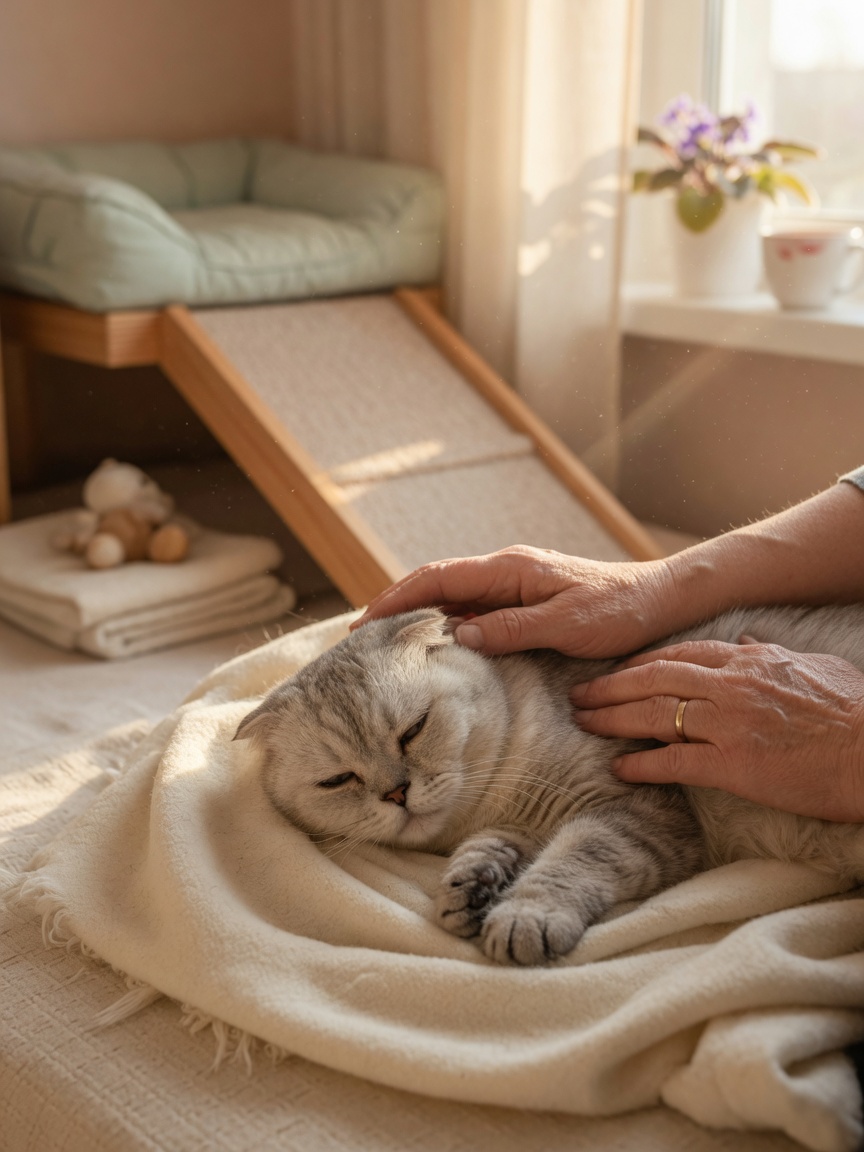
Osteochondrodysplasia is not curable. Management is palliative and focuses on pain control and quality of life. Anti-inflammatory medications, analgesics, and environmental modifications (ramps instead of steps, low-sided litter trays, accessible feeding stations) can improve comfort, but they do not halt the underlying skeletal deterioration. Some cats require lifelong pain management, and in severe cases, euthanasia on welfare grounds becomes the most humane option.
The Veterinary and Regulatory Position
The British Veterinary Association, the Royal College of Veterinary Surgeons, and equivalent bodies in several other European countries have issued clear statements advising against breeding Scottish Folds due to the inherent welfare compromise the TRPV4 mutation creates. The Netherlands and several other countries have implemented breeding bans. In Germany, production of Scottish Folds is prohibited under animal welfare legislation. These are not precautionary positions based on theoretical risk — they reflect accumulated clinical evidence of a predictable, painful, progressive disease inherent to the breed's defining characteristic.
If You Already Own a Scottish Fold
If you have a Scottish Fold, the priority is proactive veterinary monitoring and early pain management. Do not wait for your cat to show overt signs of distress — cats conceal pain effectively. A baseline radiographic assessment of the tail, hind limbs, and spine gives valuable information about existing skeletal changes and allows early intervention.
- Schedule a veterinary assessment specifically to discuss osteochondrodysplasia risk.
- Request baseline radiographs of the tail, hind limbs, and spine, particularly if your cat is over two years old.
- Watch for subtle signs of discomfort: reduced jumping, reluctance to be handled around the tail or hind end, change in gait, or decreased grooming.
- Modify your home environment to reduce the need to jump — ramps, low furniture access, and ground-level feeding reduce joint strain.
- Work with your vet to implement appropriate pain management if osteochondrodysplasia is confirmed.
- Do not breed from a Scottish Fold — this perpetuates the disease in offspring.
- If you are considering acquiring a cat, choose a breed that is not defined by a mutation that causes inherent suffering.
The Scottish Fold's popularity is understandable — these are affectionate, characterful cats. But the evidence that the fold mutation causes predictable, progressive pain throughout the body is unambiguous. Responsible ownership means acknowledging that reality, providing the best possible care for cats already living with the condition, and not contributing to its continuation through breeding.