
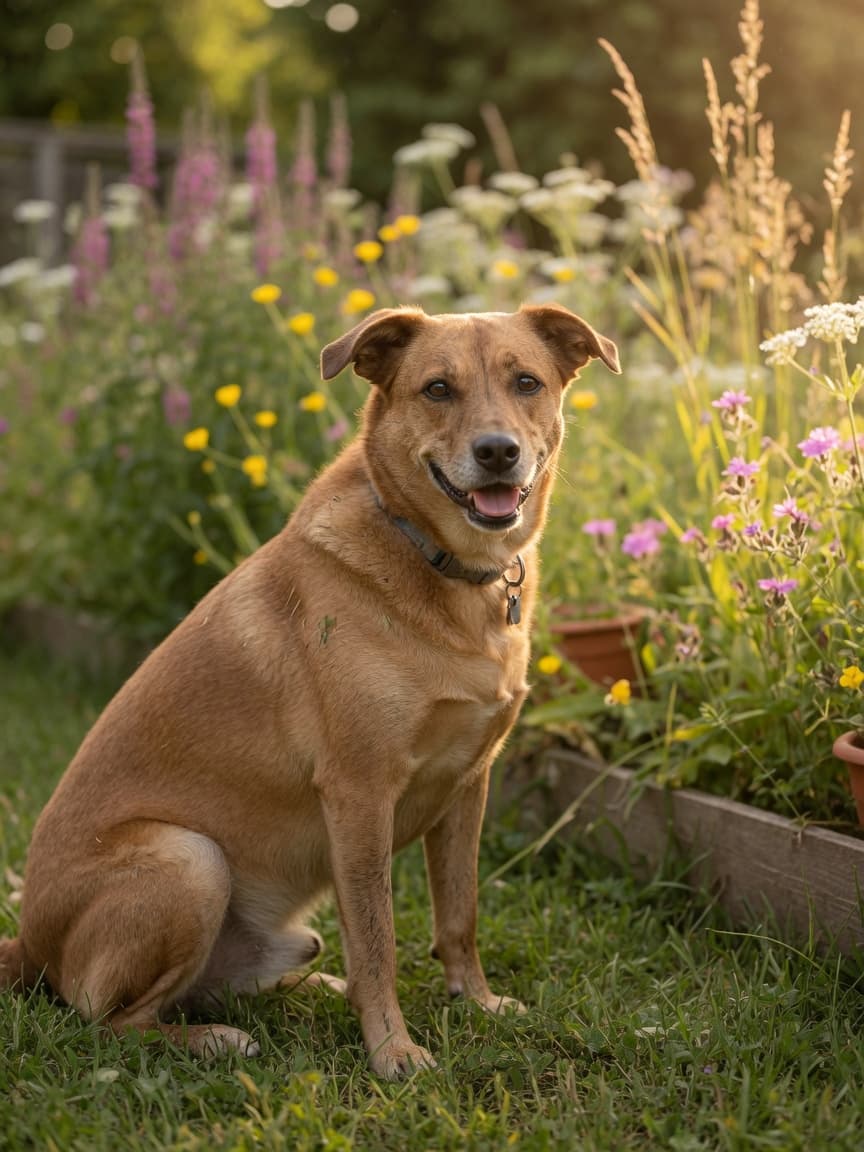
Why Does My Dog Follow Me Everywhere? Shadow Dog Explained
Fun fact: Dogs that follow their owners from room to room are affectionately nicknamed "velcro dogs" by animal behaviourists — because they stick to their person like glue. While it's often adorable, it can sometimes signal an underlying emotional need worth addressing. Here's how to tell the difference.
You get up to make a cup of tea. Your dog gets up. You go to the bathroom. Your dog follows, waits outside the door, and is there when you emerge. You move from the kitchen to the living room. Your dog — you guessed it — is right there. Welcome to life with a velcro dog.
For most dog owners, being followed everywhere is endearing background noise to daily life. But what does it actually mean? And when does constant shadowing tip from sweet to something worth paying attention to? Let's break it down.
Reason 1: Pack Bonding — You're Their Person
Dogs are descended from wolves, and wolves are pack animals. Even after thousands of years of domestication, the instinct to stay close to the social group — and especially to the group's key members — remains deeply embedded. You are your dog's pack. Following you is, at the most fundamental level, an expression of that social instinct.
This is especially true if you're the one who feeds, walks, and plays with the dog most consistently. In their mind, you are the most important resource and the most important relationship. Staying close makes perfect evolutionary sense.
The RSPCA notes that dogs are inherently social animals who rely on proximity to their bonded humans for emotional security, particularly in unfamiliar or unpredictable environments.
Reason 2: Learned Behaviour for Rewards
Here's a humbling truth: you may have taught your dog to follow you, entirely by accident. Every time they trot after you into the kitchen and you give them a treat, every time they follow you to the sofa and receive a stroke — you've reinforced the following behaviour. Dogs are exquisitely good at identifying patterns that produce rewards.
This is harmless and easy to manage. If you'd like your dog to be slightly more independent, start rewarding calm, settled behaviour in their own space — a mat, a crate, or their bed — rather than always engaging with them when they follow you.
Reason 3: Velcro Dog Breeds
Some dogs are simply bred to be close to humans. Working dogs developed to assist shepherds, hunters, or farmers were selectively bred over centuries for attentiveness to human behaviour. This means breeds like Border Collies, Shetland Sheepdogs, Labrador Retrievers, Golden Retrievers, and Vizslas are particularly prone to velcro tendencies — it's in their DNA.
If you have one of these breeds and they follow you everywhere, there's nothing wrong. They're doing exactly what generations of selective breeding have primed them to do. Channel that attentiveness with training, sports like agility or scent work, and structured engagement.
A feature in The Guardian explored how selective breeding for human-dog collaboration has resulted in some breeds being far more socially attached to humans than others — sometimes to an almost comical degree.
Reason 4: Separation Anxiety
This is where shadow behaviour can shift from sweet to something requiring attention. Dogs with separation anxiety don't just follow you — they become distressed when you leave, or even when they anticipate you leaving. Signs include frantic following, whining or barking as you prepare to go out, destructive behaviour in your absence, and over-the-top greetings when you return.
Research published in Applied Animal Behaviour Science suggests that separation anxiety affects between 14% and 20% of dogs and is one of the most common reasons for relinquishment to shelters. Early intervention with behaviour modification, desensitisation training, and in some cases veterinary support is important.
The Dogs Trust has a free "Dogs Apart" programme specifically designed to help owners address separation anxiety at home.
Reason 5: Health Anxiety in Senior Dogs
If an older dog who was previously independent suddenly starts shadowing you constantly, a veterinary check-up is warranted. Increased clinginess in senior dogs can be a sign of cognitive decline (Canine Cognitive Dysfunction), hearing loss, vision impairment, chronic pain, or the early stages of other age-related health conditions.
When a dog's world becomes less predictable due to sensory decline, their bonded human becomes an anchor of security. The increase in following behaviour is an adaptive response to uncertainty — but the underlying cause deserves investigation and, where possible, treatment.
Key Takeaways
- Following behaviour is largely rooted in pack instinct — you are your dog's social anchor.
- Accidental reinforcement through treats and attention is a very common driver of velcro behaviour.
- Some breeds (Border Collies, Labradors, Vizslas) are selectively bred for close human attentiveness.
- If following is accompanied by distress at your departure, separation anxiety may be the cause — seek professional support.
- A sudden increase in clinginess in a senior dog warrants a vet visit to rule out cognitive or physical decline.
Building your dog's confidence and independence is easier with the right enrichment. Puzzle toys and long-lasting chews encourage calm, self-directed play and can help anxious dogs learn to settle. Find a great range at Zooplus. Browse calming enrichment at Zooplus →
References
- Flannigan G, Dodman NH. (2001). Risk factors and behaviors associated with separation anxiety in dogs. Journal of the American Veterinary Medical Association, 219(4), 460–466. PMID: 11518178
- Chapagain D, et al. (2018). Cognitive aging in dogs and its relation to human Alzheimer's disease. Frontiers in Veterinary Science, 5, 56. PMID: 29619375