
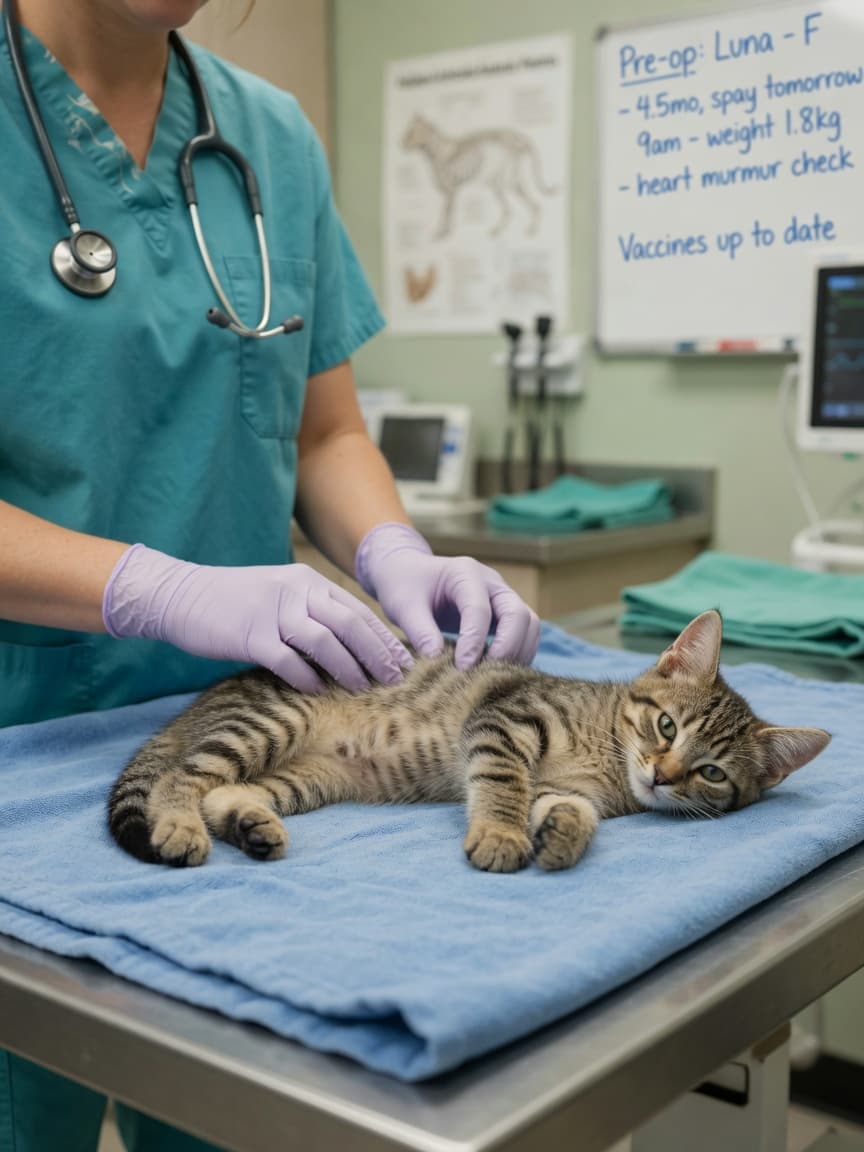
When to Spay or Neuter Your Cat: Timing & Health Benefits
- Traditional timing: 5–6 months (before first heat in females)
- Early spay/neuter (pediatric): 8–16 weeks — safe and common in shelters
- Female cats' first heat: As early as 4–5 months in some individuals
- Key benefit: Spaying before first heat reduces mammary cancer risk by ~91%
- Male cats: Neutering at any point after 8 weeks is safe and effective
By Julia Wrenfield, Pet Wellness Researcher | Published June 25, 2026
With cats, the spay/neuter timing debate is considerably simpler than with large breed dogs — but it is not entirely without nuance. Cats do not have the same growth-plate vulnerability as large breeds, and the reproductive consequences of leaving a cat intact are severe and swift. A female cat can go into her first heat as early as 4 months of age, can have multiple litters per year, and carries significant health risks from remaining intact through multiple heat cycles. Understanding the timing options, the procedure itself, and the meaningful health benefits will help you make a confident decision.
Early (Pediatric) Spay/Neuter: 8–16 Weeks
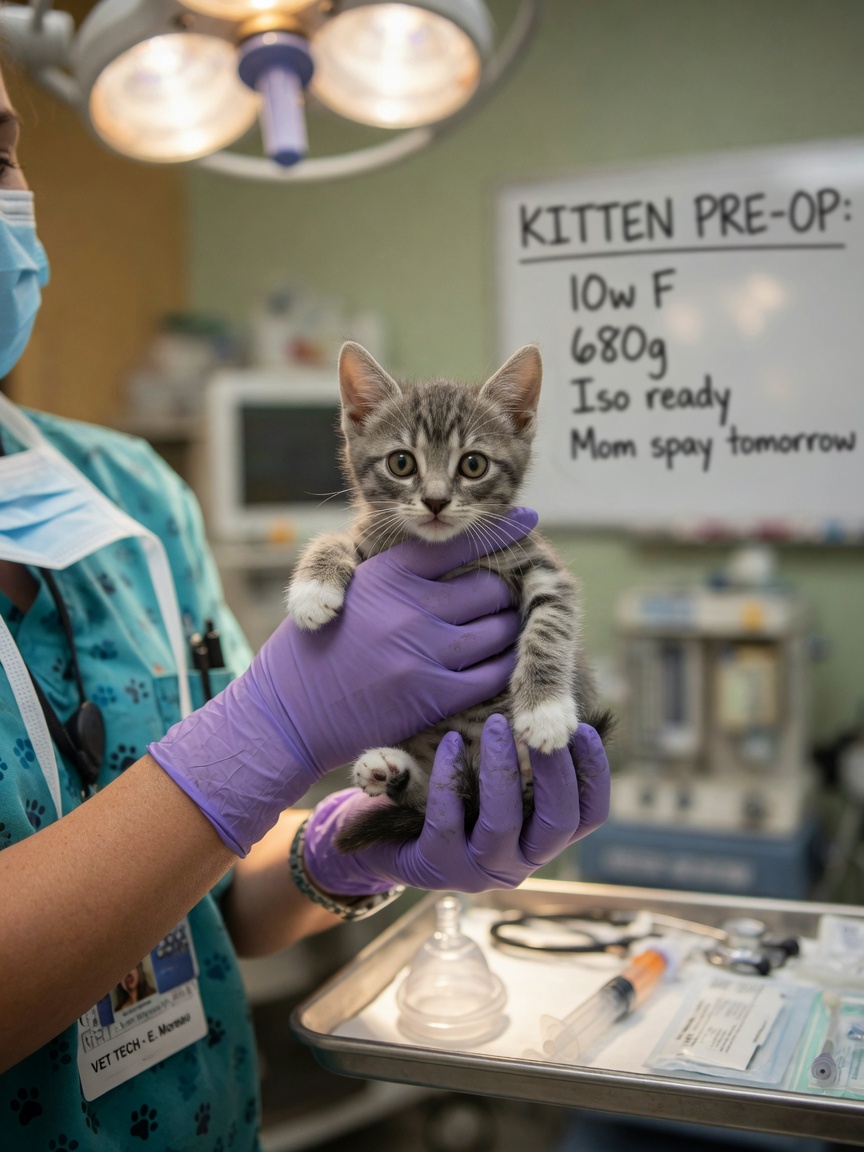
Early or pediatric spay/neuter, performed at 8–16 weeks of age, has been practiced in shelters since the 1990s as a population control strategy. The primary concern at the time was kittens being adopted before sterilization and subsequently reproducing. Research on the long-term outcomes of pediatric spay/neuter in cats has been largely reassuring.
Studies have found no significant increase in orthopedic disease, behavioral problems, or other adverse health outcomes compared to cats altered at the traditional 5–6 month age. The Association of Shelter Veterinarians, the American Veterinary Medical Association (AVMA), and the American Animal Hospital Association (AAHA) all endorse pediatric spay/neuter as safe and appropriate for cats.
The main practical consideration with early neutering in cats is a slightly increased risk of urinary obstruction in male cats, due to the influence of testosterone on penile development. However, the absolute risk increase is modest and should be weighed against the benefits — and is substantially mitigated by appropriate feeding of wet food and adequate water intake.
Traditional Timing: 5–6 Months

The traditional recommendation — spaying females before 5–6 months and neutering males around the same time — remains entirely appropriate for most pet cats. For female cats, the critical factor is timing relative to the first heat cycle. Spaying before the first heat provides the greatest cancer protection; spaying after one heat still provides significant protection. After two or more heat cycles, the protective benefit for mammary cancer diminishes substantially.
Female cats that are not spayed typically go into heat (estrus) for the first time between 4 and 10 months of age, depending on breed, season (cats are seasonally polyestrous — more likely to cycle in spring and summer), and individual variation. This means the traditional 5–6 month recommendation is sometimes already after the first heat for early-maturing individuals. If you have a female kitten and want maximum cancer protection, scheduling spay at 4–5 months is reasonable and increasingly recommended.
What Does the Surgery Involve?
Spay (Ovariohysterectomy or Ovariectomy)
The traditional spay procedure is an ovariohysterectomy — removal of both ovaries and the uterus. This is performed under general anesthesia, with a small abdominal incision. In Europe, ovariectomy (removal of ovaries only, leaving the uterus) has become common and is considered equally effective for preventing both reproduction and hormone-driven disease, with a slightly smaller incision. Recovery is typically 10–14 days with activity restriction and a follow-up check to confirm incision healing.
Neuter (Castration)
Neutering in male cats is a much simpler, faster procedure — it involves two small scrotal incisions and removal of both testes under general anesthesia. Most male cats are discharged the same day and have minimal recovery requirements. The incisions typically do not require sutures, healing in 3–5 days.
Health Benefits of Spaying and Neutering Cats
Mammary Tumors (Females)
Mammary cancer is the third most common tumor in cats and is malignant in approximately 85–90% of cases — a significantly higher malignancy rate than in dogs or humans. The influence of estrogen on mammary tumor development is well-established. A landmark study by Overley et al. (2005) found that cats spayed before 6 months of age had a 91% reduction in mammary tumor risk compared to intact cats. Cats spayed between 6 months and 2 years had approximately 86% reduction. After 2 years, the protective benefit decreases substantially but is still present.
Given the high malignancy rate of feline mammary tumors and the dramatic protective effect of early spaying, this is one of the clearest cancer prevention interventions available in veterinary medicine.
Pyometra (Females)
Pyometra — a life-threatening bacterial infection of the uterus — affects a significant proportion of intact female cats as they age. The condition develops in the progesterone-primed uterus and can progress rapidly to sepsis and death. Treatment is emergency surgery. Spaying eliminates pyometra risk entirely by removing the uterus.
Uterine and Ovarian Tumors
While less common than mammary tumors, uterine and ovarian tumors do occur in intact female cats. Spaying eliminates this risk.
Behavioral Benefits (Both Sexes)
| Behavior | Intact Cats | After Spay/Neuter |
|---|---|---|
| Urine spraying (males) | Very common, pungent odor | Significantly reduced; eliminated if neutered young |
| Roaming/escaping | Strongly driven by reproduction | Substantially reduced |
| Inter-male aggression | Common | Reduced significantly |
| Yowling in heat (females) | Loud, frequent, disruptive | Eliminated |
| Mounting behavior | Present in intact males | Reduced, especially if neutered young |
The Weight Gain Concern
One legitimate concern with spay/neuter in cats is an increased risk of weight gain. Sex hormones influence metabolic rate, and their removal decreases resting energy expenditure by approximately 20–30%. This does not mean your cat will inevitably become obese — it means the food intake that was appropriate before surgery is now too much. After spaying or neutering, reduce your cat's daily caloric intake by approximately 20% and monitor body condition score monthly. Premium cat foods formulated for "neutered" cats have lower caloric density and are worth considering.
- Spaying before the first heat provides ~91% reduction in mammary cancer risk — one of the strongest cancer prevention measures in all of veterinary medicine.
- Early spay/neuter at 8–16 weeks is safe in cats and commonly used in shelters; no significant long-term harm has been demonstrated.
- Traditional timing of 5–6 months is still appropriate and effective for most pet cats.
- Neutering male cats eliminates testicular cancer, dramatically reduces urine spraying and roaming, and prevents reproductive contribution to overpopulation.
- After surgery, reduce caloric intake by ~20% to prevent the common post-neuter weight gain.
References
- Overley B, et al. "Association between ovarihysterectomy and feline mammary carcinoma." Journal of Veterinary Internal Medicine. 2005;19(4):560-563. PMID: 16095180
- Spain CV, Scarlett JM, Houpt KA. "Long-term risks and benefits of early-age gonadectomy in cats." Journal of the American Veterinary Medical Association. 2004;224(3):372-379. PMID: 14765797
- Root Kustritz MV. "Determining the optimal age for gonadectomy of dogs and cats." Journal of the American Veterinary Medical Association. 2007;231(11):1665-1675. PMID: 18052800