
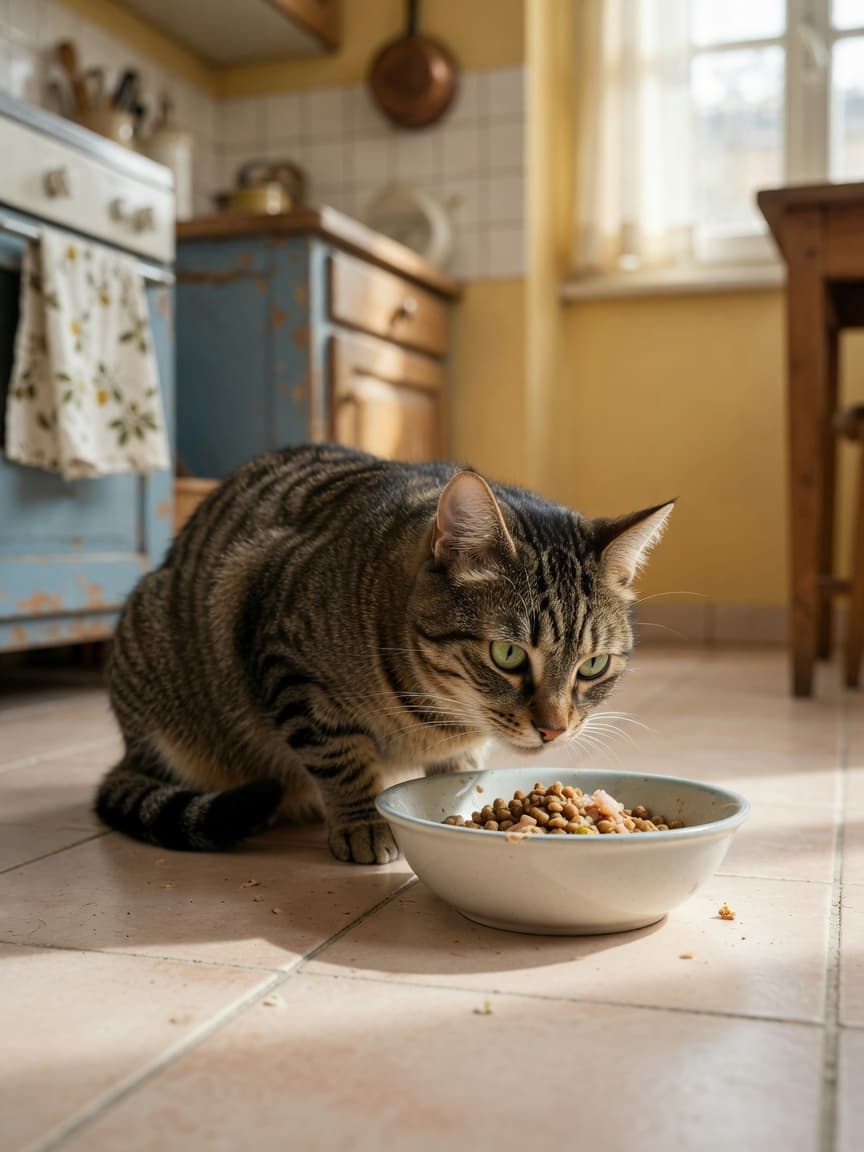
Transitioning a Fussy Cat to a New Food: A Step-by-Step Protocol
If you have ever tried to switch a cat to a new food and been met with an expression of profound contempt followed by a pointed refusal to acknowledge the bowl exists, you are in excellent company. Cats are among the most food-neophobic domestic animals kept as pets — a characteristic that has solid biological grounding but can make dietary transitions genuinely challenging. Understanding why cats resist new foods, and how to work with rather than against that resistance, makes the process considerably less fraught.
Why Cats Are Fussy Eaters
Feline food preferences are largely established during a sensitive developmental window in kittenhood, roughly between two and seven weeks of age, during which kittens learn what is safe and appropriate to eat through exposure to the foods their mother consumes and later through their own early experiences. This imprinting-like process is not absolute, but it means that a cat raised on a single food type may genuinely perceive unfamiliar foods as potentially unsafe rather than simply unappealing.
This is compounded by a phenomenon called dietary neophobia — an aversion to novel foods that appears to be more pronounced in cats than in most other domestic species. From an evolutionary perspective, this conservatism made sense for a small predator with no margin for error: eating something unknown that turned out to be toxic could be fatal, so defaulting to familiar foods was the safer strategy. In a domestic context, it manifests as a cat that has eaten the same brand of chicken paté for eight years and views the introduction of a salmon variety as a deeply suspicious development.
Common Reasons for Needing to Switch Foods
There are several circumstances that may require a dietary change: a veterinary recommendation for a prescription diet, a manufacturer discontinuing a product, a cat developing a suspected food sensitivity or allergy, a transition from kitten to adult food, or a decision to move from dry to wet food for health reasons. Each of these scenarios carries different urgency and allows for different timelines in the transition process.
A prescription renal diet required in response to newly diagnosed chronic kidney disease may need to be introduced more urgently than a routine switch from one commercial food to another, but the principles of the transition remain largely the same — the timeline simply compresses.
The Protocol: A Gradual Introduction
The most reliable method for transitioning a fussy cat to a new food involves a slow, systematic increase in the proportion of the new food over a minimum of two weeks, and ideally three to four weeks for cats with a history of strong food preference or gastrointestinal sensitivity.
A standard progression looks like this:
- Days 1 to 3: Mix approximately ten percent new food with ninety percent current food. The new food should be almost imperceptible in the mixture
- Days 4 to 6: Increase to twenty-five percent new food and seventy-five percent current food
- Days 7 to 9: Move to a fifty-fifty mixture
- Days 10 to 12: Shift to seventy-five percent new food and twenty-five percent current food
- Days 13 to 14 and beyond: Transition to one hundred percent new food
If the cat shows reluctance at any stage — reduced intake, signs of digestive upset, or active avoidance of the bowl — hold at the current ratio for an additional three to four days before progressing. The process should move at the cat's pace, not a schedule imposed by the owner's impatience.
Switching from Dry to Wet Food
Dry-to-wet transitions deserve specific attention because they involve not just a new flavour but a fundamentally different texture, moisture content, and sensory profile. Many cats raised exclusively on dry food do not initially recognise wet food as food at all. Strategies that help include:
- Warming wet food slightly to increase aroma, which is the primary driver of food acceptance in cats — never serve it directly from the refrigerator
- Starting with a wet food that uses a similar protein source to the current dry food, minimising the number of variables the cat must adapt to simultaneously
- Offering the wet food at a scheduled meal time when the cat is genuinely hungry rather than at a time when dry food has been available recently
- Placing a tiny amount of the wet food on the cat's paw or nose so they taste it incidentally before deciding whether to approach the bowl
Dealing with a Complete Refusal
Some cats refuse to eat the new food at any inclusion level. Before interpreting this as an insurmountable preference issue, check whether any of the following might be contributing:
- The bowl material — some cats will not eat from plastic bowls due to odour sensitivity; try ceramic or stainless steel
- The bowl depth and width — whisker stress can cause avoidance of any bowl with a narrow rim, regardless of what is in it
- The location of feeding — changes to feeding location introduced simultaneously with food changes compound the resistance
- The temperature of the food — wet food served cold is frequently rejected by cats that would readily accept the same food at room temperature or slightly warmed
The Importance of Not Letting a Cat Go Without Food
This point cannot be overemphasised: a cat that goes without eating for more than twenty-four to forty-eight hours is at risk of hepatic lipidosis — a serious and potentially fatal liver condition in which the body mobilises fat stores faster than the liver can metabolise them. This risk is elevated in overweight cats. If a dietary transition is causing a cat to stop eating entirely, do not hold the line hoping they will eventually give in. Return to the previous food, allow normal eating to resume, and consult your vet about whether the transition is medically essential and how to approach it more gradually.
Patience as the Primary Tool
Most fussy cats can be successfully transitioned to a new diet with sufficient time, consistency, and attention to the sensory variables that influence their acceptance. The process is rarely quick, and the temptation to speed it up — offering treats to compensate for a refused meal, mixing in flavour enhancers, or giving up and returning to the old food when the cat vocalises — consistently makes the transition take longer. Steady, calm persistence, with close monitoring of food intake throughout, is the most effective approach available.