
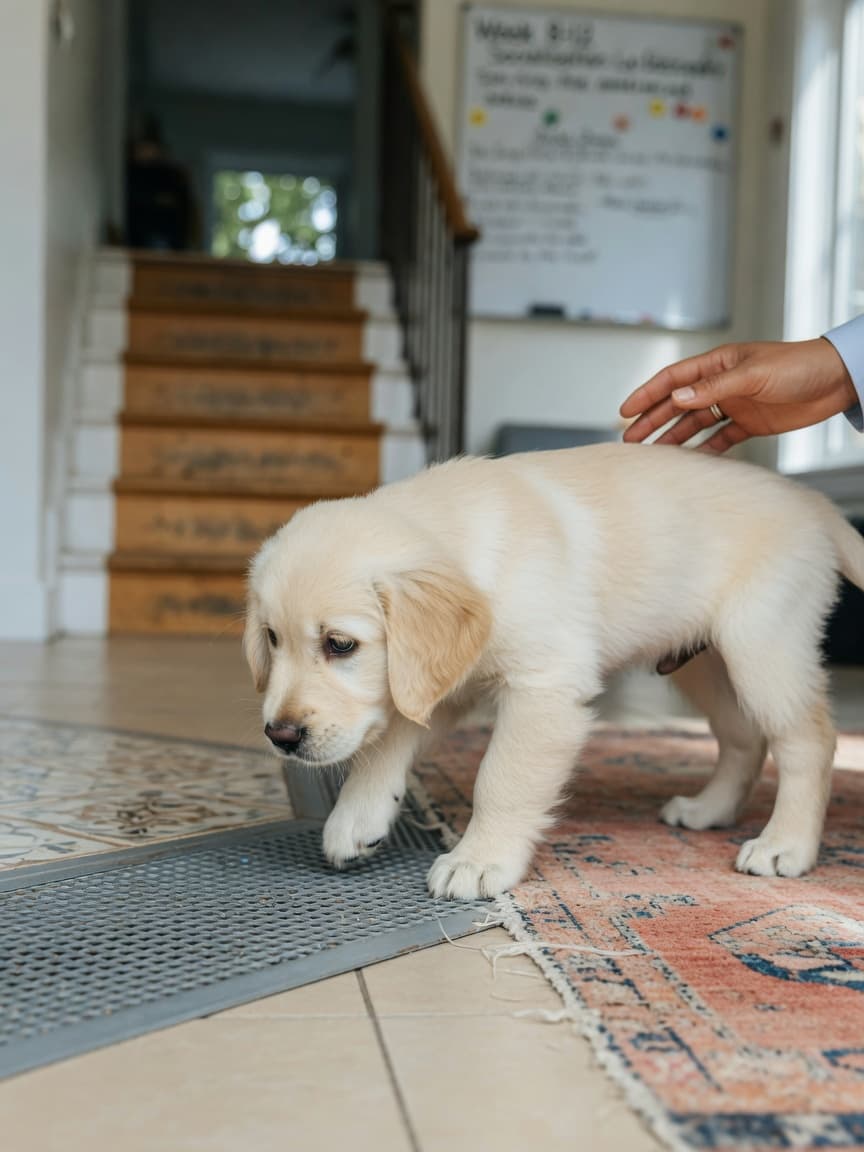
Puppy Socialization: The 16-Week Window You Can't Miss
No single thing you do in your puppy's first months will matter more than socialization. Not the food you choose, not the training classes, not the toys. Puppies who are properly socialized in their critical window grow into confident, adaptable, friendly adult dogs. Those who aren't can spend years struggling with fear, anxiety, and reactivity — problems that are extraordinarily difficult to undo.
Here's the science, and exactly what to do about it.
The Science Behind the Socialization Window
Between approximately 3 and 12–16 weeks of age, puppies go through what developmental biologists call the "sensitive period for socialization." During this window, the brain is primed to form lasting positive associations with new experiences. Neural pathways for fear and novelty-response are still highly plastic — meaning exposure creates templates that persist for life.
The landmark work by Scott and Fuller (1965) at the Jackson Laboratory established that puppies who received no human contact before 14 weeks had extreme difficulty bonding with humans later in life. More recent research has confirmed and expanded this: a 2013 study in Applied Animal Behaviour Science found that early environmental enrichment during the socialization window was the single strongest predictor of adult dog temperament (PMID: 22365947).
After 16 weeks, the brain shifts — new experiences are processed with more caution and, if they're unfamiliar, with more fear. This doesn't mean adult dogs can't learn, but the ease and depth of socialization is never the same.
Fear Periods: Don't Be Alarmed
Within the socialization window, puppies go through brief "fear periods" — typically around 8–10 weeks — where they become suddenly cautious about things that didn't bother them before. This is neurologically normal and temporary. During a fear period:
- Don't force exposure to the scary thing.
- Don't over-reassure in an anxious way ("it's okay, it's okay!") — this can inadvertently confirm there's something to fear.
- Use calm, matter-of-fact body language and let the puppy approach at their pace.
- Pair scary things with high-value food to build a positive association.
What to Socialize: The Complete Exposure List
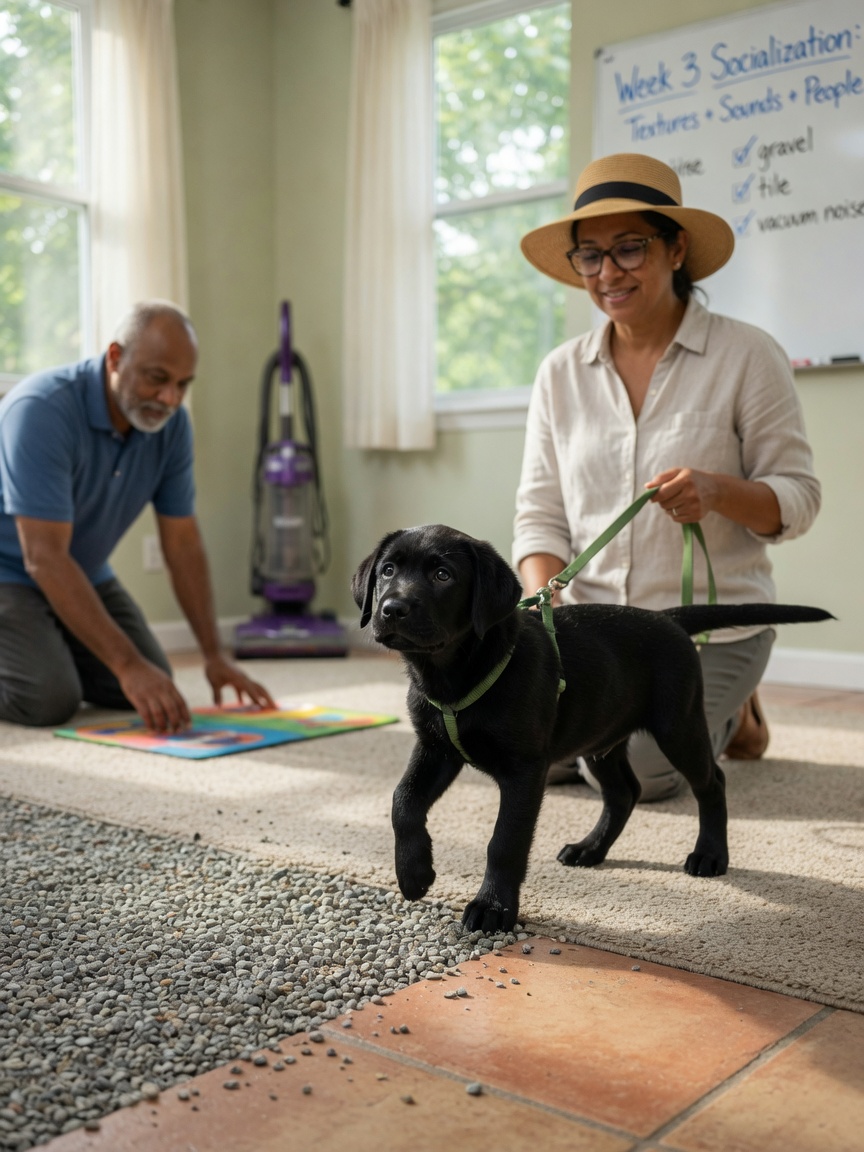
Think in categories. Puppies need positive exposure to:
Sounds
Thunderstorms, fireworks, traffic, vacuum cleaners, motorcycles, babies crying, construction sounds. You can use free "puppy sound desensitization" playlists on YouTube — start quietly and gradually increase volume over several days. Never flood a puppy with a loud, scary sound and expect them to "get used to it." That causes trauma, not desensitization.
Surfaces
Grass, gravel, tile, carpet, metal grates, wooden decks, sand, puddles, stairs. Puppies that have only ever walked on one surface type often develop surface anxiety — a dog that refuses to walk on anything slippery or unfamiliar is a direct result of insufficient surface socialization.
People
Men with beards, children running, people in hats, people with glasses, elderly people with walking aids, people in uniforms, people of different ethnicities, people in raincoats. The goal is to make "human diversity" feel completely normal. A puppy who is only socialized with one "type" of person can develop fear-reactivity toward others.
Animals
Friendly, vaccinated adult dogs (ideal — they teach appropriate dog communication). Cats, if safely introduced. Other species the dog is likely to encounter in their life. Keep early animal meetings brief and positive; never force interaction with a dog that is showing stress signals.
Handling
Ear touching, paw handling, nail touching, mouth examination, restraint, being picked up and held. Practice this daily so vet visits, grooming, and first aid situations don't become crises. Pair all handling with treats.
Week-by-Week Socialization Checklist
Weeks 8–9 (First Week Home)
- Introduce the home environment room by room.
- Start sound desensitization with low-level audio.
- Handle ears, paws, and mouth gently every day.
- Introduce to calm, known adult family members only.
Weeks 10–11
- Carry the puppy to new environments (no ground contact until vaccinations allow — see below).
- Introduce one new person type per day.
- Introduce car rides (short, positive — not just to the vet).
- Start puppy classes (reputable classes are safe and prioritize health protocols).
Weeks 12–14
- Low-risk on-ground socialization: puppy classes, friends' vaccinated dogs, private gardens.
- Exposure to busier environments (held in arms or in a carrier).
- Children of different ages — supervised, calm, positive only.
Weeks 14–16
- By now, after the final vaccine dose, most puppies can begin on-lead walks in public.
- Dog parks (choose calm times, monitor closely).
- Broader urban exposure: cafes with outdoor seating, pet-friendly shops.
Socializing Safely Before Full Vaccination
This is the question every new puppy owner faces: how do you socialize before the vaccination series is complete without risking parvovirus exposure? The American Veterinary Society of Animal Behavior (AVSAB) has a clear position: the risk of behavioral problems from under-socialization is greater than the infection risk from carefully managed early socialization.
Safe pre-vaccination socialization includes:
- Puppy classes run indoors on sanitized surfaces with vaccinated puppies only.
- Carrying the puppy in your arms or a carrier in public (no ground contact in high-traffic areas).
- Visiting homes with known, vaccinated, healthy adult dogs.
- Avoiding dog parks, pet store floors, and areas frequented by unknown dogs until after 16-week vaccines.
Key Takeaways
- The socialization window is 3–16 weeks — your most important opportunity to shape your dog's personality.
- Prioritize sounds, surfaces, people types, animals, and handling.
- Fear periods at 8–10 weeks are normal — don't force or over-reassure.
- Safe socialization can and should begin before the vaccine series is complete.
- Puppy classes from 10 weeks are endorsed by veterinary behavioral specialists.
- The quality of socialization matters more than quantity — positive, paired-with-food exposure is key.
References
- Howell TJ, King T, Bennett PC. "Puppy parties and beyond: the role of early age socialization practices on adult dog behavior." Veterinary Medicine: Research and Reports. 2015;6:143–153. PMID: 30101099
- Dietz L, et al. "The influence of early experience on the development of sensory systems and behaviour in the domestic dog." Neuroscience & Biobehavioral Reviews. 2018;82:150–162. PMID: 22365947