
The Behaviour That Baffles Every Cat Owner
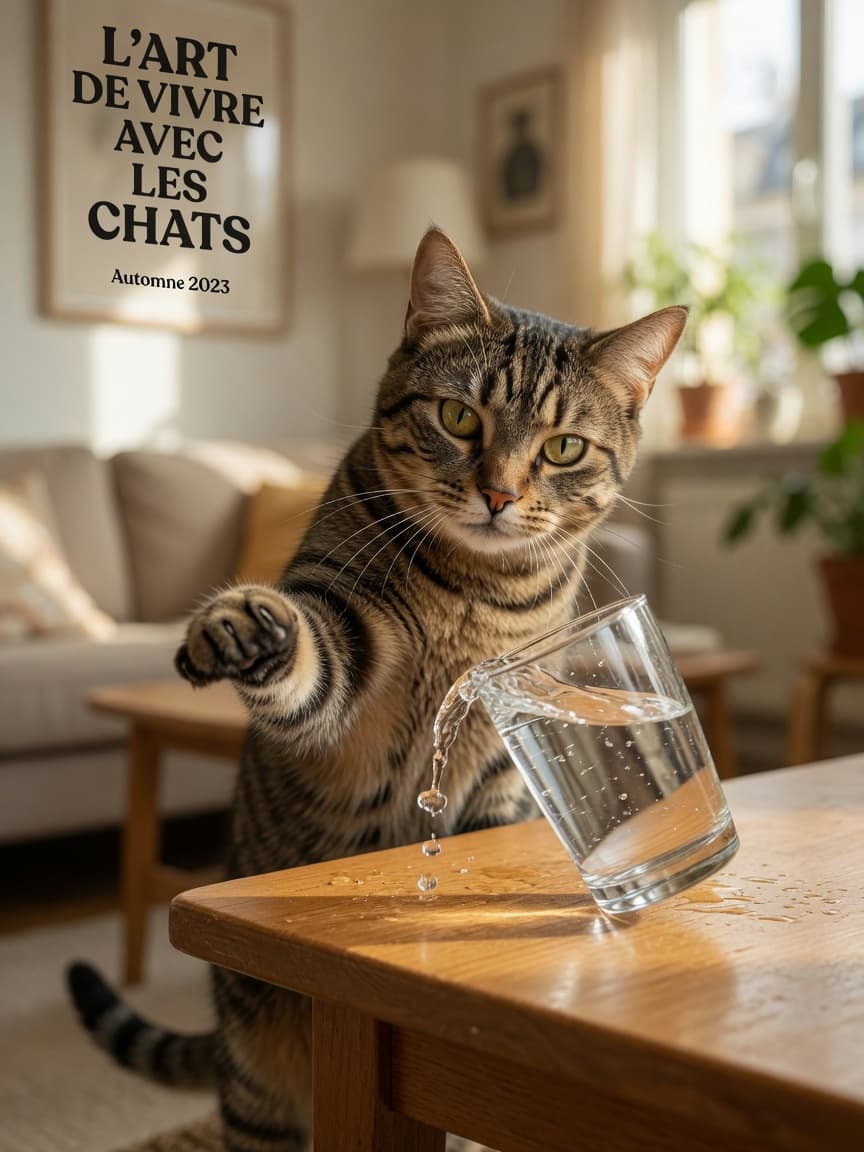
You watch your cat approach an object — a pen, a glass, a television remote — make deliberate eye contact with you, and then calmly sweep it off the edge of the surface with one paw. It is a behaviour so universally recognised among cat owners that it has become a defining cultural image of feline personality. But what is actually driving it?
The answer involves feline neurology, predatory instinct, social communication, and a touch of what researchers cautiously refer to as object play curiosity. Understanding the mechanisms behind this behaviour is genuinely useful, because it tells you something important about what your cat needs from their environment.
The Predatory Wiring Explanation
Cats are obligate carnivores who evolved as solitary hunters. Their entire sensory and neurological architecture is built around detecting, pursuing, and capturing prey. This does not switch off simply because prey is no longer on the menu.
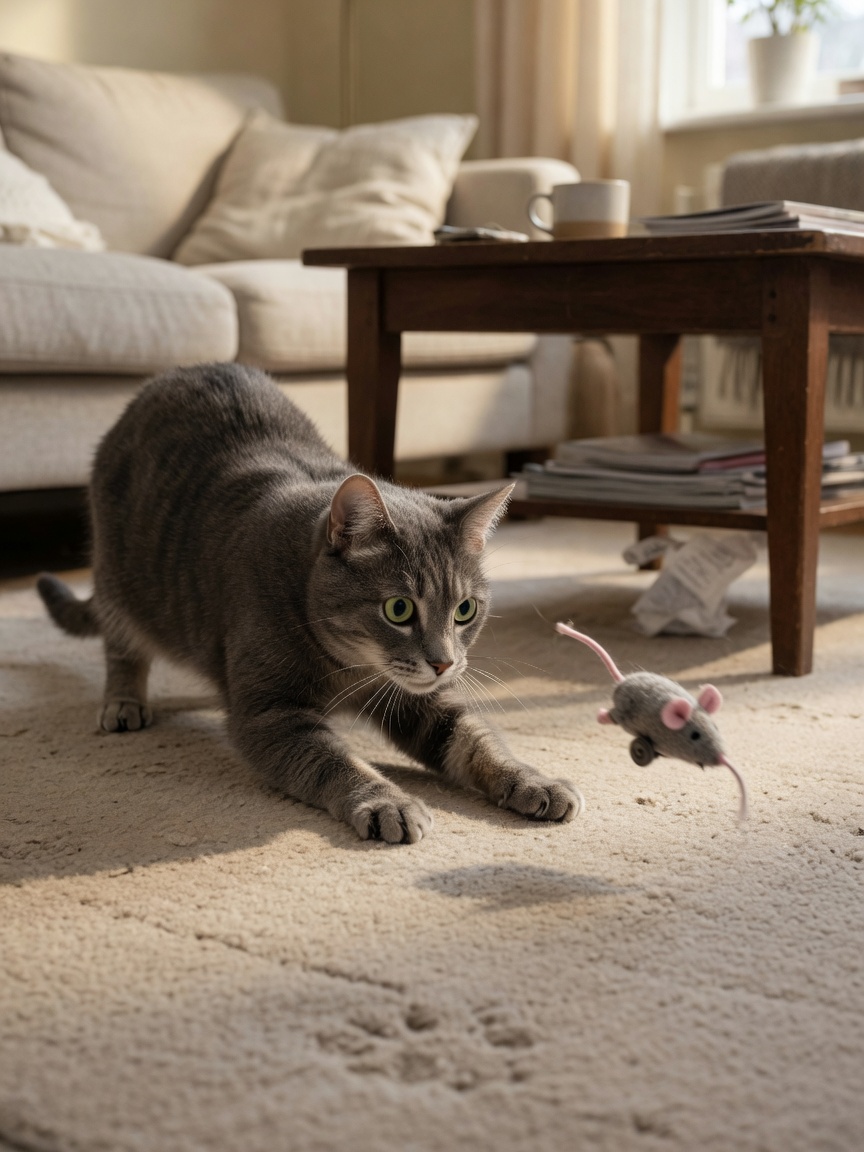
When a cat bats at an object, they are engaging the same neural circuitry used in hunting. A moving or teetering object mimics the erratic motion of small prey animals — the twitch of a mouse, the flutter of a wounded bird. The paw swipe is the predatory strike. The fact that the object then falls and moves unpredictably across the floor or makes a satisfying sound on impact provides sensory feedback that is intrinsically rewarding to a predatory nervous system.
Why Stationary Objects Get Swiped Too
Even objects that are not moving initially will sometimes receive the paw treatment. Cats will often tap an object first — this is partly investigatory, to check if it is alive, and partly to initiate movement. From a cat's perspective, a stationary pen is a potential prey item waiting to be provoked. The swipe is a test.
Attention-Seeking and Social Dynamics
There is a less flattering but well-supported explanation operating alongside the predatory one: cats learn quickly that knocking things off surfaces gets a reaction from their humans.
Research into feline cognition has shown that cats are more adept at reading and responding to human social cues than was previously assumed. A 2019 study published in Current Biology demonstrated that cats form secure attachment relationships with their owners and are sensitive to human attention and emotional states. A cat that has discovered — through trial and learning — that sweeping an object off a table produces an immediate, often dramatic human response has effectively trained their owner to respond on command.
This does not mean the cat is plotting or vindictive. It means they have learned an effective strategy for social engagement. If your cat tends to knock things over specifically when you are busy, distracted, or not paying attention to them, this social motivation is very likely a significant driver.
Curiosity and Sensory Exploration
Cats investigate their environment primarily through their paws. The pads contain a dense network of sensory receptors that gather information about texture, temperature, and movement. Batting at unfamiliar objects is a legitimate form of environmental exploration — the cat is essentially conducting a physical investigation.
The falling object also provides what animal behaviour scientists call contingency awareness. The cat performs an action, something in the environment changes as a direct result, and that cause-and-effect relationship is inherently engaging for a cognitively active animal. For indoor cats with limited environmental stimulation, this kind of sensory feedback can be genuinely enriching.
What It Tells You About Your Cat's Needs
If your cat is a habitual table-clearer, that behaviour is communicating something. It usually points to one or more of the following:
- Insufficient opportunity for predatory play during the day
- Boredom or understimulation in their environment
- A learned pattern of gaining owner attention that has been inadvertently reinforced
- A curious, cognitively active temperament that needs appropriate outlets
Practical Responses That Actually Work
Increase Interactive Play
Two dedicated play sessions daily using a wand toy or fishing rod-style toy — each lasting ten to fifteen minutes — can significantly reduce attention-seeking and displacement behaviours. The key is to mimic prey movement: irregular, unpredictable, with pauses and sudden bursts. This satisfies the predatory sequence and provides genuine neurological fulfilment.
Provide Appropriate Objects to Interact With
Puzzle feeders, small lightweight toys that move unpredictably, and foraging activities give your cat legitimate outlets for batting and swatting behaviour. Cats that are well-enriched tend to rely less on household objects for stimulation.
Stop Reacting
If the behaviour is primarily attention-driven, reacting — even with frustration — rewards it. The most effective response to socially motivated table-clearing is to calmly remove yourself from the room. Over time, if the behaviour consistently produces no reaction, its frequency typically declines. This is straightforward extinction of a learned behaviour.
Secure Genuinely Fragile Items
Some objects are not worth the risk of breakage, regardless of training efforts. Sentimental items, valuables, and anything that could pose a hazard if broken should simply be stored out of reach. This is pragmatic rather than defeatist — it removes the opportunity for the behaviour without requiring any ongoing management.
Your cat is not a tiny saboteur. They are a highly wired predatory animal exploring their world and occasionally communicating their needs in the most direct way available to them. Understanding that is the first step towards meeting those needs more effectively.