
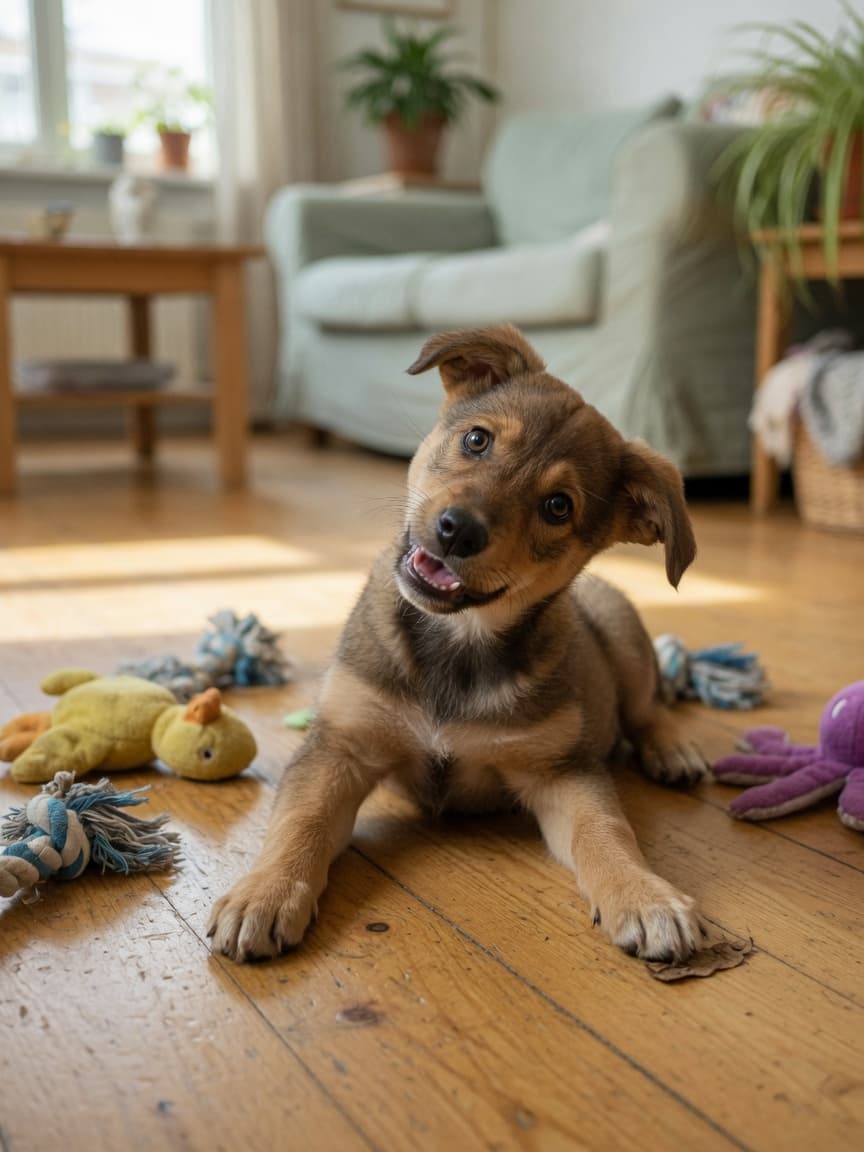
Puppy Biting: Why They Do It & How to Stop It (Without Punishment)
Your puppy is not aggressive. They are not "dominant." They are not trying to hurt you. They are doing exactly what puppies do — exploring the world with their mouth, playing the way they played with their littermates, and learning the rules of social interaction. The good news is that bite inhibition is one of the most teachable things in early puppyhood. The bad news is that most people handle it wrong, which makes it worse.
Here's what the science says, and what actually works.
Why Puppies Bite: The Real Reasons
1. Teething
Puppies begin teething at around 3 weeks of age and continue until approximately 6 months, when adult teeth fully replace baby teeth. During active teething periods (particularly 12–16 weeks and 4–6 months), gum discomfort drives puppies to chew on literally anything — including your hands, ankles, and clothing. This is purely physical, not behavioral. It requires appropriate chew outlets, not correction.
2. Play Communication
In the litter, biting is the primary language of play. Puppies wrestle, chase, and mouth each other constantly. When a bite is too hard, the bitten puppy yelps and play stops — that feedback teaches bite inhibition gradually. When your puppy arrives in your home at 8 weeks, they have not yet learned how different human skin is from puppy skin, or how different your rules are from their litter's rules. They're not being mean; they haven't been taught yet.
3. Overstimulation and Fatigue
A tired or overstimulated puppy bites harder and more persistently. If your puppy's biting escalates in the evening (a phase many owners call "the witching hour"), they are almost certainly overtired. The solution is a nap, not more redirection attempts.
4. Attention-Seeking
Puppies learn fast. If biting you causes you to squeal, jump, and pay attention — even negative attention — they may repeat it because it works. This is why the response to biting matters as much as the biting itself.
The Concept of Bite Inhibition
Bite inhibition is not about stopping a dog from ever biting. It's about teaching a dog to control the pressure of their bite — so that if a dog ever does bite in fear or pain, they bite gently rather than breaking skin. This is a critical safety skill for life.
Research by Dr. Ian Dunbar, foundational in applied dog behavior, established that bite inhibition is most effectively learned before 18 weeks of age. After this window, a dog's learned bite threshold is largely set. This means the early weeks with a biting puppy are not just about comfort — they're about creating a safer adult dog.
Teach it in two stages: first teach soft mouth (biting is okay but must be gentle), then teach no mouth (teeth on skin ends play entirely). Going straight to "no biting ever" skips the bite inhibition stage and produces a dog that has never learned pressure control.
Techniques That Actually Work
The Yelp Method
When the puppy bites too hard: let out a sharp, high-pitched "ouch!" or "yelp" — similar to what a littermate would do. Immediately go still, remove your hand, and ignore the puppy for 20–30 seconds. Then re-engage calmly. This mimics exactly how litter learning works and is highly effective for puppies under 12 weeks.
Important caveat: some puppies become MORE excited by the yelp and bite harder. If that's your puppy, skip this method and go straight to remove-and-ignore (below).
Remove and Ignore (Withdrawal of Attention)
The most reliable method for most puppies: the moment teeth touch skin, all play stops immediately. Stand up, cross your arms, turn your back, and ignore the puppy for 10–20 seconds. Then resume. Repeat every single time, consistently. Within a week, most puppies make the connection: teeth on skin = the fun stops.
This works because it removes the reward (attention and play) with zero escalation. The puppy is not afraid of you — they just learn that biting is the world's least effective strategy for getting what they want.
Redirection to Appropriate Outlets
Before biting starts or at the first sign of mouthing, offer a legal chew toy. Keep toys within reach at all times during play sessions. When the puppy takes the toy, praise warmly. You're teaching a two-part lesson: "not my skin — but this is perfect."
Cold toys are especially effective during active teething. Freeze a wet washcloth or a rubber KONG stuffed with wet food — the cold soothes inflamed gums and makes the toy far more appealing than warm human skin.
Structured Time-Outs
For older puppies (12+ weeks) who don't respond quickly to remove-and-ignore: a brief, calm time-out in a pen or safe room for 1–2 minutes. No scolding, no drama — just a quiet removal from the fun. When they come back, they're calm and the play can restart. The time-out is not punishment; it's a reset.
What NOT to Do
These approaches are common, but all make the problem worse:
- Tapping or hitting the nose. Physical punishment triggers defensive biting in many puppies and damages trust. It also teaches the puppy to be afraid of your hand approaching — creating hand-shyness and potentially worsening biting in the long run.
- Scruffing or alpha rolls. Outdated dominance-theory techniques that increase stress and fear without teaching anything. A 2009 study in Applied Animal Behaviour Science found that confrontational training methods significantly increased aggression in dogs over time (PMID: 19393692).
- Continuing to play through biting. If you react with laughter, excited noises, or keep playing when the puppy bites, you're training biting. Your reaction is the feedback they use.
- Wearing gloves to "protect" yourself. This removes the sensory feedback that teaches bite pressure — counterproductive for bite inhibition training.
- Expecting it to stop overnight. Bite inhibition takes 2–6 weeks of consistent reinforcement. If you're consistent every single time, it will work.
When to Be Concerned
Normal puppy biting is playful, sporadic, and reduces with consistent training. Seek professional help from a positive-reinforcement trainer or veterinary behaviorist if:
- The puppy bites with obvious tension, growling, and stiffness (not playful looseness) consistently after 16 weeks.
- The biting is breaking skin regularly in a puppy over 4 months despite 3+ weeks of consistent training.
- The puppy guards food, toys, or spaces aggressively AND bites — this combination warrants professional assessment.
- The biting is targeted specifically at one family member and intensifying rather than reducing.
Key Takeaways
- Puppy biting is normal — it's teething, play communication, and litter behavior, not aggression.
- Bite inhibition (learning pressure control) must be taught before 18 weeks for lasting safety.
- The most effective methods: yelp-and-ignore or remove-and-ignore, applied consistently every time.
- Redirect to cold chew toys, especially during teething phases.
- Never use physical punishment — it increases biting and damages the relationship.
- Most puppies show significant improvement within 2–3 weeks of consistent training.
References
- Herron ME, Shofer FS, Reisner IR. "Survey of the use and outcome of confrontational and non-confrontational training methods in client-owned dogs showing undesired behaviors." Applied Animal Behaviour Science. 2009;117(1–2):47–54. PMID: 19393692
- Casey RA, et al. "Human directed aggression in domestic dogs: Occurrence in different contexts and risk factors." Applied Animal Behaviour Science. 2014;152:52–63. PMID: 24402455