
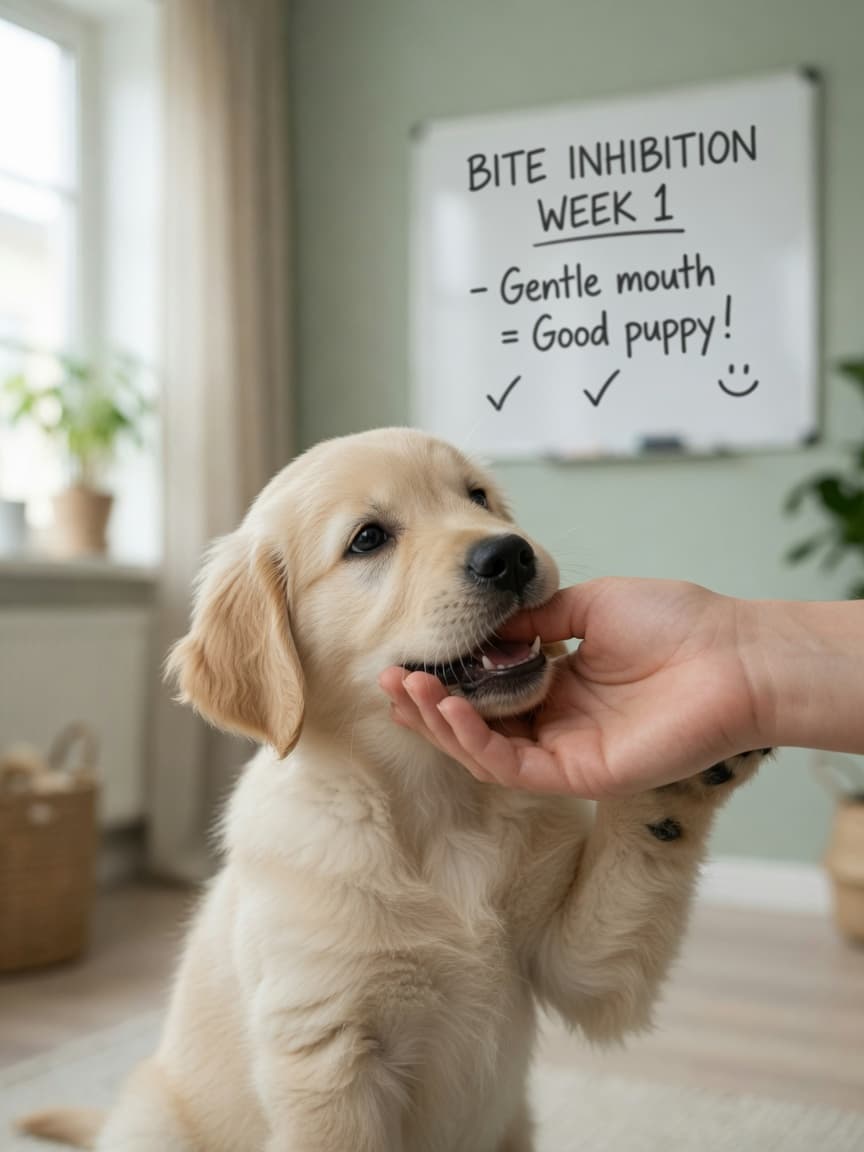
Why Puppies Bite: It Is Normal, But Still Needs Managing
If your puppy is biting and nipping, you are not alone and your puppy is not aggressive. Mouthing and biting are completely normal puppy behaviours, and understanding the reasons behind them is the first step to addressing the problem effectively.
Puppies explore the world primarily through their mouths. They use biting to investigate objects, to initiate and engage in play, and to communicate. In the litter, puppies bite one another constantly — it is how they learn the limits of acceptable force and how they build bonds with their siblings. They also bite as a response to teething discomfort, which begins at around three to four weeks and continues in waves as adult teeth come through between three and six months of age.
The challenge is that what is playful and natural in a litter becomes painful and unacceptable when directed at human hands, ankles, and clothing. Your job is not to eliminate biting entirely, but to teach your puppy two important lessons: that biting humans causes play to stop, and that appropriate chew items are available as an alternative.
Understanding Bite Inhibition
Bite inhibition refers to a dog's ability to control the pressure of its bite. Dogs that have good bite inhibition will mouth gently rather than applying full force, which is critically important should they ever bite in a genuine emergency such as fear or pain. A dog that never learned bite inhibition is far more dangerous if it does bite, because it has no instinct to hold back.
In the litter, puppies teach one another bite inhibition naturally. When one puppy bites another too hard, the bitten puppy yelps and stops playing. The biter learns that too much force ends the fun. Once removed from the litter and placed in a home, it is the responsibility of the owner and other humans to continue this lesson.
The goal during the first weeks at home is not to stop your puppy mouthing entirely, but to gradually reduce the pressure of its bites before then reducing the frequency.
The Yelp Method
When your puppy bites too hard during play, let out a short, sharp yelp — a high-pitched sound that mimics the response of a puppy sibling — and immediately withdraw your hand and stop all interaction for a few seconds. Do not resume play until the puppy is calm. If the biting continues, leave the room briefly. Over time, your puppy learns that hard biting causes the thing it wants (your attention and play) to disappear.
This method works well for many puppies, but some become more excited by the yelp and bite harder in response. If your puppy is one of these, skip the vocal response and simply withdraw calmly and quietly instead.
Redirecting to Appropriate Chew Items
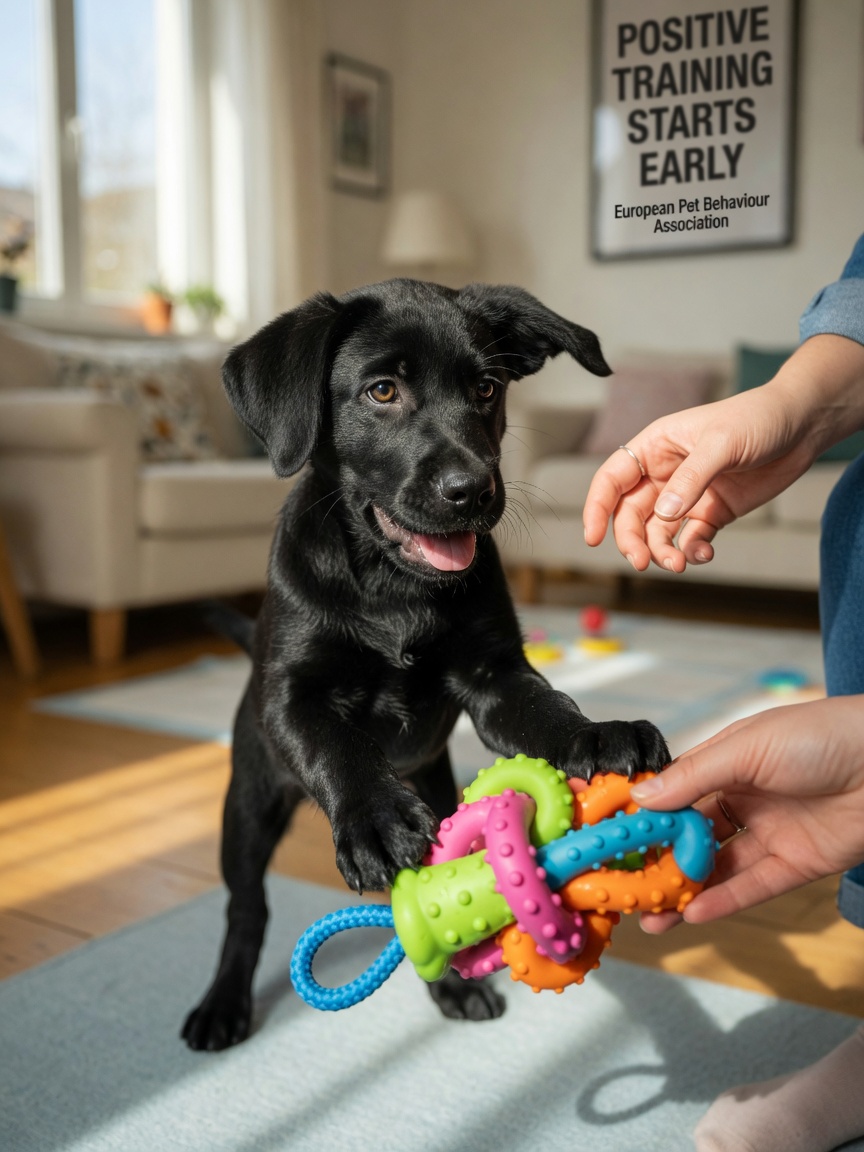
One of the most effective and practical strategies is to redirect your puppy's biting to appropriate objects. Always have a suitable chew toy within reach during play and interaction. The moment your puppy begins to mouth your hand, calmly offer the toy as a substitute. When your puppy takes the toy and chews it, praise and reward immediately.
Over time, your puppy learns that chewing toys earns reward and attention, while biting humans causes everything to stop. Rotation of different toys keeps things interesting — puppies can become bored with the same item quickly. Zooplus offers an extensive range of chew toys and teething toys specifically designed for puppies, including rubber toys, rope toys, and softer options suited to young mouths and sensitive gums during teething.
The Time-Out Method
For puppies that bite frequently or with significant force, a brief time-out can be effective when used consistently. When biting occurs, calmly say a neutral word such as "too bad" and place the puppy behind a baby gate or in a separate room for 30 to 60 seconds. The time-out must be immediate, brief, and consistent to be effective. It is not a punishment — it is simply the removal of access to fun and company, which is the consequence that teaches the lesson.
Return to the puppy calmly and resume interaction. Repeat the time-out every time biting occurs. Most puppies begin to show a reduction in biting within a few days of consistent application.
What Not to Do: Common Mistakes That Make Things Worse
There are several responses to puppy biting that are widely used but cause real harm. Avoid all of the following:
- Physical punishment of any kind — smacking, tapping the nose, or flicking — causes pain and fear, damages your relationship with your puppy, and can trigger defensive biting
- Scruffing or pinning — holding a puppy by the scruff or rolling it onto its back creates significant stress and is not an effective teaching tool; it teaches the puppy to fear being handled rather than to control its bite
- Shouting or aggressive responses — this can excite some puppies further and frightens others without teaching anything useful
- Allowing rough play with hands — if hands are used as toys, puppies cannot be expected to understand when that is and is not acceptable
Positive reinforcement — rewarding the behaviour you want rather than punishing the behaviour you do not — is the most effective, humane, and evidence-backed approach to puppy training. It builds trust, strengthens your bond, and produces lasting results.
The Teething Timeline
Understanding the teething timeline helps set realistic expectations. Puppies are born without teeth. Deciduous (milk) teeth begin to emerge from around three weeks. By six weeks, puppies have a full set of 28 milk teeth. From around three months, these begin to fall out and are replaced by 42 permanent adult teeth, a process that is usually complete by six to seven months of age.
Biting and chewing tends to intensify during active teething phases as puppies seek relief from sore gums. Offering cold or frozen chew items during these periods can help soothe discomfort and redirect chewing energy appropriately. Chilled rubber teething toys are particularly effective.
When Biting Becomes a Concern
Most puppy biting is normal and resolves with consistent management. However, there are situations where biting warrants professional assessment. Speak to your vet or a qualified behaviourist if:
- Your puppy's biting is accompanied by prolonged growling, stiffening of the body, or a fixed stare
- Biting breaks the skin regularly despite consistent training over several weeks
- Your puppy snaps suddenly and without warning, especially in contexts that do not involve play
- The biting is getting worse rather than better over time
These signs may indicate something beyond normal puppy mouthing and deserve early professional attention. A certified behaviourist can assess the situation and design an appropriate behaviour modification programme. The sooner a genuine problem is identified, the better the outcome is likely to be.