
ForPetsHealthcare
Dogs

Dog Zoomies: What They Are and Why Dogs Do Them

By Julia WrenfieldUpdated August 4, 20263 min read
Evidence-based · Sources checked
{"en": "Golden retriever running energetically across a grassy yard during a case of zoomies", "es": "Golden retriever corriendo energ\u00e9ticamente por un patio durante un ataque de zoomies", "fr": "Golden retriever courant \u00e9nergiquement dans une cour herbeuse pendant une crise de zoomies", "de": "Golden Retriever rennt energisch \u00fcber einen grasbewachsenen Hof w\u00e4hrend Zoomies", "nl": "Golden retriever die energiek over een grasveld rent tijdens zoomies", "pt": "Golden retriever correndo energicamente pelo quintal durante um ataque de zoomies", "it": "Golden retriever che corre energicamente nel cortile durante un episodio di zoomies"}
Quick answer: Dog zoomies (FRAPs) are sudden bursts of frantic running that are completely normal and healthy, typically caused by energy release, excitement, or relief from stress—just ensure a safe space and let them run it out.

Dog Zoomies: What They Are and Why Dogs Do Them

Frenetic Random Activity Periods (FRAPs) — known as zoomies — are completely normal and usually hilarious.

What Are Zoomies?

Sudden bursts of frantic running in circles or figure-eights, often after a bath, after waking up, or during play. Dogs appear to lose control — then stop as suddenly as they started.

Why Do Dogs Get Zoomies?
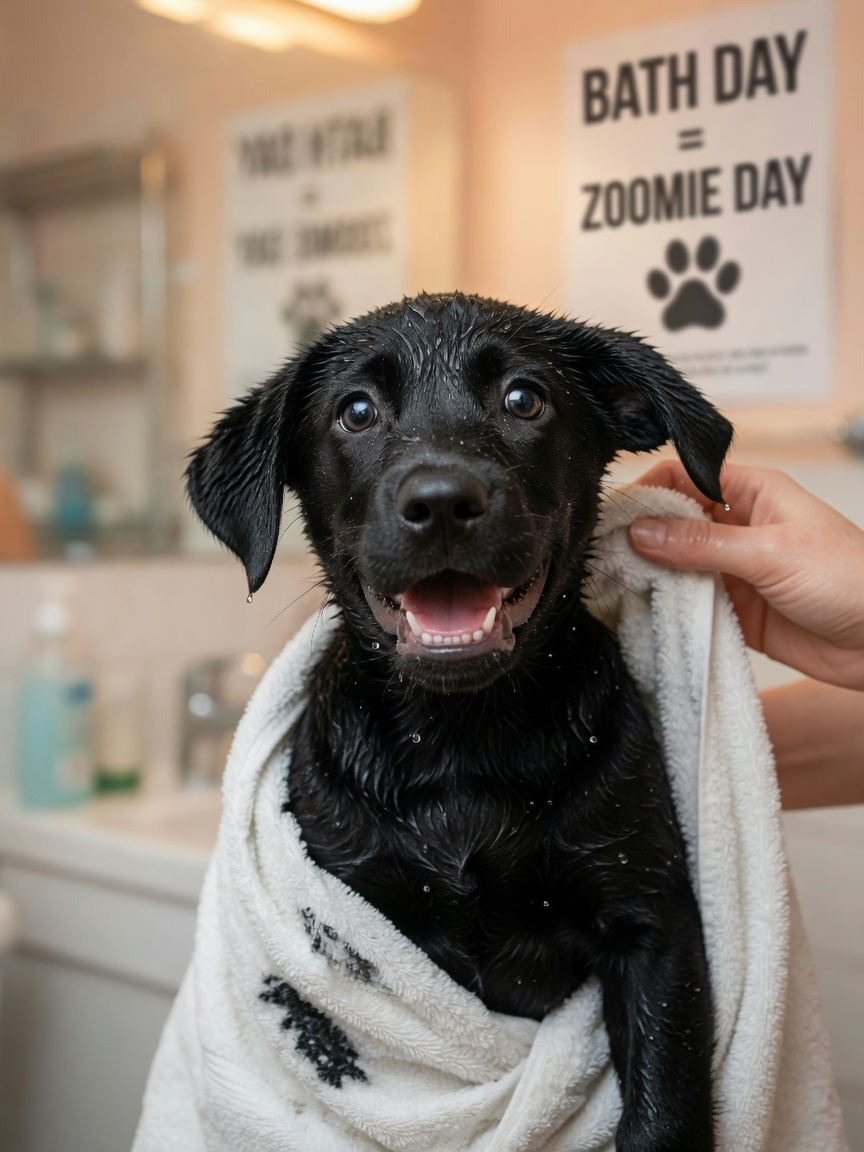
Wet black labrador puppy wrapped in a towel after bathing, eyes bright with energy
  • Release of pent-up energy
  • Expression of joy and excitement
  • Relief after a stressful experience (like a bath)
  • Simply because it feels good

Are Zoomies Normal?

Completely normal in dogs of all ages, most common in puppies and young dogs. Frequency decreases with age and adequate exercise.

When to Be Concerned

Zoomies in the middle of the night, very frequent zoomies in adult dogs, or zoomies combined with other unusual behaviour may indicate insufficient exercise or stimulation.

Should You Stop Zoomies?

Usually no. Ensure the area is safe (away from roads, no sharp furniture corners). Let them burn off the energy.

Key takeaways

  • Zoomies are sudden, frantic running episodes where dogs appear to lose control temporarily, often happening after baths, naps, or play sessions
  • They're a normal way for dogs to release pent-up energy and express joy, with puppies and young dogs experiencing them most frequently
  • Most zoomies need no intervention—just provide a safe, open area away from hazards and let your dog burn off the energy naturally
  • Excessive zoomies in adult dogs or those combined with unusual behaviour may signal insufficient exercise or mental stimulation
  • Zoomies typically decrease in frequency as dogs age and receive adequate daily exercise and activity

Frequently asked questions

Are zoomies a sign my dog is sick or anxious?

Not usually—zoomies are a normal, healthy behaviour in dogs of all ages. However, if your adult dog experiences very frequent zoomies combined with other unusual behaviour, it may indicate they need more exercise or mental stimulation rather than indicating illness.

Why does my dog get zoomies after a bath?

Baths can be stressful for dogs, and zoomies are a way they release that tension and express relief once it's over. The sudden burst of energy helps them shake off the stress and feel good again.

What should I do when my dog has the zoomies?

Generally, you should let them run it out naturally. Just make sure the area is safe by removing hazards like sharp furniture corners and keeping them away from roads or other dangers. Trying to stop them usually won't work and isn't necessary.

Is it normal for my puppy to get zoomies multiple times a day?

Yes, puppies and young dogs get zoomies more frequently than older dogs, so multiple episodes daily is completely normal. As your dog matures and gets adequate daily exercise, the frequency will naturally decrease.

#dog zoomies what they mean#dog health#dog nutrition#forpetshealthcare

Sources & further reading

This article is based on peer-reviewed veterinary research and reputable animal-health sources. Explore the underlying science in our Research Library.

Related articles

The 19 Best Animal Shelters in the Netherlands (2026)

the Netherlands's animal shelters, rescue associations and refuges save thousands of dogs, cats and other animals every year, almost always on tiny budgets and volunteer power. To build the most objective ranking possible, we analysed public Google reviews across more than 56 registered animal-prote…

Read more →

The 25 Best Animal Shelters in Italy (2026)

Italy's animal shelters, rescue associations and refuges save thousands of dogs, cats and other animals every year, almost always on tiny budgets and volunteer power. To build the most objective ranking possible, we analysed public Google reviews across more than 121 registered animal-protection org…

Read more →

The 48 Best Animal Shelters in Germany (2026)

Germany's animal shelters, rescue associations and refuges save thousands of dogs, cats and other animals every year, almost always on tiny budgets and volunteer power. To build the most objective ranking possible, we analysed public Google reviews across more than 152 registered animal-protection o…

Read more →

The 32 Best Animal Shelters in France (2026)

France's animal shelters, rescue associations and refuges save thousands of dogs, cats and other animals every year, almost always on tiny budgets and volunteer power. To build the most objective ranking possible, we analysed public Google reviews across more than 89 registered animal-protection org…

Read more →

The 8 Best Animal Shelters in Portugal (2026)

Portugal's animal shelters, rescue associations and municipal centros de recolha save thousands of dogs, cats and other animals every year, almost always on tiny budgets and volunteer power. To build the most objective ranking possible, we analysed public Google reviews across more than 86 registere…

Read more →

Sphynx Cat Skin care and hygiene: Causes, Signs & Care

Sphynx cats have little to no coat, which means the skin itself takes on jobs that fur normally does — insulation, oil dispersal, and barrier protection — leaving it prone to greasiness, blocked pores, fungal infections, and sunburn. The single most important thing to know is that a Sphynx's skin ne…

Read more →
Disclaimer:This article is for informational purposes only and does not constitute veterinary advice. Always consult a qualified veterinarian for your pet's health concerns.

Free newsletter

Pet health tips, straight to your inbox

Weekly science-backed advice for dog & cat owners. No spam, unsubscribe anytime.